
(Editor’s Note. 8 Dec 2023) Highlinght Conoco Phillips environmental record and its departure from the U.S. Climate Action Partnership.
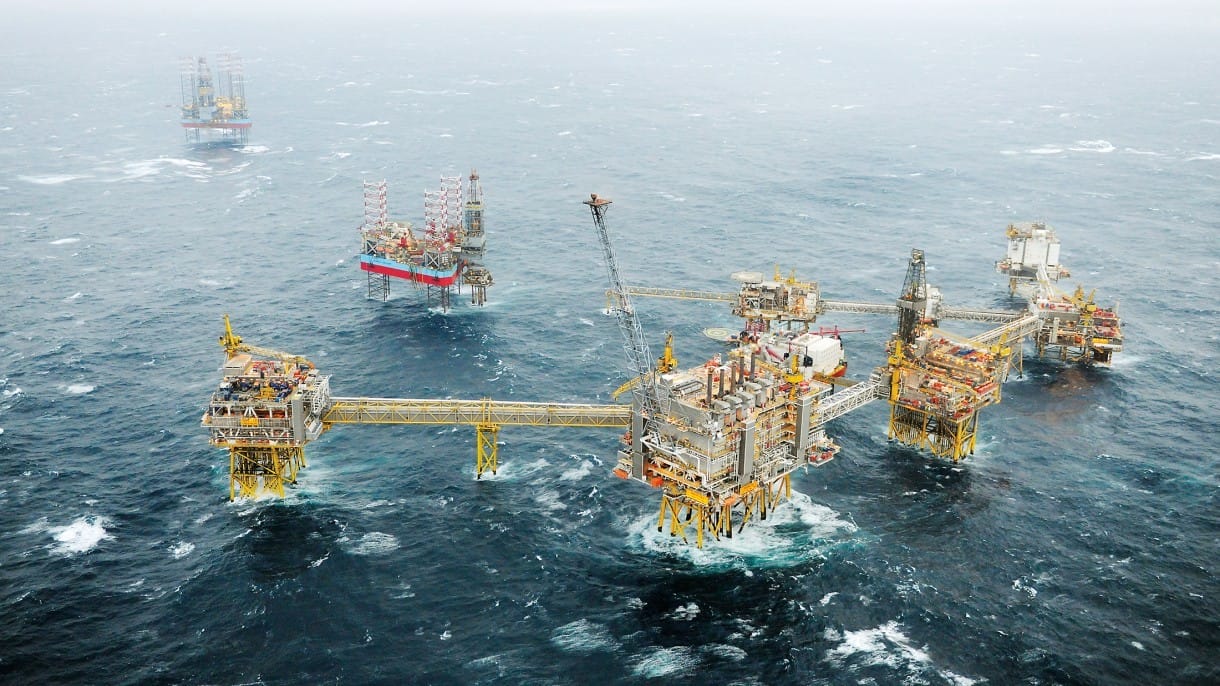
Across our 13 countries of operations, 9,800 people work in a truly integrated way to find and produce oil and natural gas.
Our technical capabilities, asset quality and scale, and financial strength are unmatched among independent exploration and production companies and uniquely position us to compete around the world.
ConocoPhillips is committed to the efficient and effective exploration and production of oil and natural gas. Producing oil and natural gas and getting them to market takes ingenuity, technology and investment. Our innovative, collaborative efforts yield products that improve quality of life globally while producing economic benefits with far-reaching influence.
About Us | ConocoPhillips
Wikipedia. Controversy about the US Climate Action Partnership
Questions have been raised about the same companies sponsoring both the partnership and lobbying groups that oppose its goals.[10]
Many of the members of USCAP were previously involved with the Global Climate Coalition, whose intention was to block or minimize the effectiveness of the Intergovernmental Panel on Climate Change‘s demands for GHG curbing legislation. After ceasing official operation in 1997 GCC was victorious in having pressured the US into refusing to ratify the Kyoto Protocols.
Although many of these corporations have now become interested in halting climate change by 2050 through USCAP, both Yvo de Boer, UN Climate Chief and the EU have heavily criticized this long term plan for reductions as offering no short or mid-term solutions to the immediate problems of climate change.[11]
According to Reuters, Robert Murray, chairman and chief executive of Murray Energy Corp., branded more than 20 major corporations that make up the U.S. Climate Action Partnership (USCAP) “un-American” for allying with environmental groups he calls “enemies of coal.”[12]
Wikipedia. Controversy about the US Climate Action Partnership
See also: Michael Burnham. Conoco, BP, Caterpillar Leave Climate Coalition. New York Times. Feb. 16, 2010.
ConocoPhillips, Caterpillar Inc. and BP America have left the U.S. Climate Action Partnership, a coalition of more than two-dozen companies and environmental groups lobbying Congress to pass greenhouse gas emissions cap-and-trade legislation.
In interviews, officials from both companies said legislation pending in Congress, including a bill passed by the House last summer, does not do enough to promote expanded natural gas consumption as a hedge against climate change. Moreover, the legislation puts the transportation sector — including oil and gas producers — at a disadvantage compared with coal.
…ConocoPhillips will not participate in U.S. CAP lobbying activities in 2010 and beyond, Red Cavaney, the company’s senior vice president for government affairs, confirmed in an interview. Cavaney said his company will work through nascent transportation coalitions, as well as major trade groups — including the American Petroleum Institute and National Association of Manufacturers — to help shape climate and energy legislation on Capitol Hill.
Among the issues his company will focus on are promoting expanded natural gas production and consumption and ensuring domestic refineries are not put at a competitive disadvantage with refineries in countries without a greenhouse gas emissions cap.
“We’ll be trying a rifle approach instead of a shotgun approach,” Cavaney added.
Michael Burnham. Conoco, BP, Caterpillar Leave Climate Coalition. New York Times. Feb. 16, 2010.
Conoco Phillips environmental Record. Wikipedia.
Environmental record
On April 11, 2007, ConocoPhillips became the first U.S. oil company to join the U.S. Climate Action Partnership, an alliance of big business and environmental groups. In January 2007, the partnership advised President George W. Bush that mandatory emissions caps would be needed to reduce the flow of carbon dioxide and other greenhouse gases into the atmosphere. In 2007, ConocoPhillips announced it would spend $150 million that year on alternative and unconventional energy sources, up from $80 million in 2006.[59] However, ConocoPhillips left the U.S. Climate Action Partnership in February 2010, at the same time as BP and Caterpillar Inc. left the partnership.[60]
ConocoPhillips is a signatory participant of the Voluntary Principles on Security and Human Rights. In 2016, ConocoPhillips was ranked as being among the 12th best of 92 oil, gas, and mining companies on indigenous rights in the Arctic.[61] In May 2020, it was reported that the company was planning new drillings in Alaska’s North Slope which would affect the life of 400 in the Native village of Nuiqsut.[62] According to the 2021 Arctic Environmental Responsibility Index (AERI), ConocoPhillips is ranked as the fourth most environmentally responsible company out of 120 oil, gas, and mining companies involved in resource extraction north of the Arctic Circle.[63]
In 1990, ConocoPhillips agreed to pay $23 million to buy 400 homes and compensate families in Ponca City, Oklahoma, who said its refinery gave them cancer and other illnesses.[64]
In June 2011, ConocoPhillips China Inc., a wholly owned subsidiary of ConocoPhillips, was responsible for the 2011 Bohai bay oil spills in Bohai Bay.[65]
In 2015, ConocoPhillips and Phillips 66 agreed to pay $11.5 million to settle a lawsuit alleging that hundreds of their gas stations violated California anti-pollution laws since 2006. The civil complaint, filed in January 2013, alleged that the companies violated state laws on the operation and maintenance of underground gasoline storage tanks at more than 560 gas stations in the state. These violations included failing to properly maintain leak detection devices, testing secondary containment systems, conducting monthly inspections and training employees in proper protocol.[66]
In May 2019, ConocoPhillips settled a lawsuit with homeowners in northwestern Oklahoma City who accused the company of polluting their soil and water to such a degree that no trees or flowers will grow.[67]
In May 2017, ConocoPhillips agreed to a $39 million settlement to resolve complaints brought by New Jersey over groundwater contamination. ConocoPhillips was one of 50 companies named in a 2007 lawsuit filed against manufacturers, distributors and other industrial users of the gasoline additive MTBE, found in groundwater at locations throughout New Jersey.[68]
Bobby Berk, one of the stars from Netflix‘s “Queer Eye,” spoke out against ConocoPhillips’ water pollution in Missouri, saying that there were so many chemicals at one point, they could “actually light a glass of our water on fire”.[69]
According to the Political Economy Research Institute, ConocoPhillips ranked 13th among U.S. corporate producers of air pollution.[70]
In 2013, ConocoPhillips had the “leakiest” methane in operations compared to its peers.[71]
In February 2022, ConocoPhillips announced a pilot program to sell its flare gas to a company operating a bitcoin mine in the Bakken Formation region of North Dakota as part of a company initiative to reduce routine flaring to zero by 2030.[72] In 2021 and 2022, an index constructed by researchers at the University of Cambridge showed that bitcoin mining consumed more electricity during the course of the year than the entire nations of Argentina (a G20 country) and the Netherlands.[73][74][75]
Conoco Phillips environmental Record. Wikipedia.
From Conoco Phillips Web Page (2010): Remediation
We give serious attention to our duty to restore properties impacted by our operations. Our responsibility for remediation can arise from prior contamination on properties we subsequently acquired, contamination of properties we currently own, or contamination of previously owned properties for which we retained individual or joint responsibility for cleanup.
We completed remediation on more than 300 sites in 2008, and currently are restoring more than 3,600 properties in various locations around the world.
See: Public Supports Consumer and Environmental Protections, Polls Show
See: Deepwater Horizon Committee Hears From Oil Industry Executives
See: BP – For BP, a History of Spills and Safety Lapses
See: Schlumberger
See: U.S. Speaker Nancy Pelosi: The Gavel: Draining The Swamp
See: Chevron Human Energy Stories | Addressing Climate Change
See: National Commission on the BP Deepwater Horizon Oil Spill and Offshore Drilling
See: Before the Big Spill
See: Ceres Principles – Corporate Environmental Conduct
See: The top five stories of the year [2010] for climate hawks
See: BP chief hails American breakthrough in gas supplies from shale rocks
See: Fueling Washington
See: The Next Drilling Disaster?
See: Natural Gas Industry Shills Use the Media to Mislead the Public – Here’s How to Spot Them
See: Hubbert Clip
See: Marcellus-Shale.us: Our look at the Halliburton Loophole – 2005 Energy Act
See: Energy Policy Act of 2005
See: This Website is a Crash Course In Fracking
See: Affirming Gasland
See: U.S. Environmental Protection Agency (EPA): Weston Wilson Whistle Blower Letter
See: NETL: Secure & Reliable Energy Supplies
See: Energy Policy Act of 2005-Critique
See: EPA Findings on Hydraulic Fracturing Deemed “Unsupportable”
See: Coalbed Methane Development: The Costs and Benefits of an Emerging Energy Resource