
(Editor’s Note. 23 Aug 2023. See also: [current] National Academies News
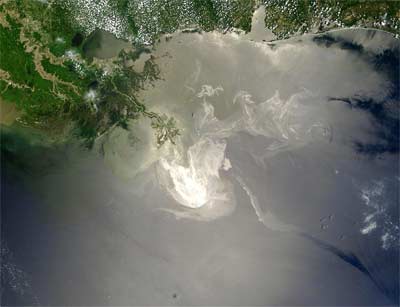
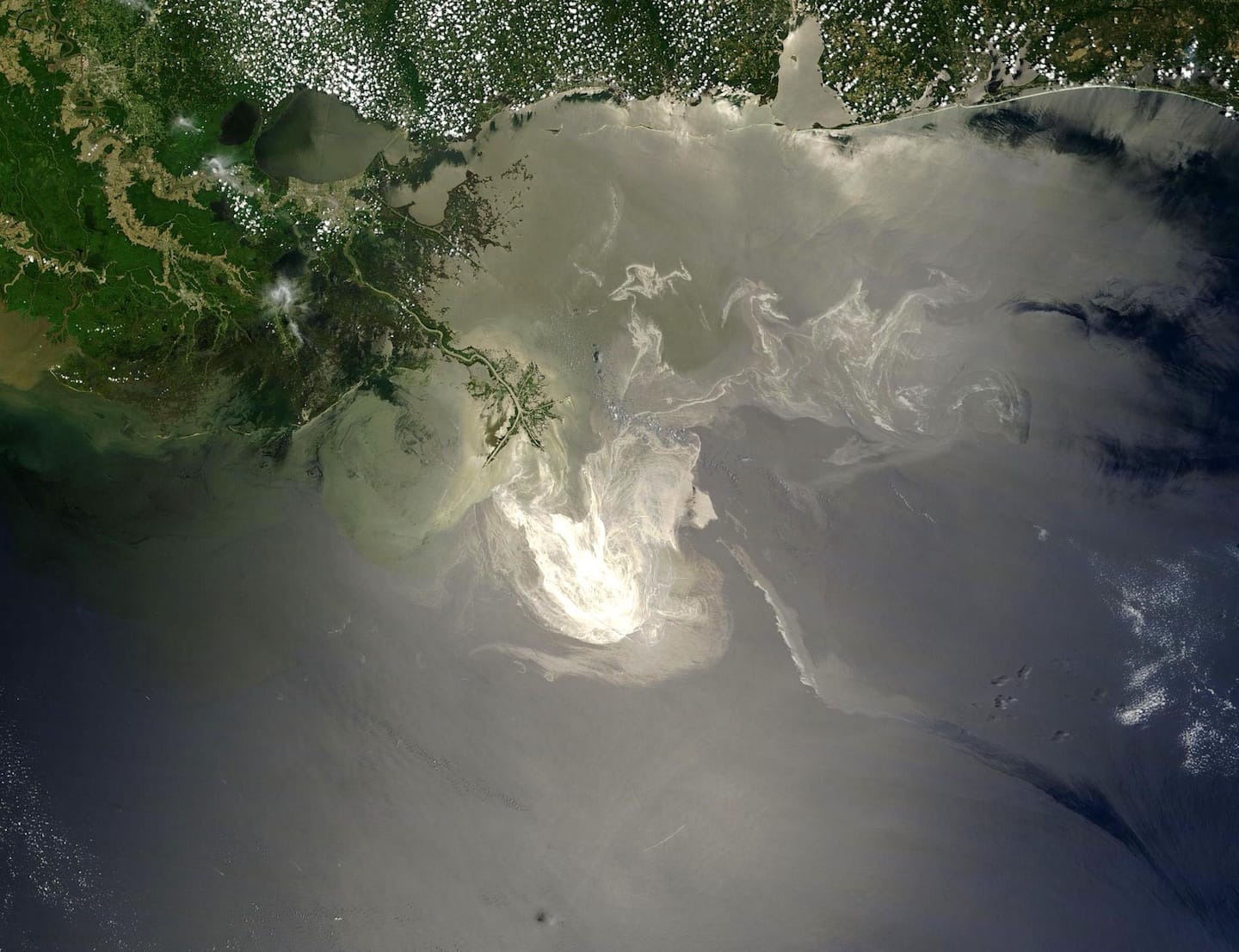
Photo: UC Santa Barbara Geography Department. The Deepwater Horizon oil spill in the Gulf of Mexico as seen from space by NASA’s Terra satellite on May 24, 2010. The spill has yet to be contained and is the worst oil spill in US history.
View of the Macondo well leaking oil in the Gulf of Mexico.
The subject of gas drilling in the Marcellus may be looked at in its historical, legal and scientific contexts. The need to heal the ineffective and mistrustful relationship between environmentalists, the U.S. government and the international energy industry concerning the preservation of American air and water becomes more urgent by seeing images like these.
See: The Next Drilling Disaster.
On Sunday, Sept. 26, 2010, a committee of the National Academy of Engineering and National Research Council conducted an analysis of the causes of the Deepwater Horizon explosion and oil spill held a public meeting to hear from Mark Bly, group head of safety and operations for BP, and other company representatives about BP’s recently released accident investigation report. Also on the agenda were executives from Halliburton and Shell Oil.
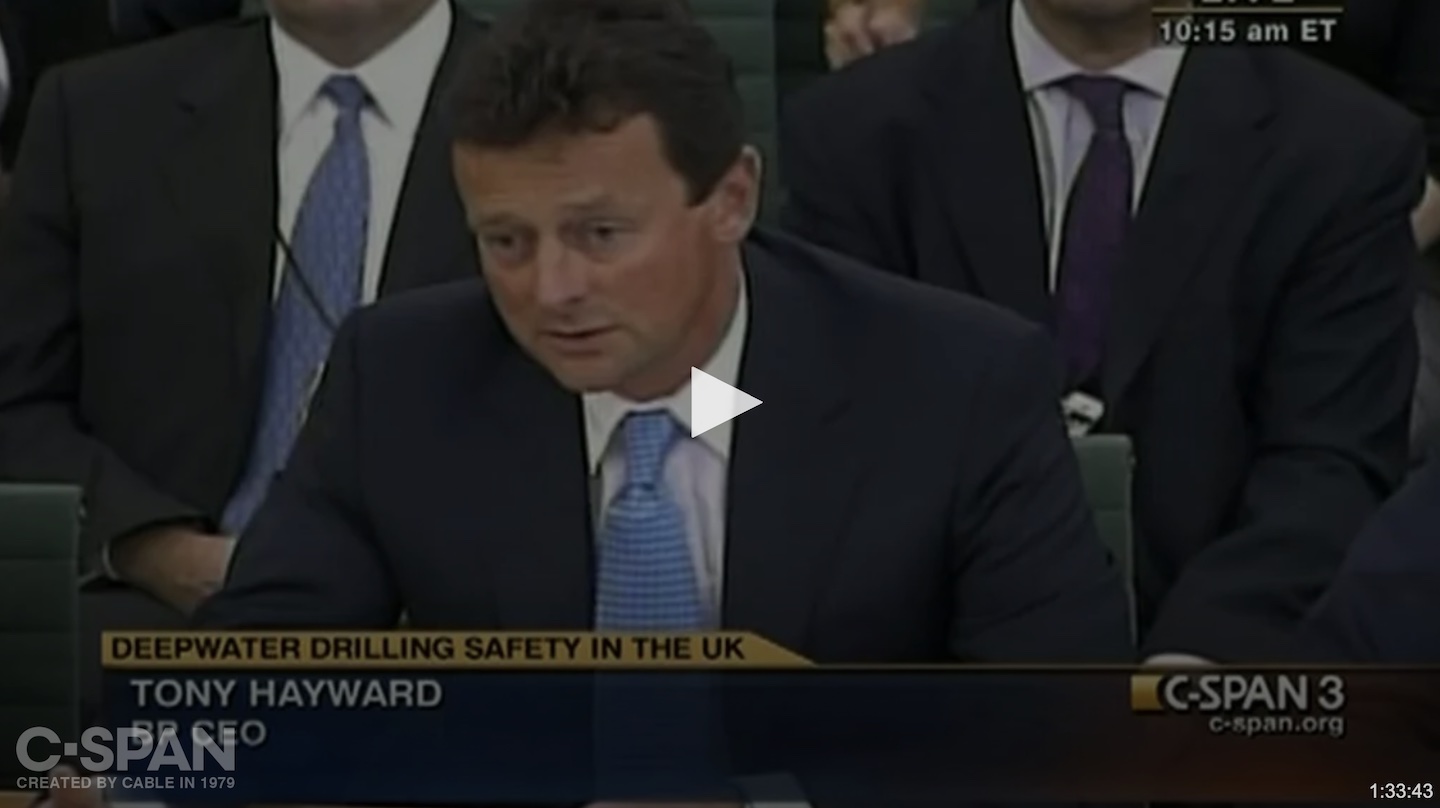
See also: Deep Water Drilling Safety | Tony Hayward and Mark Bly appeared at the British House of Commons Energy and Climate Change Committee inquiry as part of an investigation into risks around deepwater drilling in the North Sea and to learn what long-term role the Gulf of Mexico oil spill will have on the United Kingdom. Mr. Hayward, who was to be replaced on October 1, 2010, said in his testimony that the accident should not lead to deepwater drilling bans and defended BP’s safety record.
See also:Flickr Photos | Sept. 26, 2010 Deepwater Horizon Committee Hears From Oil Industry Executives
At the request of the Department of the Interior (DOI), a National Academy of Engineering/National Research Council (NAE/NRC) committee is examining the probable causes of the Deepwater Horizon explosion, fire, and oil spill in order to identify measures for preventing similar harm in the future. The study is organized under the auspices of the NAE and the NRC’s Transportation Research Board (through its Marine Board) and the Division on Earth and Life Studies, with assistance from the Division on Engineering and Physical Sciences.
See also: “More Questions About BP’s Limited Investigation Into Gulf Disaster”.
See also: Dave Cohen. Energy Bulletin. “Shale Gas Shenanigans.”
See also: National Commission on the BP Deepwater Horizon Oil Spill and Offshore Drilling
See also: The Questions BP Didn’t Answer
See also: Tracking the Oil Spill in the Gulf | Interactive Map
For more on the size of estimates of the Deepwater spill disaster, see these articles:
May 14: Size of Oil Spill Underestimated, Scientists Say
May 28: Estimates Suggest Spill Is Biggest in U.S. History
June 7: Rate of Oil Leak, Still Not Clear, Puts Doubt on BP
June 10: New Estimates Double Rate of Oil Leak
June 15: Panel Sharply Raises Estimate of Oil Spill
Aug. 2: Gulf Spill Is the Largest of Its Kind
See also: Cain Burdeau. “Scientists Find Damage to Coral Near BP Well.” AP. Coastal Care. Nov. 6, 2010.
See also: Peter Hart. July 2010. “Still Drill, Baby—Despite Spill
Little rethinking of oil after Deepwater disaster.” FAIR. (Fairness and Accuracy in Reporting)
See also: Institute of Medicine, Margaret A. Mccoy, and Judith A. Salerno. Assessing the Effects of the Gulf of Mexico Oil Spill on Human Health: A Summary of the June 2010 Workshop. National Academies Press, 2010. Print.
See: Ceres Principles – Corporate Environmental Conduct
See: Unconventional Gas Shales: Development, Technology, and Policy Issues