
Government

Government

Articles examining government policy, regulation, and public oversight related to hydraulic fracturing and climate change. These documents explore how lawmakers, agencies, and public institutions have responded to the expansion of the technology and its environmental implications. Explore related scholarly research below ↓

71 documents

2013

January (2013)

Smitsky Letter

Smitsky Letter

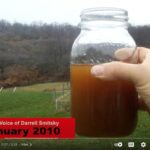
Narrated by Virginia Smitske’s son, this firsthand account describes brown, toxin-filled water in a Pennsylvania household. The video contrasts public fear of distant health threats with the quiet normalization of local contamination tied to gas drilling.

Source: YouTube (2010) Read More

Supreme Court Restricts Clean Water Act

Supreme Court Restricts Clean Water Act

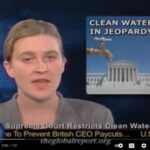
Thousands of the largest water polluters in the United States are outside the Clean Water Acts reach because the Supreme Court has left uncertain which waterways are protected by that law.

Source: YouTube (2010) Read More

House committee votes to deny climate change

House committee votes to deny climate change

On March 15, 2011, Republicans in the House energy committee voted not once (archived), not twice, but three times (archived), against amendments (archived) recognizing that climate change is real, despite the broad scientific consensus that ” climate change is happening (archived) and human beings are a major reason for it.” They then unanimously voted (archived) in favor of the Upton-Inhofe bill to repeal the EPA’s scientific endangerment finding on greenhouse pollution.

Source: Grist (2011) Read More

2012

May (2012)

2011

December (2011)

U.S. Department of Energy – Homepage

U.S. Department of Energy - Homepage

The Department of Energy promotes research, innovation, and domestic production across the energy spectrum. As shale gas surged, DOE messaging emphasized technological advancement and energy security. Critics questioned whether federal enthusiasm adequately balanced environmental risk.

Source: U.S. Department of Energy (2009) Read More

June (2011)

Clean Water Act Definition of “Waters of the United States”

Clean Water Act Definition of "Waters of the United States"

Americans depend on clean and abundant water. However, over the past decade, interpretations of Supreme Court rulings removed some critical waters from Federal protection, and caused confusion about which waters and wetlands are protected under the Clean Water Act.

Source: US EPA: Wetlands | Clean Water Act (1972) Read More

May (2011)

Strong Push Against Fracking

Strong Push Against Fracking

Sens. Tony Avella, D-Whitestone, Liz Krueger, D-Manhattan, and Joseph Addabbo, D-Queens, introduced a package of bills April 11 that includes three bills for tighter regulations and transparency for oil and gas drilling and a bill by Avella to ban hydraulic fracturing, or hydrofracking, in New York State.

Source: New York State Senate | Liz Krueger (2011) Read More

Energy & Commerce Committee Investigates Potential Impacts of Hydraulic Fracturing

Energy & Commerce Committee Investigates Potential Impacts of Hydraulic Fracturing

A report linking the fracking industry to violations of the Safe Drinking Water Act put some of the biggest names in shale on the defensive. The House Energy & Commerce Committee launched inquiries, demanding data and calling executives to testify. Senator Barbara Boxer announced hearings and press conferences. In Washington, oversight begins with microphones — and can end with subpoenas.

Source: U.S. Congress. Committee On Energy and Commerce (2010) Read More

U.S. Congress. (2009). A bill to amend the Safe Drinking Water Act to repeal a certain exemption for hydraulic fracturing, and for other purposes

U.S. Congress. (2009). A bill to amend the Safe Drinking Water Act to repeal a certain exemption for hydraulic fracturing

Legislation introduced in Congress sought to amend the Safe Drinking Water Act to remove exemptions shielding hydraulic fracturing from federal oversight. Supporters argued the change would restore transparency and accountability. Industry groups warned of duplication and delay. The bill spotlighted the “Halliburton loophole” in statutory form.

Source: Library of Congress (2009) Read More

April (2011)

Fueling Washington

Fueling Washington

OpenSecrets.org Launches ‘Fueling Washington’ Series Exploring Oil and Gas Industry’s Political Influence

Source: OpenSecrets.org (2010) Read More

March (2011)

EPA Hydraulic Fracturing Study Plan Review Panel

EPA Hydraulic Fracturing Study Plan Review Panel

The Panel will review and provide independent expert advice on EPA’s draft Hydraulic Fracturing Study Plan that will investigate the potential public health and environmental protection research issues that may be associated with hydraulic fracturing.

Source: EPA Science Advisory Board (SAB) (2011) Read More

U.S. Speaker Nancy Pelosi: The Gavel: Draining The Swamp

U.S. Speaker Nancy Pelosi: The Gavel: Draining The Swamp

Then–Speaker Nancy Pelosi highlighted legislative efforts addressing energy reform and environmental protection. Congressional leadership framed drilling oversight and clean energy transitions as matters of national policy. In Washington, energy debates unfolded not only in committees but on the House floor.

Source: The Gavel (2008) Read More

U.S. Speaker Nancy Pelosi | Current Legislation

U.S. Speaker Nancy Pelosi | Current Legislation

Tracking current legislation revealed how energy bills advanced, stalled, or fractured along partisan lines. Proposals ranged from renewable incentives to drilling reforms. The legislative docket became a scoreboard for competing visions of America’s energy future.

Source: Speaker Nancy Pelosi | Current Legislation (2010) Read More

Safe Drinking Water Act (SDWA) | Safe Drinking Water Act | US EPA

Safe Drinking Water Act (SDWA) | Safe Drinking Water Act | US EPA

The Safe Drinking Water Act establishes federal standards to protect public water supplies from contamination. Its authority over underground injection became central to the hydraulic fracturing debate — especially after exemptions narrowed its reach. The statute’s language determines what protections apply beneath the surface.

Source: U.S. Environmental Protection Agency (1974) Read More

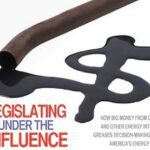
Legislating Under the Influence

Legislating Under the Influence

In the last decade alone, big energy has pumped more than $2.9 billion into electing and lobbying federal officials and candidates, according to campaign finance and lobbying disclosure reports.

Source: Common Cause (2010) Read More

February (2011)

FCPA Blog | UK Court Won’t Block Telser Extradition

FCPA Blog | UK Court Won't Block Telser Extradition

The London lawyer accused by American authorities of helping KBR and its partners bribe Nigerian officials lost his battle against extradition, marking a major chapter in one of the largest Foreign Corrupt Practices Act cases tied to global energy contracts. The prosecution stemmed from a decade-long scheme involving liquefied natural gas projects on Bonny Island, Nigeria — a scandal that ultimately led Halliburton and KBR to pay hundreds of millions in penalties and intensified scrutiny of corruption within multinational energy ventures.

Source: The Foreign Corrupt Practices Act (FPCA) Blog (2011) Read More

U.S. Greenhouse Gas Inventory Report (2010 Draft) | Climate Change – Greenhouse Gas Emissions | U.S. EPA

U.S. Greenhouse Gas Inventory Report (2010 Draft) | Climate Change - Greenhouse Gas Emissions | U.S. EPA

The EPA’s draft greenhouse gas inventory quantified methane and carbon dioxide emissions across sectors — including natural gas systems. Methane’s potency as a greenhouse gas sharpened attention on leaks from wells, pipelines, and compressor stations. The numbers reframed shale not just as local extraction, but as a climate variable.

Source: U. S. EPA Office of Atmospheric Programs (2006) Read More

Graham Pulls Support for Major Senate Climate Bill

Graham Pulls Support for Major Senate Climate Bill

Senator Lindsey Graham withdrew support from a major Senate climate bill, fracturing a fragile bipartisan coalition. The setback stalled momentum for comprehensive climate legislation. Energy policy once again splintered along party lines, leaving regulatory authority to agencies and states.

Source: The New York Times (2010) Read More

Energy Policy Act of 2005-Critique

Energy Policy Act of 2005-Critique

Critics revisited the Energy Policy Act of 2005, focusing on provisions that limited federal oversight of hydraulic fracturing. The “Halliburton loophole” became shorthand for regulatory exemption. What passed quietly in statute books years earlier now sat at the center of public debate.

Source: Wikipedia, the free encyclopedia (2010) Read More
Birth of EPA

Birth of EPA

The United States Environmental Protection Agency (EPA), officially established on December 2, 1970 by President Richard Nixon, emerged from a decade of rising environmental awareness sparked in large part by Rachel Carson’s Silent Spring. As pollution crises mounted and public pressure intensified following the passage of the National Environmental Policy Act (NEPA), Nixon created a strong, independent agency to unify federal air, water, pesticide, and radiation programs under Administrator William D. Ruckelshaus.

Source: EPA Journal (1985) Read More

Freedom of Information in the USA

Freedom of Information in the USA

There are probably no more important reforms to government than the ones that came with the passing of the Federal Freedom of Information (“FOI”) Act. The law recognized in no uncertain terms that if government is to be of the people, by the people and for the people, the decisions and actions of the government must be open for review by the people.

Source: IRE (Investigative Reporters and Editors) Journal (2002) Read More

U.S. EPA Initiates Hydraulic Fracturing Study | Meeting | EPA Science Advisory Board (SAB)

U.S. EPA Initiates Hydraulic Fracturing Study | Meeting | EPA Science Advisory Board (SAB)

Under mounting pressure, the EPA launched a comprehensive study of hydraulic fracturing’s potential impacts on drinking water resources. The move signaled federal recognition that questions about contamination required systematic review. Communities awaiting answers looked to the agency for clarity — and for evidence that could withstand political crosswinds.

Source: U.S. Environmental Protection Agency (EPA) (2010) Read More

Keystone XL Pipeline – Issues

Keystone XL Pipeline - Issues

Our country’s need for energy is a top priority and oil is among the energy sources that will help us meet this need. An oil pipeline, known as the Keystone XL Pipeline, has been proposed by TransCanada Corporation to deliver oil from its source in Canada through Nebraska to refineries in Oklahoma and Texas.

Source: U.S. Senator Mike Johanns for the State of Nebraska (2010) Read More

January (2011)

NETL: Secure & Reliable Energy Supplies

NETL: Secure & Reliable Energy Supplies

The National Energy Technology Laboratory promoted research aimed at securing domestic energy supplies through technological innovation. Supporters framed shale as strategic independence. Skeptics questioned whether security metrics accounted for environmental and climate costs. The framing of “reliability” carried more than engineering meaning.

Source: U.S. National Energy Policy Key Issues & Mandates (2010) Read More
Global Warming Frequently Asked Questions

Global Warming Frequently Asked Questions

As debate over shale intensified, broader climate science entered the conversation. FAQs on global warming addressed atmospheric carbon, temperature trends, and mitigation pathways. The underlying tension lingered: if gas is cleaner than coal, is it a bridge — or a detour — in a warming world?

Source: Global Warming Frequently Asked Questions (2010) Read More
Dirty Energy Money

Dirty Energy Money

We’ve created maps of political campaign contributions from companies in the oil & gas and coal industries to congressional representatives. These are

Source: Dirty Energy Money | Oil Change International (2012) Read More

GovTrack.us: Tracking the U.S. Congress

GovTrack.us: Tracking the U.S. Congress

Gov Track was the first website to apply the principles of open data and Web 2.0 to the U.S. Congress. It catalyzed the development of a community of like-minded developers and shaped the data-oriented open government movement that we see today.

Source: GovTrack.us (2004) Read More
FERC: For Citizens: Get Involved

FERC: For Citizens: Get Involved

If you think you might be affected by a proposed natural gas or hydroelectric project regulated by the Commission, you have certain rights. These rights range from being able to look at project correspondence to becoming an intervener and being able to appeal any FERC decisions in federal court.
Source: Federal Energy Regulatory Commission (FERC) (2010) Read More

Unconventional Gas Shales: Development, Technology, and Policy Issues

Unconventional Gas Shales: Development

Congressional Research Service reports detailed the mechanics of unconventional shale development — horizontal drilling, hydraulic fracturing fluids, production decline curves. The technical primer underscored a reality: the shale revolution was engineered as much as it was discovered.

Source: U.S. Congress (2009) Read More

EPA in the Crosshairs

EPA in the Crosshairs

Politico, a Washington, D.C.–based political news outlet founded by former Washington Post reporters John Harris and Jim VandeHei, reported that Congressional Republicans were preparing to target EPA Administrator Lisa P. Jackson over the Obama administration’s environmental agenda. GOP lawmakers accused the Environmental Protection Agency of regulatory overreach, particularly in advancing climate rules and emissions limits. Jackson defended the agency’s authority as it moved to curb pollution from industry, automobiles, and coal-fired power plants.

Source: Politico (2010) Read More

U.S. Environmental Protection Agency (EPA): Hydraulic Fracturing Study (2010-2012)

U.S. Environmental Protection Agency (EPA): Hydraulic Fracturing Study (2010-2012)

The Environmental Protection Agency compiled research, guidance, and regulatory interpretations on hydraulic fracturing as public scrutiny intensified. From underground injection rules to drinking water protections, the agency’s evolving position signaled how far federal oversight would reach — and where exemptions still stood.

Source: U.S. Environmental Protection Agency (EPA) (2010) Read More

Opinion: Avoiding America’s next drilling disaster

Opinion: Avoiding America's next drilling disaster

In the wake of the BP Gulf oil disaster, U.S. Sen. Robert Casey of Pennsylvania and U.S. Rep. Diana DeGette of Colorado warned in the Philadelphia Inquirer that hydraulic fracturing posed a parallel onshore risk, urging federal disclosure of fracking chemicals under the Safe Drinking Water Act. Challenging exemptions advanced during Vice President Dick Cheney’s 2005 energy legislation, Casey and DeGette argued that energy companies should disclose the ingredients in fracking fluids—diesel fuel, benzene, methanol, and formaldehyde among them—while preserving proprietary formulas, countering industry claims that state regulation alone was sufficient.

Source: Philadelphia Inquirer (2010) Read More

2010

November (2010)

New York City Department of Environmental Protection: Briefing to the NYC Water Board on the Natural Gas Impact Assessment Project

New York City Department of Environmental Protection: Briefing to the NYC Water Board on the Natural Gas Impact Assessment Project

The New York City Department of Environmental Protection oversees a watershed supplying drinking water to more than 9 million people. As Marcellus Shale drilling approached upstate reservoirs, NYCDEP entered the debate forcefully. When a city of that size signals risk, drilling is no longer rural policy — it becomes metropolitan infrastructure defense.

Source: City of New York (2009) Read More

ToxFAQs™: Hydrogen Sulfide

ToxFAQs™: Hydrogen Sulfide

Hydrogen sulfide — a colorless gas with a rotten-egg odor — can be released during oil and gas operations. At high concentrations, it is dangerous; at lower levels, it can cause headaches and respiratory irritation. Toxicology sheets like this ground political debate in chemistry. What’s in the air matters.

Source: Agency of Toxic Substances and Disease Registry (ATSDR) (2006) Read More

What is the National Children’s Study?

What is the National Children's Study?

The National Children’s Study will examine the effects of the environment, as broadly defined to include factors such as air, water, diet, sound, family dynamics, community and cultural influences, and genetics on the growth, development, and health of children across the United States, following them from before birth until age 21 years.

Source: nationalchildrensstudy.gov (2008) Read More

National Parks Traveler | Bush Administration Poised to Sell Oil and Gas Leases Around Dinosaur National Monument, Arches and Canyonlands National Parks

National Parks Traveler | Bush Administration Poised to Sell Oil and Gas Leases Around Dinosaur National Monument

Reporting on policies during the Bush administration, National Parks Traveler examined how energy development proposals intersected with protected federal lands. When drilling interests approached park boundaries, preservationists questioned whether conservation commitments would hold against energy priorities.

Source: National Parks Traveler (2008) Read More

October (2010)

Energy Policy Act of 2005

Energy Policy Act of 2005

The Energy Policy Act of 2005 reshaped U.S. energy law — offering incentives for domestic production while limiting certain federal oversight of hydraulic fracturing. The statute helped clear regulatory pathways for shale expansion. Years later, critics would point back to this legislation as a turning point in how the boom unfolded.

Source: U.S. Environmental Protection Agency (EPA) (2005) Read More

Raul Grijalva’s MySpace Blog

Raul Grijalva's MySpace Blog

Congressman Raúl Grijalva used early social media platforms to challenge energy policy and call for stronger environmental oversight. In the late-2000s digital landscape, blogs and MySpace posts became tools for shaping public narrative — lawmakers speaking directly to constituents about drilling, climate, and regulatory reform.

Source: Raul Grijalva's MySpace Blog (2006) Read More

Clean Water Restoration Act of 2009 (S 787)

Clean Water Restoration Act of 2009 (S 787)

The Clean Water Restoration Act aimed to clarify and restore federal authority over streams and wetlands narrowed by Supreme Court rulings. Supporters argued it would close regulatory gaps affecting small waterways. Opponents warned of expanded federal reach. In drilling regions, the bill’s language carried implications for wastewater oversight and watershed protection.

Source: cleanwateraction.org (2010) Read More

Extraction-tax and campaign donations

Extraction-tax and campaign donations

Marcellus Shale Money Watch emerged as a transparency initiative urging Pennsylvania legislators to disclose campaign contributions from the natural gas industry during debates over extraction taxes. Partnering with advocacy groups such as Common Cause, the project highlighted loopholes in campaign finance reporting that allowed donations to remain undisclosed until after key votes. The broader effort reflects ongoing concerns about industry influence, political accountability, and the role of small-donor, citizen-funded election reforms in strengthening democratic governance.

Source: Philly.com (2010) Read More

September (2010)

Obama’s gifts to extractive industries continue with defense of Bush mining policy

Obama's gifts to extractive industries continue with defense of Bush mining policy

In April 2010, Earthworks criticized the Obama administration for defending a Bush-era policy allowing unlimited toxic mine waste dumping on public lands, arguing the move contradicted stated commitments to environmental reform. The organization framed the decision as another example of federal policy favoring extractive industries over water protection, public lands stewardship, and community health.

Source: Earthworks (2010) Read More

Obama Admin Rejects Timeout for Natural Gas Drilling in N.Y., Pa.

Obama Admin Rejects Timeout for Natural Gas Drilling in N.Y.

President Obama and federal officials declined calls to seek a temporary halt on Marcellus Shale drilling in the Delaware River Basin pending a cumulative environmental impact study, despite appeals from Rep. Maurice Hinchey and environmental advocates. The dispute exposed tensions between economic development and watershed protection, with critics arguing that comprehensive risk assessment should precede regulatory approval in order to safeguard the basin’s Special Protection Waters.

Source: The New York Times: Greenwire (2010) Read More

NYS Dept. of Environmental Conservation (DEC): Marcellus Shale

NYS Dept. of Environmental Conservation (DEC): Marcellus Shale

New York’s DEC oversaw the state’s environmental review process as officials weighed whether to permit high-volume hydraulic fracturing. Draft impact statements, public comment periods, and regulatory revisions unfolded under intense scrutiny. The agency’s findings would determine whether the Marcellus boom crossed the state line.

Source: NYS Dept. of Environmental Conservation (2015) Read More

August (2010)

U.S. Environmental Protection Agency (EPA): Private Drinking Water Wells

U.S. Environmental Protection Agency (EPA): Private Drinking Water Wells

As the EPA proposed new guidance or rule adjustments affecting drilling oversight, stakeholders mobilized. Public comment periods filled with submissions from industry groups, environmental advocates, and private citizens. Proposed rules are not final decisions — but they mark moments when policy direction becomes visible.

Source: U.S. Environmental Protection Agency (EPA): Private Drinking Water Wells (2010) Read More

U.S. Environmental Protection Agency (EPA): Comment on the Draft Supplemental Environmental Impact Statement (dSGEIS) sent to the New York State Department of Environmental Conservation (DEC) during the public comment period closing 12/31/09.

U.S. Environmental Protection Agency (EPA): Comment on the Draft Supplemental Environmental Impact Statement (dSGEIS) sent to the New York State Department of Environmental Conservation (DEC) during the public comment period closing 12/31/09.

As the EPA advanced climate-related findings and regulatory steps, including endangerment determinations, greenhouse gas emissions from energy systems entered formal regulatory territory. The shift signaled that climate science was no longer advisory — it could trigger enforceable standards.

Source: U.S. Environmental Protection Agency (EPA) (2009) Read More

U.S. Senate: Energy and Commerce Subcommittee Hearing on “Endocrine Disrupting Chemicals in Drinking Water: Risks to Human Health and the Environment”

U.S. Senate: Energy and Commerce Subcommittee Hearing on “Endocrine Disrupting Chemicals in Drinking Water: Risks to Human Health and the Environment”

In Senate subcommittee hearings, lawmakers questioned agency officials and industry representatives about drilling practices, emissions, and regulatory authority. These sessions translated local complaints and scientific findings into federal inquiry — recorded, transcribed, and archived.

Source: Subcommittee on Energy and Environment (2010) Read More

U.S. General Accounting Office (GAO) – Oil And Gas Development: Increased Permitting Activity Has Lessened the Bureau of Land Management’s (BLM) Ability to Meet Its Environmental Protection Responsibilities

U.S. General Accounting Office (GAO) - Oil And Gas Development: Increased Permitting Activity Has Lessened the Bureau of Land Management's (BLM) Ability to Meet Its Environmental Protection Responsibilities

The GAO examined how oil and gas leasing and oversight were administered on public lands — auditing whether agencies collected fair royalties and enforced regulations effectively. When billions in public resources are at stake, oversight becomes more than paperwork. It becomes accountability for taxpayers.

Source: U.S. GAO (2005) Read More

Scalise: EPA Declares CO2 a Dangerous Pollutant Based on “Climate Gate’s” Corrupt Science

Scalise: EPA Declares CO2 a Dangerous Pollutant Based on “Climate Gate’s” Corrupt Science

Congressman Steve Scalise criticized the EPA’s determination that greenhouse gases endanger public health, arguing it threatened economic growth. The endangerment finding opened the door to federal regulation of carbon emissions. What the agency framed as science-based necessity, opponents framed as regulatory overreach.

Source: Congressman Steve Scalise Representing the 1st of Louisiana (2009) Read More

Scalise: Cap-and-Trade Hinders Job Growth

Scalise: Cap-and-Trade Hinders Job Growth

Opposition to cap-and-trade legislation crystallized around economic arguments — warnings of higher energy prices and job losses. As climate policy proposals advanced, energy development and employment figures became central talking points. The debate fused atmospheric science with recession-era anxiety.

Source: Congressman Steve Scalise Representing the 1st of Louisiana (2010) Read More

Senators Want to Bar E.P.A. Greenhouse Gas Limits

Senators Want to Bar E.P.A. Greenhouse Gas Limits

A group of senators moved to block the EPA from regulating greenhouse gases, arguing climate rules exceeded the agency’s mandate. The proposal reflected a broader clash over separation of powers: should carbon limits originate in Congress or through agency interpretation of existing law?

Source: The New York Times (2010) Read More

NYCDEP Calls for Prohibition on Drilling in the New York City Watershed

NYCDEP Calls for Prohibition on Drilling in the New York City Watershed

NYCDEP urged a prohibition on high-volume hydraulic fracturing within the city’s watershed, warning that filtration avoidance — a rare federal status — depended on pristine source water. One contamination event could trigger billions in treatment costs. The position reframed drilling as a fiscal as well as environmental gamble.

Source: NYC Environmental Protection (2009) Read More
Item added to cart.
0 items - $0.00