Experts

Experts

Articles featuring scientific and academic analysis of hydraulic fracturing and its relationship to climate change. These documents highlight research findings, expert commentary, and scholarly perspectives on the environmental and policy implications of the technology. Explore related scholarly research below ↓

75 documents

2013

January (2013)

Ignitable Drinking Water in Candor, NY, Above Marcellus Shale

Ignitable Drinking Water in Candor

This video documents a well in Candor, NY—above the Marcellus Shale—where drinking water can be ignited, raising urgent questions about regulatory oversight and underground contamination (Spill #0811696). Referencing Walter Hang’s 2010 letter to the NYS DEC and watchdog reports criticizing decades of insufficient enforcement, the footage situates the incident within a broader pattern of state-level regulatory failure and mounting public protest.

Source: YouTube (2009) Read More


Sixty Lame Minutes

Sixty Lame Minutes

Aubrey McClendon of Chesapeake Energy blamed “Congressional apathy” for coal’s price advantages. Photo: F. Carter Smith/Bloomberg News

Source: Post Carbon Institute | Leading the transition to a resilient world (2010) Read More

2012

July (2012)

TEDX — The Endocrine Disruption Exchange

TEDX — The Endocrine Disruption Exchange

At TEDx events, researchers associated with The Endocrine Disruption Exchange brought endocrine science to wider audiences, explaining how low-dose chemical exposure can produce outsized biological effects. The talk translated lab findings into accessible warnings: invisible molecules can shape visible health outcomes.

Source: TEDX — The Endocrine Disruption Exchange (2009) Read More

June (2012)

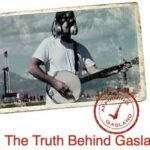
Affirming Gasland

Affirming Gasland

Immediately upon the film’s release, Energy In Depth issued a paper claiming to “debunk” the film’s documentary evidence.

Source: DamascusCitizens.org (2010) Read More

May (2012)

2011

May (2011)

BodyBurden – The Pollution in Newborns

BodyBurden  - The Pollution in Newborns

Not long ago scientists thought that the placenta shielded cord blood — and the developing baby — from most chemicals and pollutants in the environment. But now we know that at this critical time when organs, vessels, membranes and systems are knit together from single cells to finished form in a span of weeks, the umbilical cord carries not only the building blocks of life, but also a steady stream of industrial chemicals, pollutants and pesticides that cross the placenta as readily as residues from cigarettes and alcohol.

Source: Environmental Working Group (EWG) (2005) Read More

Environmental Advocates New York

Environmental Advocates New York

The New York Water Rangers, launched by Environmental Advocates of New York, mobilized residents to defend state waters from hazardous fracking waste. Through legislative advocacy, coalition organizing, and narrative strategy developed with SmartMeme Studios, the campaign pushed to close loopholes in state law, extend moratorium protections, and require independent health impact assessments before permitting high-volume hydraulic fracturing in New York.

Source: Environmental Advocates New York (2011) Read More

In Pursuit of Sustainability

In Pursuit of Sustainability

In The Coming Transformation: Values to Sustain Human and Natural Communities, contributors including David Grant recount environmental advocacy efforts in New Jersey that exposed contamination flowing from an abandoned industrial site into residential neighborhoods. Community activist Robert Spiegel contacted the U.S. Environmental Protection Agency (EPA) and organized public screenings of videotaped evidence, prompting federal response. The work connects grassroots environmental action to broader questions of sustainability, public accountability, and civic engagement, themes also supported by the Geraldine R. Dodge Foundation through its environmental and community initiatives.

Source: Geraldine R. Dodge Foundation (2009) Read More

The Deep Hot Biosphere : The Myth of Fossil Fuels

The Deep Hot Biosphere : The Myth of Fossil Fuels

This post explores Thomas Gold’s controversial abiogenic theory of petroleum formation, which argues that hydrocarbons originate deep within the Earth rather than from compressed biological matter. While climate policy debates focus on fossil fuel scarcity and carbon removal, the article raises concerns about methane emissions from gas flaring and questions assumptions embedded in mainstream energy narratives. Gold’s “deep hot biosphere” hypothesis challenges conventional geology and reframes discussions about resource limits, earthquakes, and even the origins of life.

Source: Springer | Copernicus (1998) Read More

April (2011)

Getting drillers to respect the environment

Getting drillers to respect the environment

“Our quality of life has an unquenchable thirst for energy. Offshore drilling and production helps to satisfy this thirst.” — Richard Haut. Extracting energy requires trade-offs. “We want clean air, but we also like the convenience of electricity,” said Richard Haut during a lunch-hour seminar last Tuesday. Haut, founder and senior research scientist at Houston Advanced Research Center (HARC), visited Cornell to promote what he calls “environ – mentally friendly drilling systems.”

Source: The Tompkins County Weekly (2011) Read More

Drilling Down on Fracking Concerns

Drilling Down on Fracking Concerns

Hydraulic fracturing needs to be done carefully and be well-monitored, with particular attention paid to the full scope of carbon dioxide released into our atmosphere to gauge accurately the consequences of global warming due to the expanded use of natural gas.

Source: Center for American Progress (2011) Read More

March (2011)

Gasland’ Filmmaker Takes on Cuomo and ‘Dot.FlatEarth’

Gasland’ Filmmaker Takes on Cuomo and ‘Dot.FlatEarth’

Debates between hydrofracking proponents and critics intensified during the Gasland era, with Walter Hang of Toxics Targeting arguing that existing regulatory frameworks could not ensure safe natural gas extraction. Industry experts and academics countered with calls for improved oversight and technological safeguards, while environmental filmmakers and investigative journalists amplified evidence of methane leakage, cement failure, and groundwater contamination.

Source: Dot Earth | New York Times (2012) Read More

All Things Nuclear

All Things Nuclear

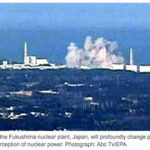
Expert reports and selections of news accounts and analysis of the breaking news concerning the meltdown of Japan’s nuclear reactors ongoing since March 13, 2011.

Source: Union of Concerned Scientists (2011) Read More

Climate Co-benefits and Child Mortality Wedges

Climate Co-benefits and Child Mortality Wedges

Climate change issues bring into greater prominence that all the world’s people are linked together and that we all have a stake in creating a sustainable path for the planet and no such path can allow for 10 million avoidable child deaths each year.

Source: Wellcome Trust Frontiers Meeting (2008) Read More

Firm’s Iraq Deals Greater Than Cheney Has Said

Firm's Iraq Deals Greater Than Cheney Has Said

Richard B. Cheney acknowledged that the oil-field supply corporation he headed, Halliburton Co ., did business with Libya and Iran through foreign subsidiaries. But he insisted that he had imposed a “firm policy” against trading with Iraq. “Iraq’s different,” he said…

Source: Global Policy Forum (2001) Read More

February (2011)

Do the natural gas industry’s surface water withdrawals pose a health risk?

Do the natural gas industry’s surface water withdrawals pose a health risk?

FracTracker Alliance documents the scale of surface water withdrawals permitted for natural gas operations in Pennsylvania, warning that cumulative impacts may reduce stream flow and intensify pollution, particularly during dry seasons. Complementary research highlights the toxic and flammable nature of petrochemicals and notes the dramatic increase in water usage per unconventional well, underscoring the resource intensity and long-term health risks of shale development.

Source: Fractracker (2010) Read More

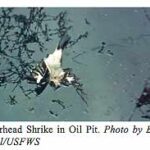
Wildlife Mortality Risk in Oil Field Waste Pits. U.S. Fish and Wildlife Service.

Wildlife Mortality Risk in Oil Field Waste Pits.  U.S. Fish and Wildlife Service.

Open waste pits associated with oil and gas operations have been linked to bird and wildlife deaths when animals mistake contaminated water for safe habitat. Mortality reports raised concerns about regulatory standards and monitoring. Extraction’s footprint, critics argued, extends beyond property lines and into migration corridors.

Source: U.S. Fish and Wildlife Service (2000) Read More

Christopherson to study economic impact of gas drilling in Marcellus Shale

Christopherson to study economic impact of gas drilling in Marcellus Shale

Sociologist Susan Christopherson examined the economic impacts of shale development, challenging assumptions that drilling automatically produces long-term prosperity. Her research questioned job durability, revenue distribution, and regional dependency. The boom, she suggested, may not equal sustained economic transformation.

Source: AAP News | College of Architecture, Art & Planning | Cornell University (2010) Read More

Global Warming Experts

Global Warming Experts

Heartland Institute Conference held March 8-10th in New York at the Marriott New York Marquis Times Square Hotel, brought together scientists, economists, legal experts, and other climate specialists to “confront the issue of global warming.”

Source: The Heartland Institute | BBC News (2011) Read More

Addressing the Environmental Risks from Shale Gas Development

Addressing the Environmental Risks from Shale Gas Development

Our analysis suggests that while shale gas development poses significant risks to the environment, including faulty well construction, blowouts, and above-ground contamination due to leaks and spills of fracturing fluids and waste water, technologies and best practices exist that can help manage these risks.

Source: Briefing Paper (2010) Read More

Tales from the Ice: Explaining Rapid Climate Change

Tales from the Ice: Explaining Rapid Climate Change

Start with the Introduction to the Feature Articles on NASA’s Earth Observatory web site to see how scientists explain rapid climate change. The beauty of Earth’s cities at night affirm our need for energy.

Source: NASA | Earth Observatory (2005) Read More

Environmental Issues and Challenges in Coal Bed Methane Production

Environmental Issues and Challenges in Coal Bed Methane Production

Coalbed methane development revealed a familiar pattern: energy extraction layered atop groundwater systems and rural landscapes. Pumping methane from coal seams alters aquifers, produces saline discharge, and reshapes surface hydrology. The environmental challenges are not incidental — they are engineered into the process. As unconventional gas expands, coalbed lessons echo forward.

Source: International Petroleum Environmental Conference, University of Tulsa (2003) Read More

Expert Testimony on Hydraulic Fracturing Impacts

Expert Testimony on Hydraulic Fracturing Impacts

I am writing on behalf of the Oil and Gas Accountability Project to provide an impartial analysis of the adequacy of the actions proposed in the subject report. I am a practicing hydrogeologist; I spent 32 years at the U.S. Geological Survey in both management and research positions. I left the USGS in 1995 to become a consultant. I have published more than 100 papers in the refereed scientific literature on various groundwater problems. My

Source: Earthworks (2003) Read More

Climate Science Watch

Climate Science Watch

“There is growing evidence from the real world that climate changes are accelerating faster than we originally feared and that impacts—already appearing—will be more widespread and severe than expected. This makes the arguments against taking actions against climate change not just wrong, but dangerous,” Dr. Gleick said in his

Source: Climate Science Watch (2010) Read More

Walter Hang’s Letter to DEC Commissioner Grannis Regarding Additional Natural Gas Hazards | Toxics Targeting

Walter Hang's Letter to DEC Commissioner Grannis Regarding Additional Natural Gas Hazards | Toxics Targeting

Environmental activist Walter Hang wrote directly to New York’s DEC Commissioner Pete Grannis, challenging assumptions in the state’s drilling review process. The letter dissected regulatory language and risk modeling, urging caution before permitting high-volume fracturing. Sometimes oversight begins not with a lawsuit, but with a pointed letter.

Source: Toxics Targeting (2010) Read More

January (2011)

Model validation : perspectives in hydrological science

Hydrological models must be validated against real-world data — aquifer behavior, fracture propagation, water flow rates. Without validation, projections risk drifting into assumption. In shale regions, the credibility of risk assessments depends on whether theory meets measurement.

Source: J. Wiley (2001) Read More

Coalbed Methane Development: The Costs and Benefits of an Emerging Energy Resource

Coalbed Methane Development: The Costs and Benefits of an Emerging Energy Resource

Coalbed methane extraction promised domestic energy gains, but critics tracked groundwater drawdown, surface disturbance, and wastewater disposal challenges. The cost-benefit debate was not theoretical — it played out in ranchlands and aquifers. As unconventional gas expanded, lessons from coalbed methane became a cautionary template.

Source: Natural Resources Journal (2003) Read More

EPA Findings on Hydraulic Fracturing Deemed “Unsupportable”

EPA Findings on Hydraulic Fracturing Deemed “Unsupportable”

EPA findings regarding hydraulic fracturing faced criticism from both industry and environmental advocates, who argued that certain conclusions were incomplete or methodologically flawed. The science itself became contested terrain. When federal findings are labeled “unsound,” confidence in oversight can erode quickly.

Source: Union of Concerned Scientists (2006) Read More

Howarth warns EPA on shale gas greenhouse footprint

Howarth warns EPA on shale gas greenhouse footprint

At an EPA meeting in 2010, Cornell scientist Robert Howarth warned that shale gas may be nearly as damaging to the climate as coal due to methane leakage during extraction and distribution. Methane is far more potent than carbon dioxide in trapping heat, and even small leakage rates could significantly worsen global warming. Activists urged the EPA to suspend high-volume hydraulic fracturing until scientific assessments were complete and climate risks more fully understood.

Source: Daily Kos (2010) Read More

2010

December (2010)

The Case for a Truth and Reconciliation Commission on Toxic Hazards

The Case for a Truth and Reconciliation Commission on Toxic Hazards

In the 1970s, Congress passed a host of environmental laws that sought to adopt a preventive approach to reducing disease and protecting health and environment. Since then, average body burdens of some persistent toxic materials such as lead and cadmium have fallen, but those of other newer materials, like persistent flame retardants, have risen.

Source: Physicians for Social Responsibility (PSR) (2010) Read More

Smoke Signals

Smoke Signals

An article in Audubon examines the climate implications of thawing Arctic permafrost. Scientists estimate that northern permafrost soils contain roughly 1,400 gigatons of carbon—nearly twice the amount currently in the atmosphere. As warming accelerates, both carbon dioxide and methane are being released, including from previously overlooked submarine permafrost. Researchers are still determining whether current emissions represent a steady leak or the early stages of a larger feedback loop with global consequences.

Source: Audubon Magazine (2010) Read More

ConserveLand

ConserveLand

ConserveLand advocates for land protection strategies in regions facing development pressure. Conservation easements, zoning decisions, and watershed protections become defensive tools when extraction interest rises. Preservation is often proactive — before leases are signed.

Source: ConserveLand (2010) Read More

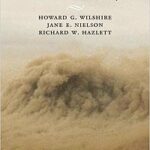
American West at Risk, The: Science, Myths, and Politics of Land Abuse and Recovery

American West at Risk

The American West at Risk examines the environmental decline of the arid western United States, documenting how resource extraction, energy development, and nuclear experimentation have reshaped fragile landscapes. From depleted soils and waters to nuclear test sites such as Gasbuggy and Rio Blanco, the book traces the consequences of policies that prioritized short-term gain over long-term stewardship. It calls for renewed conservation of soils, freshwater, forests, and fisheries to prevent further degradation of the region’s remaining natural resources.

Source: Oxford University Press, USA (2008) Read More

Probe Earth’s Interior with Advanced Radiation Sources

Probe Earth's Interior with Advanced Radiation Sources

Consortium for Materials Properties Research in Earth Sciences is a community-based consortium whose goal is to enable Earth Science researchers to conduct the next generation of high-pressure science on world-class equipment and facilities.

Source: Consortium for Materials Properties Research in Earth Sciences (COMPRES) (2011) Read More

Desalination of Oil Field Brine

Desalination of Oil Field Brine

Oil and gas production consumes staggering amounts of water — more than 5 million gallons per day in fracturing operations alone. What comes back up is brine: saline wastewater laced with drilling byproducts. Engineers have explored desalination as a solution, but the chemistry is stubborn and costly. As shale wastewater volumes surged, the question became practical: can treatment technology keep pace with what the wells produce?

Source: The Future of Desalination in Texas (2006) Read More

Federation of American Scientists (FAS) – SourceWatch

Federation of American Scientists (FAS) - SourceWatch

The Federation of American Scientists envisions a world where cutting-edge science, technology, and expertise are embedded in government and public discourse to meet the largest challenges of our time. In the shale debate, FAS compiled technical analyses of energy systems, environmental risks, and policy frameworks. Where campaign rhetoric often dominated headlines, its documentation grounded arguments in research — a reminder that extraction is both industrial process and national strategy.

Source: SourceWatch (2010) Read More

Big Oil Goes to College

Big Oil Goes to College

Hundreds of millions of dollars in grants from major oil companies may have compromised the ethics of energy research at such institutions as UC Berkeley, UC Davis, Stanford and Cornell.

Source: AmericanProgress.org (2010) Read More

Drinking Water: Understanding the Science and Policy behind a Critical Resource

Drinking Water: Understanding the Science and Policy behind a Critical Resource

The National Research Council of the National Academies reports in Management and Effects of Coalbed Methane Produced Water in the Western United States (National Academies Press, 2010) that “produced water” accumulates over millions of years and should be treated as a largely nonrenewable resource. The study—authored by the Board on Earth Sciences and Resources, the Water Science and Technology Board, and the Division on Earth and Life Studies—warns that removing these underground water stocks without fully understanding groundwater impacts carries serious environmental risks and requires management decisions based on ecological responsibility rather than lowest cost.

Source: National Academies of Sciences, Engineering and Medicine (2010) Read More

Food and Water Watch

Food and  Water Watch

Some energy analysts are predicting that natural gas will be the fuel of the future if advances in drilling technology allow drillers to tap into domestic shale rock formations on a large scale. But because of the impacts that the technology can have on water, natural gas could become our next energy disaster.

Source: Food and Water Watch (2021) Read More

Public Supports Consumer and Environmental Protections, Polls Show

Public Supports Consumer and Environmental Protections

Americans overwhelmingly support government protection of the environment and consumers, a series of new polls shows. The findings come as efforts to enforce and expand regulation face increasingly hostile rhetoric from conservatives and industry representatives in Washington.

Source: OMB Watch (2010) Read More

November (2010)

Natural Resources Defense Council (NRDC) – The Earth’s Best Defense

Natural Resources Defense Council (NRDC) - The Earth's Best Defense

The Natural Resources Defense Council combined litigation, scientific research, and policy advocacy to press for stricter oversight of drilling practices. Through lawsuits and regulatory commentary, NRDC positioned itself as a national counterweight to industry lobbying in the shale era.

Source: Natural Resources Defense Council (NRDC) (2010) Read More

Poisoned profits : the toxic assault on our children

Poisoned profits : the toxic assault on our children

In The Toxic Assault on Our Children, journalists Philip and Alice Shabecoff examine rising rates of childhood illness in the United States, arguing that environmental exposure to industrial chemicals plays a significant role. Drawing on scientific research and public policy analysis, the authors critique regulatory shortcomings and industry influence. The book calls for stronger environmental protections and greater public awareness regarding toxic exposure and children’s health.

Source: Random House (2008) Read More

Shale Gas Shenanigans

Shale Gas Shenanigans

“Shale Gas Shenanigans” cataloged disputed claims, regulatory inconsistencies, and industry messaging strategies surrounding hydraulic fracturing. The tone may carry humor, but the substance tracks contested science and policy gaps. Beneath the wordplay lies documentation.

Source: Energy Bulletin (2010) Read More

Louisiana Environmental Action Network (LEAN)

Louisiana Environmental Action Network (LEAN)

The Louisiana Environmental Action Network (LEAN), founded in 1986, is a community-based nonprofit working to address environmental and public health challenges in Louisiana. Through education, advocacy, technical assistance, and leadership development, LEAN supports residents confronting pollution, industrial conflicts, and regulatory concerns. Its initiatives include community empowerment programs, river stewardship efforts, and grassroots organizing aimed at increasing local control over environmental decision-making.

Source: Louisiana Environmental Action Network (LEAN) (2010) Read More

October (2010)

Environmental Defense Fund – Finding the Ways That Work

Environmental Defense Fund - Finding the Ways That Work

The Environmental Defense Fund focused on measurable methane leakage and pragmatic solutions, arguing that improved monitoring and technology could reduce emissions from natural gas systems. EDF’s approach emphasized data and collaboration, positioning methane control as both environmental necessity and operational opportunity.

Source: Environmental Defense Fund - Finding the Ways That Work (2010) Read More

Watchdog: New York State Regulation of Natural Gas Wells Has Been “Woefully Insufficient for Decades.”

Watchdog: New York State Regulation of Natural Gas Wells Has Been "Woefully Insufficient for Decades."

Watchdog reporting scrutinized New York’s regulatory approach to natural gas development as the state weighed whether to permit high-volume hydraulic fracturing. New York–based Toxics Targeting examined the Department of Environmental Conservation’s own spill database, identifying 270 documented cases over three decades involving fires, explosions, wastewater releases, well contamination, and ecological damage tied to gas drilling — many still unresolved. The findings challenged repeated assurances that existing regulations were sufficient to safeguard public health and the environment.

Source: Democracy Now! (2009) Read More

U.S. Senate. (2007). Health Risks to Children and Communities From Recent EPA Proposals and Decisions on Air and Water Quality

U.S. Senate. (2007). Health Risks to Children and Communities From Recent EPA Proposals and Decisions on Air and Water Quality

A Senate report examining environmental health risks to children underscored how pollution exposure disproportionately affects the young. Though broader than shale alone, the findings amplified concerns about drilling near homes and schools. The health lens sharpened the stakes: policy decisions reverberate across generations.

Source: U.S. Senate, Committee on Environment and Public Works (2007) Read More

World-Renowned Scientist Dr. Theo Colborn on the Health Effects of Water Contamination from Fracking

World-Renowned Scientist Dr. Theo Colborn on the Health Effects of Water Contamination from Fracking

Dr. Theo Colborn, founder of The Endocrine Disruption Exchange, warned that chemicals used in hydraulic fracturing could interfere with hormonal systems at low concentrations. Her research focused on endocrine disruption — subtle biological effects not always captured by traditional toxicology thresholds. The implications extended beyond spills to long-term exposure science.

Source: Democracy Now! (2010) Read More

Leaking Underground Storage Tanks

Leaking Underground Storage Tanks

Environmental engineer Dr. Joe Ryan of the University of Colorado explained how even small gasoline leaks can contaminate millions of gallons of groundwater, drawing parallels to risks associated with natural gas storage and fracking waste. At a July 9, 2010 EPA meeting in Texas, citizen Tim Ruggiero testified that drilling near his property led to contaminated drinking water resembling MTBE exposure, underscoring growing concerns raised at EPA hearings about benzene, BTEX compounds, and undisclosed fracking chemicals.

Source: Boulder Area Sustainability Network (BASIN) (2010) Read More

Center for Healthy Environments & Communities Homepage

Center for Healthy Environments & Communities Homepage

The Center for Healthy Environments & Communities bridged research and public health, examining how environmental exposure intersects with community well-being. In drilling regions, health data becomes part of the evidence base — linking air, water, and lived experience through structured study rather than anecdote.

Source: Center for Healthy Environments & Communities Homepage (2010) Read More

Bruce Baizel Testimony to the City of New York

Bruce Baizel Testimony to the City of New York

Bruce Baizel testified before New York City officials as the state weighed whether to allow high-volume hydraulic fracturing near its watershed. His remarks dissected regulatory gaps and contamination risks, urging caution where millions rely on unfiltered water. In a city built atop distant reservoirs, upstream decisions become municipal defense.

Source: Earthworks (2008) Read More

The Hidden Costs of Clean Coal: Longwall Mining Documents

The Hidden Costs of Clean Coal: Longwall Mining Documents

The Center for Public Integrity compiled a document archive supporting its investigation into longwall coal mining and its environmental and social impacts. Materials include state and federal records, environmental studies, legal agreements, landowner correspondence, and regulatory filings. The collection provides background documentation for reporting on subsidence damage, water contamination, and the regulatory framework governing coal extraction in affected communities.

Source: The Center for Public Integrity (2009) Read More

August (2010)

Carnegie Mellon University: Shale-Gas Production – New Water Cleaning Treatment

Carnegie Mellon University: Shale-Gas Production -  New Water Cleaning Treatment

Carnegie Mellon researchers examined lifecycle emissions and climate implications of shale-gas production, modeling methane leakage and energy substitution scenarios. Their findings fed into the broader “bridge fuel” debate: does gas meaningfully reduce carbon intensity, or do upstream leaks undermine its advantage?

Source: Carnegie Mellon: Shale Gas Production (2010) Read More

Ecocide in the USSR : health and nature under siege

Ecocide in the USSR : health and nature under siege

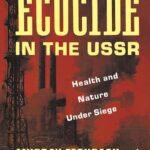
The term “ecocide” evokes systemic environmental destruction — landscapes degraded not by accident but by policy and industrial priority. Examining ecological collapse in the former USSR provides a historical mirror: when environmental safeguards erode, damage accumulates quietly until it becomes generational. Energy policy is never purely economic.

Source: BasicBooks (1993) Read More

Models in ecosystem science

Ecosystem science relies on models — structured representations of complex biological and hydrological systems. In drilling debates, models estimate contamination pathways, habitat fragmentation, and long-term impacts. The quality of the model shapes the quality of the decision.

Source: Princeton University Press (2003) Read More

New York State Water Resources Institute

New York State Water Resources Institute

The New York State Water Resources Institute supports research on watershed management and water quality across the state. As Marcellus development loomed, baseline studies and hydrological monitoring gained urgency. Without baseline data, change cannot be measured.

Source: NYS.WRI (2010) Read More

Item added to cart.
0 items - $0.00