Editor’s Note: 11 Sep 2023. After a hiatus of over 10 years, I am still fascinated by this link to the section of Speaker Pelosi”s blog named “Draining the Swamp“.
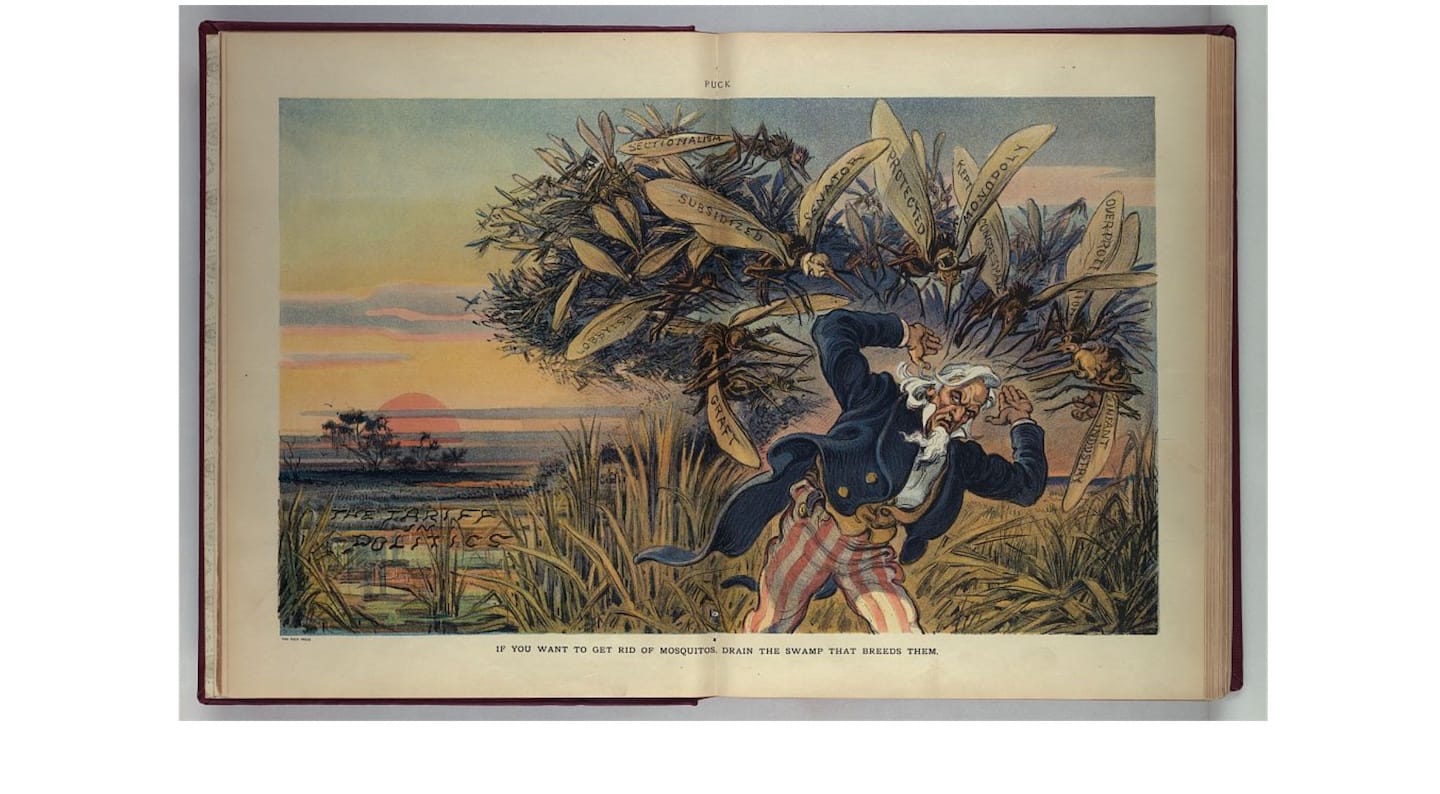
Keppler, Udo J., 1872-1956, artist. Illustration shows Uncle Sam, at the edge of a swamp labeled “The Tariff in Politics”, being attacked by a horde of mosquitos labeled on the wing as “Sectionalism, Subsidized Senator, Lobbyist, Graft, Kept Congressman, Protected Monopoly, Over-Protected, [and] Infant Industry”. N.Y. : Published by Keppler & Schwarzmann, Puck Building, 1909 August 11. Source : Library of Congress
Drain the swamp is a phrase which has frequently been used by politicians since the 1980s and in the U.S. often refers to reducing the influence of special interests and lobbyists. The phrase can allude to the physical draining of swamps which is conducted to keep mosquito populations low in order to combat malaria, prevalent during the time in Washington, D.C., on supposed swampy grounds. — Wikipedia article, “Drain the Swamp”
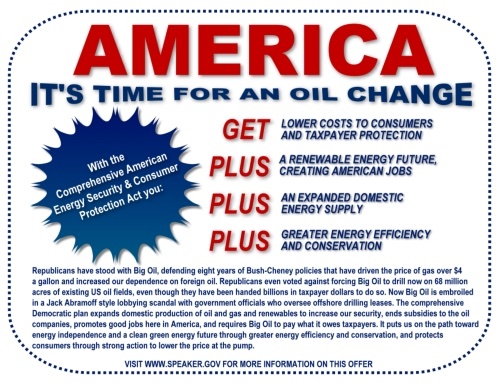
An archived version of the Nancy Pelosi official blog, The Gavel, Included articles tagged: ‘Draining the Swamp’. This link takes you to the article: “Floor Debate on Comprehensive American Energy Security and Consumer Protection Act.” 18 Sep 2008. The Gavel.
This entire collection of articles, books, and media on Fracking was compiled shortly after the BP Deepwater Horizon disaster of April 20, 2010. I am the editor and owner of The Fracking Resource Guide which was taken up on a challenge by the head of reference at the Tompkins-Cortland Community College library in Dryden, New York, 2010 to provide a service to thje public that was not available and could not be presented through regular library web pages. Throughout this site and here on this entry, I have “restored” the “rotten links” relying on the archive.org WayBack Machine to help make the era of 2008 – 2012 come alive through images, letters and testimony; and help find its relevancy to our present situation; as it relates to the oil and gas industry, global warming and democratic institutions under threat.
…corruption undermines democracy. Many studies argue that high levels of corruption are a sign of democratic decay, but what are the ways in which corruption drives democratic erosion? Corruption is an oft cited reason for coups (Hiroi and Omori, 2013) and revolutions (Tucker, 2007), but there is less scholarship that has explored the relationship between corruption and democratic decay (Hiroi and Omori, 2013). A few studies have demonstrated that high levels of corruption are harmful to democratic consolidation, because corruption affects political legitimacy (Seligson, 2002a; Warren, 2004).
Corruption affects a country’s political culture, leading to low levels of trust in public institutions, which has a severe impact on the commitment to civic activity and collective projects (Doig and Theobald, 2000). For example, the level of political corruption in Nigeria has affected its political culture substantially. There is decreasing confidence and trust in the state’s ability to organize free and fair elections and be accountable to its citizens (Ogundiya, 2010; Basiru, 2018). Rising corruption also creates fertile ground for the emergence of messianic styles of leadership that can ‘save’ the public from corrupt elites of the past.
Since the inception of the MMS, and in particular since the 1990s, the Agency has been embroiled or implicated in numerous scandals. For example, in 1990 MMS employees were linked to prostitution,[15] and in 2008 the Department of Interior’s Inspector General reported that MMS employees had participated in drug use and sexual activity with employees from the very energy firms they were to be regulating.[16]
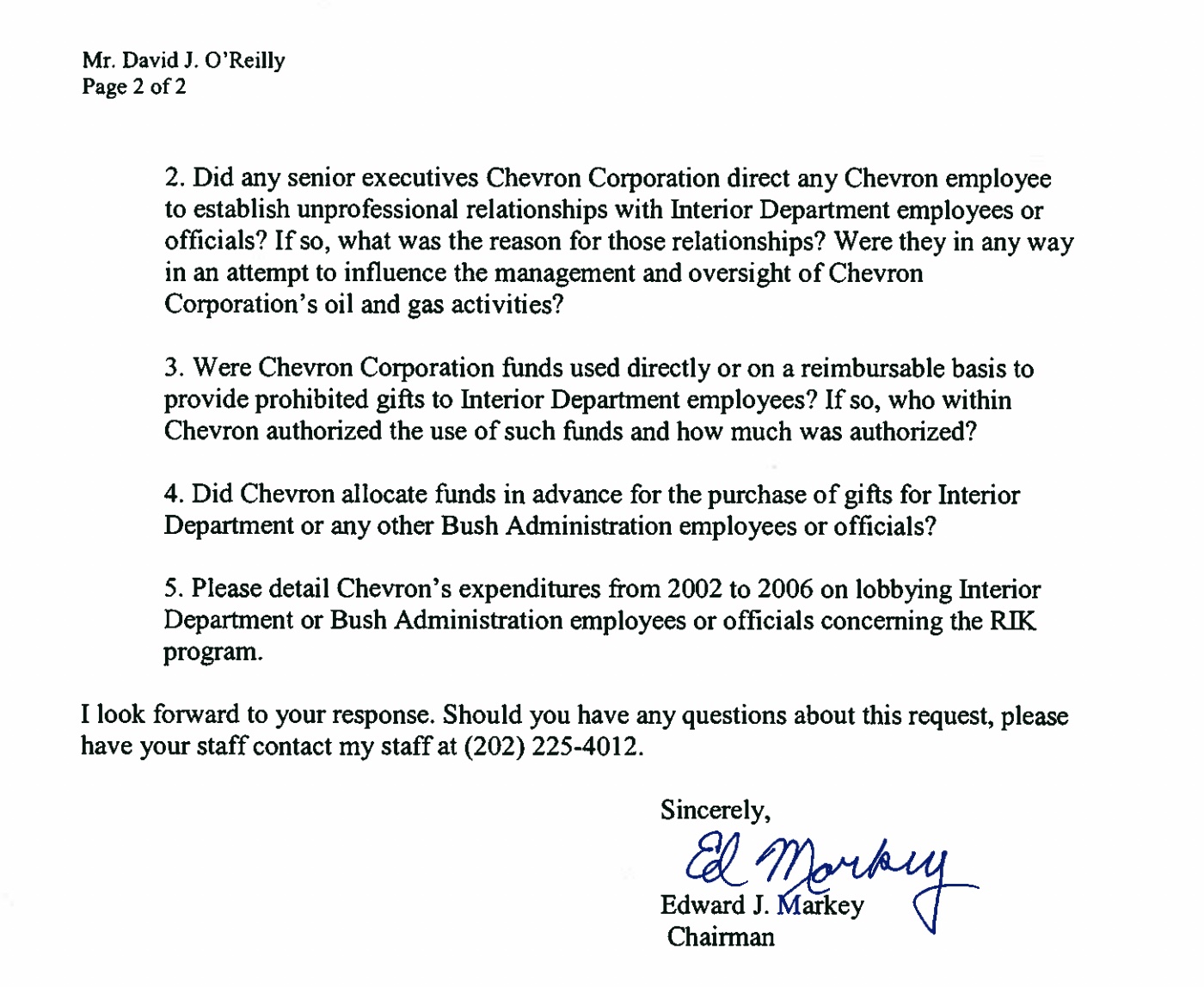
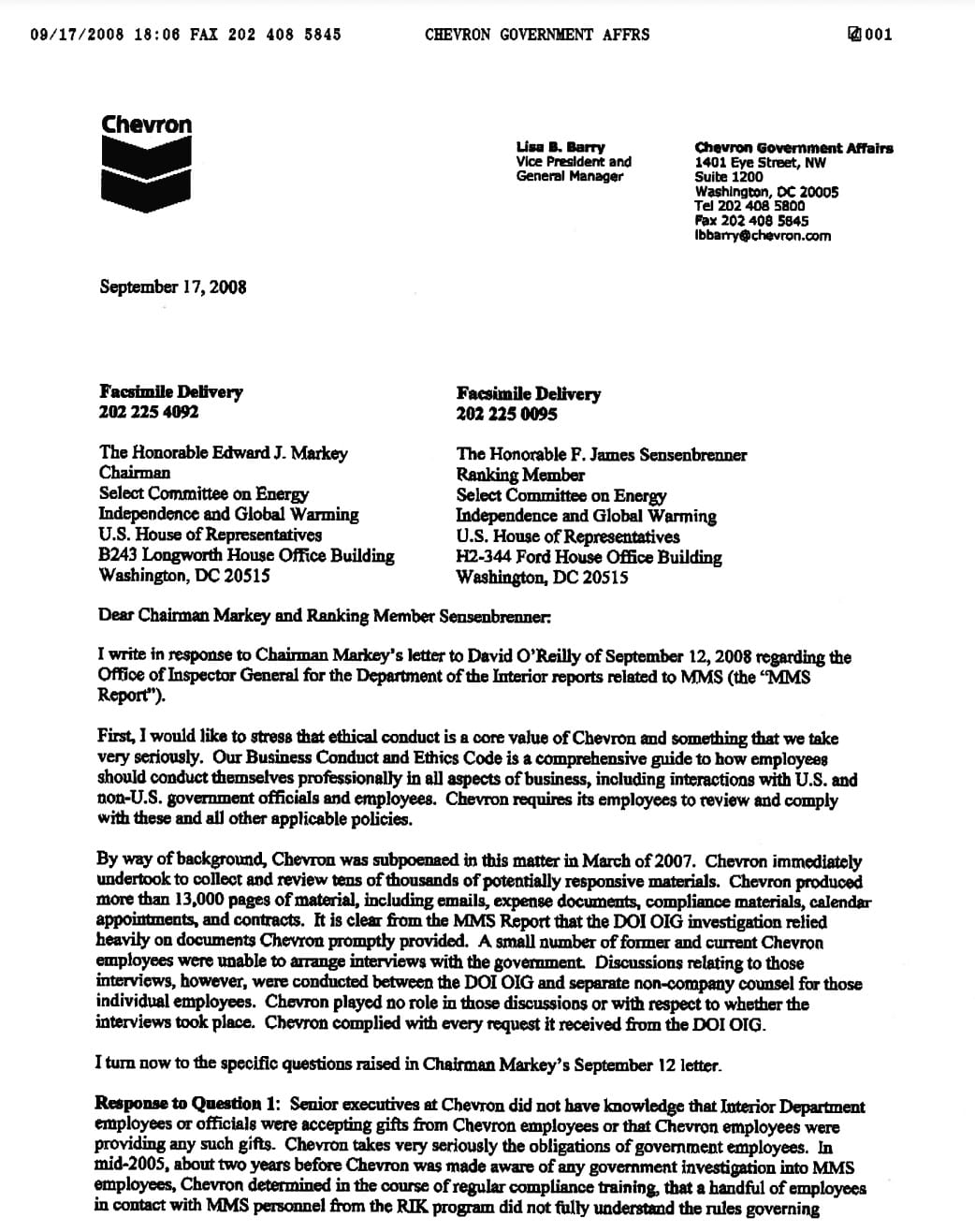
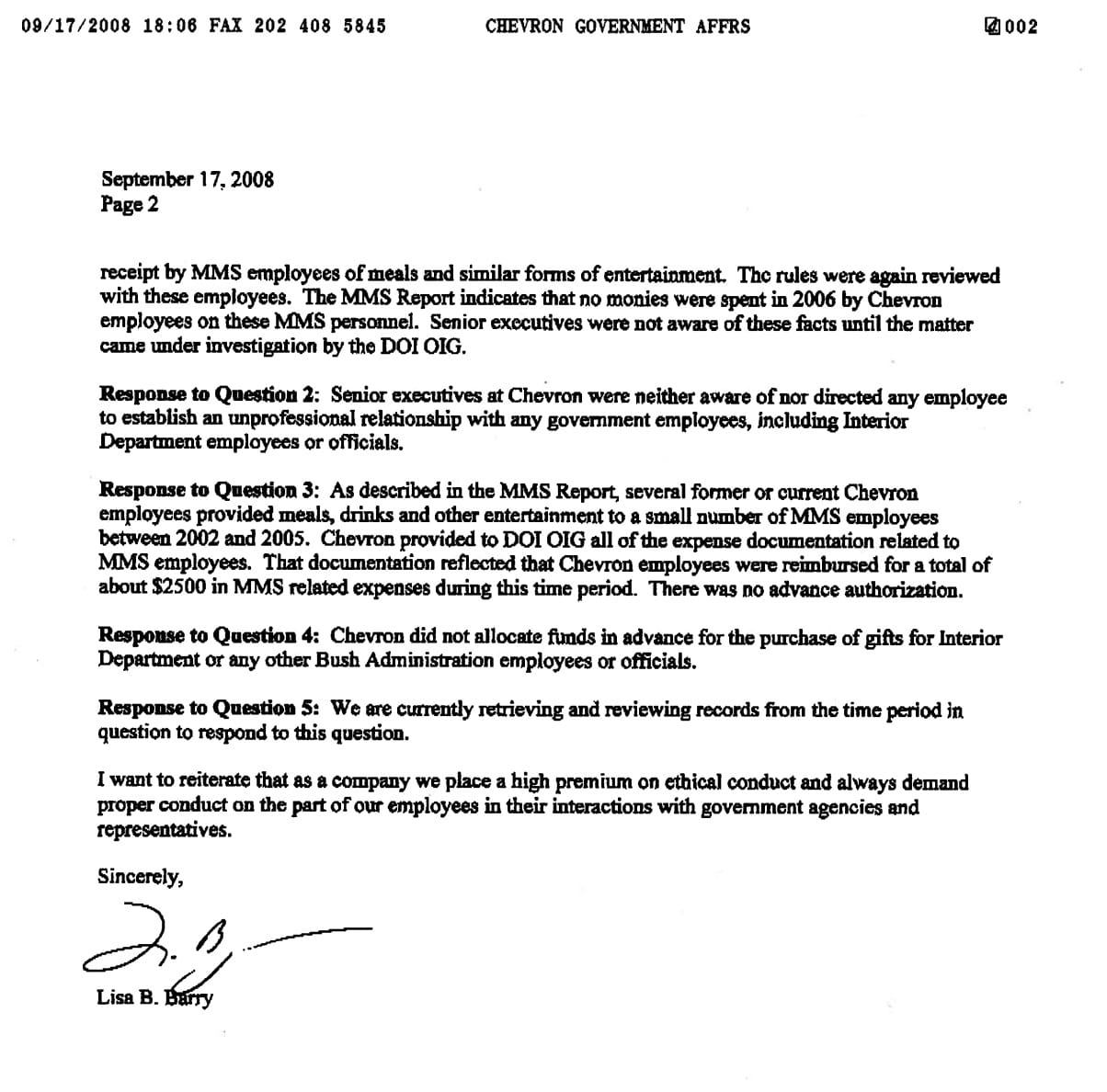
Chairman Edward J. Markey has launched an investigation into the growing scandal involving members of the Bush administration’s Interior Department oil division. Chairman Markey sent letters late Friday to the heads of the oil companies involved in the scandal, probing the companies’ knowledge of the unethical dealings between oil company officials and the regulators.
“Sniffing out the bad actors in the Bush administration’s oil division is important, but we need to be just as vigilant with the companies involved in this crude distortion of government ethics,” said Rep. Markey, who chairs the Select Committee on Energy Independence and Global Warming. “It takes two to tango, and the oil companies appear to have danced over just as many ethical lines as the Bush administration officials.”
The Gavel
Three days before this meeting, with the American economy heading into the Great Recession under the Bush-Cheney Presidency, Lehman Brothers melted down on September 15, 2008 along with the rest of the American economy due to risky investments in real estate by banks.
For a dollar figure on what the Great Recession cost the American taxpayer:
We conservatively estimate the loss of national output as a result of the financial crisis and its aftermath at between $6 trillion and $14 trillion. The high end of this range is equal to nearly one year of U.S. output. Including broader and more-difficult-to-quantify measures that reflect the lingering trauma experienced by millions of Americans pushes these costs still higher—possibly to as much as two years’ worth of forgone consumption.
Are there any researchers, journalists, pundits, poets, songwriters, novelists, citizen activists, or anyone, now or tomorrow, who wishes to try to draw a line between the subject of this Gavel item from 2008 and the Deepwater Horizon disaster from 2010 and the excesses of the MMS (Minerals and Mining Service)? It is one of the epics of recent American History worthy of being made into a major motion picture. It is why I have labored to place in potential perpetuity on the free Internet.
(See also below: Lifset Robert et al. American Energy Cinema. First ed. West Virginia University Press 2023.)
U.S. Interior Secretary Dirk Kempthorne told Congress on Thursday he was “dismayed” about the “inexcusable” behavior of some department employees who had sex, used drugs and took gifts from workers at regulated oil and gas companies.
Kempthorne is sworn in as Secretary of the Interior on June 7, 2006. On the right: President George W. Bush
Kempthorne testified at a House Natural Resources Committee hearing on the findings by the Interior Department’s inspector general about “a culture of substance abuse and promiscuity” at the department’s Minerals Management Service (MMS), whose employees handled billions of dollars in oil and natural gas supplies that were turned over by companies as in-kind royalty payments for drilling on federal lands.
“The abuse of the public trust in this instance is tragic,” Kempthorne testified. “I am outraged that the public’s trust, an important and necessary part of public service, has been abused.”
In his findings, Interior Department Inspector General Earl Devaney said about a dozen MMS workers in the royalty-in-kind program took cocaine and marijuana and had “illicit sexual encounters.”
See also: The CLEAR Act. (2010): In the wake of the BP disaster, Congress is acting on its commitment to protect America’s families and businesses, rebuild the Gulf Coast, hold BP and oil companies accountable, and work to ensure that a spill of this kind never happens again.
On July 30th, the House passed the CLEAR Act (H.R. 3534) by a vote of 209-193—legislation to effectively prevent and respond to oil spills and protect our coastal communities and waters:
Pelosi has been on it! The MMS (Minerals and Mining Service) has failed us. State monitoring of Horizontal Drilling will not protect consumers. Gas Drilling needs the same Federal scrutiny as Oil Drilling.
The MMS (Minerals and Mining Service) was first brought to my attention through Pelosi’s Blog.
The Minerals Management Service (MMS) was an agency of the United States Department of the Interior that managed the nation’s natural gas, oil and other mineral resources on the outer continental shelf (OCS).
Due to perceived conflict of interest and poor regulatory oversight following the Deepwater Horizon oil spill and Inspector General investigations, Secretary of the Interior Ken Salazar issued a secretarial order on May 19, 2010, splitting MMS into three new federal agencies: the Bureau of Ocean Energy Management, the Bureau of Safety and Environmental Enforcement, and the Office of Natural Resources Revenue. MMS was temporarily renamed the Bureau of Ocean Energy Management, Regulation and Enforcement (BOEMRE) during this reorganization before being formally dissolved on October 1, 2011.
During a hearing held this morning to examine recent revelations about ethical failings within the Bush administration’s Department of the Interior, Representative Edward J. Markey (D-MA) closely questioned both Interior Secretary Dirk Kempthorne and Earl Devaney, Inspector General of the department and author of the governmental report on the scandal, over the Bush administration’s lax oversight.
“This is a blistering scalding indictment of the Bush administration’s oversight of the Department of Interior,” Rep. Markey charged during the House Natural Resources committee hearing. “This is a stain on the Department of Interior and its operations.”
Attorney General Eric Holder and the Justice Dept. indicted a few low-level operatives for Deepwater which resulted in acquittals a few years later. BP was fined but was never prosecuted. Holder also did not prosecute the parties responsible for the Great Recession whcih cost the U.S. government trillions of dollars in taxpayer money.
Danenberger was pleased to have assisted the legal team that represented Bob Kaluza, a BP Well Site leader on the Deepwater Horizon, who was fully and rightfully acquitted of all charges.
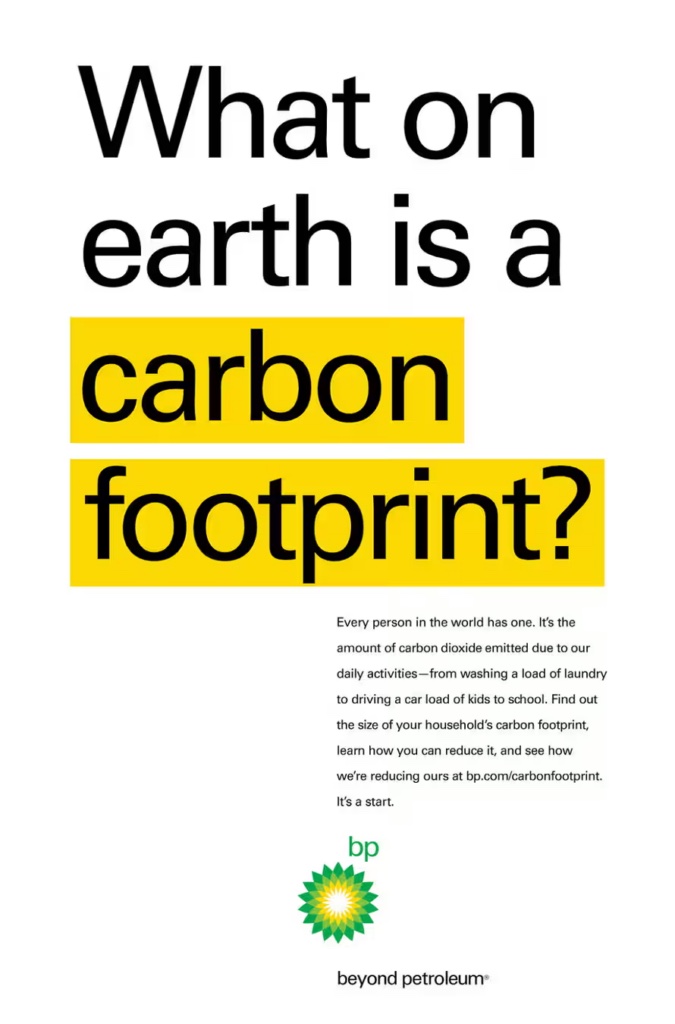
From 2004 to 2006, a $100m-plus a year BP marketing campaign “introduced the idea of a ‘carbon footprint’ before it was a common buzzword”, according to the PR agent in charge of the campaign. The targets of this campaign were the “routine human activities” and “lifestyle choices” of “individuals” and the “average American household”. In 2019, BP ran a new “Know your carbon footprint” campaign on social media.
In all, the Justice Department brought 48 felony charges and 2 misdemeanor charges against four BP employees: Kaluza, Vidrine, former BP vice president David Rainey, and an engineer named Kurt Mix. The result: two acquittals and two misdemeanor guilty pleas. “The Justice Department came up short because it largely targeted individuals who were too far down the corporate hierarchy to be compelling defendants in a case that involved a corporate culture run amok,” says David Uhlmann, the director of the Environmental Law and Policy Program at the University of Michigan and the former chief of the Justice Department’s environmental crimes section. “It’s never easy to prosecute senior corporate officials for catastrophes like the Gulf oil spill, but that does not justify going after low-level officials who had no say in misplaced corporate priorities.” (The DOJ declined to comment on these cases.)
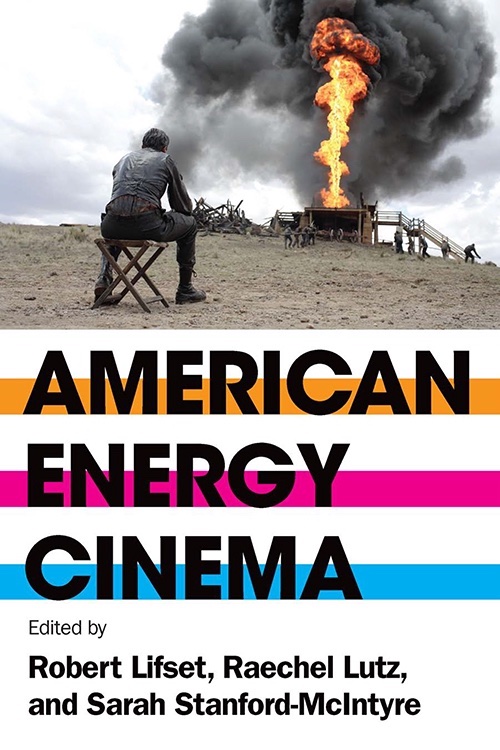
See also: Lifset Robert et al. American Energy Cinema. First ed. West Virginia University Press 2023.
Lifset Robert et al. American Energy Cinema. First ed. West Virginia University Press 2023.
See also: Steffy, Loren C. Drowning in Oil : Bp and the Reckless Pursuit of Profit. McGraw-Hill 2011.
The first in-depth examination of how a lack of corporate responsibility and government oversight led to the biggest offshore oil spill in U.S. history. On April 20, 2010, a series of explosions rocked Deepwater Horizon, the immense semisubmersible drilling platform leased by British Petroleum, located 40 miles off the Louisiana coast. The ensuing inferno claimed 11 lives and raged uncontained for two days, until its wreckage sank a mile beneath the waves. On the ocean floor, the unit’s wellhead erupted. Over the next ten weeks, an estimated 200 million gallons of oil–the equivalent of 20 Exxon Valdez spills–spewed into the Gulf of Mexico, eventually lapping up on beaches as far away as Florida. Business journalist Loren Steffy–considered by many to be the writer with the best access to the story–presents the definitive account of this catastrophe and how BP’s winner-take-all business culture made it all but inevitable.–From publisher description
Steffy, Loren C. Drowning in Oil : Bp and the Reckless Pursuit of Profit. McGraw-Hill 2011.