Legal

Legal

Articles examining the legal battles, court decisions, and regulatory disputes surrounding hydraulic fracturing and climate change. These documents explore how courts, legal scholars, and advocacy groups have addressed environmental impacts, property rights, and government authority. Explore related scholarly research below ↓

53 documents

2013

January (2013)

CattleDrinkDrillingWaste

CattleDrinkDrillingWaste

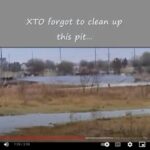
This video shows Texas Black Angus cattle drinking from drilling sludge pits at two different drilling sites in Denton County. I have witnessed cattle drinking from sludge pits regularly over the past few years.

Source: YouTube (2009) Read More
Cornell 2011 Energy Conference

Cornell 2011 Energy Conference

The Cornell University Law School – 2011 Energy Conference (March 31-April 2, 2011) explored, among other topics, the legal issues associated with natural gas drilling and energy policy, different scientific perspectives on how clean and sustainable natural gas is, alternative clean energy sources, and the potential risks and benefits of shale gas development in Upstate New York.

Source: YouTube (2011) Read More

2011

May (2011)

Dish Mayor Calvin Tilman Testifies at Railroad Commission – Oil and Gas Lawyer Blog

Dish Mayor Calvin Tilman Testifies at Railroad Commission - Oil and Gas Lawyer Blog

In Dish, Texas, Mayor Calvin Tilman brought air monitoring data and resident complaints before the Texas Railroad Commission, the state’s oil and gas regulator. He described odors, emissions, and health concerns near compressor stations. The hearing placed a small town’s grievances in front of a powerful agency — and forced regulators to respond on record.

Source: Oil and Gas Lawyer Blog (2010) Read More

April (2011)

Cornell University Law School – 2011 Energy Conference

Cornell University Law School - 2011 Energy Conference

The conference will use natural gas drilling as a lens to explore energy policy, the global energy market, and the integral role the law can and must play in creating energy security and ensuring a sustainable future.

Source: Cornell University Law School (2011) Read More
High court could melt climate-change cases

High court could melt climate-change cases

Here you have a particular village that is going to be under water. Various scientific and government studies report that the right combination of storms could flood the entire village at any time and have recommended relocation at costs varying up to $400 million.

Source: The National Law Journal | Law.com (2010) Read More

March (2011)

Untested Waters: The Rise of Hydraulic Fracturing in Oil and Gas Production and the Need to Revisit Regulation

Untested Waters: The Rise of Hydraulic Fracturing in Oil and Gas Production and the Need to Revisit Regulation

As the hunt for important unconventional gas resources in America expands, an increasingly popular method of wringing resources from stubborn underground formations is a process called hydraulic fracturing – also described as hydrofracturing, fracking, or fracing – wherein fluids are pumped at high pressure underground to fracture a formation and release trapped oil or gas.

Source: Fordham Environmental Law Review (2008) Read More
Crimes against nature: how George W. Bush and his corporate pals are plundering the country and high-jacking our democracy

Crimes against nature: how George W. Bush and his corporate pals are plundering the country and high-jacking our democracy

In Crimes Against Nature, Robert F. Kennedy Jr. delivers a sweeping indictment of the George W. Bush administration, arguing that corporate cronyism has undermined public health, national security, and democratic governance. Kennedy emphasizes the enduring importance of the public trust doctrine, which holds that resources such as air, water, fisheries, and wetlands belong to the commons and cannot be diminished for private gain. He contends that protecting these shared resources is essential to preserving democracy itself.

Source: HarperCollins (2004) Read More
The Effect of the United States Supreme Court’s Eleventh Amendment Jurisprudence on Clean Water Act Citizen Suits: Muddied Waters

The Effect of the United States Supreme Court's Eleventh Amendment Jurisprudence on Clean Water Act Citizen Suits: Muddied Waters

In her Oregon Law Review article, “The Effect of the United States Supreme Court’s Eleventh Amendment Jurisprudence on Clean Water Act Citizen Suits,” Professor Hope Babcock examines how the Court’s expansion of state sovereign immunity has narrowed citizens’ ability to enforce federal environmental laws. She argues that recent decisions have shielded state agencies from accountability, weakening Clean Water Act enforcement and limiting private lawsuits under other environmental statutes, thereby constraining the public’s capacity to vindicate federally protected rights.

Source: Oregon Law Review (2004) Read More

Owning the Center of the Earth

Owning the Center of the Earth

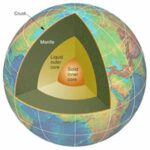
How far below the earth’s surface do property rights extend? The conventional wisdom is that a landowner holds title to everything between the surface and the center of the earth. This article is the first legal scholarship to challenge the traditional view.

Source: UCLA Law Review (2008) Read More

As climate crime continues, who are we sending to jail? Tim DeChristopher?


As climate crime continues

Let’s consider for a moment the targets the federal government chooses to make an example of. So far, no bankers have been charged, despite the unmitigated greed that nearly brought the world economy down. No coal or oil execs have been charged, despite fouling the entire atmosphere and putting civilization as we know it at risk.

Source: Grist (2011) Read More

The Need for Mass Mobilizations

The Need for Mass Mobilizations

This essay argues that much of the climate justice movement has become isolated and screen-bound, with activists working alone through social media, emails, and phone calls rather than building embodied community. It contends that meaningful political power comes from visible, collective action in physical space, where real human connection strengthens courage and solidarity, and highlights mass mobilization and civil resistance—such as the actions of Tim DeChristopher—as essential to confronting corporate extraction and political complacency.

Source: Peaceful Uprising (2010) Read More

Tim DeChristopher | Bidder70

Tim DeChristopher | Bidder70

Environmental activist Tim DeChristopher, founder of Peaceful Uprising and later cofounder of the Climate Disobedience Center, became known as “Bidder 70” after disrupting a 2008 Bureau of Land Management (BLM) oil and gas lease auction held during the final months of the George W. Bush administration. By posing as a bidder and driving up prices on 22,000 acres of Utah public land slated for fossil fuel development, DeChristopher sought to prevent what environmentalists described as a rushed and undervalued sale. He was later prosecuted and convicted of fraud in March 2011 and sentenced to two years in prison, framing his act as civil disobedience in defense of climate justice and democratic accountability.

Source: Bidder70 (2010) Read More

February (2011)

History of Litigation Concerning Hydraulic Fracturing to Produce Coalbed Methane. LEAF (Legal Environmental Assistance Foundation) and The Hydraulic Fracturing Decisions.

History of Litigation Concerning Hydraulic Fracturing to Produce Coalbed Methane. LEAF (Legal Environmental Assistance Foundation) and The Hydraulic Fracturing Decisions.

A growing body of litigation traced disputes over groundwater contamination, lease conflicts, and regulatory authority tied to hydraulic fracturing. Lawsuits accumulated across states as plaintiffs sought damages and clarity. The courtroom became an extension of the drilling field — technical arguments, expert testimony, and contested science unfolding under oath.

Source: Interstate Oil and Gas Commission (IOGCC) (2009) Read More

Pollution in Your Community

Pollution in Your Community

The environmental website Scorecard.org provided county-level pollution reports using data from the EPA’s Toxics Release Inventory, empowering citizens to track air, water, and chemical releases in their communities. Advocates warned that proposed reductions in TRI reporting requirements under the Environmental Protection Agency would limit public access to hazardous chemical disclosure, weakening a key transparency tool for public health and environmental accountability.

Source: Scorecard (2010) Read More

E2 Law Blog

E2 Law Blog

David G. Mandelbaum represents clients facing problems under environmental laws. He regularly represents clients in lawsuits and also has helped clients achieve satisfactory outcomes through regulatory negotiation or private transactions. A Fellow of the American College of Environmental Lawyers, David teaches Superfund, and Oil and Gas Law in rotation at the Temple University Beasley School of Law as well as an environmental litigation course at Suffolk (Boston) Law School.

Source: E2 Law Blog (2010) Read More

Experts in Favor of Public Access

Experts in Favor of Public Access

The public should have access to the inner workings of Luzerne County home rule subcommittees, say three experts on the state’s open meeting law.

Source: The Times Leader, Wilkes-Barre & Scranton PA (2011) Read More

Tree spiker : from Earth First! to lowbagging: my struggles in radical environmental action

Tree spiker : from Earth First! to lowbagging: my struggles in radical environmental action

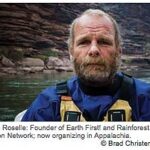
In Tree Spiker: From Earth First! to Lowbagging: My Struggles in Radical Environmental Action, Mike Roselle recounts his evolution from Yippie provocateur to cofounder of Earth First! and the Rainforest Action Network, tracing decades of radical environmental activism from street theater to mountaintop-removal protests in Appalachia. Writing against the backdrop of federal drilling exemptions advanced under Vice President Dick Cheney and ongoing battles over hydraulic fracturing disclosure, Roselle situates non-violent civil disobedience as both moral response and strategic necessity in confronting coal, oil, and gas power structures.

Source: St. Martin's Press (2009) Read More

Mountaintop Removal

Mountaintop Removal

The documentary Mountaintop Removal, directed by Michael C. O’Connell, examines the human and ecological toll of strip-mining in West Virginia. Featuring activists such as Ed Wiley, Julia Bonds, and Maria Gunnoe, along with commentary from Jeff Goodell and Duke University scientists, the film exposes how mountaintop removal mining reshapes Appalachia’s landscape and water systems. It situates coal extraction within broader debates over corporate power, public health, and environmental justice.

Source: Haw River Films | IMDB (2007) Read More

Whistleblower.org

Whistleblower.org

The Government Accountability Project’s mission is to promote corporate and government accountability by protecting whistleblowers, advancing occupational free speech, and empowering citizen activists…

Source: Government Accountability Project (2011) Read More

Fight Over Gas Wells in Chief Logan Heads to Supreme Court

Fight Over Gas Wells in Chief Logan Heads to Supreme Court

A dispute over gas wells beneath West Virginia’s Chief Logan State Park escalated to the state Supreme Court, pitting mineral rights holders against conservation concerns. At issue: whether drilling could proceed under protected public land. For residents and park advocates, the fight wasn’t abstract law — it was about whether a state park could become collateral in a mineral rights battle.

Source: West Virginia Highlands Voice (2010) Read More

MarcellusGas.Org Home Page

MarcellusGas.Org Home Page

Extensive and thorough source of information on Marcellus Shale gas drilling in Pennsylvania. Non-members have limited access to some of the county and township specific information provided on well data, maps, production reports, violations, and company details. There is an option to become a guest

Source: MarcellusGas.Org (2010) Read More

January (2011)

Pennsylvania Gas Pipeline Challenged

Pennsylvania Gas Pipeline Challenged

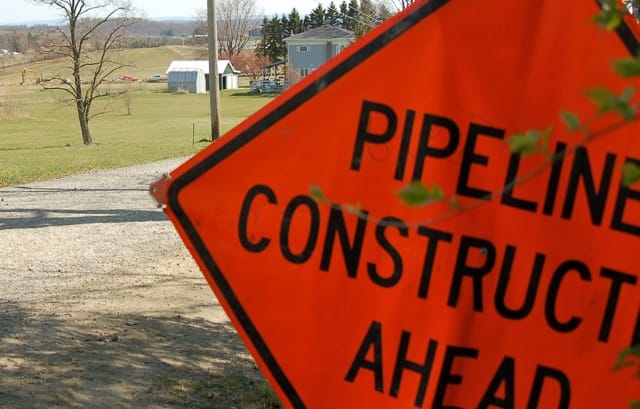
The Endless Mountains forms a dissected region of the Allegheny Plateau, a landscape covering most of norhtern Pennsylvania. (Photo: Nichloas T / Flickr)

Source: Earthjustice (2011) Read More

Civil Disobedience

Civil Disobedience

The Thoreau Reader, curated by Richard Lenat in cooperation with the Thoreau Society, presents annotated editions of Henry David Thoreau’s works including Civil Disobedience and Walden. Thoreau’s refusal to pay taxes in protest of slavery and the U.S. war with Mexico later influenced figures such as Mahatma Gandhi and Martin Luther King Jr., whose philosophy of nonviolent resistance drew upon Thoreau’s assertion that when government becomes destructive of human rights, individuals may have a moral duty to resist unjust law.

Source: Thoreau eServer by Richard Lenat (2002) Read More

State Decision Blocks Drilling for Gas in Catskills

State Decision Blocks Drilling for Gas in Catskills

New York State halted proposed drilling in the Catskill Park, protecting a region that feeds New York City’s drinking water system. Energy companies argued modern techniques could operate safely. State officials weighed the risk to a supply serving millions. The decision underscored a high-stakes reality: when gas sits beneath a watershed of national importance, economics collides with precaution.

Source: The New York Times (2010) Read More

Coal River

Coal River

(The Killers Within) has crafted an incriminating indictment of the Appalachian King Coal industry in West Virginia, and of the man he defines as its rapacious kingpin, Massey Energy’s CEO, Don Blankenship.

Source: Farrar, Straus and Giroux (2008) Read More

Environmental Integrity Project (EIP)

Environmental Integrity Project (EIP)

EIP combines research, reporting, and media outreach to spotlight illegal pollution, expose political intimidation of enforcement staff, and encourage federal and state agencies to take enforcement action to stop these practices. EIP’s work has been cited in Congressional hearings and debates, in reports by the US General Accountability Office, and in frequent news articles.

Source: Environmental Integrity Project (EIP) (2011) Read More

2010

December (2010)

Environmental Groups Support U.S. EPA in Texas Air Permit Case

Environmental Groups Support U.S. EPA in Texas Air Permit Case

In August 2010, Environmental Defense Fund and the Environmental Integrity Project moved to intervene in the U.S. Court of Appeals for the Fifth Circuit after Texas Attorney General Greg Abbott sued the U.S. Environmental Protection Agency over its disapproval of Texas’ Flexible Air Permitting program. EDF’s Jim Marston argued that Governor Rick Perry was seeking a “special pollution pass” rather than complying with the Clean Air Act, while federal regulators defended the EPA’s authority to enforce national air standards.

Source: Environment News Service (ENS) (2010) Read More

Whistle Blower’s Corner

Whistle Blower's Corner

Every thing secret degenerates, even the administration of justice; nothing is safe that does not show how it can bear discussion and publicity.’

Source: Basel Action Network (BAN) (2010) Read More

Criminalising Civil Disobedience

Criminalising Civil Disobedience

SourceWatch traces the popularization of the term “eco-terrorism” to Ron Arnold of the Center for the Defense of Free Enterprise. After September 11, the label gained traction through legislation promoted by the American Legislative Exchange Council (ALEC), blurring the line between peaceful civil disobedience and terrorism. Environmental groups such as Greenpeace and the Rainforest Action Network argue that redefining protest as “terrorism” threatens media visibility, fundraising capacity, and constitutionally protected dissent.

Source: SourceWatch (2017) Read More

U.S. Environmental Protection Agency (EPA): EPA Announces “Eyes on Drilling” Tipline.

U.S. Environmental Protection Agency (EPA): EPA Announces “Eyes on Drilling” Tipline.

The Environmental Protection Agency weighed how existing federal statutes applied to hydraulic fracturing — parsing authority under the Safe Drinking Water Act and Clean Water Act. As pressure mounted from both industry and environmental groups, the EPA’s interpretations shaped whether certain practices required permits or fell through regulatory gaps.

Source: US EPA: “Eyes on Drilling” Tipline. (2010) Read More

Marcellus-Shale.us: Our look at the Halliburton Loophole – 2005 Energy Act

Marcellus-Shale.us: Our look at the Halliburton Loophole - 2005 Energy Act

The so-called “Halliburton loophole” — language in the Energy Policy Act of 2005 that exempted most hydraulic fracturing from the Safe Drinking Water Act — became a flashpoint. Critics argued the exemption removed federal oversight from underground injection practices. Supporters maintained states could regulate effectively. The loophole wasn’t just statutory text; it defined the regulatory boundary of a boom.

Source: Marcellus-Shale.us (2010) Read More

November (2010)

Mobilize to End Mountantop Removal!

Mobilize to End Mountantop Removal!

Appalachia Rising, a national mobilization held in Washington, D.C., September 25–27, 2010, brought together coalfield residents, grassroots groups, and national organizations to protest mountaintop removal coal mining and its destruction of Appalachian mountains, waterways, and communities. The action ’culminated in arrests at the White House and was covered by outlets including Democracy Now!, framing mountaintop removal as both an environmental and public health crisis affecting America’s water supply.

Source: Appalachia Rising (2010) Read More

Pennsylvania lawsuit says drilling polluted water

Pennsylvania lawsuit says drilling polluted water

A Pennsylvania lawsuit alleged that nearby drilling operations contaminated private water wells, igniting a battle over causation and responsibility. Plaintiffs pointed to methane and chemical signatures. Companies disputed the link. As expert witnesses parsed geology, the case underscored a persistent question: when water changes, who proves why?

Source: Reuters (2009) Read More

Pennsylvania Department of Environmental Protection (DEP). Fact Sheet:Landowners and Oil and Gas Leases in Pennsylvania, Answers to questions frequently asked by landowners about oil and gas leases and drilling.

Pennsylvania Department of Environmental Protection (DEP).  Fact Sheet:Landowners and Oil and Gas Leases in Pennsylvania

As shale drilling surged across Pennsylvania, the Department of Environmental Protection found itself under pressure — issuing permits, responding to complaints, and fielding accusations of understaffing. For residents reporting contaminated wells or methane migration, the DEP was the first call. For drillers, it was the regulator standing between delay and approval. Its capacity became part of the story.

Source: Commonwealth of Pennsylvania, Edward G. Rendell, Governor (2012) Read More

U.S. (EPA): Elimination of Diesel Fuel in Hydraulic Fracturing Fluids Injected into Underground Sources of Drinking Water During Hydraulic Fracturing of Coalbed Methane Wells

U.S. (EPA): Elimination of Diesel Fuel in Hydraulic Fracturing Fluids Injected into Underground Sources of Drinking Water During Hydraulic Fracturing of Coalbed Methane Wells

The U.S. Environmental Protection Agency moved to eliminate the use of diesel fuel in hydraulic fracturing fluids without proper permitting under the Safe Drinking Water Act. Diesel contains benzene and other hazardous compounds. The policy signaled a tightening stance — a recognition that what goes downhole can travel in ways regulators once downplayed.

Source: U.S. Environmental Protection Agency (EPA) (2003) Read More

September (2010)

Climate Ground Zero

Climate Ground Zero

Climate Ground Zero relocated to West Virginia in 2009 to support residents opposing mountaintop removal at Coal River Mountain. Working alongside Mountain Justice and local activists, the campaign organized nonviolent civil resistance after clear-cutting began. Despite widespread opposition among West Virginians, activists argue that both the EPA and the West Virginia Department of Environmental Protection failed to halt coal industry destruction, leading to over 150 arrests in ongoing direct actions.

Source: Climate Ground Zero (2009) Read More

New Lawsuit Filed in Fracking Country

New Lawsuit Filed in Fracking Country

More than a dozen families in Susquehanna County, Pennsylvania filed suit against Southwestern Energy Production Company, alleging that releases of combustible gases, hazardous chemicals, and industrial wastes from nearby drilling sites contaminated their drinking water and caused illness. The lawsuit, part of a broader wave of legal and regulatory challenges surrounding hydraulic fracturing in the Marcellus Shale, intensified scrutiny at the local, state, and federal levels as energy companies expanded drilling across Pennsylvania, West Virginia, Ohio, and New York.

Source: Green | NYTimes.com (2010) Read More

IQS (Info Quick Solutions, Inc.) – Search Cortland County

IQS (Info Quick Solutions

Online court record systems allowed citizens and attorneys to track lawsuits tied to drilling operations — contract disputes, contamination claims, regulatory challenges. Transparency in dockets revealed how frequently energy development intersected with litigation. The public record became part of the accountability mechanism.

Source: Cortland County: Search Public Records (2025) Read More

Two held on $100,000 bails for non-violent protest; Demand Bail Reduction: Call Magistrate Snodgrass 304-369-7360

Two held on $100

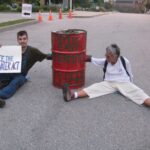
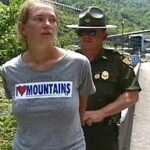
On May 17, 2010, Climate Ground Zero activists EmmaKate Martin and Benjamin Bryant blockaded Massey Energy’s headquarters in Boone County, West Virginia, protesting mountaintop removal mining. Magistrate Snodgrass set bail at $100,000 each for misdemeanor charges, marking one of the highest bails imposed on nonviolent environmental protesters in the state. The action, linked to broader campaigns involving James Hansen and Daryl Hannah, spotlighted escalating legal pressure on climate resistance movements.

Source: It’s Getting Hot In Here (2010) Read More

Landman Report Card

Landman Report Card

The Landman Report Card, developed through MIT’s Center for Future Civic Media and the Oil and Gas Accountability Project, provided a platform for landowners to review oil and gas land agents negotiating mineral leases. Designed to counter misinformation and imbalance in early industry contact, the project aimed to strengthen community knowledge and transparency during the rapid expansion of shale drilling.

Source: Landman Report Card (2010) Read More

What Landowners Need to Know About Oil and Gas Wells

What Landowners Need to Know About Oil and Gas Wells

For landowners approached with lease offers, the fine print mattered — royalty percentages, surface use clauses, indemnification language. What looks like a bonus check can bind property for decades. Attorneys and advocates urged landowners to understand drilling rights, water access, and restoration terms before signing. In shale regions, a single signature can reshape a family’s land for a generation.

Source: NYS Dept. of Environmental Conservation (2008) Read More

August (2010)

Earthjustice

Earthjustice

Earthjustice, founded in 1971 as the Sierra Club Legal Defense Fund, pledged renewed legal resistance as President Donald Trump returned to office in 2025, emphasizing its record of courtroom victories defending clean air, water, and climate protections. The organization also condemned the Mendoza Supreme Court in Argentina for rejecting civil society participation in a case concerning fracking in the Vaca Muerta formation, arguing that indigenous Mapuche groups and international environmental advocates were denied meaningful input while fossil fuel interests were granted access.

Source: Earthjustice: Environmental Law: Because the Earth Needs a Good Lawyer (2025) Read More

Red Lodge Clearinghouse – Oil and Gas Resource Development

Red Lodge Clearinghouse - Oil and Gas Resource Development

Red Lodge Clearinghouse compiled legal resources for communities confronting oil and gas development in the West. From surface rights disputes to environmental review procedures, the clearinghouse translated complex statutes into tools citizens could use. In regions where extraction reshaped landscapes, access to legal knowledge became leverage.

Source: Red Lodge Clearinghouse (2008) Read More

Priscilla Summers v. Earth Island Institute Supreme Court Decision : ACOEL

Priscilla Summers v. Earth Island Institute Supreme Court Decision : ACOEL

In Priscilla Summers v. Earth Island Institute, legal arguments reached the U.S. Supreme Court over environmental standing — who has the right to sue when ecological harm is alleged. Though not limited to shale, the case shaped the terrain for future challenges to drilling permits and federal oversight. Standing doctrine can determine whether environmental claims are heard at all.

Source: American College of Environmental Lawyers (ACOEL) (2009) Read More

Penn State Law – Natural Gas Exploration Online Resources

Penn State Law - Natural Gas Exploration Online Resources

Penn State Law launched an online resource tracking legal developments tied to natural gas exploration — statutes, court rulings, and regulatory updates. As shale transformed Pennsylvania’s economy, the legal framework evolved in real time. The site became a clearinghouse for those trying to keep up with precedent and policy.

Source: Penn State Law - The Dickinson School of Law (2010) Read More

Marcellus Shale Development : Toxic Tort Litigation Blog

Marcellus Shale Development : Toxic Tort Litigation Blog

As drilling expanded across Pennsylvania and neighboring states, toxic tort claims followed — lawsuits alleging groundwater contamination, methane migration, and chemical exposure. Plaintiffs sought damages for health impacts and property loss. Defendants contested causation and baseline conditions. In these cases, geology met civil procedure, and the burden of proof carried enormous weight.

Source: Toxic Tort Litigation Blog (2010) Read More
Item added to cart.
0 items - $0.00