Editor’s note: 21 Sep 2023. This topic and update is a historical monument of corruption and corporate secrecy that goes against public interest and safety. Citizens must continue to ask and new generations of voters must begin to discover why this controversial and epic battle continbues to rage on and ask the question, what is the FRAC Act and why has industry been opposed to it since 2009 and why has Diana DeGette courageously continued this effort?
First a word about the main source of this information, THOMAS from the Library of Congress:

Congress.gov supersedes the THOMAS system which was retired on July 5, 2016. Congress.gov was released in beta in September 2012. The THOMAS URL was redirected to Congress.gov in 2013. The beta label was removed in 2014.
The scope of data collections and system functionality have continued to expand since THOMAS was launched in January 1995, when the 104th Congress convened. THOMAS was produced after Congressional leadership directed the Library of Congress to make federal legislative information freely available to the public.
The Federal government has tried and failed through multiple administrations to get the Oil and Gas trade to agree to disclose the chemical additives used in the hydraulic fracturing fluid.
This librarian’s Fracking Resource Guide article, like the piece I just renovated titled: U.S. Speaker Nancy Pelosi: The Gavel: Draining The Swamp , is also an ‘epic’ of recent history in regards to energy policy and the U.S Government. As recently as 20 Jul 2023, the bill was again re-introduced by Diana DeGette’s office.
Check out this name-calling and pearl clutching and ostensibly well-resourced report on the FRAC Act from the Industry’s voice: Energy in Depth (this link locates all the articles on Fracking Resourcde guide that contain a mention of Energy in Depth) :
See also: Nicole Jacobs. The ‘Frack Pack’ is stuck in the past. 24 Mar 2021. Energy in Depth.
The ‘Frack Pack’ is back with another rendition of its failed hydraulic fracturing legislative package.
House Democratic Reps. Diana DeGette (Colo.), Matt Cartwright (Pa.), Yvette Clarke (N.Y.), and Jan Schakowsky (Ill.) recently re-introduced the ‘Frack Pack’, zombie pieces of legislation that have consistently failed to pass Congress regardless of which party was in control.
Much like the first time it was introduced more than a decade ago, the legislation is stuck in the past, mandating disclosures that are already happening and revoking an “exemption” that has never existed, completely disregarding existing federal, and more importantly, state regulations.
The ‘Frack Pack’ includes:
- “Fracturing Responsibility and Awareness of Chemicals (FRAC) Act,” R. 4014
- “Safe Hydration Is an American Right in Energy Development (SHARED) Act,” R. 3604
- “Closing Loopholes and Ending Arbitrary and Needless Evasion of Regulations (CLEANER) Act,” R. 4006
- “Focused Reduction of Effluence and Stormwater Runoff Through Hydrofracking Environmental Regulation (FRESHER) Act,” R. 4007
- “Closing Loopholes for Oil and Other Sources of Emissions (CLOSE) Act,” R. 585
A Continued Failed Effort
Rep. DeGette and associates have tried time and time again to pass duplicative anti-oil and gas legislation, failing each time.
These bills began with the 2009 FRAC Act, which failed to pass a Democratic-controlled House. Since 2009, a version of the FRAC Act has been pushed in almost every session.
Nicole Jacobs. The ‘Frack Pack’ is stuck in the past. 24 Mar 2021. Energy in Depth.
See also: Office of Rep. Diana DeGette. DeGette introduces legislation to regulate chemicals used in fracking process. 20 Jul 2023. Press Release.
See also: Abrahm Lustgarten. The FRAC Act under attack. 14 Jul 2009. Salon.
“…The oil and gas guys came out of the barnstorming,” he said. “I think that opposition has been throwing out scare tactics and mischaracterizations of what she [DeGette] is trying to do.”
At least five reports have been issued since January arguing that the proposed legislation — which would give the Environmental Protection Agency authority to investigate fracturing accidents and to dictate how the process is done — would hamper exploration, raise fuel prices, and cost Americans jobs and energy.
The industry maintains that state regulations already sufficiently protect drinking water from hydraulic fracturing.
Abrahm Lustgarten. The FRAC Act under attack. 14 Jul 2009. Salon.
From Wikipedia, the free encyclopedia
S.1215 – Fracturing Responsibility and Awareness of Chemicals (FRAC) Act.
The Fracturing Responsibility and Awareness of Chemicals Act (H.R. 1084, S. 587, dubbed as the FRAC Act) was a 2009 legislative proposal in the United States Congress to define hydraulic fracturing as a federally regulated activity under the Safe Drinking Water Act. The proposed act would have required the energy industry to disclose the chemical additives used in the hydraulic fracturing fluid. The gas industry opposed the legislation.[1]
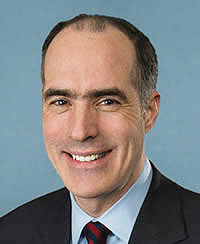
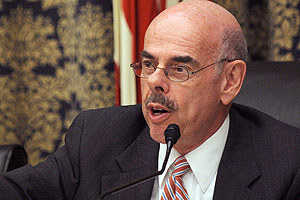
The bill was introduced to both houses of the 111th United States Congress on June 9, 2009. The House bill was introduced by representatives Diana DeGette, D-Colo., Maurice Hinchey D-N.Y., and Jared Polis, D-Colo. The Senate version was introduced by senators Bob Casey, D-Pa., and Chuck Schumer, D-N.Y. The bill was re-introduced to both houses of the 112th United States Congress on March 15, 2011, by Representative Diana DeGette and Senator Bob Casey.

S.1215. 6/9/2009. Fracturing Responsibility and Awareness of Chemicals (FRAC) Act’. Sponsor: Sen. Casey, Robert P., Jr. [PA], Co-Sponsors in alphabetical order: Sen. Cardin, Benjamin L. [MD], Sen. Feinstein, Dianne [CA], Sen. Gillibrand, Kirsten E. [NY], Sen. Sanders, Bernard [VT], Sen. Schumer, Charles E. [NY].
Referred to Senate committee. Status: Read twice 6/9/2009 and referred to the Committee on Environment and Public Works.

See also House Bill: H.R. 2766. 111th Congress. Rep. Diana Degette. Rep. Maurice Hnchey, et al. Fracturing Responsibility and Awareness of Chemicals Act of 2009 – Amends the Safe Drinking Water Act to: (1) repeal the exemption from restrictions on underground injection of fluids near drinking water sources granted to hydraulic fracturing operations under such Act; and (2) require oil and gas companies to disclose the chemicals used in hydraulic fracturing operations. (6/9/2009).
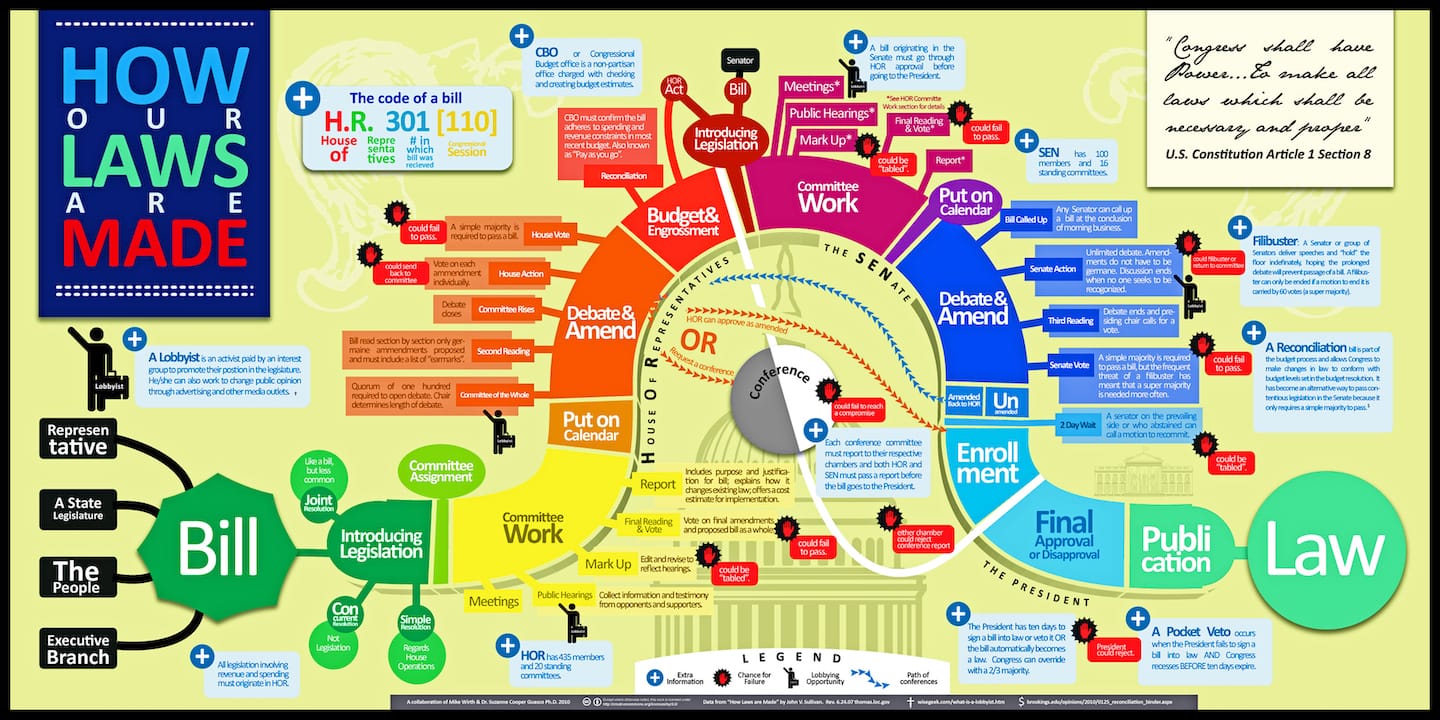
See also: CIVICA: Centrist & Independent Voters in Coalition for America. “How out Laws are Made.” 2011-04-09.
The Schoolhouse Rock “I’m Just a Bill – How a Bill Becomes a Law” video has enjoyed a surge of renewed interest due to recent comments made by a prominent United States Republican Congressman. This Congressman’s statements revealed that he sorely needed to revisit what he should have learned long before in Social Studies class.
While the Schoolhouse Rock video is a great introduction for kids to the process of lawmaking, it’s a little too simplistic for anyone really wanting to understand the twists and turns a bill takes on it’s way to becoming a law. We found an excellent chart diagramming a bill’s sometimes perilous journey to the land of law, shown below, which was created by Mike Wirth in collaboration with Dr. Suzanne Cooper-Guasco Ph.D. We hope you’ll find it both interesting and useful. Be sure to click on the chart for a larger view.
CIVICA: Centrist & Independent Voters in Coalition for America. “How out Laws are Made.” 2011-04-09
Just this past year, as peported by NPR, the Supreme Court “significantly curtailed the power of the Environmental Protection Agency to regulate the nation’s wetlands and waterways. It was the court’s second decision in a year limiting the ability of the agency to enact anti-pollution regulations and combat climate change.”
The FRAC Act struggle for accountability and protection of our right to health continues as the world burns…
See also: Nina Totenberg. The Supreme Court has narrowed the scope of the Clean Water Act. 25 may 2023. NPR.
Justice Brett Kavanaugh, joined by the court’s three liberal members, disputed Alito’s reading of the statute, noting that since 1977 when the CWA was amended to include adjacent wetlands, eight consecutive presidential administrations, Republican and Democratic, have interpreted the law to cover wetlands that the court has now excluded. Kavanaugh said that by narrowing the act to cover only adjoining wetlands, the court’s new test will have quote “significant repercussions for water quality and flood control throughout the United States.”
In addition to joining Kavanaugh’s opinion, the court’s liberals signed on to a separate opinion by Justice Elena Kagan. Pointing to the air and water pollution cases, she accused the majority of appointing itself instead of Congress as the national policymaker on the environment.
Nina Totenberg. The Supreme Court has narrowed the scope of the Clean Water Act. 25 may 2023. NPR.
See: Marcellus-Shale.us: Our look at the Halliburton Loophole – 2005 Energy Act
See: Energy Policy Act of 2005
See: This Website is a Crash Course In Fracking
See: Affirming Gasland
See: U.S. Environmental Protection Agency (EPA): Weston Wilson Whistle Blower Letter
See: Energy Policy Act of 2005-Critique
See: EPA Findings on Hydraulic Fracturing Deemed “Unsupportable”
See: N.Y. Democrat Fires Back at Obama Admin in Fight Over Shale Drilling
See: U.S. Speaker Nancy Pelosi: The Gavel: Draining The Swamp