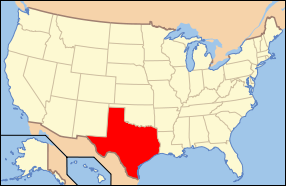
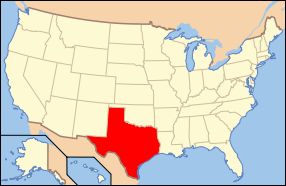
Wikipedia. Barnett Shale. (Editor’s Note. 27 Dec 2023. Last updated 1 Nov 2023. See below for advisory on using Wikipedia. I have found it to a reliable first look at subjects if it is used in a “smart way.”
The Barnett Shale and Marcellus Shale have similar geological properties.
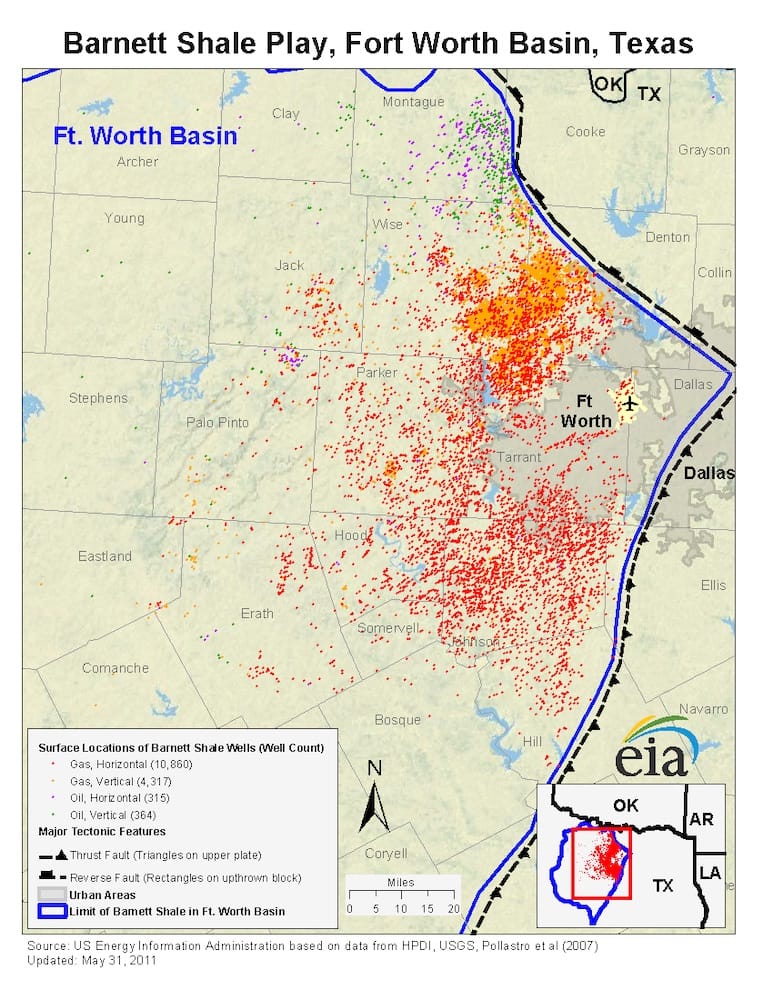
The Barnett Shale is known as a “tight” gas reservoir, indicating that the gas is not easily extracted. The shale is very hard, and it was virtually impossible to produce gas in commercial quantities from this formation until recent improvements were made in hydraulic fracturing technology and horizontal drilling, and there was an upturn in the natural gas price.
Future development of the field will be hampered in part by the fact that major portions of the field are in urban areas, including the rapidly growing Dallas-Fort Worth Metroplex.
Some local governments are researching means by which they can drill on existing public land (e.g., parks) without disrupting other activities so they may obtain royalties on any minerals found, whereas others are seeking compensation from drilling companies for damage to roads caused by overweight vehicles (many of the roads are rural and not designed for use by heavy equipment). In addition, drilling and exploration have generated significant controversy.
Controversy
Several groups in communities in which gas wells have been located have complained of high risk of catastrophic accidents, and some allege that accidents have already occurred, including several resulting in fatalities.[29]
Some environmental groups and north Texas residents have expressed concern about the effects of drilling on air and water quality in the areas surrounding the wells and pipelines.[30]
In 2010, the Environmental Protection Agency (EPA) issued an emergency order against Range Resources, stating that the company’s drilling activities in Parker County, Texas had contaminated at least two residential drinking water wells. The company denied the allegations, and said the presence of methane was a result of naturally occurring migration, and had shown up in nearby water wells long before Range drilled its gas wells.[31][32] However, after a January 2011 Texas Railroad Commission (TRRC) hearing, TRRC staff concluded that, based on chemical composition, the gas in the water wells came from the shallow Strawn Formation, rather than the deeper Barnett Shale, in which the Range wells were completed. They also concluded that pressure tests by Range showed mechanical integrity of the casing. EPA and the two homeowners were invited to present evidence at the TRRC hearing, but did not.[33] In March 2012, the EPA dropped its order against Range.[34]
The mayor of DISH, Texas complained that air pollution from a natural gas compressor station was sickening his family. However, in May 2010, The Texas Department of State Health Services released air quality results for DISH, including tests of blood and urine samples from 28 DISH residents that were tested for volatile organic compounds (VOCs). The agency concluded: “The information obtained from this investigation did not indicate that community-wide exposures from gas wells or compressor stations were occurring in the sample population. This conclusion was based on the pattern of VOC values found in the samples. Other sources of exposure such as cigarette smoking, the presence of disinfectant by-products in drinking water, and consumer or occupational/hobby related products could explain many of the findings.”[35]
Texas environmental regulators and the EPA have ordered the Texas Commission on Environmental Quality to begin investigating drilling complaints on-site within 12 hours of reception.[36]
Numerous lawsuits against companies operating in the Barnett Shale allege that companies have reneged on promised lease payments, altered agreements after the fact, or failed to meet their commitments to lessors of land in the shale.[37][38]
Wikipedia. Barnett Shale
Please note that information taken from Wikipedia should be verified using other, more reliable sources. It is a good place to start research, but because anyone can edit Wikipedia, we do not recommend using it in research papers or to obtain highly reliable information.
See also: Calvin Tillman website.
United By A Common Goal of Protecting Private Property for Texans
Calvin Tillman believes that you should be able to own and peacefully enjoy private property, and neither the government or private industry should be able to take that right away.
Calvin Tillman website

~Calvin Tillman
See: Barnett Shale: An Aerial View
See: Bluedaze – Drilling Reform for Texas
See: Bluedaze’s Sharon Wilson is Texan of the Year: Texas Progressive Alliance 2007 Silver Stars
See: Fracked: Barnett Shale drilling chemicals found in blood and organs
See: Gas industry approach would torpedo Barnett Shale study
See: Fracking: Implications for Human and Environmental Health
See: Dish Mayor Calvin Tilman Testifies at Railroad Commission – Oil and Gas Lawyer Blog
See: Health Issues Follow Natural Gas Drilling In Texas
See: Fort Worth Weekly: Perilous Profits
See: Chesapeake Energy Flares Barnett Shale Gas Well in Trinity Trail
See: The Barnett Shale first fracing natural gas well in 1980 by C.W. and C.C. Sanders
See: Barnett Shale Energy Education Council (BSEEC)
See: The risks of oil and gas production acknowledged around the world
See: Coalbed Methane Development: The Costs and Benefits of an Emerging Energy Resource
See: Natural gas: the commodity world’s ugly duckling
See: This Website is a Crash Course In Fracking
See: Affirming Gasland
See: Poison Fire
See: Ceres Principles – Corporate Environmental Conduct
See: EPA Findings on Hydraulic Fracturing Deemed “Unsupportable”
See: U.S. Speaker Nancy Pelosi: The Gavel: Draining The Swamp
See: Energy & Commerce Committee Investigates Potential Impacts of Hydraulic Fracturing
See: Hydraulic Fracturing: History of an Enduring Technology