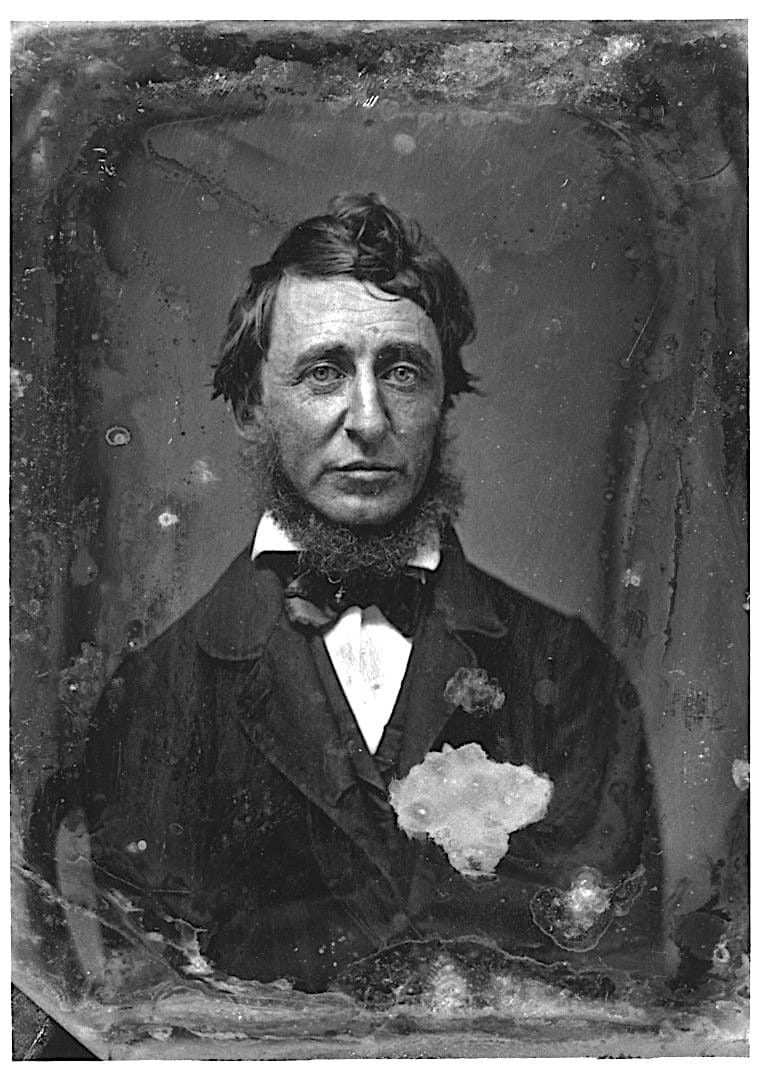



Dr. Ray Perryman
The Perryman Group
President & CEO
Dr. Ray Perryman is President and CEO of The Perryman Group, an economic research and analysis firm based in Waco, Texas.
He holds a BS in Mathematics from Baylor University and a PhD in Economics from Rice University. He always felt that the BS would have been somehow more appropriate for Economics. He took his first economics course on a coin flip between economics and psychology. If it had gone the other way, there might be some really messed up people in the world. In addition to his earned degrees, Dr. Perryman has received an honorary doctorate from the International Institute for Advanced Studies. After that one, he told his kids they had to start calling him “Doctor Doctor.” They preferred dork, dweeb, nerd, geek, and loser (on a good day).
Dr. Perryman has held numerous academic positions in his career, including ten years as Herman Brown Professor of Economics and five years as University Professor and Economist-in-Residence at Baylor University, as well as five years as Business Economist-in-Residence at Southern Methodist University. He has authored several books and more than 400 academic papers, and has served as President of both the Southwestern Economic Association and the Southwestern Society of Economists. His current academic roles include Senior Research Fellow of the IC2 Institute of the University of Texas and Institute Distinguished Professor of Economic Theory and Method at the International Institute for Advanced Studies. He also lives in Odessa while working in Waco, is the father of five young Texans (ages 31-37—although some temporarily reside elsewhere) and the grandfather of four, gets lost on his own block (he lives on a circle), and once ran one of his cars into the other one.
In the professional arena, Dr. Perryman has authored more than 2,500 trade articles, publishes a subscription forecasting service and a monthly newsletter, writes a weekly syndicated newspaper column, hosts a daily radio commentary, and appears regularly on National Public Radio. His firm engages in a broad range of complex projects for major corporate and governmental interests and has served the needs of more than 2,500 clients, including 10 cabinet departments, over half of the Fortune 100, two-thirds of the Global 25, and the 12 largest technology firms, six largest energy companies, and the five largest financial institutions in the world. In other words, he is an obsessive-compulsive workaholic.
Dr. Perryman has been called a “genius” by The Wall Street Journal, a “world class scholar” by Business Week, the “unofficial state economist” by The New York Times, “the most quoted man in Texas” by Texas Monthly, and, his personal favorite, “the state’s premiere barbecue connoisseur” by The Dallas Morning News. What his wife calls him can’t be repeated in mixed company.
Dr. Perryman has received hundreds of prestigious awards for his academic and professional efforts. He has been named the Outstanding Young Economist and Social Scientist in the US, the Outstanding Young Person in the World in Business and Economic Innovation, one of Ten Outstanding Young Americans and Ten Outstanding Young Persons in the World. It is highly unlikely that he will ever receive another award with the word “Young” in it, or even “Middle-Aged” for that matter.
Dr. Perryman has been honored by The Democracy Foundation for his role in promoting capitalism in China, The Asia and World Institute for promoting international trade and academic exchange, and the Systems Research Foundation for his contributions to the field of modeling (that would be “economic” modeling, not “fashion” modeling; he seems to think there might be some confusion). He has also received the Lifetime Achievement Award from the International Institute for Advanced Studies. He was skeptical about that one, thinking it was something you received just before you croaked. He has never played in the NBA, but he has played in Wilson Pickett’s band, sang the National Anthem at a Cubs game at Wrigley Field, and had his name and picture in lights on the marquee in Times Square.
Dr. Perryman has received citations from governments around the world, presidents, governors, Congress, and national and state administrative and legislative bodies, and has been nominated for the Bank of Sweden Prize in Economic Sciences in Memory of Alfred Nobel (Nobel Memorial Prize in Economics). He has received far more citations from the Texas Department of Public Safety.
Some of his most gratifying work has been in the field of economic development, where he has played a key role in the creation of hundreds of thousands of jobs. He is pleased that, at long last, some of his kids actually hold some of those jobs. He devotes a substantial portion of his time to pro bono efforts seeking solutions to major social problems such as poverty, hunger, indigent health care, and child maltreatment. He is a past recipient of the Outstanding Texas Leader Award and has been honored by the Texas Legislature for his “tireless efforts in helping to build a better Texas.” Dr. Perryman was selected as the 2012 Texan of the Year by the Texas Legislative Conference, received the 2013 Baylor University Distinguished Service Medal, was inducted into the Texas Leadership Hall of Fame in 2014, received the 2016 Cesar E. Chavez Legacy Award for his humanitarian efforts, was named the Most Dynamic Economic Researcher in the US in 2018 by Global Business Insights, received the 2019 Chairman’s Award for Lifetime Achievement in Economic Development from the International Economic Development Council, and was selected for the 2019 “Go Global” Award from the International Trade Council as the outstanding global economic analyst for his work on trade, energy, the environment, and other international issues. He is also an honorary Kilgore Rangerette, although his high kick leaves a lot to be desired, so he is not yet on the traveling squad (but there is always next year!!).
Dr. Perryman’s daughter is also notable. See also:
See also: Martin Pengelly. Democracy 2025: the lawyer leading ‘swift legal defenses’ against new Trump threat. 28 Dec 2024. The Guardian.
Skye Perryman and her progressive coalition are preparing to fight in court and in the public square against Project 2025 and other foes
See also: NGI Staff Reports. Barnett Shale Accounts for 5% of Fort Worth Area Economy. 17 May 2007. Natural Gas Intelligence (NGI)
Perryman’s report is the first complete look at the economic impact of the Barnett Shale on the counties with the most drilling activity: Clay, Cook, Denton, Erath, Hill, Hood, Jack, Johnson, Montague, Palo Pinto, Parker, Tarrant, Wise and Young. Perryman said the Barnett Shale would be responsible for an average of 108,000 jobs and $10.4 billion in output each year through 2015.
“In 2007, our analysis of the impact of the Barnett Shale indicated it was like ‘icing on the cake’ for the already healthy Fort Worth-area economy. This year, we found that activity in the Barnett Shale is making an even bigger difference, with expansion in benefits surpassing expectations.” (Perryman, 2008, p.5.)
-Dr. M. Ray Perryman.
See also: The Perryman Group. “Drilling for Dollars: An Assessment of the Ongoing and Expanding Economic Impact of Activity in the Barnett Shale on Fort Worth and the Surrounding Area.” ( PDF 1.2MB, 2008)
Exploration, drilling, and production in the Barnett Shale natural gas field have transformed the Fort Worth-area economy with thousands of jobs and millions of dollars in investment.
…This huge surge in economic activity is generating sizable gains for local taxing authorities. The fiscal impact of the Barnett Shale stems from two primary sources: property taxes paid on oil and gas properties and enhanced retail sales and real estate development due to the economic impact of the Barnett Shale. Our analysis indicates that the total direct and indirect revenue to local governments in the region (excluding royalty and lease payments) was about $227.7 million as of 2006, and will likely increase in the future.
A follow-up to the prediction Perryman offered in 2007 for Ft. Worth did not look as rosy.
Read this report from the Ft. Worth Business Press, September 21, 2009. Dan McGraw. “Cut Out.” Ft. Worth Weekly. September 2, 2009. (Neil Zusman, 2010-08-20.)
ECONOMIC BENEFIT? REALLY?
As the horrific truth about the dangers of fracking continue to come to light, economist (and Catskill Citizens member!) Jannette Barth, Ph.D., continues to deconstruct the myth that drilling will be a boon to local communities and the state. Her 2011 report points out distortions and misstatements in the industry- funded studies that tout the economic benefits of fracking.

Janette Barth: Unanswered Questions About The Economic Impact of Gas Drilling In the Marcellus Shale: Don’t Jump to Conclusions
See also: NGI Staff Reports. Barnett Shale Accounts for 5% of Fort Worth Area Economy. 17 May 2007. Natural Gas Intelligence (NGI).
Exploration and production (E&P) activity in the Barnett Shale is contributing more than $5 billion annually to North Texas coffers and has created about 55,000 permanent jobs in the area, according to a study of energy companies drilling and producing in the 14 counties of the hydrocarbon-rich region.
In 2006 the Fort Worth Chamber of Commerce commissioned the study and unveiled it Wednesday at the Barnett Shale Expo, the largest trade show ever devoted to the Barnett Shale energy industry.
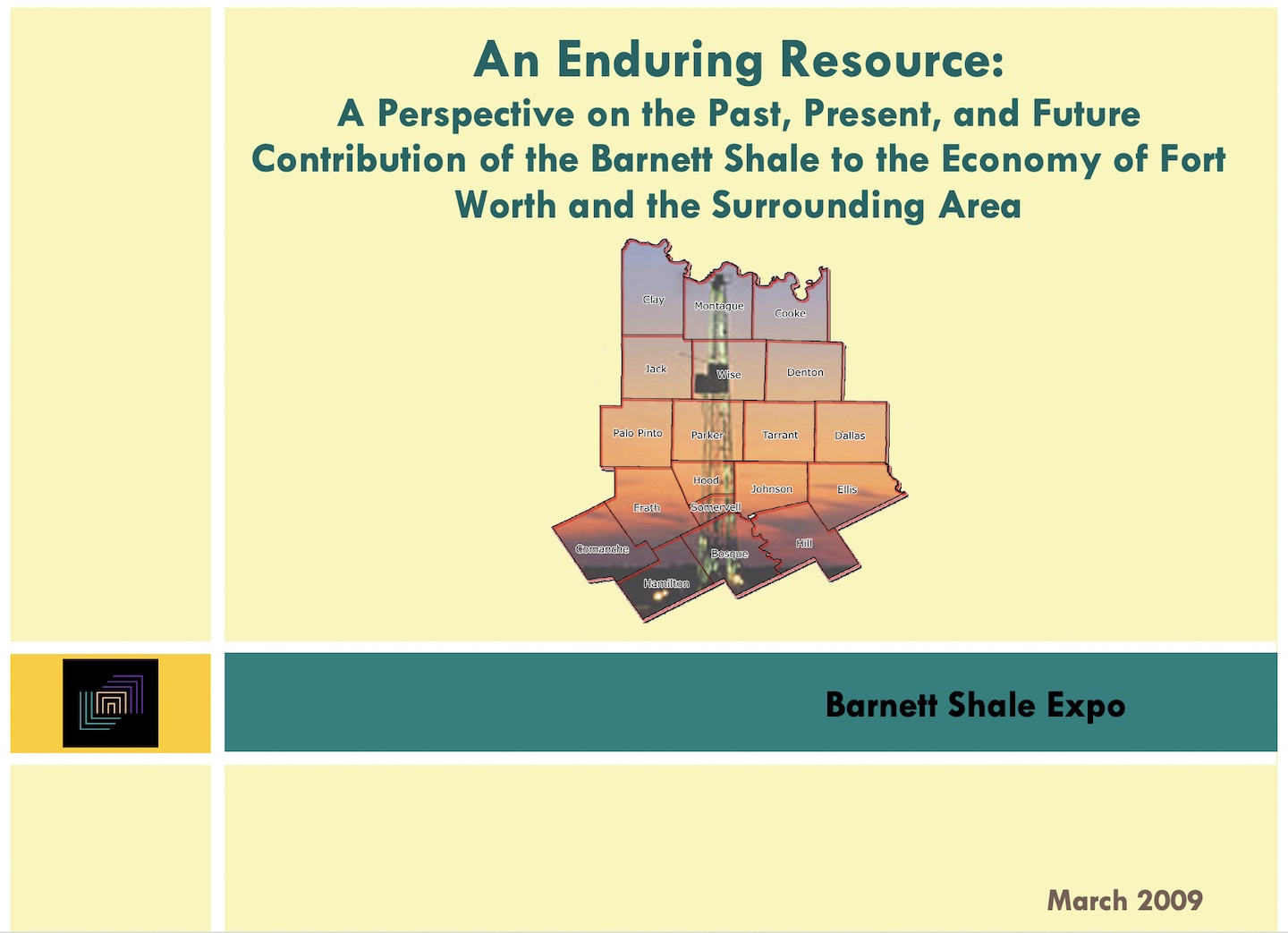
The Barnett Shale now accounts for approximately 5% of the area’s total economic output, according to the study. The play’s growth has been driving the growth and consolidation of numerous small service and other E&P-related businesses in the area (see Daily GPI, Jan. 31).
“Historically, we see oil or natural gas discovered and then the town springs up around it,” said economist Ray Perryman, author of the report, “Bounty from Below: The Impact of Developing Natural Gas Resources Associated with the Barnett Shale on Business Activity in Fort Worth and the Surrounding 14-County Area.”
“In this case, we have a big, fully functioning metropolitan area on top of one of the largest natural gas fields in North America,” he said. “The Barnett Shale is like the icing on the cake for a city already performing quite well.”
Perryman’s report is the first complete look at the economic impact of the Barnett Shale on the counties with the most drilling activity: Clay, Cook, Denton, Erath, Hill, Hood, Jack, Johnson, Montague, Palo Pinto, Parker, Tarrant, Wise and Young. Perryman said the Barnett Shale would be responsible for an average of 108,000 jobs and $10.4 billion in output each year through 2015. The economic stimulus from the Barnett Shale ripples through the economy in the form of personal income from jobs, investment and royalty and bonus payments, and from increased tax receipts generated by retail, property and hotel/motel occupancy taxes and local permits and fees. Other findings from the study include:
David Berzina, executive vice president of economic development for the Fort Worth Chamber of Commerce, said the study was commissioned to help local governments plan their revenue windfalls wisely. “The Barnett Shale has the potential to reshape dramatically the budgets of local school districts, cities and other jurisdictions,” said Berzina. “Smart growth requires a clear understanding of just how much they can expect from this energy sector and plan ahead.”
Seven major energy companies responded to a seven-page questionnaire prepared by the Perryman Group. These companies represent two-thirds of the drilling activity in the Barnett region. The companies were asked to break down by counties the number of full-time employees over the past six years, staffing needs through 2015, annual payroll, operating costs, current and future production levels, charitable contributions and the amount of state and local taxes paid.
Natural gas production in the Barnett Shale has grown sharply in recent years, accounting for 12% of Texas’ total production in 2006. Industry observers expect activity to continue for the next 20 to 30 years; however, advances in drilling technology may extend the play’s life further. The Barnett covers about 5,000 square miles and portions of at least 14 counties in North Texas.
“While some of the effects of the Barnett Shale may be transitory, the investment of payments currently being received stands to permanently change the economy,” said Perryman. “Infrastructure improvements such as flood control will pay off indefinitely. Purchase of assets such as land for parks also will yield permanent benefits. Quality-of-life enhancements will enable the area to compete for desirable economic development of many types.”
See: Encana Fracking Cake for Kids – A Look Underground
See: Christopherson to study economic impact of gas drilling in Marcellus Shale
See: Myth Busting | The Marcellus: An American Travesty
See: It’s Getting Hot In Here: Keeping (and Calculating) Tabs on Gas Drilling
See: Bluedaze – Drilling Reform for Texas
See: Health Issues Follow Natural Gas Drilling In Texas
See: Bluedaze’s Sharon Wilson is Texan of the Year: Texas Progressive Alliance 2007 Silver Stars
See: Environmental Groups Support U.S. EPA in Texas Air Permit Case
See: Dish Mayor Calvin Tilman Testifies at Railroad Commission – Oil and Gas Lawyer Blog
See: How Should We Do the Mountain?: Who the heck is Calvin Tilman?
See: Christopherson to study economic impact of gas drilling in Marcellus Shale