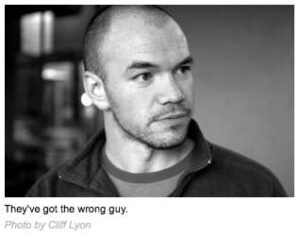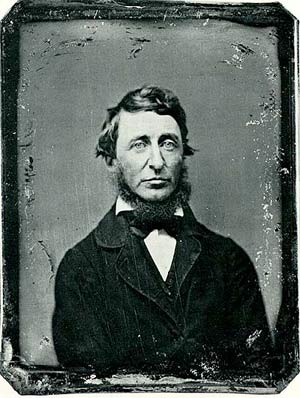
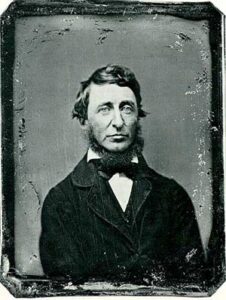
Richard Lenat is the creator of The Thoreau Reader, a website that includes introductions to Henry David Thoreau’s works, electronic versions of the texts, and links to other Thoreau resources.
What’s included in The Thoreau Reader?
- Introductions to several of Thoreau’s books and essays
- Electronic versions of Thoreau’s works
- Links to other Thoreau resources
- An annotated version of “Civil Disobedience”
- An annotated version of “Walking”
- A selection of resources from The Maine Woods and Walden
Where can you find The Thoreau Reader?
- The Thoreau Reader: A website that includes introductions to Thoreau’s works, electronic versions of the texts, and links to other Thoreau resources
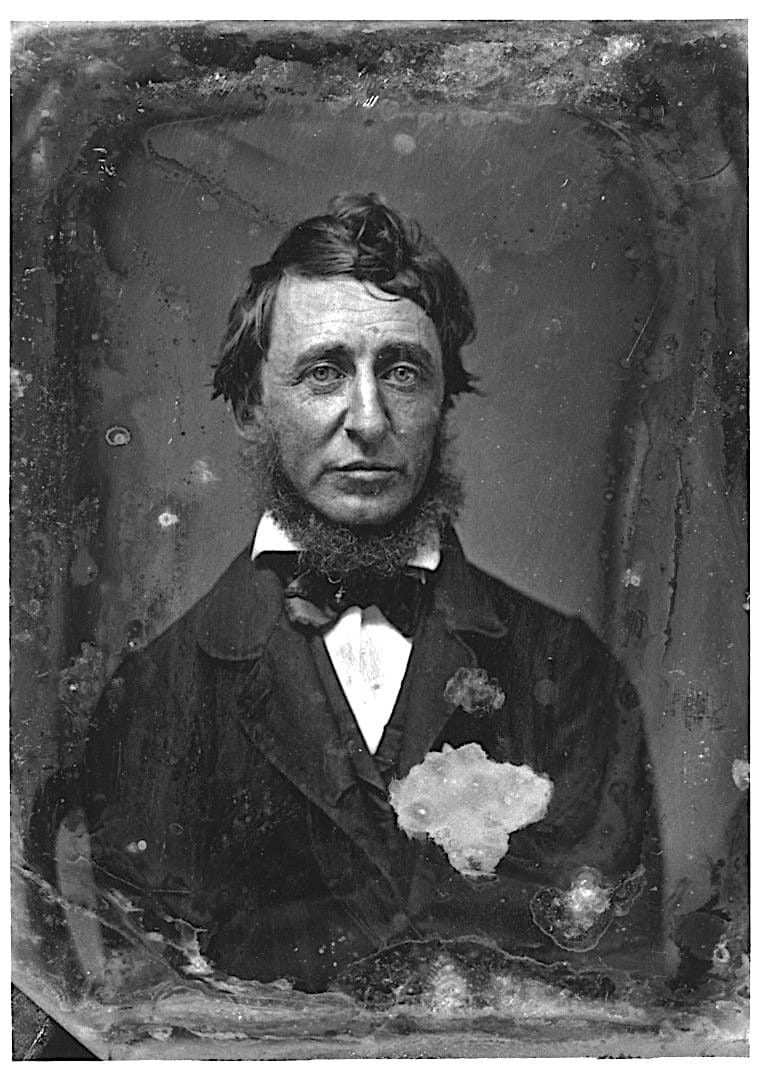
Henry David Thoreau in a daguerreotype taken in 1856 by Benjamin D. Maxham. Credit…Benjamin D. Maxham/Thoreau Society and the Walden Woods Project. Source: New York Times.
Benjamin D. Maxham active 1848 – 1858. Portrait photograph from a ninth-plate daguerreotype of Henry David Thoreau. 18 Jun 1856.
Calvin R. Greene was a Thoreau “disciple” who lived in Rochester, Michigan, and who first began corresponding with Thoreau in January 1856. When Greene asked for a photographic image of the author, Thoreau initially replied: “You may rely on it that you have the best of me in my books, and that I am not worth seeing personally – the stuttering, blundering, clodhopper that I am.”
Yet Greene repeated his request and sent money for the sitting. Thoreau must have kept this commitment to his fan in the back of his mind for the next several months. On June 18, 1856, during a trip to Worcester, Massachusetts, Henry Thoreau visited the Daguerrean Palace of Benjamin D. Maxham at 16 Harrington Corner and had three daguerreotypes taken for fifty cents each. He gave two of the prints to his Worcester friends and hosts, H.G.O. Blake and Theophilius Brown. The third he sent to Calvin Greene in Michigan. “While in Worcester this week I obtained the accompanying daguerreotype – which my friends think is pretty good – though better looking than I,” Thoreau wrote.
Wikipedia. File:Benjamin D. Maxham – Henry David Thoreau.
See also: Fen Montaigne. On Thoreau’s 200th Birthday, a New Biography Pictures Him as a Man of Principle. 12 Jul 2017. New York Times.
The author of “Walden” — an account of living for two years, two months and two days on the shores of Walden Pond in Concord, Mass. — was a mid-19th-century visionary besotted with the wonders of the natural world. Thoreau laid the groundwork for a field that would come to be known as ecology. He was one of the first advocates for the establishment of a system of national parks. He was a passionate champion of the ethical treatment of all living things and embraced the tenets of Eastern religion, incurring the wrath of fundamentalists who accused him of blasphemy.
And he was a man devoted to science who compiled 12 volumes of notes on the Native Americans of the northeastern United States, faithfully chronicled the dates of the flowering of plants (an important record today as the climate changes) and performed groundbreaking research into the succession of trees in burned and logged forests. Asked once why he was so eternally curious about things, Thoreau responded, “What else is there in life?”
Fen Montaigne. On Thoreau’s 200th Birthday, a New Biography Pictures Him as a Man of Principle. 12 Jul 2017. New York Times.
See also: Alec Israeli. Henry David Thoreau Was a Theorist of the Transition to Capitalism. 5 Aug 2023. Jacobin Magazine.
Philosopher Henry David Thoreau has developed a reputation as an advocate for self-help in the form of withdrawal from work. But in his writing, he advanced a thoroughgoing critique of work under capitalism and defended the emancipatory potential of labor.
The Thoreau Reader – Annotated works of Henry David Thoreau, Part 1 of 3
A Project in Cooperation with the Thoreau Society.
I HEARTILY ACCEPT the motto,—”That government is best which governs least”;(1) and I should like to see it acted up to more rapidly and systematically. Carried out, it finally amounts to this, which also I believe,—”That government is best which governs not at all”; and when men are prepared for it, that will be the kind of government which they will have.
Government is at best but an expedient; but most governments are usually, and all governments are sometimes, inexpedient. The objections which have been brought against a standing army, and they are many and weighty, and deserve to prevail, may also at last be brought against a standing government. The standing army is only an arm of the standing government.
The government itself, which is only the mode which the people have chosen to execute their will, is equally liable to be abused and perverted before the people can act through it. Witness the present Mexican war,(2) the work of comparatively a few individuals using the standing government as their tool; for, in the outset, the people would not have consented to this measure.
This American government—what is it but a tradition, though a recent one, endeavoring to transmit itself unimpaired to posterity, but each instant losing some of its integrity? It has not the vitality and force of a single living man; for a single man can bend it to his will.
The Thoreau Reader – Annotated works of Henry David Thoreau, Part 1 of 3
While Walden can be applied to almost anyone’s life, “Civil Disobedience” is like a venerated architectural landmark: it is preserved and admired, and sometimes visited, but for most of us there are not many occasions when it can actually be used.
Thoreau has such a way of speaking that I am tempted to quote him too much; I can’t say it any better than he. Thoreau was once jailed to refusing to pay taxes because he didn’t want to support a government that upheld slavery and also, a government involved in a war with Mexico, which he considered an immoral war. He wrote about this experience in an essay called “Resistance to Civil Government”. The name of the essay was later changed to “Civil Disobedience.”
On his website, Richard Lenat writes:
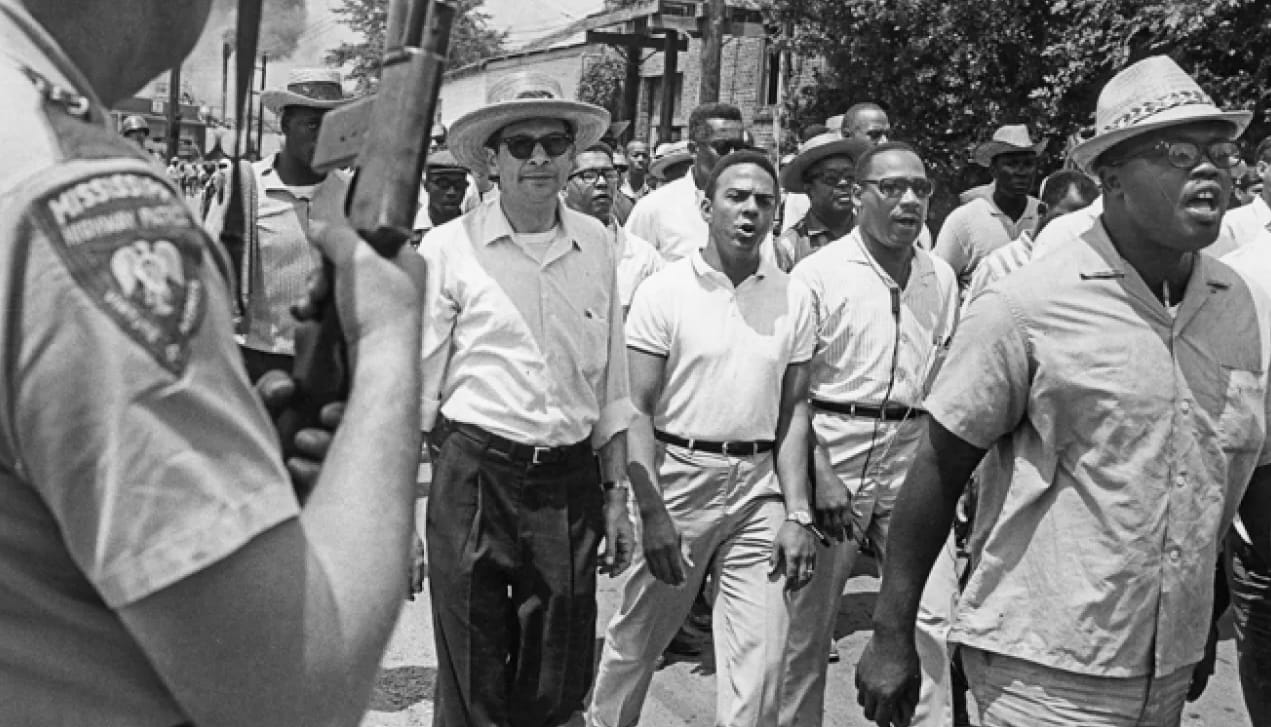
“… Although it is seldom mentioned without references to Gandhi and King, “Civil Disobedience” has more history than many suspect. In the 1940’s it was read by the Danish resistance, in the 1950’s it was cherished by people who opposed McCarthyism, in the 1960’s it was influential in the struggle against South African apartheid, and in the 1970’s it was discovered by a new generation of anti-war activists.” Source: https://litkicks.com/CivilDisobedience/
See also: The Higher Law: Thoreau on Civil Disobedience and Reform by Henry David Thoreau, edited by Wendell Glick, with an introduction by Howard Zinn.
IN THE YEAR 1968 I was called to Milwaukee to testify in the case of the Milwaukee Fourteen, a group of priests, nuns, and laypeople who had gone into a draft board, taken thousands of its documents, and burned them in a symbolic protest against the war in Vietnam. As a historian of social movements, I was asked to discuss the role of civil disobedience in American history. The judge was clearly uneasy, but he allowed me to answer the question.
I spoke of the principles of the Declaration of Independence, and of its insistence that when a government becomes destructive of basic human rights, it is the duty of the people to “alter or abolish it.” I began to talk about Henry David Thoreau and his decision to break the law in protest against the U.S. invasion of Mexico in 1846. At this point, Judge Larsen interrupted. He pounded his gavel and said: “You can’t discuss that. That is getting to the heart of the matter.”
The Higher Law: Thoreau on Civil Disobedience and Reform by Henry David Thoreau, edited by Wendell Glick, with an introduction by Howard Zinn.
As a result of his writings and personal witness, we are the heirs of a legacy of creative protest. – Martin Luther King, Jr, Autobiography
To Save the Soul of America
“Somewhere I read of the freedom of assembly. Somewhere I read of the freedom of speech. Somewhere I read of the freedom of press. Somewhere I read that the greatness of America is the right to protest for right. And so just as I say we aren’t going to let any dogs or water hoses turn us around, we aren’t going to let any injunction turn us around. We are going on.”
This work is included in Fracking Resource Guide as an homage to the many individual voices and blogs I will continue to read that help the world stay informed about the dangers of hydrofracking.
Neil Zusman, Fracking Resource Guide (2010) then and (2025) now
I will join you at the barricades. Drilling isn’t safe.
See also : Essay by Peter Suber. “Civil Disobedience”.
…The Nuremberg principles require disobedience to national laws or orders which violate international law, an overriding duty even in (perhaps especially in) a democracy.
Civil disobedience is a form of protest in which protestors deliberately violate a law. Classically, they violate the law they are protesting, such as segregation or draft laws, but sometimes they violate other laws which they find unobjectionable, such as trespass or traffic laws. Most activists who perform civil disobedience are scrupulously non-violent, and willingly accept legal penalties.
The purpose of civil disobedience can be to publicize an unjust law or a just cause; to appeal to the conscience of the public; to force negotiation with recalcitrant officials; to “clog the machine” (in Thoreau’s phrase) with political prisoners; to get into court where one can challenge the constitutionality of a law; to exculpate oneself, or to put an end to one’s personal complicity in the injustice which flows from obedience to unjust law —or some combination of these.
While civil disobedience in a broad sense is as old as the Hebrew midwives’ defiance of Pharaoh, most of the moral and legal theory surrounding it, as well as most of the instances in the street, have been inspired by Thoreau, Gandhi, and King. In this article we will focus on the moral arguments for and against its use in a democracy.
Essay by Peter Suber. “Civil Disobedience”
See: DEC Fracks NYC & Josh Fox of Water Under Attack’s Responds
See: Criminalising Civil Disobedience
See: The Yes Men | Climate Pledge of Resistance
See: Under the surface : fracking, fortunes and the fate of the Marcellus Shale
See: Tree spiker : from Earth First! to lowbagging: my struggles in radical environmental action
See: BARDs “Big Mule” Drummond Coal Sued–Part II
See: Climate Ground Zero
See: The Deep Hot Biosphere : The Myth of Fossil Fuels
See: Drill, Baby, Drill!: The chant of the political naif
See: Action Center | Republicans for Environmental Protection (REP America)
See: Art of the common-place: the agrarian essays of Wendell Berry
See: Coal River
See: Natural Gas Drilling Threatens Communities in Northeastern United States
See: This Website is a Crash Course In Fracking
See: Deep Down | Film on Mountaintop Mining | PBS
See: Chevron Human Energy Stories | Addressing Climate Change
See: WATER | Clean Water Action
See: Louisiana Environmental Action Network (LEAN)
See: U.S. Environmental Protection Agency (EPA): Weston Wilson Whistle Blower Letter
See: Whistleblower.org