The Government Accountability Project’s mission is to promote corporate and government accountability by protecting whistleblowers, advancing occupational free speech, and empowering citizen activists…
…Founded in 1977, GAP is the nation’s leading whistleblower protection and advocacy organization. Located in Washington, D.C., GAP is a nonpartisan, public interest group. In addition to focusing on whistleblower support in our stated program areas, we lead campaigns to enact whistleblower protection laws both domestically and internationally. GAP also conducts an accredited legal clinic for law students, and offers an internship program year-round.
See also: Halliburton’s Interests Assisted by White House – Los Angeles Times.
See also: Daniel Ellsberg’s The Pentagon Papers | Wikipedia | The Most Dangerous Man in America (film)
See also: Michael Mann. The Insider (1999). Based on a story about Jeffrey Wigand adapted from Marie Brenner, May 1996, Vanity Fair, “The Man Who Knew Too Much”.
See also: Goldman Environmental Prize Winners (2001) Jane Akre and Steve Wilson.
See also: Alfed and John Donovan. 2010-10-27. “Sadistic sacking of a Royal Dutch Shell whistleblower”. Royal Dutch Shell PLC.com
See also: Rick Piltz. Climate Science Watch.
See also: Julian Assange. Wikileaks.
See also: Moynihan Commission on Government Secrecy (1997) | Wikipedia
See also: Massimo Calabresi. Dec. 2, 2010. Time. “WikiLeaks’ War on Secrecy: Truth’s Consequences.”
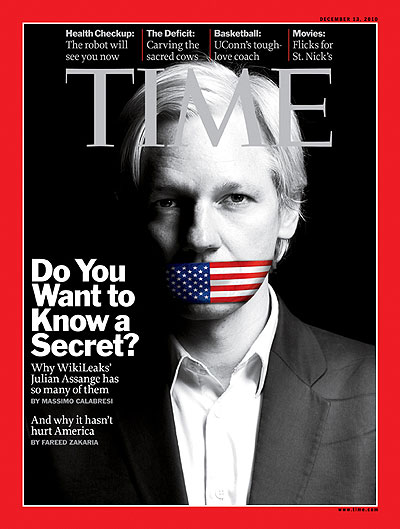
More damaging, perhaps, is that a fundamental mistrust of government is a natural outgrowth of secrecy inflation. As the number of secrets expanded in the 1990s, Moynihan observed in his 1997 report, the imperative to keep them secret diminished.
Because “almost everything was declared secret, not everything remained secret and there were no sanctions for disclosure,” Moynihan wrote. And the more secrets leak, the worse it is for government credibility: either they are important and the sanctions are too minimal, or they are unimportant and the public believes there’s no point in keeping secrets at all.
“When trusted insiders no longer have faith in the judgment of government regarding secrets, then they start to substitute their own judgment,” says William J. Bosanko, head of the Information Security Oversight Office at the National Archives, which oversees what gets classified. “And that’s a big problem.”
See also: Xah Lee. Wikileaks: US Diplomatic Cables Leak. (WikiLeaks’s Julian Assange Reviews TIME’s Top 10 Leaks)
Big news: United States diplomatic cables leak. Quote:
The United States diplomatic cables leak is the ongoing public release of 251,287 documents, detailing correspondence between the U.S. State Department and U.S. embassies around the world. The documents were obtained by WikiLeaks and distributed to five major newspapers under embargo, with the first set of 220 cables published on 28 November 2010. The release includes approximately 100,000 documents labelled “confidential” on the classification scale and around 15,000 documents at the higher level “secret”, but none marked “top secret”. Most of the documents focus on diplomatic relations between the U.S. and Middle East states. WikiLeaks plans on releasing the entirety of the cables in phases over several months.
Also of interest, is this. Quote:
On 26 November, via his lawyer Jennifer Robinson, Wikileaks founder Julian Assange sent a letter to the US Department of State, inviting them to “privately nominate any specific instances (record numbers or names) where it considers the publication of information would put individual persons at significant risk of harm that has not already been addressed”. Harold Koh, Legal Adviser of the Department of State, refused the proposal, stating, “We will not engage in a negotiation regarding the further release or dissemination of illegally obtained U.S. Government classified materials”.[15] Assange responded to this by writing “You have chosen to respond in a manner which leads me to conclude that the supposed risks are entirely fanciful and you are instead concerned to suppress evidence of human rights abuse and other criminal behaviour”.
Basically, the US government takes “law” and stern approach, using the name of “protecting lives”. I don’t know if wikileak’s document would endanger lives, but i know it’s far better to release this lie-exposure than, say, continuing US government’s “war on terror” or whatnot other secrecy that caused some hundred thousands of Iraq civilian dead. (See: Iraq War Photos)
The Wikipedia article also contain summary of the leaks so far.
Xah Lee. Wikileaks: US Diplomatic Cables Leak. 2010-11-29
See also: Moynihan, Daniel Patrick. Secrecy: the American experience. Yale University Press, 1999.
Senator Daniel Patrick Moynihan, chairman of the bipartisan Commission on Protecting and Reducing Government Secrecy, here presents an eloquent and fascinating account of the development of secrecy as a mode of regulation in American government since World War I–how it was born, how world events shaped it, how it has adversely affected momentous political decisions and events, and how it has eluded efforts to curtail or end it. Senator Moynihan begins by recounting the astonishing story of the Venona project, in which Soviet cables sent to the United States during World War II were decrypted by the U.S. Army–but were never passed on to President Truman. The divisive Hiss perjury trial and the McCarthy era of suspicion might have had a far different impact on American society, says Moynihan.
See: WolfeNotes | On the Threshold of a Fracking Nightmare
See: The Yes Men | Climate Pledge of Resistance
See: U.S. Environmental Protection Agency (EPA): Hydraulic Fracturing Study (2010-2012)
See: U.S. Environmental Protection Agency (EPA): Weston Wilson Whistle Blower Letter
See: Affirming Gasland
See: This Website is a Crash Course In Fracking
See: Coalbed Methane Development: The Costs and Benefits of an Emerging Energy Resource
See: Fracking: Implications for Human and Environmental Health
See: EPA Findings on Hydraulic Fracturing Deemed “Unsupportable”