The Basel Action Network is still going strong in 2025.
‘Sunlight is said to be the best of disinfectants.’
— U.S. Supreme Court Justice Louis Brandeis
‘Secrecy is the badge of fraud’
— Sir John Chadwick (b. 1941), British judge
‘Every thing secret degenerates, even the administration of justice; nothing is safe that does not show how it can bear discussion and publicity.’
— Lord Acton (1834-1902), English historian
“The first principle of a free society is an untrammeled flow of words in an open forum.’
–Adlai Stevenson (1900-1965), American statesman
‘Give me the liberty to know, to utter, and to argue freely according to conscience, above all liberties.’
–John Milton (1608-74), English poet
Basel Action Network (BAN) is the world’s only organization focused on confronting the global environmental injustice and economic inefficiency of toxic trade (toxic wastes, products and technologies) and its devastating impacts.
Working at the nexus of human rights and environment, we confront the issues of environmental justice at a macro level, preventing disproportionate and unsustainable dumping of the world’s toxic waste and pollution on our global village’s poorest residents.
At the same time we actively promote the sustainable and just solutions to our consumption and waste crises — banning waste trade, while promoting green, toxic free and democratic design of consumer products.
Basel Action Network (BAN) is a 501(c)3 charitable organization of the United States, based in Seattle, Washington
Basel Action Network (BAN) leaked the Summers Memo in 1991 that Summers signed while he was Chief Economist of the World Bank.
Hydraulic Fracturing involves dumping millions of gallons of toxic slaine brine whose ingredients remain a trade secret due to monitoring exemptions granted by the 2005 Energy Policy Act.
See also: Jennifer Clapp. (2010). Toxic Exports: The Transfer of Hazardous Wastes from Rich to Poor Countries. Cornell Univ Press. 2010.
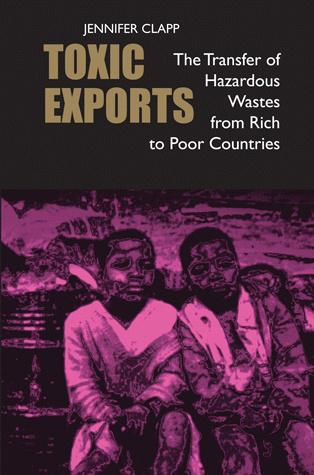
In recent years, international trade in toxic waste and hazardous technologies by firms in rich industrialized countries has emerged as a routine practice. Many poor countries have accepted these deadly imports but are ill equipped to manage the materials safely. For more than a decade, environmentalists and the governments of developing countries have lobbied intensively and generated public outcry in an attempt to halt hazardous transfers from Northern industrialized nations to the Third World, but the practice continues.
In her book, Jennifer Clapp addresses this alarming problem. Clapp describes the responses of those engaged in hazard transfer to international regulations, and in particular to the 1989 adoption of the Basel Convention. She pinpoints a key weakness of the regulations—because hazard transfer is dynamic, efforts to stop one form of toxic export prompt new forms to emerge. For instance, laws intended to ban the disposal of toxic wastes in the Third World led corporations to ship these byproducts to poor countries for “recycling.” And, Clapp warns, current efforts to prohibit this “recycling movement” may accelerate a new business endeavor: the relocation to poor countries of entire industries that generate toxic wastes.
Clapp concludes that the dynamic nature of hazard transfer results from increasingly fluid global trade and investment relations in the context of a highly unequal world, and from the leading role played by multinational corporations and environmental NGOs. Governments, she maintains, have for too long failed to capture the initiative and have instead only reacted to these opposing forces. (Text from Cornell University Press)
Jennifer Clapp. (2010). Toxic Exports: The Transfer of Hazardous Wastes from Rich to Poor Countries. Cornell Univ Press. 2010.
See: Gas Drillers Plead Guilty to Felony Dumping Violations
See: Tragedy of the Commons | Mixplex
See: Blue Covenant: The Global Water Crisis and the Coming Battle for the Right to Water
See: Flow – The War Between Public Health and Private Interests
See: BodyBurden – The Pollution in Newborns