Most Consulted 🔥

Most Consulted 🔥

Earthstage’s Archive Resonance captures moments when certain documents drew exceptional attention. Most Consulted works reflect peak engagement—periods when readers returned to the same sources again and again. Explore related scholarly research below ↓

53 documents

2023

June (2023)

Clean Water Laws Are Neglected, at a Cost in Suffering

Clean Water Laws Are Neglected

Journalist Charles Duhigg examined how weakened enforcement of clean water laws left communities exposed to pollution. In states where regulators lacked resources or political backing, violations mounted quietly. The cost wasn’t theoretical — it showed up in hospital visits, contaminated wells, and neighborhoods struggling with what flowed from upstream facilities.

Source: New York Times (2009) Read More

2013

January (2013)

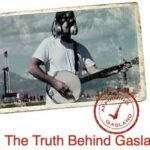
Poison Fire

Poison Fire

If you plan to stop by these woods on a snowy evening bring some marshmallows and expect an evening sunburn. There’s a chance your treats will be toxic.

Source: YouTube (2008) Read More

American Petroleum Institute

American Petroleum Institute

Critics and investigative reports have accused the American Petroleum Institute (API) of advancing climate change denial and working to block climate legislation in defense of its constituent interests. The organization serves as the principal trade association for the U.S. oil and gas industry, shaping regulatory advocacy and public messaging on behalf of member companies. API has defended hydraulic fracturing as safe when properly regulated and has opposed expanded federal oversight that could alter the industry’s operating framework, placing the trade group at the center of national energy policy battles.

Source: API (2010) Read More

Deep Down | Film on Mountaintop Mining | PBS

Deep Down | Film on Mountaintop Mining | PBS

Beverly May and Terry Ratliff grew up like kin on opposite sides of a mountain ridge in eastern Kentucky. Now in their fifties, the two find themselves in the midst of a debate dividing their community and the world: who controls, consumes, and benefits from our planet’s shrinking supply of natural resources?

Source: Independent Lens | PBS (2010) Read More
Cornell 2011 Energy Conference

Cornell 2011 Energy Conference

The Cornell University Law School – 2011 Energy Conference (March 31-April 2, 2011) explored, among other topics, the legal issues associated with natural gas drilling and energy policy, different scientific perspectives on how clean and sustainable natural gas is, alternative clean energy sources, and the potential risks and benefits of shale gas development in Upstate New York.

Source: YouTube (2011) Read More

House committee votes to deny climate change

House committee votes to deny climate change

On March 15, 2011, Republicans in the House energy committee voted not once (archived), not twice, but three times (archived), against amendments (archived) recognizing that climate change is real, despite the broad scientific consensus that ” climate change is happening (archived) and human beings are a major reason for it.” They then unanimously voted (archived) in favor of the Upton-Inhofe bill to repeal the EPA’s scientific endangerment finding on greenhouse pollution.

Source: Grist (2011) Read More
2012

June (2012)

Affirming Gasland

Affirming Gasland

Immediately upon the film’s release, Energy In Depth issued a paper claiming to “debunk” the film’s documentary evidence.

Source: DamascusCitizens.org (2010) Read More

May (2012)

2011

December (2011)

May (2011)

Chu Names Panel to Study Fracking

Chu Names Panel to Study Fracking

Broder’s piece goes on to offer a smokescreen of protest by the right, but according to Dusty Horwitt of the Environmental Working Group (archived), “An industry insider like John Deutch is completely unacceptable to lead this panel…It looks as if the Obama Administration has already reached the conclusion that fracking is safe.”

Source: NYTimes.com: Green | A Blog About the Environment (2011) Read More

Fracking the Karoo – The People Say No!

Fracking the Karoo - The People Say No!

“Do you know what fracking the Karoo is like?” demanded Esme Senekal of Somerset East. The people from Royal Dutch Shell and their consultants didn’t reply, their faces impassive. “It’s like you coming and drilling holes in our mother, and then leaving us to look after her and take her to hospital. Leave the Karoo alone!

Source: Fracking the Karoo - The People Say No! (2011) Read More

Energy & Commerce Committee Investigates Potential Impacts of Hydraulic Fracturing

Energy & Commerce Committee Investigates Potential Impacts of Hydraulic Fracturing

A report linking the fracking industry to violations of the Safe Drinking Water Act put some of the biggest names in shale on the defensive. The House Energy & Commerce Committee launched inquiries, demanding data and calling executives to testify. Senator Barbara Boxer announced hearings and press conferences. In Washington, oversight begins with microphones — and can end with subpoenas.

Source: U.S. Congress. Committee On Energy and Commerce (2010) Read More

April (2011)

Worlds Collide at Cancun Climate Talks

Worlds Collide at Cancun Climate Talks

Foreign Policy In Focus publishes commentaries, briefs, and reports on its website and organizes briefings for the public, media, lawmakers, and legislative staff.

Source: Foreign Policy In Focus (2010) Read More
Pa. drillers told to stop sending wastewater to treatment plants

Pa. drillers told to stop sending wastewater to treatment plants

The bromides themselves are not a public health risk – they account for a tiny part of the salty dissolved solids that create an unpleasant taste in water at elevated levels. …But bromides react with the chlorine disinfectants used by drinking water to form brominated trihalomethanes (THMs), a volatile organic compound.

Source: Philadelphia Inquirer (2011) Read More

Drilling Down on Fracking Concerns

Drilling Down on Fracking Concerns

Hydraulic fracturing needs to be done carefully and be well-monitored, with particular attention paid to the full scope of carbon dioxide released into our atmosphere to gauge accurately the consequences of global warming due to the expanded use of natural gas.

Source: Center for American Progress (2011) Read More

March (2011)

Owning the Center of the Earth

Owning the Center of the Earth

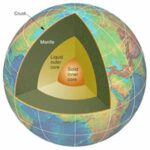
How far below the earth’s surface do property rights extend? The conventional wisdom is that a landowner holds title to everything between the surface and the center of the earth. This article is the first legal scholarship to challenge the traditional view.

Source: UCLA Law Review (2008) Read More

As climate crime continues, who are we sending to jail? Tim DeChristopher?

As climate crime continues

Let’s consider for a moment the targets the federal government chooses to make an example of. So far, no bankers have been charged, despite the unmitigated greed that nearly brought the world economy down. No coal or oil execs have been charged, despite fouling the entire atmosphere and putting civilization as we know it at risk.

Source: Grist (2011) Read More

Clifford Krauss: propagandist par excellence

Clifford Krauss: propagandist par excellence

I especially enjoyed his reporting on how some environmentalists are for gas drilling despite the inflammatory water faucets and cancer clusters: You don’t have to be working at FAIR to ask the question which environmentalists ? -Louis Proyect.

Source: Louis Proyect: The Unrepentant Marxist (2010) Read More

Smackdown: climate science vs. climate economics

Smackdown: climate science vs. climate economics

As I see it, there are two incommensurate stories being told about climate change. I’m not talking about the largely fake debate between those who say climate change is happening and human-driven (scientists) and those who say it isn’t (the GOP).

Source: Grist (2011) Read More

Firm’s Iraq Deals Greater Than Cheney Has Said

Firm's Iraq Deals Greater Than Cheney Has Said

Richard B. Cheney acknowledged that the oil-field supply corporation he headed, Halliburton Co ., did business with Libya and Iran through foreign subsidiaries. But he insisted that he had imposed a “firm policy” against trading with Iraq. “Iraq’s different,” he said…

Source: Global Policy Forum (2001) Read More

February (2011)

Big Money Drives Up the Betting on the Marcellus Shale

Big Money Drives Up the Betting on the Marcellus Shale

As major investors and multinational firms entered the Marcellus Shale, lease prices and speculative capital surged. The influx of “big money” transformed local drilling into a high-stakes financial arena, where acreage valuation became as strategic as production rates.

Source: The New York Times | Climatewire (2010) Read More

Before the Big Spill

Before the Big Spill

Slate is a general readership online magazine offering analysis and commentary on politics, news, and culture. It was bought by the Washington Post from Microsoft in 2004.

Source: Slate (2010) Read More

Christopherson to study economic impact of gas drilling in Marcellus Shale

Christopherson to study economic impact of gas drilling in Marcellus Shale

Sociologist Susan Christopherson examined the economic impacts of shale development, challenging assumptions that drilling automatically produces long-term prosperity. Her research questioned job durability, revenue distribution, and regional dependency. The boom, she suggested, may not equal sustained economic transformation.

Source: AAP News | College of Architecture, Art & Planning | Cornell University (2010) Read More

Switchboard, from NRDC :: Amy Mall’s Blog :: Tags: hydraulicfracturing

Switchboard

On NRDC’s Switchboard, Amy Mall tracked the fast-moving terrain of shale development — regulatory shifts, industry claims, emerging science. From Washington rulemaking to on-the-ground drilling impacts, the blog translated policy fights into plain stakes. As the gas boom expanded, so did the need for real-time scrutiny. Switchboard became a running ledger of what regulators proposed — and what communities stood to lose or gain.

Source: Switchboard, from NRDC :: Amy Mall's Blog (2010) Read More

E2 Law Blog

E2 Law Blog

David G. Mandelbaum represents clients facing problems under environmental laws. He regularly represents clients in lawsuits and also has helped clients achieve satisfactory outcomes through regulatory negotiation or private transactions. A Fellow of the American College of Environmental Lawyers, David teaches Superfund, and Oil and Gas Law in rotation at the Temple University Beasley School of Law as well as an environmental litigation course at Suffolk (Boston) Law School.

Source: E2 Law Blog (2010) Read More

U.S. EPA Initiates Hydraulic Fracturing Study | Meeting | EPA Science Advisory Board (SAB)

U.S. EPA Initiates Hydraulic Fracturing Study | Meeting | EPA Science Advisory Board (SAB)

Under mounting pressure, the EPA launched a comprehensive study of hydraulic fracturing’s potential impacts on drinking water resources. The move signaled federal recognition that questions about contamination required systematic review. Communities awaiting answers looked to the agency for clarity — and for evidence that could withstand political crosswinds.

Source: U.S. Environmental Protection Agency (EPA) (2010) Read More

Whistleblower.org

Whistleblower.org

The Government Accountability Project’s mission is to promote corporate and government accountability by protecting whistleblowers, advancing occupational free speech, and empowering citizen activists…

Source: Government Accountability Project (2011) Read More

January (2011)

FERC: For Citizens: Get Involved

FERC: For Citizens: Get Involved

If you think you might be affected by a proposed natural gas or hydroelectric project regulated by the Commission, you have certain rights. These rights range from being able to look at project correspondence to becoming an intervener and being able to appeal any FERC decisions in federal court.

Source: Federal Energy Regulatory Commission (FERC) (2010) Read More

U.S. Environmental Protection Agency (EPA): Hydraulic Fracturing Study (2010-2012)

U.S. Environmental Protection Agency (EPA): Hydraulic Fracturing Study (2010-2012)

The Environmental Protection Agency compiled research, guidance, and regulatory interpretations on hydraulic fracturing as public scrutiny intensified. From underground injection rules to drinking water protections, the agency’s evolving position signaled how far federal oversight would reach — and where exemptions still stood.

Source: U.S. Environmental Protection Agency (EPA) (2010) Read More

Energy in Depth

Energy in Depth

Energy in Depth continued to advocate for hydraulic fracturing through media outreach and rapid-response commentary, positioning itself as a counterweight to environmental criticism. In the shale era, narrative strategy became as organized as drilling logistics.

Source: Energy in Depth (2010) Read More

2010

December (2010)

Editorial: Fiddling while the tap water burns

Editorial: Fiddling while the tap water burns

Let us see if we have this right: The tap water is bubbling in Parker County, carbonated with enough natural gas to make it as flammable as a French Quarter cocktail and as explosive as a hand grenade, and the Texas Railroad Commission — consulting its Advent calendar, no doubt — has scheduled a hearing on the matter for Jan. 10.

Source: Denton Record Chronicle (2010) Read More

Food and Water Watch

Food and  Water Watch

Some energy analysts are predicting that natural gas will be the fuel of the future if advances in drilling technology allow drillers to tap into domestic shale rock formations on a large scale. But because of the impacts that the technology can have on water, natural gas could become our next energy disaster.

Source: Food and Water Watch (2021) Read More

November (2010)

Tar Sands – National Wildlife Federation

Tar Sands - National Wildlife Federation

Big Oil has some big plans to put America’s clean energy future in jeopardy by expanding the production of tar sands oil – one of the most destructive, dirty, and costly fuels in the world.

Source: National Wildlife Federation (2010) Read More

October (2010)

Bruce Baizel Testimony to the City of New York

Bruce Baizel Testimony to the City of New York

Bruce Baizel testified before New York City officials as the state weighed whether to allow high-volume hydraulic fracturing near its watershed. His remarks dissected regulatory gaps and contamination risks, urging caution where millions rely on unfiltered water. In a city built atop distant reservoirs, upstream decisions become municipal defense.

Source: Earthworks (2008) Read More

August (2010)

Earthjustice

Earthjustice

Earthjustice, founded in 1971 as the Sierra Club Legal Defense Fund, pledged renewed legal resistance as President Donald Trump returned to office in 2025, emphasizing its record of courtroom victories defending clean air, water, and climate protections. The organization also condemned the Mendoza Supreme Court in Argentina for rejecting civil society participation in a case concerning fracking in the Vaca Muerta formation, arguing that indigenous Mapuche groups and international environmental advocates were denied meaningful input while fossil fuel interests were granted access.

Source: Earthjustice: Environmental Law: Because the Earth Needs a Good Lawyer (2025) Read More

Longtime landowner advocate reflects on decades of activism

Longtime landowner advocate reflects on decades of activism

A landowner advocate looks back over years of leasing battles, negotiations, and the slow lessons of contract language. The drama isn’t abstract — it’s clauses, deductions, surface rights, and the moment someone realizes what they signed. Retrospective voices like this become a record of learning under pressure: what worked, what backfired, and how communities adapted as the boom rolled in faster than most legal advice could travel.

Source: Wyofile (2020) Read More
Item added to cart.
0 items - $0.00