Calfrac Well Services Ltd. is an oilfield services company operating in Canada, the United States, and Argentina. Services include hydraulic fracturing, coiled tubing, cementing and other well stimulation techniques designed to help increase the production of oil and natural gas.
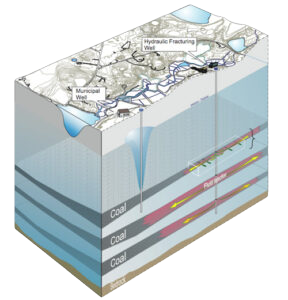
Fracking (also known as hydraulic fracturing, fracing, hydrofracturing, or hydrofracking) is a well stimulation technique involving the fracturing of formations in bedrock by a pressurized liquid. The process involves the high-pressure injection of “fracking fluid” (primarily water, containing sand or other proppants suspended with the aid of thickening agents) into a wellbore to create cracks in the deep-rock formations through which natural gas, petroleum, and brine will flow more freely. When the hydraulic pressure is removed from the well, small grains of hydraulic fracturing proppants (either sand or aluminium oxide) hold the fractures open.[1]
See also: Oil Field News. Calfrac Loses 1,700 Jobs. 25 Feb 2016.
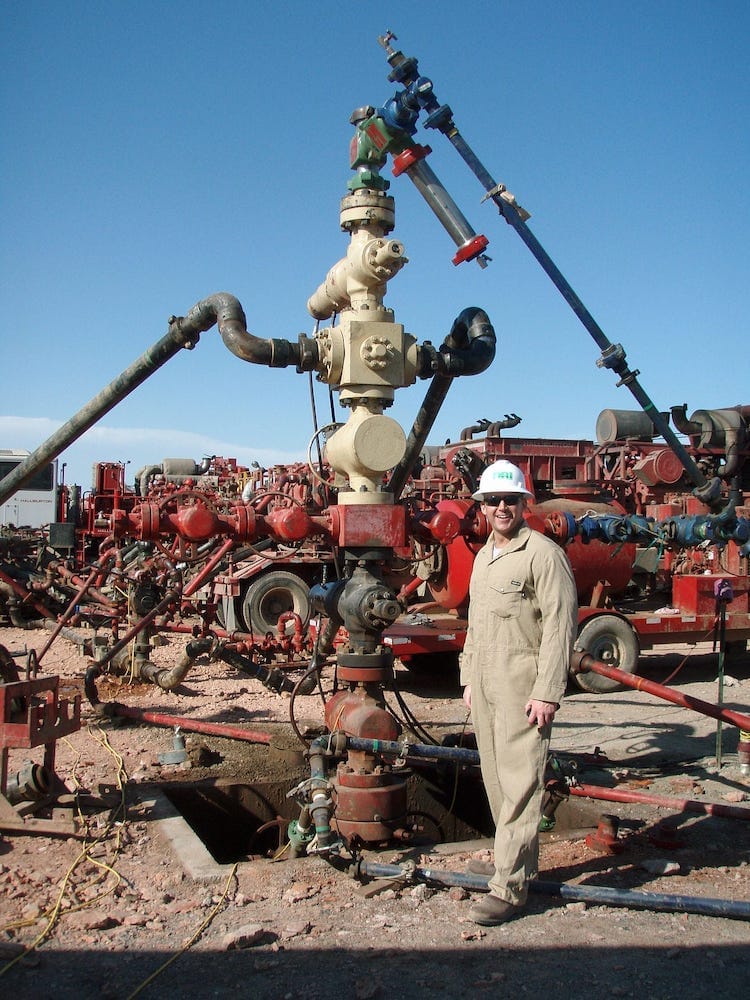
Nipple UP: To put together, connect parts and plumbing, or otherwise make ready for use. This term is usually reserved for the installation of a blowout preventer stack.
Calfrac Well Services Ltd. has shed more than 1,700 jobs from its Canadian and U.S. workforce since the end of 2014, underscoring how painful the crude price collapse has been for oilfield services firms
Calfrac Well Services Ltd. has shed more than 1,700 jobs from its Canadian and U.S. workforce since the end of 2014, underscoring how painful the crude price collapse has been for oilfield services firms.
The Calgary-based company (TSX:CFW) said Wednesday it has reduced its head count by 40 per cent in Canada and 60 per cent in the United States as it faces the worst oilpatch downturn in three decades.
…Revenue fell 62 per cent to $286.2 million for the last three months of the year.
Service companies like Calfrac have been hit hard by the downturn because their customers — oil and gas producers — have been scaling back on drilling new wells and pressing for lower rates.
CalFrac is one of the companies the U.S. House Committee on Energy and Commerce is investigating on the potential environmental impacts from hydraulic fracturing.
See also: Chris Casteel. Congressional panel to investigate hydraulic fracturing for natural gas. 18 Feb 2010. The Oklahoman.
See also (archived): U.S. Energy & Commerce Committee Investigates Potential Impacts of Hydraulic Fracturing. 18 Feb 2010. (Includes written requests PDF)
“Hydraulic fracturing could help us unlock vast domestic natural gas reserves once thought unattainable, strengthening America’s energy independence and reducing carbon emissions,” said Chairman Waxman. “As we use this technology in more parts of the country on a much larger scale, we must ensure that we are not creating new environmental and public health problems. This investigation will help us better understand the potential risks this technology poses to drinking water supplies and the environment, and whether Congress needs to act to minimize those risks.”
“Natural gas can play a very important role in our clean energy future, provided that it is produced in a safe and sustainable way,” said Subcommittee Chairman Markey. “By getting more information from the industry about hydraulic fracturing practices, Congress can help ensure that development of this important resource moves forward in a manner that does not harm the environment.”
As Chairman of the Committee on Oversight and Government Reform in the last Congress, Rep. Waxman requested and received information from the largest hydraulic fracturing companies – Halliburton, BJ Services, and Schlumberger – on the chemicals used in their fracturing fluids. According to this data, two of these companies used diesel fuel in their fracturing fluids between 2005 and 2007, potentially violating a voluntary agreement with EPA to cease using diesel. Halliburton reported using more than 807,000 gallons of seven diesel-based fluids. BJ Services reported using 2,500 gallons of diesel-based fluids in several fracturing jobs. Halliburton and BJ Services also indicated that they used other chemicals – such as benzene, toluene, ethylbenzene, and xylene – that could pose environmental risks in their fracturing fluids.
Today Chairmen Waxman and Markey sent letters seeking additional information from Halliburton, BJ Services, and Schlumberger on these and related issues. The Chairmen requested similar information from five smaller fracturing companies that comprise a growing share of the market: Frac Tech Services, Superior Well Services, Universal Well Services, Sanjel Corporation, and Calfrac Well Services.
In addition, the Chairmen sent a memo to Members of the Subcommittee on Energy and Environment detailing the background on the issue, including EPA’s recent work on hydraulic fracturing, the Committee on Oversight and Government Reform’s investigative findings, and the need for additional oversight and investigation.
U.S. Energy & Commerce Committee Investigates Potential Impacts of Hydraulic Fracturing. 18 Feb 2010. (Includes written requests PDF)
Documents
- Letter to Andrew Gould
- Letter to Roger Willis
- Letter to David J. Lesar
- Letter to Douglas R. Ramsay
- Letter to Darin MacDonald
- Letter to J.W. Stewart
- Letter to Dan Wilks
- Letter to David E. Wallace
See also:
United States House of Representatives Committee on Energy and Commerce. Minority Staff. April 2011. Chemicals Used in Hydraulic Fracturing (PDF). United States House of Representatives.
PREPARED BY COMMITTEE STAFF FOR: Henry A. Waxman Ranking Member Committee on Energy and Commerce, Edward J. Markey Ranking Member Committee on Natural Resources, Diana DeGette Ranking Member Subcommittee on Oversight and Investigation
Executive Summary:
“…As the use of hydraulic fracturing has grown, so have concerns about its environmental and public health impacts. One concern is that hydraulic fracturing fluids used to fracture rock formations contain numerous chemicals that could harm human health and the environment, especially if they enter drinking water supplies.
The opposition of many oil and gas companies to public disclosure of the chemicals they use has compounded this concern.
This report summarizes the information provided to the Committee. Between 2005 and 2009, the 14 oil and gas service companies used more than 2,500 hydraulic fracturing products containing 750 chemicals and other components. Overall, these companies used 780 million gallons of hydraulic fracturing products – not including water added at the well site – between 2005 and 2009.
Some of the components used in the hydraulic fracturing products were common and generally harmless, such as salt and citric acid. Some were unexpected, such as instant coffee and walnut hulls. And some were extremely toxic, such as benzene and lead. Appendix A lists each of the 750 chemicals and other components used in hydraulic fracturing products between 2005 and 2009.”
United States House of Representatives Committee on Energy and Commerce. Minority Staff. April 2011. Chemicals Used in Hydraulic Fracturing (PDF). United States House of Representatives.
See: Energy & Commerce Committee Investigates Potential Impacts of Hydraulic Fracturing
See: Hydraulic Fracturing: History of an Enduring Technology
See: Natural gas: the commodity world’s ugly duckling
See: Chevron Human Energy Stories | Addressing Climate Change
See: Halliburton
See: BJ Services
See: Schlumberger
See: Superior Well Services – Products – Fracturing Systems
See: Universal Well Services, Inc.
See: Sanjel Corporation