Editor’s Note: 25 Mar 2026. This entry has been updated to correct a lost attribution for the Wikipedia paragraphs on Ken Saro-Wiwa and to clarify that it is mainly concerned with Shell Nigeria. The original wording is preserved below where relevant.
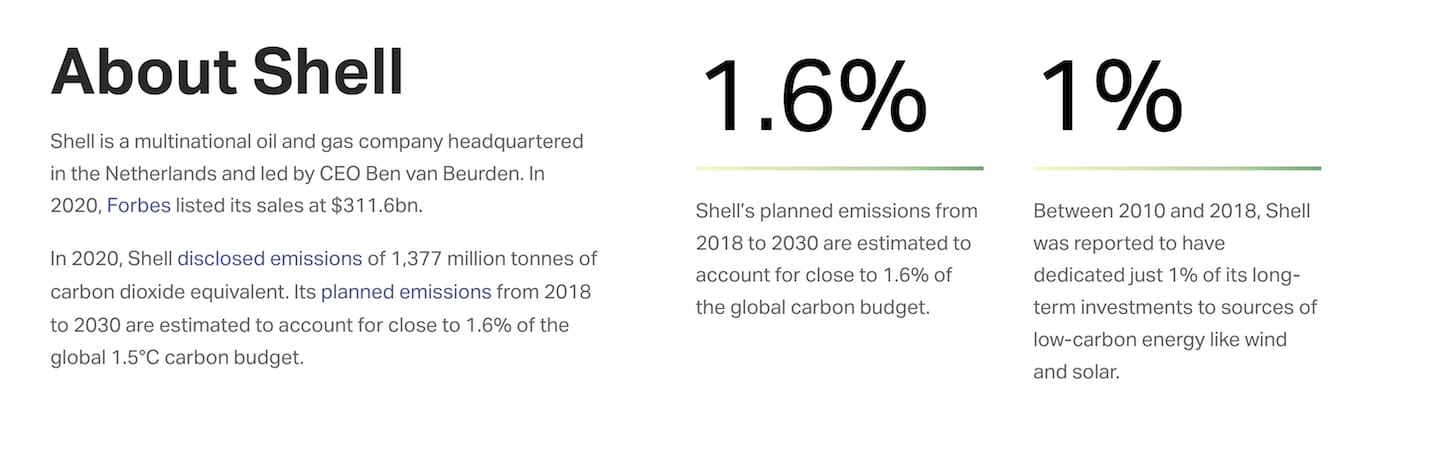
Shell is a multinational oil and gas company headquartered in the Netherlands and led by CEO Ben van Beurden. In 2020, Forbes listed its sales at $311.6bn.
In 2020, Shell disclosed emissions of 1,377 million tonnes of carbon dioxide equivalent. Its planned emissions from 2018 to 2030 are estimated to account for close to 1.6% of the global 1.5°C carbon budget.
On the Shell Nigeria website today, is this banner: Completion of share sale of The Shell Petroleum Development Company Limited (SPDC) to Renaissance Africa Energy Company Limited (RAEC). On 13 March 2025, Shell completed the share sale of SPDC, to RAEC. Completion followed approvals from the Federal Government of Nigeria.
Shell Nigeria is the common name for Shell plc’s Nigerian operations carried out through four subsidiaries—primarily Shell Petroleum Development Company of Nigeria Limited (SPDC). Royal Dutch Shell’s joint ventures account for more than 21% of Nigeria’s total petroleum production.
The company has been controversial in communities in the Niger Delta, who point to its poor environmental record and that most of the economic benefit from oil exploitation has not benefited local communities. In particular, when, in 1993 the Movement for the Survival of the Ogoni People (MOSOP) organized large protests against Shell and the government, it led to repression of the local community.
The company has been responsible for some significant oil spills in the Niger delta, and both Nigerian and European courts have held them liable for environmental destruction. One of the most significant cases was at one of Shell’s oil extraction facilities located in the Ejama-Ebubu community.
See also: Wikipedia. Shell Nigeria Impact.
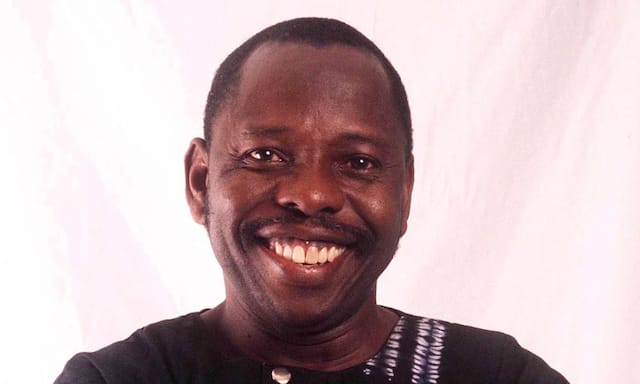
Author Ken Saro-Wiwa was a member of the Ogoni people, an ethnic Nigerian minority whose hometown, Ogoniland, in the Niger Delta has been targeted for crude oil extraction since the 1950s and which has suffered extreme and unremediated environmental damage from decades of indiscriminate oil waste dumping. Saro-Wiwa, initially as spokesperson, and then as President, of the Movement for the Survival of the Ogoni People (MOSOP), led a nonviolent campaign against environmental degradation of the land and natural waters of Ogoniland by the operations of multinational oil companies, especially Shell.
At the peak of his non-violent campaign, Saro-Wiwa and the other members of the Movement for the Survival of the Ogoni People were arrested, hastily tried by a special military tribunal, and hanged in 1995 by the Nigerian military government of General Sani Abacha, all on charges widely viewed as entirely politically motivated and completely unfounded. Their executions provoked international outrage and resulted in Nigeria’s suspension from the Commonwealth of Nations.
Shell has been brought on trial in New York with the accusation of having collaborated with the military executions, and in June 2009, it has settled out of court for US $15 million to bring the case to an end.
See also: Ken Wiwa. Finally it seems as if Ken Saro-Wiwa, my father, may not have died in vain. 10 Nov 2015. The Guardian.
Nigeria’s Ogoniland still looks as devastated by oil pollution as when the junta executed my father 20 years ago. But the carbon economy seems to be reaching a tipping point at last
See also: Susan Farbstein. Remembering Ken Saro-Wiwa: The Struggle Continues in the Niger Delta. 10 Nov 2015. Harvard Law School. International Human Rights Clinic.
See also: On May 28, 2010, Reuters.com reported that Royal Dutch Shell Plc agreed to buy closely held East Resources Inc., for about $5 billion. Pennsylvania-based East Resources holds more than 650,000 acres in the Marcellus shale — a rock formation running from West Virginia to New York and said to have vast amounts of natural gas.
East Resources will no longer be a U.S. corporation.
See also: Ed Pilkington. “Shell pays out $15.5m over Saro-Wiwa killing.” The Guardian. June 9, 2009.
See also: Jad Mouawad. “Shell to Pay $15.5 Million to Settle Nigerian Case.” NYT. June 8, 2009.
See also: Shell Gas Flaring is Illegal Says Benin City High Court
See also: Shell Oil statement. Flaring in Nigeria.
The gas gathering programme has been delayed by funding shortfalls from the major government shareholder and security concerns which meant it was not safe for staff to work in large parts of the delta for long periods of time.
Shell and Hydraulic Fracturing
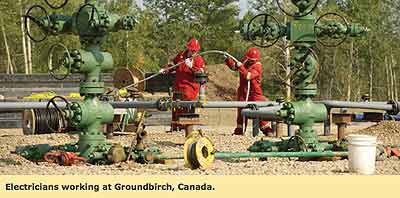
“At Shell we have decades of experience with this technology and we continue to follow strict measures to protect drinking water supplies.”
The truth behind the greenwashing
Shell is still committed to exploring for new sources of oil and gas and does not have any plans to reduce the overall amount of oil and gas it produces by 2030, the date by which IPCC scenarios say emissions from oil, gas, and coal will need to have substantially reduced.
Shell mentions “using lower-carbon energy products to reduce GHG emissions”, but the company’s plans include growing its fossil gas business by 20% in the coming years. Whilst the company believes its oil production peaked in 2019 and will decline slightly by 1-2% per year until 2030, the company wants to grow its fossil gas operations until this occupies over half of Shell’s energy business by 2030.
Despite Shell’s climate pledges, the Climate Action 100+ Net Zero Company Benchmark finds that the company only meets some of the Benchmark’s targets criteria – Shell does not have both an ambition to reach ‘net-zero’ and net zero-aligned short, medium and long-term GHG reduction targets, which cover all its relevant emissions.
Shell is also scored ‘No’ for failing to disclose an aim to align its capital allocation (investments) with its targets, let alone with the Paris Agreement goal to limit global temperature rises to 1.5°C above pre-industrial levels.
The Benchmark estimates that over $3.9 billion of Shell’s 2019 capital expenditure on ‘upstream’ fossil fuel extraction and production, and 66% of the company’s future capital expenditure, conflict with the International Energy Agency’s ‘Beyond Two Degrees’ scenario. In this scenario, total temperature rise is limited to 1.75°C by 2100. More and quicker emissions reductions would be required to limit temperature rise to the Paris goal of 1.5°C and to avert more climate harms to people and to the environment.
But its ads tell a different story…
ClientEarth.org. Accessed 25 Mar 2026.
See: Anger grows across the world at the real price of ‘frontier oil’
See: Poison Fire
See: Frack off, Shell!
See: FCPA Blog | UK Court Won’t Block Telser Extradition
See: South Africa Endorses Plans For Karoo Gas-Drill Freeze, Ending Shell Hopes
See: East Resources