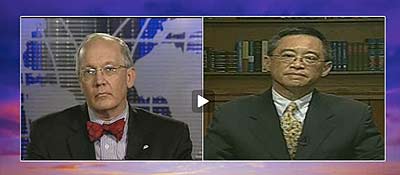

(Editor’s Note. 26 Aug 2023. I searched for the original or archived video of the Susan McGinnis Clean Skies debate between Walter Hang of Toxics Tageting, Inc. and Richard Haut of Houston Advanced Research Center. but found nothing. Toxics Targeting has posted a partial transcript but it does not include the question below that I chose to post after watching the debate..
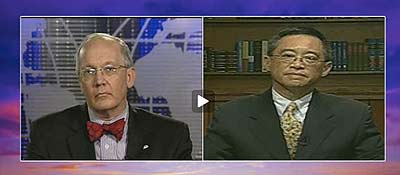
“Walter, do you believe natural gas can be extracted in an environmentally safe manner?
WALTER HANG: Not under the current regulatory scheme. If they do things better, if they require financial surety, we will find out. But under the existing regs, it cannot be done safely. The data proved that beyond a shadow of a doubt.”
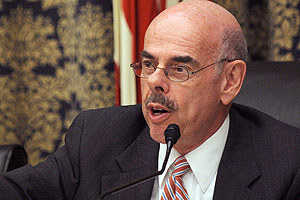
Richard Haut is from Houston Advanced Research Center and is an expert on hydrofracking. Walter Hang is President of Toxics Targeting, and provides data to engineers, municipalities and homeowners on possibly contaminated properties.
Richard Haut is listed as one of the authors of this report: International Resources Group, USAID, Ukraine Shale Gas: Volume I: Environmental and Regulatory Assessment 18 (2012).
In 2022, Russia invaded Ukraine and seized the territories associated with the large natural gas reserves held by Ukraine.
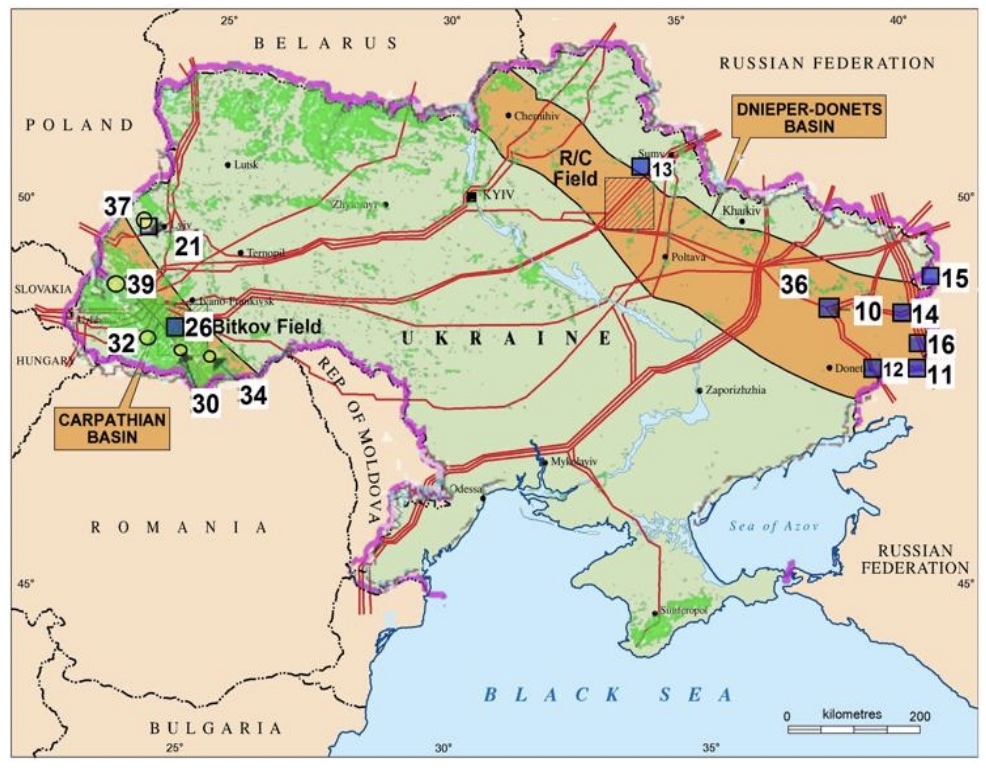
See also: Vinson & Elkins. Ukraine: Global Fracking Resources. 2016.
See also: Jonathan Masters. Ukraine: Conflict at the Crossroads of Europe and Russia. 14 Feb 2023. Council on Foreign Relations.
See also: The fracking debate: Terry Engelder at TEDxPSU. Youtube. 24 Jun 2013.
Terry Engelder, a leading authority on the recent Marcellus gas shale play, holds degrees from Penn State B.S. (’68), Yale M.S. (’72) and Texas A&M, Ph.D. (’73). He is currently a Professor of Geosciences at PennState and has previously served on the staffs of the US Geological Survey, Texaco, and Columbia University. Short-term academic appointments include those of Visiting Professor at Graz University in Austria and Visiting Professor at the University of Perugia in Italy. Other academic distinctions include a Fulbright Senior Fellowship in Australia, Penn State’s Wilson Distinguished Teaching Award, membership in a US earth science delegation to visit the Soviet Union immediately following Nixon-Brezhnev dêtente, and the singular honor of helping Walter Alvarez collect the samples that led to the famous theory for dinosaur extinction by large meteorite impact. He has written 160 research papers, many focused on Appalachia, and a book, the research monograph “Stress Regimes in the Lithosphere.” His research focus for the past 35 years has been the interaction between earth stress and rock fracture. His work on gas shales first caught industry attention in the late 1970s and industry has engaged him ever since in learning how to recover gas from black shale. In the international arena, he has worked on exploration and production problems with companies including Saudi Aramco, Royal Dutch Shell, Total, Agip, and Petrobras. In 2011 he was named to the Foreign Policy Magazine’s list of Top 100 Global Thinkers for drawing international attention to the value of gas shale as an energy source.
See also: Articles mentioning Walter Hang in the New York Times
See also: Andrew C. Revkin. ‘Gasland’ Filmmaker Takes on Cuomo and ‘Dot.FlatEarth’. 28 Jun 2012. Dot Earth: New York Times Blog.
See: Mixplex articles on Global Warming Experts and Climate Science Watch to read more about the compelling reasons to watchdog government regulation at best and challenge those who claim that peer-reviewed scientific analysis will weaken business development and national security.
Josh Fox:
Rather than focusing on presentation, focus on the bottom line issue. There is overwhelming evidence from within the industry itself that there is a massive problem with well leakage– it causes methane migration (flaming faucets, rivers, lakes, etc) and there is no known way for the industry to prevent the problem. These problems are part of fracking as a whole–you can’t frack a well without cementing it and cement fails at alarming rates.
Southwestern may be trying to get out ahead of this issue, belittling it, making it seem like they are on top of it. But looking at the industry’s history and the severe problem with horizontal wells, they are not in a position to guarantee the integrity of the water supply. What you are left with is a tradeoff — safe water over the long term for polluting energy in the short term. Bad trade.
There are alternative forms of energy which are capable of outlasting and outperforming gas. Last I heard, there is no alternative to water.
Andrew C. Revkin. ‘Gasland’ Filmmaker Takes on Cuomo and ‘Dot.FlatEarth’. 28 Jun 2012. Dot Earth: New York Times Blog
The opportunities to have both an educated public and the scientific community comment on the many environmental impact statements required for the mining and extractiive industries is a benefit to both the public and industry according to this report: Pew Environment Group (PEG) Factsheet: Industry Opposition to Government Regulation (PDF), October 14, 2010. (Neil Zusman, 2010-08-28).
See also: Environmental Integrity Project (EIP)
EIP combines research, reporting, and media outreach to spotlight illegal pollution, expose political intimidation of enforcement staff, and encourage federal and state agencies to take enforcement action to stop these practices.
See also: Nora Eisenberg. Onshore Drilling Disasters Waiting to Happen: An Interview With ‘Gasland’ Director Josh Fox | The Nation
Eisenberg: In your sleuthing, what was the most surprising discovery you made?
Josh Fox: Most baffling to me was how much the gas industry was able to get away with—like [insisting] that drilling is safe. Most people when they sign the lease don’t realize that what they’re in for is a complete industrialization of their property and an enormous problem with their air and water. The gas industry is somehow able to move into an area and say that everything is going to be just fine, you’re just going to make a lot of money.
See: Gasland Trailer
See: Under the surface : fracking, fortunes and the fate of the Marcellus Shale
See: Natural Gas Industry Shills Use the Media to Mislead the Public – Here’s How to Spot Them