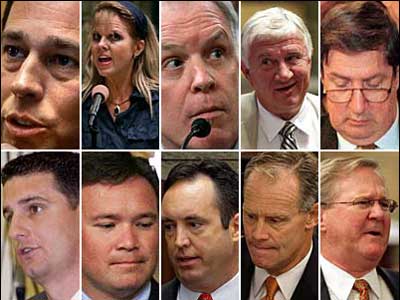
Between now and October 1st, the state legislature will debate a new tax on natural gas extraction. But because of a loophole in the state’s campaign finance laws, legislators will likely cast their votes before disclosing recent donations. That means the gas industry and environmental groups can flood Harrisburg with contributions without anyone knowing where the money is going.
That’s why “It’s Our Money” and Common Cause have teamed up to create a place where lawmakers can report contributions in real time: Marcellus Shale Money Watch.
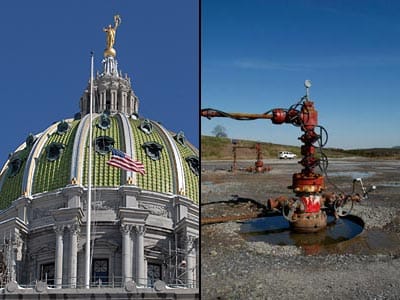
Here is what could be worse: all the concern about shale gas has made the public unaware of other continuing problems. Big coal continues to destroy houses and streams. No one is demanding that the long overdue Act 54-required study of longwall mining be released. Big coal is continuing to do as it will with coal ash. With budget cuts in DEP, longwall enforcement, which has never been adequate, will be even worse.
See also: The Hidden Costs of Clean Coal. 12 Jan 2009.
See also: Doron Taussig. Legislators: Tell us how much money the gas industry gives you BEFORE the gas tax vote! 23 Aug 2010. Philly.com.
This morning, It’s Our Money and the Daily News called on state lawmakers to disclose, within one business day, any donations they accept between Sept. 13 and Oct. 1 from the natural gas industry or other groups seeking to influence the gas tax debate.
If they don’t, a loophole in the state’s campaign finance laws will allow them to accept these donations, and vote on the size and scope of the new extraction tax, without telling the public how much money they’ve taken until after the votes are cast.
Our friends at Common Cause have agreed to compile the data legislators submit, and post it online. When a legislator accepts a donation, he or she can e-mail it to Common Cause’s Alex Kaplan (akaplan@commoncause.org or It’s Our Money (waxmab@phillynews.com).
We’ll call up the lawmakers who’ve taken the most money from the natural gas industry so far and ask them if they intend to cooperate. In the meantime, please feel free to contact your representatives and encourage them to do so.
Common Cause | We the People
6 Jun 2024. Our Small Dollars, Our Elections, Our Voices.
Returning Political Power to Citizens
Citizen-funded elections represent the most successful effort to combat the domination of Big Money over our democracy, from policy debates on health care to stewardship of our children’s planet.
The goal of citizen-funded election programs is not simply to pay for individuals to run for office, instead the programs should serve everyday Americans.
And they do.
Citizen-funded candidates focus on working-class concerns
By eliminating the candidates’ reliance on perpetual high-dollar fundraising, it allows candidates to focus more on working-class voters, listening to their needs and concerns, instead of “dialing for dollars” to keep their campaigns running.
With citizen-funded elections, lawmakers return to voters across race, gender, class, and party more authority to determine who will represent them in government. This gives everyone more power to shift focus to policies that favor everyday Americans. This is not just rhetoric, it is really important.
In one state, individual donations went from making up 49% of total political contributions to representing 99% of contributions over the course of 12 years.
That means money from lobbyists and PACs went from a majority of candidates’ fundraising to just 1% of the total funds raised by source. We’ve seen over those same years that candidate reliance on small-donor funds also transferred political power away from wealthy contributors and businesses to the people.
Citizen-funded candidates are more representative of their constituents
Small-donor programs also open the process up to greater numbers of qualified candidates, often diverse backgrounds across race, gender, class, and party, who would not otherwise be empowered with the resources to run for office. Many grassroots candidates in state and local programs across the country share that without the funding provided through these programs, they would never have sought public office.
See: Big Money Drives Up the Betting on the Marcellus Shale
See: Dirty Energy Money
See: House committee votes to deny climate change
See: Opponents to Fracking Disclosure Take Big Money From Industry
See: Smitsky Letter
See: Gasland Trailer 2010
See: Legislating Under the Influence
See: GovTrack.us: Tracking the U.S. Congress
See: Fueling Washington
See: Big Polluters Freed from Environmental Oversight by Stimulus – The Center for Public Integrity
See: There’s Gas in Those Hills
See: Natural gas: the commodity world’s ugly duckling
See: Drilling Marcellus Shale: Unlimited Natural Gas Company Contributions to Pennsylvania Politicians
See: Western PA landowners regret deep gas wells deals
See: U.S. Speaker Nancy Pelosi: The Gavel: Draining The Swamp