For best viewing, click ⛶ for fullscreen.
Perseverance: Out Walking | Jul 2026
10 minutes read time
What disappears from sight may continue somewhere else. Smoke crosses borders and oceans. Heat travels beyond the place where it begins. The fires of North America, Europe, and Asia belong to a climate without national boundaries; no single country can confront them alone.
What good does a walk do against that?
I walk because I love the world I am walking through. The attention itself becomes a demand: for clean air, living water, healthy animals, gardens, trees, streets, and places where life can flourish. I cannot make that world by walking, but I can refuse to stop wanting it.
Changing forms
July begins with things changing form.
Leaves appear as glass. An egret emerges from darkness and becomes an orange daylily floating into a tree at sunset. Fireworks dissolve into rain striking my umbrella. A turtle’s face, painted by time, passes into the metallic surface of a Mustang.
Nothing holds its shape for long.
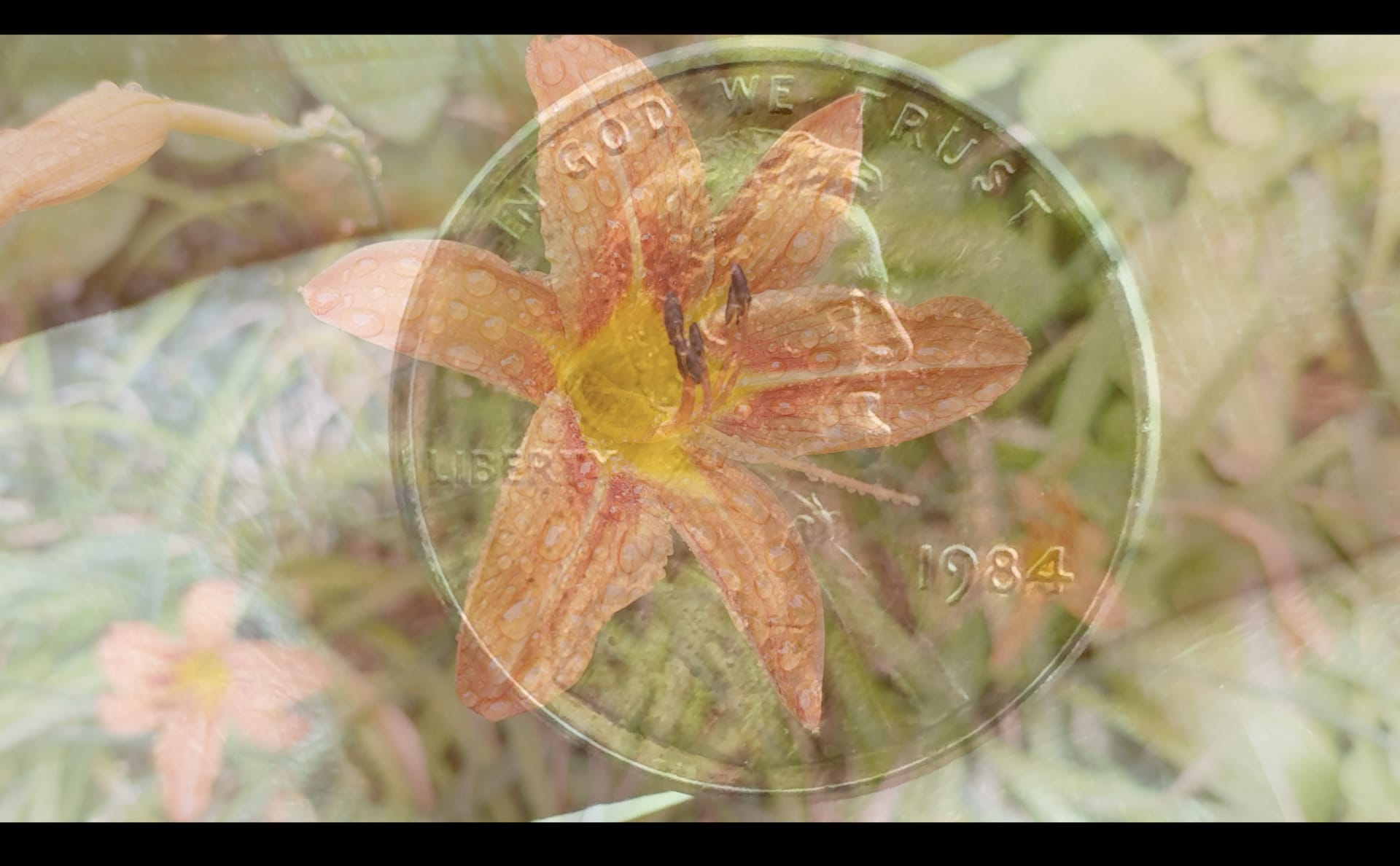
Independence Day arrives in colored sparks and popping sounds. A red wheel of fireworks divides into two curved shapes, each turning into the other. A 1984 penny offers Lincoln, liberty, and trust in God among flowers, raindrops, traffic, and discarded things.
A fire truck races down Main Street. A siren sounds over a field of ants. A white flower appears in remembrance.
Perseverance is often imagined as holding firm, but the living world persists by changing. We see the word on a mural by Jonathan Matas, featuring Sojourner Truth and Frederick Douglas. Truth and Douglass situate perseverance in collective struggle, public speech, historical risk, abolition, and unfinished freedom.
Disappearance
By coincidence, Independence Day gives way to the disappearance of a great tree.
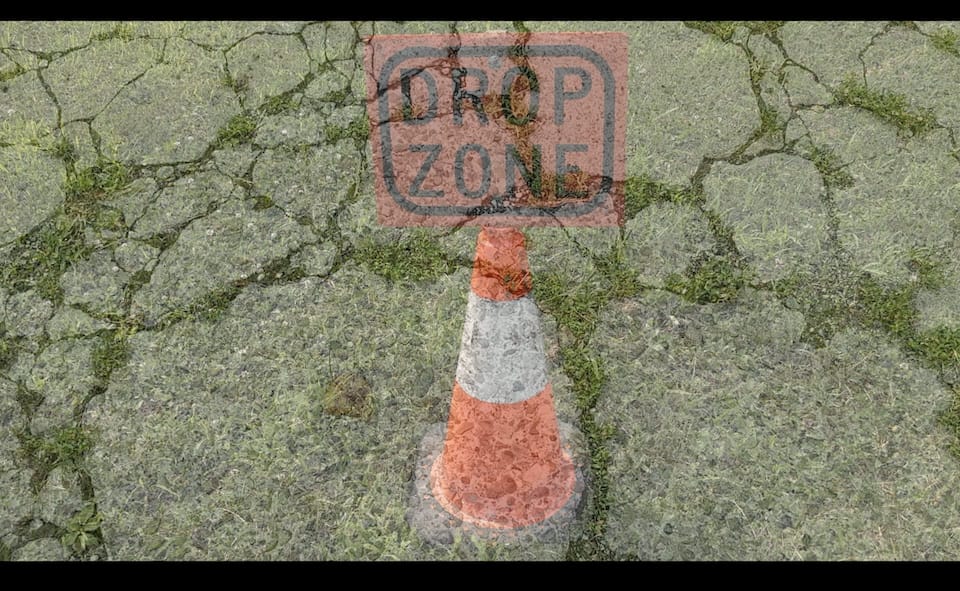
“Drop Zone.”
In Washington Park, the tree is dismantled slowly from the top down. We watch the sections fall.
What had occupied the sky is lowered to the ground and becomes something else: a mushroom dome, exposed geometry, the spine of the dead in its mathematical form.
An ant walks through what remains.
Later, there is a tree trunk and no tree.
A buried gas line flag blows nearby. A Stars and Stripes balloon rises over a burnt house where I have not seen anyone living for several years.
The nation appears in fragments—fireworks, Lincoln amidst the Orwellian year 1984, liberty, trust in God, a flag-painted balloon—while the world beneath them keeps changing.
Perseverance belongs to destructive systems too. Trees are removed. Gas lines remain buried. Houses stand after life appears to have left them.
Persistence is not perseverance.
Life around what remains…
I cross the bridge I always retrace.
Around the trunk, the burnt house, the traffic, and the changing weather, small lives continue.
Two bugs ride a wave together. Grasses rustle. A bird calls. A dog answers. Yellow flowers gather around the buttonbush. A black ibis stands in a garden in sunlight.
A deer gazes at us while chewing grass and listens.
The yellow moon dissipates into clouds. In another garden, I imagine the sky contained inside a little stone house, behind its latticework cement.
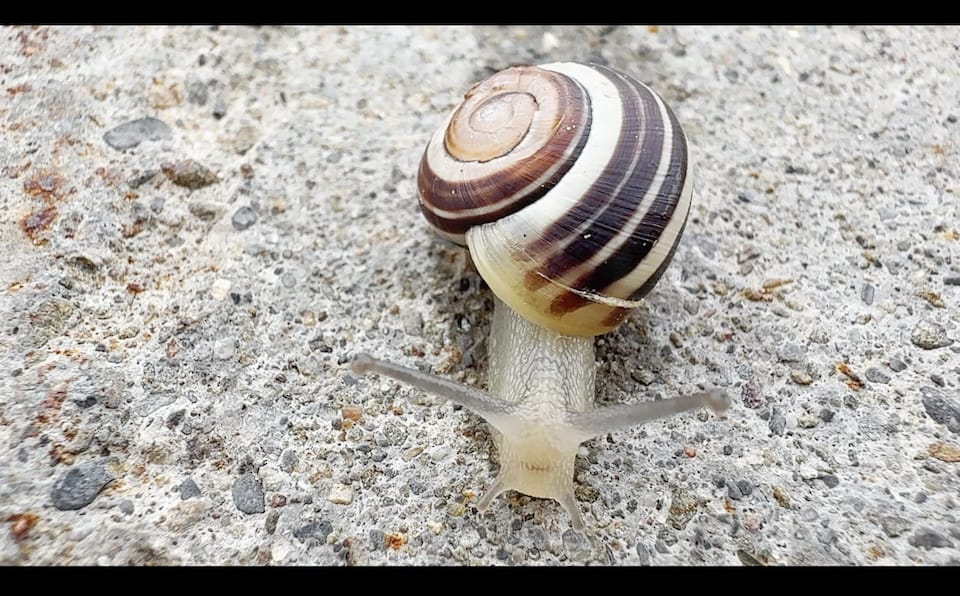
A snail motors along, carrying its perfect spiral.
Are those eyes or ears?
Its body becomes transparent and dissolves into orange rain.
The walk comes round again. I retrace the bridge, but repetition does not restore what has disappeared, and returning does not make the walk the same.
Perhaps perseverance is not remaining unchanged. It is continuing to move, notice, and remember among what remains.
Small lives continue, and I listen to it all.
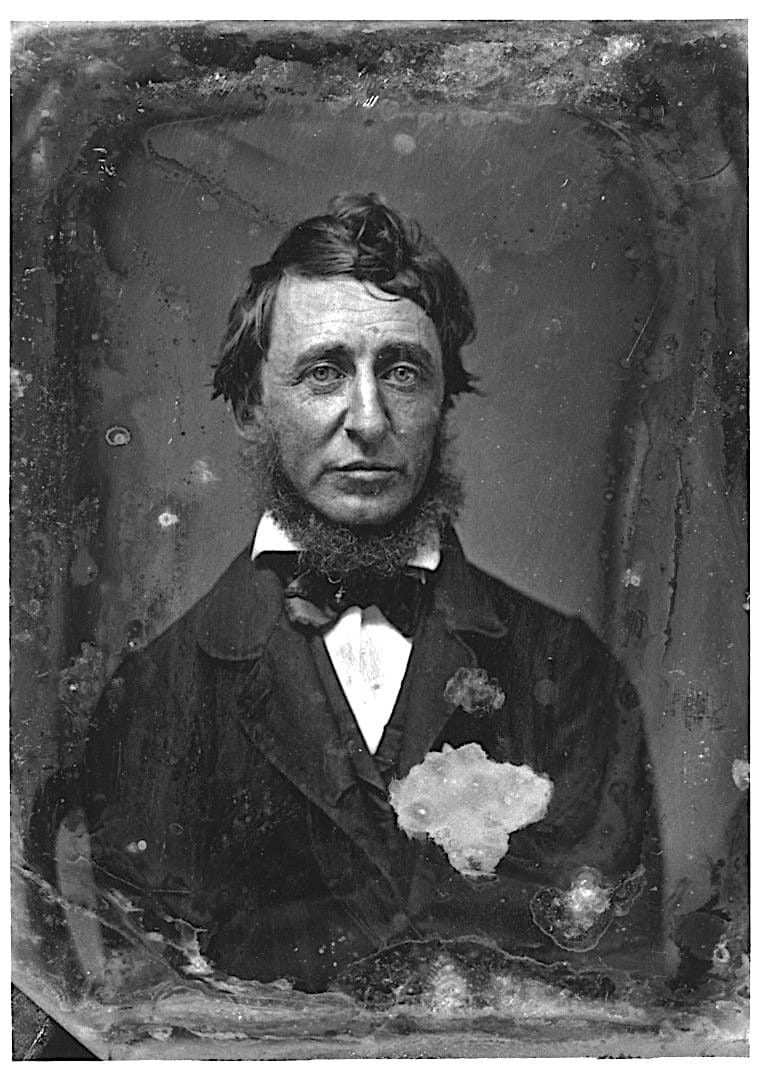
It is true, we are but faint-hearted crusaders, even the walkers, nowadays, who undertake no persevering, never-ending enterprises. Our expeditions are but tours, and come round again at evening to the old hearth-side from which we set out. Half the walk is but retracing our steps. We should go forth on the shortest walk, perchance, in the spirit of undying adventure, never to return—prepared to send back our embalmed hearts only as relics to our desolate kingdoms. If you are ready to leave father and mother, and brother and sister, and wife and child and friends, and never see them again—if you have paid your debts, and made your will, and settled all your affairs, and are a free man—then you are ready for a walk.
Henry David Thoreau. Walking. As published in Atlantic Monthly, 1862.
Smackdown
Official Story / Public Reckoning / Deeper Contrast
July 2026

Federal / EPA, Interior, Energy
Federal agencies describe July through recovery, flexibility, reliability, affordability, and control. Wildlife becomes a management question. Extreme heat becomes electricity demand. Habitat destruction becomes a dispute over what may legally count as “harm.”
Emphasis
- Interior proposes returning greater management authority over grizzly bears to western states, describing populations in some regions as meeting or exceeding federal recovery benchmarks.
- Interior rescinds the Endangered Species Act regulatory definition of “harm”, calling the earlier interpretation federal overreach and an intrusion on private property rights.
- Energy responds to extreme heat by authorizing additional power generation, even where normal air-quality or environmental permit limits would otherwise constrain operation.
- Later July emergency orders again translate hot weather into grid demand, backup generation, and reliability.
- Domestic fossil-fuel production, expanded generation, industrial growth, and “energy dominance” are presented as answers to affordability and national security.
Key rhetoric
- “Recovery”
- “Management flexibility”
- “Original intent”
- “Private property rights”
- “Affordable, reliable, and secure”
- “Energy dominance”
Foregrounded
State authority, property rights, recovery benchmarks, economic growth, electricity supply, and regulatory certainty. The emphasis is on what government can return, rescind, authorize, produce, and keep operating.
Minimized or absent
The living consequences: a grizzly facing greater risk of lethal control, habitat destroyed without an animal being struck directly, people breathing smoke, and people enduring dangerous heat.
The Guardian / Dharna Noor and Oliver Milman
Guardian reporting follows July outward from policy to consequence. Fireworks become particulate pollution. Wildfires become smoke breathed hundreds of miles away. Extreme heat settles over tens of millions of people. Energy policy returns as household cost, pollution, and continued dependence on coal.
Emphasis
- Washington briefly records the worst air quality of any major city in the world following its enormous Independence Day fireworks display. Particulate concentrations rose to more than six times their pre-fireworks levels.
- Smoke from roughly 200 uncontrolled Canadian wildfires affects about 109 million Americans, bringing hazardous air, irritated eyes, health warnings, and instructions in some cities to stay indoors.
- A third major heat dome in one month threatens about 70 million people, with temperatures of 95–105°F across large areas and forecasts approaching 120°F in the desert Southwest.
- Public money is used to suppress wind development and extend the life of coal plants, while critics warn that taxpayers and ratepayers ultimately bear the costs.
- Wildfire harm continues after the flames disappear through respiratory and cardiac illness, displacement, trauma, economic loss, and effects on children and communities that may persist for years.
Key rhetoric
- Harm
- Smoke
- Heat
- Health
- Cost
- Displacement
Foregrounded
Bodies, lungs, wildlife, homes, communities, household bills, damaged habitat, and consequences that cross property lines, state lines, and national borders.
Minimized or absent
Recovery, reliability, flexibility, and management are not accepted as complete descriptions. The reporting keeps asking what happens beyond those words: who breathes the smoke, who bears the heat, who pays the bill, what habitat disappears, and what remains after the immediate event.
Key verbs
Federal verbs: restore, return, rescind, manage, authorize, secure, unleash
Guardian verbs: breathes, endures, exposes, crosses borders, displaces, lingers, survives
Sources
- U.S. Department of the Interior. Department of the Interior Restores Clear ESA Enforcement by Rescinding Misguided “Harm” Definition. 10 Jul 2026. U.S. Department of the Interior.
- U.S. Department of the Interior. Secretary Burgum Returns Management of Grizzly Bears to the West. 14 Jul 2026. U.S. Department of the Interior.
- U.S. Department of Energy. Energy Secretary Secures Carolinas’ Grid Amid Period of Hot Weather. 2 Jul 2026. U.S. Department of Energy.
- U.S. Department of Energy. Energy Secretary Secures Grid Across 17 States Amid Period of Hot Weather. 26 Jul 2026. U.S. Department of Energy.
- Dharna Noor. Washington records world’s worst air quality for a city after 850,000 Fourth of July fireworks. 7 Jul 2026. The Guardian.
- The Guardian. More Canadian wildfire smoke shrouds US midwest, mid-Atlantic and north-east. 17 Jul 2026. The Guardian.
- Dharna Noor. “He’s forcing higher bills”: Trump spends billions to kill clean energy and keep coal alive. 10 Jul 2026. The Guardian.
- Oliver Milman. Scorching US heatwave to hit 70 million people with third “heat dome” in month. 25 Jul 2026. The Guardian.
- Oliver Milman. Past fires suggest effects of Europe and North America wildfires may linger for years. 28 Jul 2026. The Guardian.
The deeper contrast
July 2026 turns on the meaning of harm.
Environmental protection begins with a simple recognition: harm does not stop where an action begins. Pollution crosses property lines. Contaminated water moves downstream. Smoke crosses borders. An animal can lose the conditions necessary for life without ever being directly struck or killed.
That is what gives Interior’s decision to rescind the Endangered Species Act regulatory definition of “harm” such consequence. The argument is presented in terms of statutory authority, property rights, and regulatory limits. But the living question is harder to contain: what happens to an animal when its shelter, food, breeding ground, or habitat disappears?
The grizzly bear brings that question into view. The U.S. Department of the Interior invokes science to support greater state control over grizzly management while the administration narrows the role habitat destruction can play in determining harm. Elsewhere, established climate science is challenged even as extreme heat, wildfire, and smoke increasingly shape daily life.
The issue is not simply whether science is accepted or rejected. It is whether what we know about harm is allowed to change what we do.
A fire ends, but smoke travels. A tree falls, but the life around it must change. Habitat disappears, and the animal remains—if it can.
Persistence is not perseverance.
Perseverance belongs to the living: to deer, birds, insects, snails, and other creatures that survive, to people enduring heat and smoke, to life continuing in damaged places, and to the practice of paying attention.
The question for regulation is different:
How far are we willing to follow an action before we acknowledge its harm?
The move could open up habitats to drilling and mining, and hasten the demise of many imperiled animals, experts say.
…After the rule was proposed last year, it triggered roughly 220,000 public comments. About 99 percent were against the change, according to an analysis by The New York Times that used artificial intelligence.
Among those asking the administration to reconsider were state wildlife agencies in some Republican-governed states.
“Threatened and endangered species are entirely dependent on healthy habitats,” wrote Bruce Kreft, the chief of the conservation and communications division of the North Dakota Game and Fish Department. The proposed change, he said, “would have dire consequences.”
Catrin Einhorn and Maxine Joselow. Trump Administration Sharply Cuts Protections for Endangered Species. 10 Jul 2026. New York Times
See also: Scott Horsley. The U.S. just produced its last penny after a more than 200-year run. 22 May 2025. NPR.
See: Poison Fire
See: Stripping the West
See: Bushwhacked : Life in George W. Bush’s America