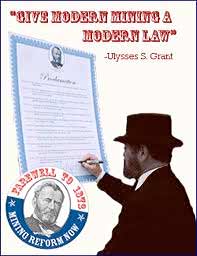

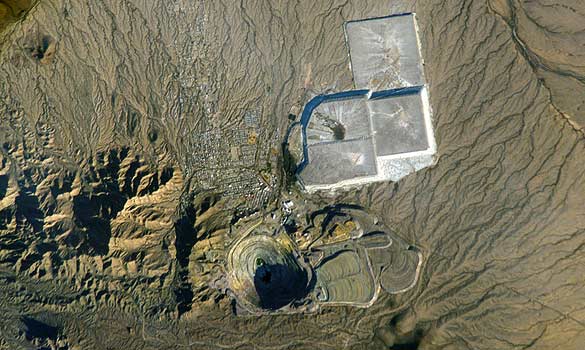
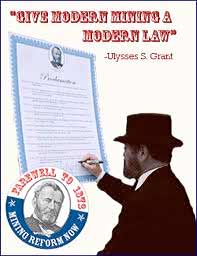
Mining of hardrock minerals—gold, uranium and other metals—on U.S. public lands is governed by the General Mining Law of 1872. Virtually unchanged since it was signed by President Ulysses S. Grant to promote development of the West, this frontier-era statute is no match for today’s modern mining. Under the 1872 law:
- Mining companies—even those that are foreign-owned—are allowed to take approximately $1 billion annually in gold and other metals from public lands without payment of a royalty.
- There is scant regulation of the nation’s top-polluting industry and few resources to clean up abandoned mines. The Environmental Protection Agency has documented more than $2 billion in taxpayer spending over the past decade on mine cleanup.
- Mining is given priority status, on most public lands, making it nearly impossible to prohibit or restrict it, even near national parks and other iconic places, like the Grand Canyon.
The Pew Campaign for Responsible Mining is a national effort to educate and encourage the public and policy makers to adopt a modern framework for mining in the West. Today:
- Taxpayers lose a conservatively estimated $100 million a year because, unlike with the coal, oil and gas industries, mining companies can extract valuable resources from public land essentially for free.
- Taxpayers face a multi-billion dollar mining cleanup bill. According to the Environmental Protection Agency, the mining industry releases more toxic pollution than any other.
- Federal agencies give hardrock mining on public lands priority status over other uses. It remains nearly impossible to restrict mining near national parks. Important water sources, wildlife and local communities are also vulnerable.
- The law allows claimholders to buy public land for $5 an acre or less, and to use it for anything from condominiums to casinos. Congress has temporarily halted the practice.
Worse yet, a new rush is on in the West. In recent years, mining claims for uranium, gold and other metals on public lands have increased dramatically. Many of these new claims lie near treasured national lands, as well as highly populated urban areas and tribal lands.
It’s time to reform the 1872 Mining Law and reclaim our public lands for future generations.
Project Team
- Jane Danowitz, Director
- Tom St. Hilaire, Manager
- Nicole Gentile, Associate
- Sarah Greene, Administrative Assistant
- Elyssa Rosen, Communications Officer, 775.224.7497
See also: Patrick Reis. NYT. Oct. 6, 2010. “W.Va. Sues Obama, EPA Over Mining Coal Regulations.”
See also: Wiseman, Hannah J. “Untested Waters: The Rise of Hydraulic Fracturing in Oil and Gas Production and the Need to Revisit Regulation.” Fordham Environmental Law Review 20 (2009): 115-170.
See also: Horwitt, Dusty.“Drilling Around the Law: Drinking Water Threatened by Toxic Natural Gas and Oil Drilling Chemicals”. Environmental Working Group, 2009.
See: Industrial Scars
See: Obama’s gifts to extractive industries continue with defense of Bush mining policy
See: Cornell 2011 Energy Conference
See: PA Gas Rush
See: Hydraulic Fracturing: History of an Enduring Technology
See: Christopherson to study economic impact of gas drilling in Marcellus Shale
See: Opinion: Avoiding America’s next drilling disaster
See: Exxon, XTO Probably Won’t Face U.S. Fracturing Rules, FBR Says – Bloomberg.com