
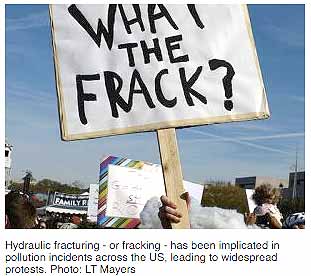
The gas stored in the Marcellus Shale formation is the subject of desperate drilling to secure US domestic energy supplies. But the process involved – hydraulic fracturing – is the focus of a bitter dispute over environmental damage and community rights.
It is a timeless patchwork of small dairy farms and endless hills, emblazoned with the blood-red tints of an autumnal Pennsylvania forest. Set against this sleepy backdrop, however, the constant convoys of water trucks rumbling along the deserted country roads suggest something profound is taking place. This is ‘fracking’ country, the latest frontier in America’s desperate search for fossil fuels.
Pioneered by companies such as Halliburton, high-volume horizontal slickwater fracturing – otherwise known as hydraulic fracturing, or simply fracking – involves the drilling of horizontal wells that are then injected with large volumes of water, sand and chemicals at high pressure to open up rock fractures and help propel rock-trapped gas back to the surface.
Professor Anthony Ingrafea, one of the world’s leading experts on fracture mechanics, based at Cornell University, told the Ecologist:
…there is an overriding urgency to slow down the fracking rush. ‘I’m not anti-oil and gas. What I’m against is an industry that is so out of control in using a new technology that does not have proper regulation, and enforcement of regulation, that they’re riding roughshod over a large segment of the population.’
See also: Bryan Walsh. People Who Mattered: Mark Ruffalo, Anthony Ingraffea, Robert Howarth. 14 Dec 2011. Time.
The biggest environmental issue of 2011 — at least in the U.S. — wasn’t global warming. It was hydraulic fracturing, and these three men helped represent the determined opposition to what’s more commonly known as fracking. Anthony Ingraffea is an engineer at Cornell University who is willing to go anywhere to talk to audiences about the geologic risks of fracking, raising questions about the threats that shale gas drilling could pose to water supplies. Robert Howarth is his colleague at Cornell, an ecologist who produced one of the most controversial scientific studies of the year: a paper arguing that natural gas produced by fracking may actually have a bigger greenhouse gas footprint than coal. That study — strenuously opposed by the gas industry and many of Howarth’s fellow scientists — undercut shale gas’s major claim as a clean fuel. And while he’s best known for his laidback hipster performances in films like The Kids Are All Right, Mark Ruffalo emerged as a tireless, serious activist against fracking — especially in his home state of New York.
Bryan Walsh. People Who Mattered: Mark Ruffalo, Anthony Ingraffea, Robert Howarth. 14 Dec 2011. Time.
See: Affirming Gasland
See: Under the surface : fracking, fortunes and the fate of the Marcellus Shale
See: Fracking: Implications for Human and Environmental Health
See: Getting drillers to respect the environment
See: Pennsylvania Gas Drillers Dumping Radioactive Waste in New York