

See: Report: Marcellus Shale Drillers Amass 1435 Violations in 2.5 Years
The Pennsylvania Land Trust Association has reviewed environmental violations accrued by Marcellus Shale drillers working in Pennsylvania between January 2008 and June 25, 2010. The records were obtained via a Right to Know Request made to the PA Department of Environmental Protection (DEP).
The Pennsylvania Land Trust Association seeks to protect Pennsylvania’s special places and landscapes for today and for generations to come.
To increase the quality and pace of land conservation, PALTA helps conservation practitioners improve their effectiveness, builds public understanding, and advocates for better governmental policy.
See also: Drilling in the Marcellus Shale | Academy of Natural Sciences

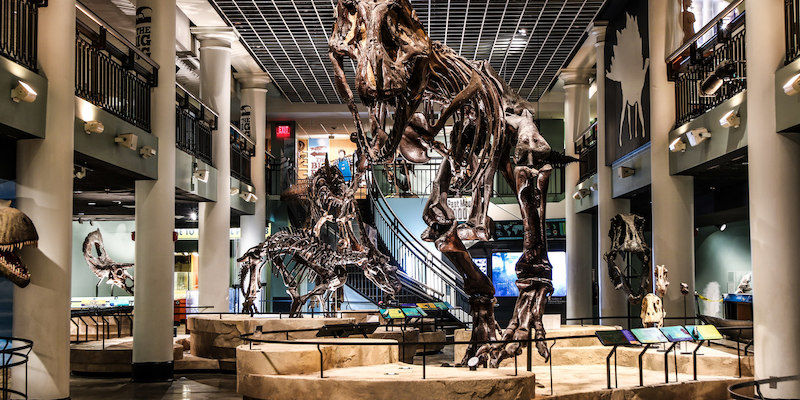
Current website: Academy of Natural Sciences. Drexel University.
In April, 2010, the Academy’s Center for Environmental Policy presented a public panel discussion, “The Marcellus Shale – The Science and the Policy.” Video of this program is available on our website.
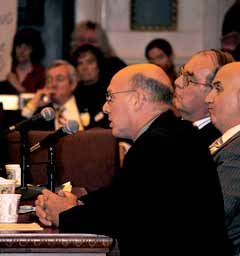
On September 28, 2010, Dr. David Velinsky, vice president of the Academy’s Patrick Center for Environmental Research, testified before the City Council of Philadelphia about the scientific questions at hand and need for new research. A copy of his testimony is available for download.
We propose to look at four streams in each of three size classes for each of the three levels of well density (none, low and high). We will also use computer modeling to analyze the impact of drilling on deforestation. When this study has been completed, we will be able to indicate with a much higher level of certainty what the ecological risks are of drilling in the shale and how they might be managed. It is this and other types of scientific studies that are needed to provide regulators and drillers the necessary information for environmentally sound gas extraction from Pennsylvania.
In conclusion, I would like to thank the Council for this opportunity to discuss these
David Velinsky, Ph.D., Vice President for Environmental Research, The Academy of Natural Sciences. Testimony on the Economic and Environmental Impacts of Hydraulic Drilling of Marcellus Shale on Philadelphia and the Surrounding Region Before The Joint Committees on the Environment and Transportation & Public Utilities of the Council of the City of Philadelphia. 23 Sep 2010. The Academy of Natural Sciences.
issues. We believe the gas in the Marcellus Shale could have positive effects on the
Pennsylvania economy, and there may be possible ways it could be extracted safely.
Again, I’d like to emphasize that the Academy does not take a position on the overall
advantages or disadvantages of obtaining gas from the Marcellus Shale. At this time,
however, there remain significant uncertainties and we urge a cumulative impact
assessment on the scale described above before any large‐scale drilling occurs.
See: East Resources
See: Talisman Energy USA Inc. – Home
See: WolfeNotes | On the Threshold of a Fracking Nightmare
See: Atlas Energy, Inc.
See: Under the surface : fracking, fortunes and the fate of the Marcellus Shale
See: Obama Admin Rejects Timeout for Natural Gas Drilling in N.Y., Pa.
See: Myth Busting | The Marcellus: An American Travesty
See: Marcellus Shale Coalition
See: PA Gas Rush
See: Marcellus Shale Development : Toxic Tort Litigation Blog
See: Big Money Drives Up the Betting on the Marcellus Shale
See: Christopherson to study economic impact of gas drilling in Marcellus Shale
See: This Website is a Crash Course In Fracking
See: Regulation Is Lax for Water From Gas Wells
See: Sixty Lame Minutes