Barack Obama

Barack Obama

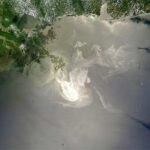
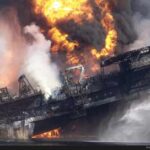
Barack Hussein Obama II (born August 4, 1961) is an American politician who served as the 44th president of the United States from 2009 to 2017. A member of the Democratic Party, he was the first African American president. Obama previously served as a U.S. senator representing Illinois from 2005 to 2008 and as an Illinois state senator from 1997 to 2004. On April 20, 2010, an explosion destroyed an offshore drilling rig at the Macondo Prospect in the Gulf of Mexico, causing a major sustained oil leak. Obama visited the Gulf, announced a federal investigation, and formed a bipartisan commission to recommend new safety standards, after a review by Secretary of the Interior Ken Salazar and concurrent congressional hearings. He then announced a six-month moratorium on new deepwater drilling permits and leases, pending regulatory review. As multiple efforts by BP failed, some in the media and public expressed confusion and criticism over various aspects of the incident, and stated a desire for more involvement by Obama and the federal government. Prior to the oil spill, on March 31, 2010, Obama ended a ban on oil and gas drilling along the majority of the East Coast of the United States and along the coast of northern Alaska in an effort to win support for an energy and climate bill and to reduce foreign imports of oil and gas. In July 2013, Obama expressed reservations and said he “would reject the Keystone XL pipeline if it increased carbon pollution [or] greenhouse emissions.” On February 24, 2015, Obama vetoed a bill that would have authorized the pipeline. It was the third veto of Obama’s presidency and his first major veto. In December 2016, Obama permanently banned new offshore oil and gas drilling in most United States-owned waters in the Atlantic and Arctic Oceans using the 1953 Outer Continental Shelf Act. Obama emphasized the conservation of federal lands during his term in office. He used his power under the Antiquities Act to create 25 new national monuments during his presidency and expand four others, protecting a total of 553,000,000 acres (224,000,000 ha) of federal lands and waters, more than any other U.S. president.

44 documents

2024

December (2024)

World of Shale

World of Shale

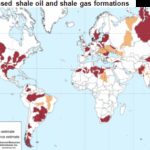
FracTracker Alliance is a Pennsylvania-based nonprofit that maps, analyzes, and communicates data on oil, gas, and petrochemical development. Founded in 2010, the organization provides state-by-state drilling maps, pipeline tracking tools, and thematic analyses to advance public understanding of hydraulic fracturing and its impacts. FracTracker connects environmental data with policy, public health, and climate concerns, offering interactive maps and research resources that situate shale development within both national and international contexts.

Source: Fractracker Alliance (2010) Read More

2023

June (2023)

Clean Water Laws Are Neglected, at a Cost in Suffering

Clean Water Laws Are Neglected

Journalist Charles Duhigg examined how weakened enforcement of clean water laws left communities exposed to pollution. In states where regulators lacked resources or political backing, violations mounted quietly. The cost wasn’t theoretical — it showed up in hospital visits, contaminated wells, and neighborhoods struggling with what flowed from upstream facilities.

Source: New York Times (2009) Read More

2013

January (2013)

American Petroleum Institute

American Petroleum Institute

Critics and investigative reports have accused the American Petroleum Institute (API) of advancing climate change denial and working to block climate legislation in defense of its constituent interests. The organization serves as the principal trade association for the U.S. oil and gas industry, shaping regulatory advocacy and public messaging on behalf of member companies. API has defended hydraulic fracturing as safe when properly regulated and has opposed expanded federal oversight that could alter the industry’s operating framework, placing the trade group at the center of national energy policy battles.

Source: API (2010) Read More

2012

September (2012)

Oil & Gas Accountability Project (OGAP)

Oil & Gas Accountability Project (OGAP)

OGAP tracks drilling impacts with a watchdog’s eye: complaints, enforcement gaps, industry claims, and the fine print of regulation. The hook is accountability — who reports what, who inspects, who pays, who fixes. In boom country, the technical work happens fast and the paperwork trails behind. OGAP exists to pull that trail forward into view, turning scattered incidents into patterns that regulators and communities can’t easily ignore.

Source: Earthworks (2009) Read More

2011

June (2011)

Clean Water Act Definition of “Waters of the United States”

Clean Water Act Definition of "Waters of the United States"

Americans depend on clean and abundant water. However, over the past decade, interpretations of Supreme Court rulings removed some critical waters from Federal protection, and caused confusion about which waters and wetlands are protected under the Clean Water Act.

Source: US EPA: Wetlands | Clean Water Act (1972) Read More

May (2011)

Chu Names Panel to Study Fracking

Chu Names Panel to Study Fracking

Broder’s piece goes on to offer a smokescreen of protest by the right, but according to Dusty Horwitt of the Environmental Working Group (archived), “An industry insider like John Deutch is completely unacceptable to lead this panel…It looks as if the Obama Administration has already reached the conclusion that fracking is safe.”

Source: NYTimes.com: Green | A Blog About the Environment (2011) Read More

April (2011)

Meet the Gas Geezers

Meet the Gas Geezers

T. Boone Pickens has somehow managed to sell President Obama and an astonishing number of Congress members on the myth that nat-gas is a homegrown wonder fuel.

Source: Counterpunch (2011) Read More

High court could melt climate-change cases

High court could melt climate-change cases

Here you have a particular village that is going to be under water. Various scientific and government studies report that the right combination of storms could flood the entire village at any time and have recommended relocation at costs varying up to $400 million.

Source: The National Law Journal | Law.com (2010) Read More

March (2011)

Lenape Resources, Inc.

Lenape Resources

Lenape Resources operated in upstate New York, exploring gas prospects amid a regulatory landscape that remained uncertain. Smaller operators often navigated tighter margins and local scrutiny, their ambitions tied closely to state permitting decisions.

Source: Lenape Resources, Inc. (2010) Read More

U.S. Speaker Nancy Pelosi | Current Legislation

U.S. Speaker Nancy Pelosi | Current Legislation

Tracking current legislation revealed how energy bills advanced, stalled, or fractured along partisan lines. Proposals ranged from renewable incentives to drilling reforms. The legislative docket became a scoreboard for competing visions of America’s energy future.

Source: Speaker Nancy Pelosi | Current Legislation (2010) Read More

Pew Campaign for Responsible Mining

Pew Campaign for Responsible Mining

The Pew Campaign for Responsible Mining argues that the 1872 General Mining Law is outdated and fails to protect taxpayers and public lands. The law allows companies to extract billions in hardrock minerals without paying royalties, while cleanup costs from abandoned mines burden the public. Pew calls for reforms to ensure fair compensation, environmental safeguards, and protection of water sources, wildlife habitats, tribal lands, and national parks amid a renewed mining rush in the American West.

Source: pewminingreform.org (2011) Read More

Leveling Appalachia: The Legacy of Mountaintop Removal Mining

Leveling Appalachia: The Legacy of Mountaintop Removal Mining

Mountaintop removal and slickwater drilling for natural gas both have been challenged by experts for the environmental damages that occur. The pollution has been well documented in public testimony and observation and has proceeded without input from peer-reviewed scientific studies, making the people who live near these extraction processes human experiments in methods unproven to be safe in the long term. (Neil Zusman, 2010-11-10.)

Source: Yale Environment 360 (2009) Read More

February (2011)

Graham Pulls Support for Major Senate Climate Bill

Graham Pulls Support for Major Senate Climate Bill

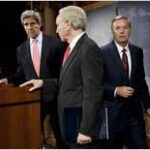
Senator Lindsey Graham withdrew support from a major Senate climate bill, fracturing a fragile bipartisan coalition. The setback stalled momentum for comprehensive climate legislation. Energy policy once again splintered along party lines, leaving regulatory authority to agencies and states.

Source: The New York Times (2010) Read More

Energy Policy Act of 2005-Critique

Energy Policy Act of 2005-Critique

Critics revisited the Energy Policy Act of 2005, focusing on provisions that limited federal oversight of hydraulic fracturing. The “Halliburton loophole” became shorthand for regulatory exemption. What passed quietly in statute books years earlier now sat at the center of public debate.

Source: Wikipedia, the free encyclopedia (2010) Read More

Triana Energy

Triana Energy

Triana Energy operated in the Marcellus Shale during the boom’s early expansion, navigating leasing, drilling, and eventual acquisition in a fast-moving market. In a 2009 case in West Virginia, landowners who sold natural gas to Chesapeake and its predecessors — including Triana Energy, NiSource Inc., and Columbia Natural Resources — alleged they were cheated out of portions of their royalty payments. In shale’s rapid ascent, corporate timing and contract terms often moved just as quickly as the drilling rigs.

Source: Triana Energy (2010) Read More

The top five stories of the year for climate hawks

The top five stories of the year for climate hawks

Cap-and-trade is deader than dead. Everyone in Washington officialdom knows that. Virtually no one in Washington officialdom understands how it would work or how much economists think it would cost, but they’re certain it’s bad, bad, bad and had to die.

Source: Grist (2010) Read More

EPA chief faces hostile House GOP

EPA chief faces hostile House GOP

The showdown between House Republicans and the White House over climate change and environmental policies kicks off Wednesday with EPA chief Lisa Jackson as the star witness.

Source: Politico (2011) Read More

January (2011)

Dirty Energy Money

Dirty Energy Money

We’ve created maps of political campaign contributions from companies in the oil & gas and coal industries to congressional representatives. These are

Source: Dirty Energy Money | Oil Change International (2012) Read More

GovTrack.us: Tracking the U.S. Congress

GovTrack.us: Tracking the U.S. Congress

Gov Track was the first website to apply the principles of open data and Web 2.0 to the U.S. Congress. It catalyzed the development of a community of like-minded developers and shaped the data-oriented open government movement that we see today.

Source: GovTrack.us (2004) Read More

What happened to climate change?

What happened to climate change?

One of the most glaring omissions during Obama’s State of the Union address was the acknowledgement of climate change. As the Senate and House return to Capitol Hill both sides are gearing up to attack the existing tool in place to address greenhouse gases – the Clean Air Act…

Source: EnergyVox | Citizen Energy (2011) Read More

FERC: For Citizens: Get Involved

FERC: For Citizens: Get Involved

If you think you might be affected by a proposed natural gas or hydroelectric project regulated by the Commission, you have certain rights. These rights range from being able to look at project correspondence to becoming an intervener and being able to appeal any FERC decisions in federal court.

Source: Federal Energy Regulatory Commission (FERC) (2010) Read More

EPA in the Crosshairs

EPA in the Crosshairs

Politico, a Washington, D.C.–based political news outlet founded by former Washington Post reporters John Harris and Jim VandeHei, reported that Congressional Republicans were preparing to target EPA Administrator Lisa P. Jackson over the Obama administration’s environmental agenda. GOP lawmakers accused the Environmental Protection Agency of regulatory overreach, particularly in advancing climate rules and emissions limits. Jackson defended the agency’s authority as it moved to curb pollution from industry, automobiles, and coal-fired power plants.

Source: Politico (2010) Read More

2010

November (2010)

National Parks Traveler | Bush Administration Poised to Sell Oil and Gas Leases Around Dinosaur National Monument, Arches and Canyonlands National Parks

National Parks Traveler | Bush Administration Poised to Sell Oil and Gas Leases Around Dinosaur National Monument

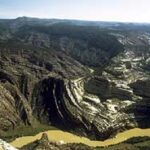
Reporting on policies during the Bush administration, National Parks Traveler examined how energy development proposals intersected with protected federal lands. When drilling interests approached park boundaries, preservationists questioned whether conservation commitments would hold against energy priorities.

Source: National Parks Traveler (2008) Read More

October (2010)

World-Renowned Scientist Dr. Theo Colborn on the Health Effects of Water Contamination from Fracking

World-Renowned Scientist Dr. Theo Colborn on the Health Effects of Water Contamination from Fracking

Dr. Theo Colborn, founder of The Endocrine Disruption Exchange, warned that chemicals used in hydraulic fracturing could interfere with hormonal systems at low concentrations. Her research focused on endocrine disruption — subtle biological effects not always captured by traditional toxicology thresholds. The implications extended beyond spills to long-term exposure science.

Source: Democracy Now! (2010) Read More

September (2010)

Obama’s gifts to extractive industries continue with defense of Bush mining policy

Obama's gifts to extractive industries continue with defense of Bush mining policy

In April 2010, Earthworks criticized the Obama administration for defending a Bush-era policy allowing unlimited toxic mine waste dumping on public lands, arguing the move contradicted stated commitments to environmental reform. The organization framed the decision as another example of federal policy favoring extractive industries over water protection, public lands stewardship, and community health.

Source: Earthworks (2010) Read More

Obama Admin Rejects Timeout for Natural Gas Drilling in N.Y., Pa.

Obama Admin Rejects Timeout for Natural Gas Drilling in N.Y.

President Obama and federal officials declined calls to seek a temporary halt on Marcellus Shale drilling in the Delaware River Basin pending a cumulative environmental impact study, despite appeals from Rep. Maurice Hinchey and environmental advocates. The dispute exposed tensions between economic development and watershed protection, with critics arguing that comprehensive risk assessment should precede regulatory approval in order to safeguard the basin’s Special Protection Waters.

Source: The New York Times: Greenwire (2010) Read More

August (2010)

White linked to company in pollution probe

White linked to company in pollution probe

As Houston mayor and 2010 gubernatorial candidate, Bill White faced scrutiny over his $2.6 million compensation from BJ Services, a gas well servicing company under congressional investigation for potential groundwater contamination linked to hydraulic fracturing. Environmental advocates, including Sharon Wilson of Earthworks’ Oil & Gas Accountability Project, questioned the alignment between White’s environmental record and his ties to the drilling industry amid mounting concerns over diesel use and hazardous waste in fracking operations.

Source: The Houston Chronicle - Houston & Texas News | Chron.com (2010) Read More

Use of potentially harmful chemicals kept secret under law – washingtonpost.com

Use of potentially harmful chemicals kept secret under law - washingtonpost.com

In the Washington Post, Lyndsey Layton reported that nearly 20 percent of the 84,000 chemicals in commercial use are shielded from public disclosure under a little-known federal provision. The Environmental Protection Agency allows companies to keep identities secret, leaving consumers and regulators in the dark. As hydraulic fracturing expands nationwide, critics warn that this chemical secrecy undermines public trust and limits meaningful oversight of substances injected underground.

Source: Washington Post (2010) Read More

U.S. finds water polluted near gas-drilling sites

U.S. finds water polluted near gas-drilling sites

In a Reuters investigation, Jon Hurdle reported that U.S. government scientists found chemical contaminants in drinking water wells near gas drilling operations in Dimock, Pennsylvania. The findings marked the first federal confirmation linking pollution concerns to hydraulic fracturing sites. For residents who had long complained of tainted water, the announcement intensified fears that drilling near homes could carry health consequences beyond what regulators had publicly acknowledged.

Source: Reuters (2009) Read More

Louisiana tells EPA that it should let Congress handle greenhouse gas regulation

Louisiana tells EPA that it should let Congress handle greenhouse gas regulation

Louisiana’s Department of Environmental Quality urged the U.S. Environmental Protection Agency to rescind its finding that greenhouse gases endanger public health, arguing that Congress—not regulators—should set climate policy. Reported by Mark Schleifstein in The Times-Picayune, the dispute reflected broader national resistance to federal climate oversight, even as scientific consensus around emissions and long-term environmental risk continued to solidify.

Source: NOLA.com | Times-Picayune (2009) Read More

Buried Secrets: Is Natural Gas Drilling Endangering U.S. Water Supplies?

Buried Secrets: Is Natural Gas Drilling Endangering U.S. Water Supplies?

Investigative reporter Abrahm Lustgarten examined whether hydraulic fracturing posed risks to underground water supplies long assumed safe. Internal documents, field reports, and federal hesitations suggested a murkier picture than public assurances implied. At stake: aquifers serving millions. The promise of cleaner-burning fuel collided with a quieter question — what happens if the contamination is slow, invisible, and hard to prove?

Source: ProPublica (2008) Read More

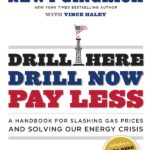
Drill here, drill now, pay less : a handbook for slashing gas prices and solving our energy crisis

Drill here

Echoing the slogan popularized by political figures like Newt Gingrich, “Drill Here, Drill Now, Pay Less” framed expanded domestic drilling as a direct path to lower energy prices. The handbook distilled an argument that resonated nationally during high gas-price cycles. Critics countered that global oil markets and production timelines rarely bend to slogans.

Source: Regnery Pub. (2008) Read More

Scalise: EPA Declares CO2 a Dangerous Pollutant Based on “Climate Gate’s” Corrupt Science

Scalise: EPA Declares CO2 a Dangerous Pollutant Based on “Climate Gate’s” Corrupt Science

Congressman Steve Scalise criticized the EPA’s determination that greenhouse gases endanger public health, arguing it threatened economic growth. The endangerment finding opened the door to federal regulation of carbon emissions. What the agency framed as science-based necessity, opponents framed as regulatory overreach.

Source: Congressman Steve Scalise Representing the 1st of Louisiana (2009) Read More

Senators Want to Bar E.P.A. Greenhouse Gas Limits

Senators Want to Bar E.P.A. Greenhouse Gas Limits

A group of senators moved to block the EPA from regulating greenhouse gases, arguing climate rules exceeded the agency’s mandate. The proposal reflected a broader clash over separation of powers: should carbon limits originate in Congress or through agency interpretation of existing law?

Source: The New York Times (2010) Read More
Item added to cart.
0 items - $0.00