For best viewing, click ⛶ for fullscreen.
Blessing of the Animals : Out Walking | Sep 2026
14 minutes read time
September found me looking down as often as looking ahead. Earthworms, caterpillars, mushrooms, butterflies, and birds occupied the streets and sidewalks of Ithaca, sharing the space with automobiles, machinery, and people going about their lives.
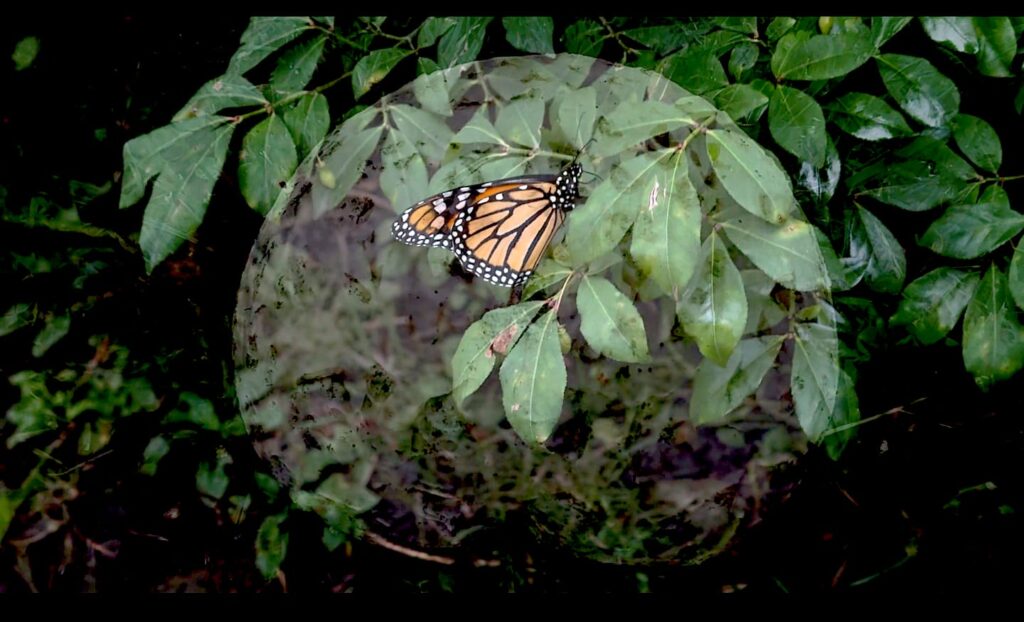
A monarch butterfly rested on wet green leaves, an earthworm crossed rough gray asphalt, and a lime-green caterpillar echoed the brilliant green paint of a Kawasaki motorcycle. Shapes reappeared in objects that had little else in common: round puffball mushrooms, discarded plastic rings, birds’ nests, and circles spreading across rainwater.
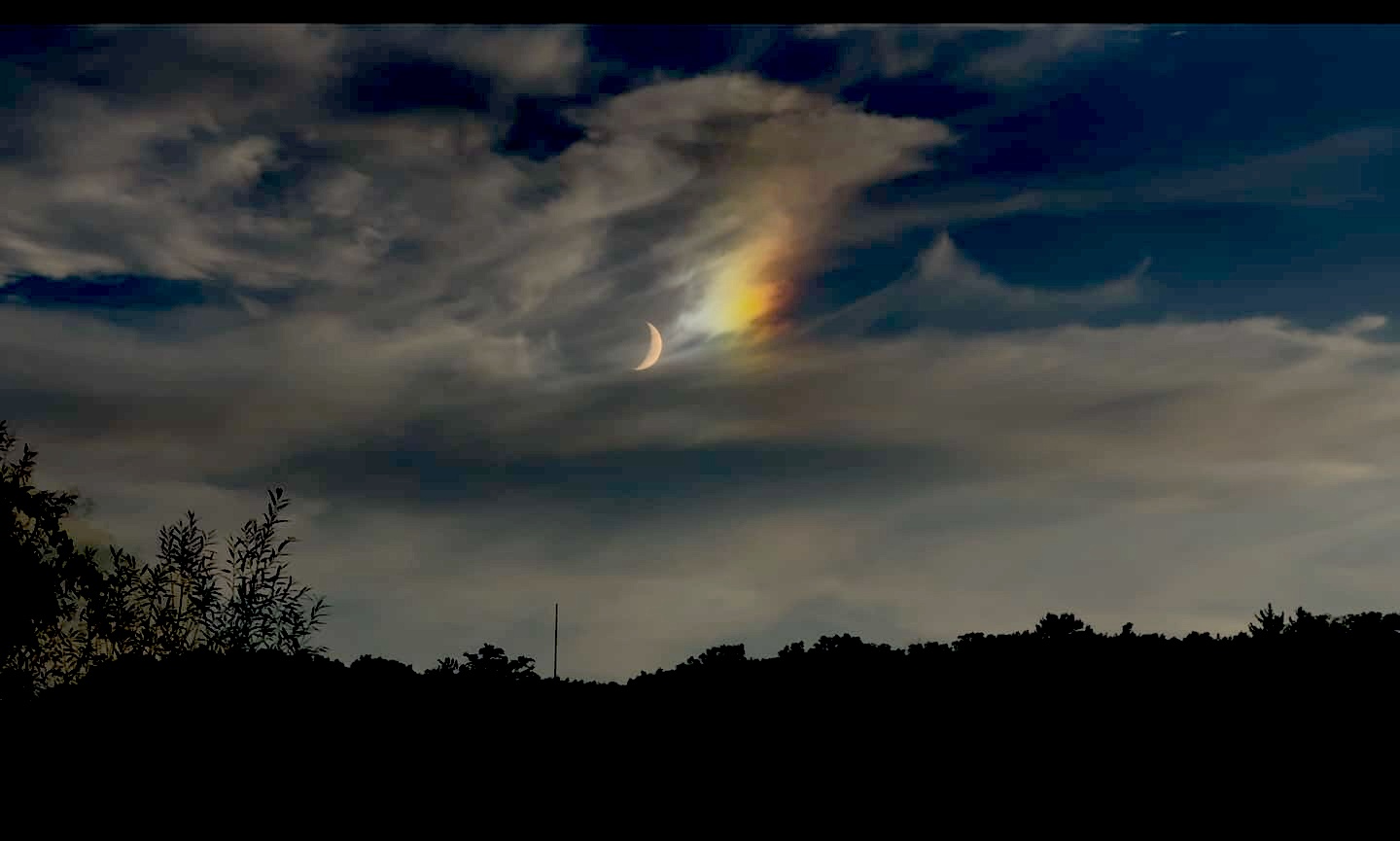
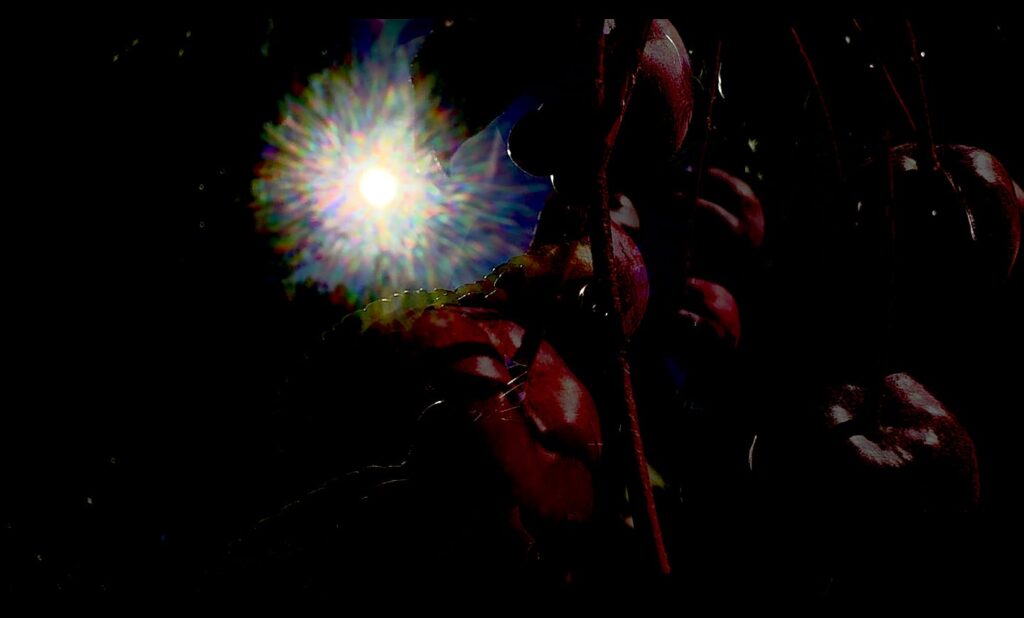
Red crabapples, a STOP sign, and the pulsing lights of a fire truck found their way into the same month. Sunlight filtered through reeds and leaves, glinted on dark water, and eventually gave way to evening skies and moonlight.
Small dates appeared in the lower-left corner, marking my progress through September. In my slowed editing, one image remained visible as another appeared, allowing their different textures and colors to briefly occupy the same space. Public signs offered competing messages: “SEE THE BEAUTY THAT IS ALL AROUND YOU,” “COMMUNICATIONS,” and “STOP FASCISM.”
Early in the month I was listening to Bob Dylan’s “Walking Down the Line” and “I Pity the Poor Immigrant,” and heard Wendell Berry reading poetry on NPR. Annie Dillard’s Pilgrim at Tinker Creek returned to my attention, and I bought a copy. I was thinking about the choices I make with my camera. Sometimes I repeat a shot like a Cubist, changing my angle, height, pan, tilt, or movement. Other things are given to me unexpectedly. I look for those encounters. The two collide.
The walks continued to fill my days with music, memories, and other people. At the Southside food program, I was given an armload of fruit, squash, and beautiful kale.
Jimi Hendrix, James Brown, and Aretha Franklin accompanied my listening. Gillian Welch brought back memories of an anniversary years earlier, when Stiller and I wandered up to Cornell and discovered Michelle Shocked performing at a 2003 celebration of peace activism honoring Daniel Berrigan.
Preparing for Stiller’s birthday and our anniversary, I was asked for proof of age at a liquor store. I joked about being seventy-three; the clerk told me someone a hundred years old had recently shopped there. A candlelit birthday celebration, with family and friends singing together, enters the film among the outdoor observations.
Later, listening to Natalie Merchant and David Byrne’s “Nature Boy,” I imagined fastening a dozen little flashlights to my fingers and arms and dancing with their beams of light. In my notes I wrote, “Committed to being in the moment, aware of movement. Consciously cultivating joy.” But I was also worrying about Chloe, our aging dog. As September drew to a close, rain fell across the lake and a white feather floated in a puddle on wet asphalt.
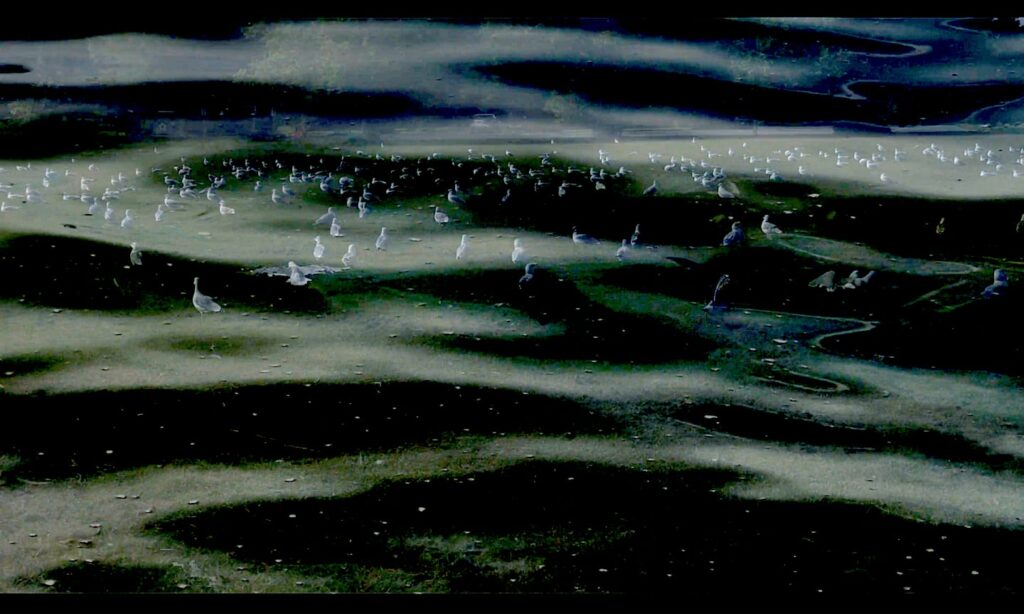
I attended Alexandria Ocasio-Cortez’s Ithaca town hall, where she spoke about allegations of sexual violence at Cornell. I subsequently incorporated more of her remarks into the film than I had recorded, allowing her words to continue across images of a dead spotted lanternfly, bright chrysanthemums, and heavy machinery gripping and crushing lumber, with sawdust blowing across the yard.
On September 29, we took Chloe to Cornell to be put to rest. Near the film’s end, a duck paddles through the water. Then a church sign announces “BLESSING OF THE ANIMALS,” returning in progressively darker light before the fade to black.
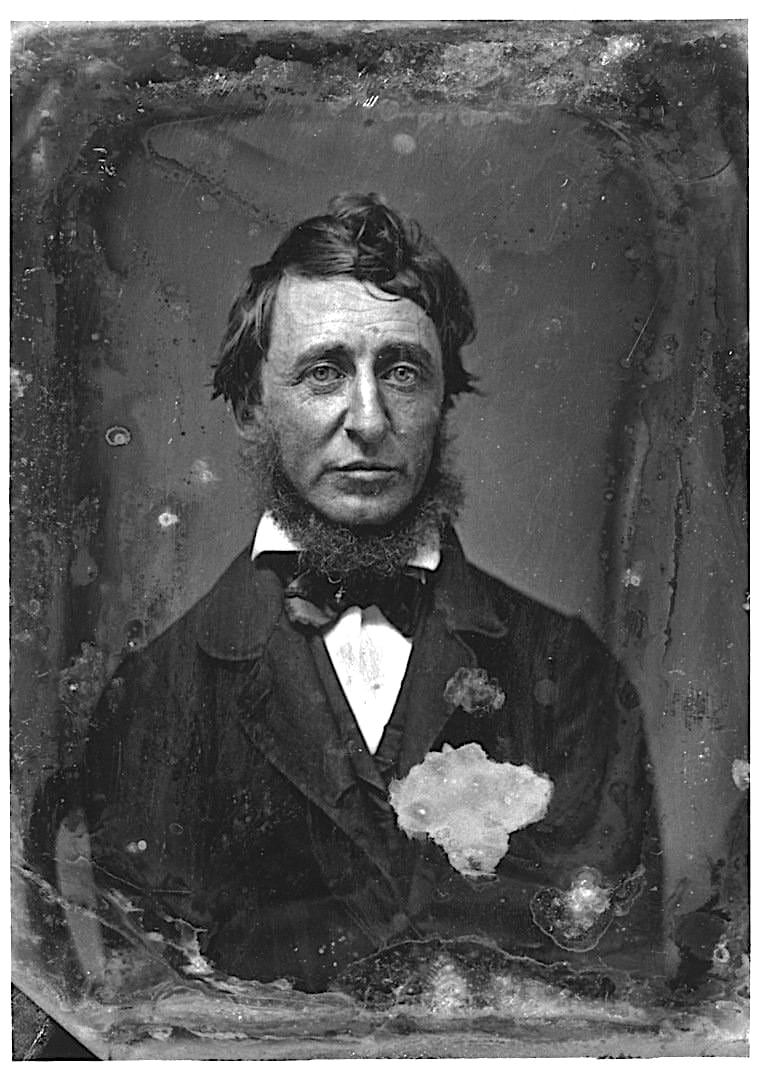
Moreover, you must walk like a camel, which is said to be the only beast which ruminates when walking. When a traveler asked Wordsworth’s servant to show him her master’s study, she answered, “Here is his library, but his study is out of doors.”
Henry David Thoreau. Walking. As published in Atlantic Monthly, 1862.
Smackdown
Official Story / Public Reckoning
Sep 2026
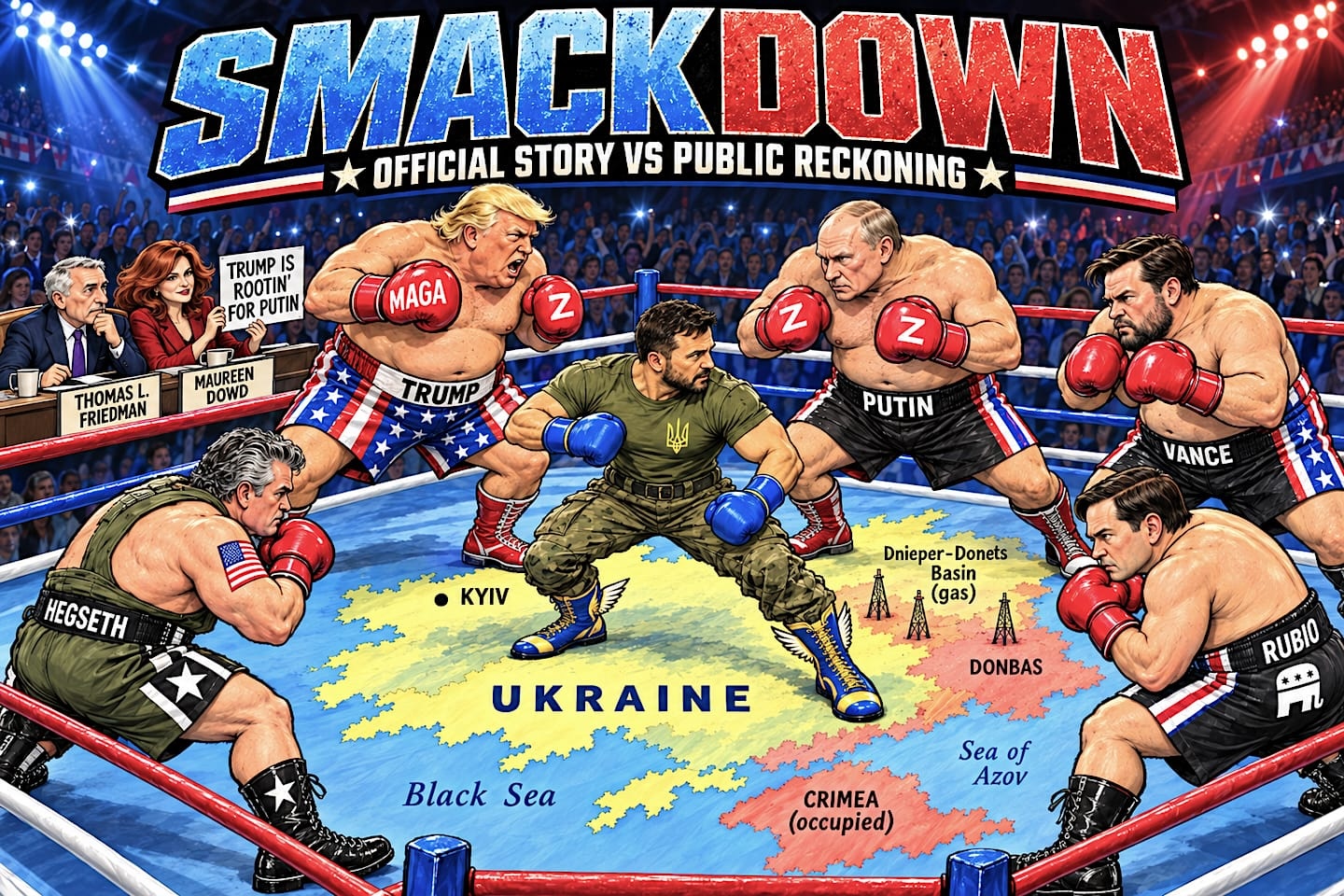
White House / Agriculture, Justice, EPA, Energy, Interior, Transportation
September’s opening confrontation concerns Ukraine, Russia and diesel fuel. Trump urges Zelensky to stop striking Russian refineries, placing global fuel supply ahead of one of Ukraine’s means of pressuring its invader. Elsewhere in the month’s public record, federal agencies describe their policies through forest health, affordable energy, regulatory relief, historical pride, property rights and consumer choice. The common claim is that fewer restrictions can produce greater security and prosperity.
Emphasis
- On September 13, Trump tells Zelensky to stop attacking Russian diesel facilities, arguing that the strikes are worsening a global fuel shortage. He says Ukraine can choose other targets, but should leave diesel refineries alone.
- The Agriculture Department’s August proposal to rescind the Roadless Area Conservation Rule is defended as a means of reducing wildfire danger, restoring forest health and making land management more effective. The proposal is under scrutiny in September; it is not yet a completed repeal.
- The Justice Department welcomes the August 31 court ruling against New York’s Climate Change Superfund Act, treating the proposed liability imposed on major fossil-fuel companies as unlawful state interference with federal energy policy.
- EPA presents its February rescission of the greenhouse-gas Endangerment Finding as historic deregulation, promising lower costs and greater consumer choice. Its treatment of climate science becomes the subject of renewed scrutiny in September.
- On September 14, EPA finalizes a partial repeal of greenhouse-gas requirements for power plants and proposes eliminating the remaining limits, citing affordable, reliable electricity and projected compliance savings.
- At the September 14–16 G20 Energy Abundance Ministerial, the Energy Department promotes expanded and diversified energy supply, emphasizing hydrocarbons, nuclear energy, infrastructure, affordability, reliability and national security.
- Interior’s July rescission of the Endangered Species Act’s regulatory definition of harm is presented as restoring the statute’s original meaning and protecting landowners from excessive federal restrictions. A further internal interpretation surfaces in September reporting.
- The White House’s earlier order on American history directs federal institutions to emphasize national achievement and review displays said to disparage Americans. Its effects on national park interpretation become visible in September.
- On September 28, the Transportation Department finalizes looser vehicle fuel-economy standards, promising less expensive cars, more consumer choice and reduced regulatory pressure on manufacturers.
Key rhetoric
- Energy security
- Energy abundance
- Affordable
- Reliable
- Forest health
- Common sense
- Restore
- Regulatory relief
- Property rights
- Consumer choice
Foregrounded
Fuel availability and prices, energy production, power-plant compliance costs, permitting and forest management, landowner certainty, national pride, vehicle prices and the administration’s asserted ability to reduce economic burdens through changes in regulation.
Minimized or absent
In these selected statements, less attention is given to Ukraine’s position as the country under invasion, the effects of extraction on protected forests, long-term costs of climate damage, methane leakage, incidental harm to endangered species, and the historical record that public-land interpretation is expected to preserve.
Reuters / The Guardian / The New York Times
Journalism asks who carries the consequences of these choices. A demand for cheaper diesel also affects Ukraine’s military leverage. A forest management proposal changes the protection of habitat. Removing an emissions rule does not remove emissions. The reporting follows decisions outward, toward the people, animals, landscapes and public institutions exposed to their effects.
Emphasis
- Reuters reports Trump’s September 13 demand and Ukraine’s explanation for targeting Russian refineries. Ukraine says the sites are military targets supporting Russia’s war, while Russian strikes continue to damage Ukrainian energy infrastructure. The argument over diesel is also an argument over who can exert pressure on whom.
- Dharna Noor examines the Forest Service chief’s former timber-industry ties as the administration moves to rescind roadless protections covering roughly 45 million acres of national forest. Conservation advocates warn of risks to habitat and protected species.
- Dharna Noor reports on the defeat of New York’s climate superfund law, which sought $75 billion over 25 years from large fossil-fuel companies for climate adaptation. The question remains who will pay for damage already affecting communities and infrastructure.
- Dharna Noor, Hazel Tang and John Farrell trace the influence of climate denialism on federal policy, distinguishing political rejection of regulation from the scientific evidence for human-caused warming.
- Oliver Milman reports on EPA’s retreat from power-plant greenhouse-gas limits, following the consequences of reducing the government’s ability to control emissions from electricity generation.
- Oliver Milman reports satellite measurements identifying major methane super-emitters, including Energy Transfer. What is called abundant energy can also be investigated as measurable atmospheric pollution.
- Catrin Einhorn reveals an internal interpretation of the Endangered Species Act that would treat only intentional harm to wildlife as prohibited, potentially excluding foreseeable deaths that occur during ordinary economic activity. The memo is a proposed interpretation, not a demonstrated change to every enforcement decision.
- Flávio Pessoa examines public resistance to an effort to revise national-park history. Visitors invited to report objectionable displays instead used the feedback system to defend accounts of slavery, Indigenous history, climate change and other difficult subjects.
- Brad Plumer profiles Energy Secretary Chris Wright and his energy-dominance argument, examining the distance between promises of plentiful domestic fossil fuels and the instability of global energy markets.
- Maxine Joselow reports on the rollback of fuel-economy standards, asking what vehicle affordability means when purchase prices are weighed against gasoline consumption and longer-term pollution.
Key rhetoric
- Sovereignty
- Military leverage
- Habitat
- Accountability
- Climate costs
- Scientific evidence
- Methane
- Incidental harm
- Historical record
- Consequences
Foregrounded
Ukraine’s right to defend itself; the ecological value of roadless forests; who pays for climate damage; measured greenhouse-gas emissions; the difference between direct and incidental injury to animals; historical accuracy on public lands; and the lifetime costs of fossil fuel dependence.
Minimized or absent
Energy abundance, regulatory relief, forest management and consumer choice are not taken as sufficient descriptions of policy. These accounts return to evidence and consequences beyond the claims used to justify the original decision.
Key verbs
Federal verbs: secure, restore, rescind, remove, expand, streamline, reduce, protect, unleash
Public verbs: examine, measure, trace, report, expose, question, document, count, defend
Sources
- Donald J. Trump. Restoring Truth and Sanity to American History. 27 Mar 2025. The White House.
- U.S. Environmental Protection Agency. President Trump and Administrator Zeldin Deliver Single Largest Deregulatory Action in U.S. History. 12 Feb 2026. U.S. Environmental Protection Agency.
- U.S. Department of the Interior. Department of the Interior Restores Clear ESA Enforcement by Rescinding Misguided “Harm” Definition. 10 Jul 2026. U.S. Department of the Interior.
- U.S. Department of Agriculture. USDA Acts to Remove Roadless Rule Restrictions That Exacerbate Rising Wildfire Risk. 18 Aug 2026. U.S. Department of Agriculture.
- U.S. Department of Justice. New York Judge Blocks State of New York’s Unconstitutional Climate Superfund Act. 31 Aug 2026. U.S. Department of Justice.
- U.S. Environmental Protection Agency. EPA Finalizes Repeal of 2024 Power Plant Regulations, Delivering $300+ Billion in Savings, Proposes Repeal of All Remaining Greenhouse Gas Emissions Standards for Power Plants. 14 Sep 2026. U.S. Environmental Protection Agency.
- U.S. Department of Energy. Energy Department Advances U.S. Energy Priorities at G20 Energy Abundance Ministerial. 16 Sep 2026. U.S. Department of Energy.
- U.S. Department of Transportation. President Trump & Transportation Secretary Duffy Finalize “Freedom Means Affordable Cars” Initiative to Reset Fuel Economy Standards, End Illegal EV Mandate. 28 Sep 2026. U.S. Department of Transportation.
- Reuters. Trump Tells Ukraine’s Zelenskiy to Stop Hitting Russian Diesel. 13 Sep 2026. Reuters.
- Dharna Noor. Forest Service Chief Faces Scrutiny Over Logging Ties as Trump Plans to Scrap Protections. 1 Sep 2026. The Guardian.
- Dharna Noor. Judge Strikes Down New York Law That Forced Climate Polluters to Pay Damages. 1 Sep 2026. The Guardian.
- Dharna Noor, Hazel Tang and John Farrell. How Climate Denialism Finds Its Way to the US’s Highest Office — Video Explainer. 3 Sep 2026. The Guardian.
- Oliver Milman. US Ends Limits on Coal and Gas Plant Emissions, Removing Key Tool to Fight Climate Crisis. 14 Sep 2026. The Guardian.
- Oliver Milman. US ‘Super-Emitters’ of Planet-Heating Methane Identified by Satellite Analysis. 14 Sep 2026. The Guardian.
- Catrin Einhorn. Trump Administration Moves to Gut a Core Endangered Species Protection. 16 Sep 2026. The New York Times.
- Flávio Pessoa. Trump Asked Americans to Help Him Whitewash National Parks. They Revolted Instead. 16 Sep 2026. The Guardian.
- Brad Plumer. The Former Fracking Executive Selling Trump’s ‘Energy Dominance’ Vision. 23 Sep 2026. The New York Times.
- Maxine Joselow. Trump Sharply Scales Back Fuel Economy Rules for New Cars. 28 Sep 2026. The New York Times.
The deeper contrast
September turns on the meaning of protection. Trump asks Zelensky to stop striking Russian diesel infrastructure in the name of fuel security, while Ukraine regards those refineries as part of the machinery supporting Russia’s invasion.
Federal agencies describe fewer restrictions as forest health, energy abundance, consumer choice and a restoration of the law’s original meaning. Journalists ask whose security is being defended, what happens to protected forests, who pays for climate damage, and whether endangered animals can be harmed without anyone being held responsible.
Changing the language of protection does not necessarily change what happens to the things being protected.
My September walks offered another way of examining these relationships. An earthworm crosses asphalt. A caterpillar moves across the pavement. Mushrooms, birds, discarded objects, construction machinery and public signs share the landscape. Colors and shapes repeat across living organisms and manufactured things.
In the slowed film, images overlap for a few seconds, allowing different materials and moments to occupy the same space. They do not become equivalent or explain one another. Their coexistence is simply something I have encountered, recorded and made visible.
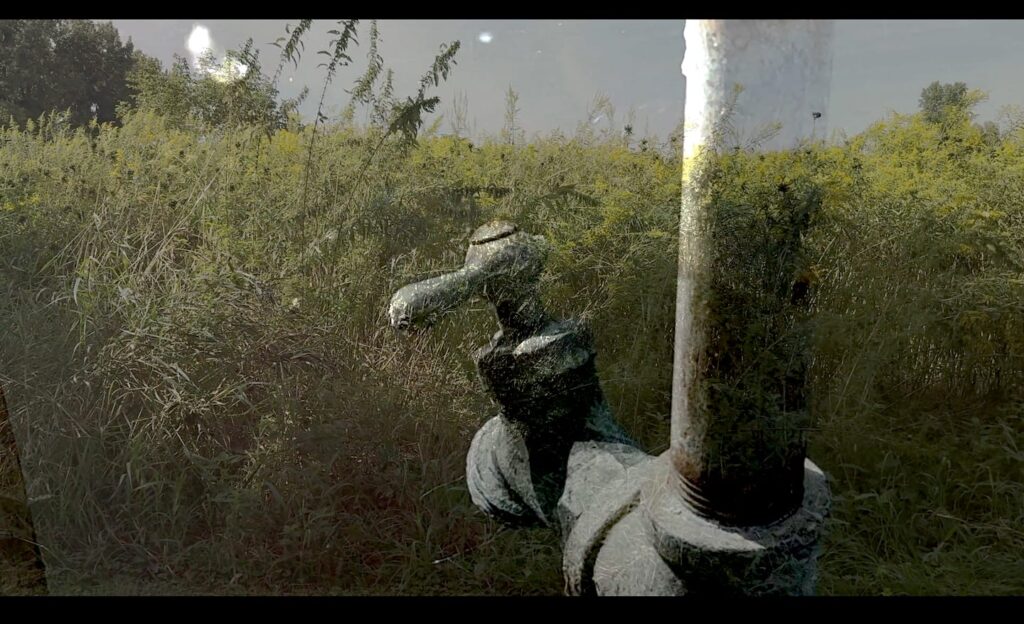
Near the end, Alexandria Ocasio-Cortez’s remarks about sexual violence at Cornell continue across images of a dead spotted lanternfly, chrysanthemums, heavy machinery and a duck moving through water. The testimony and the images are not illustrations of one another. Their uneasy coexistence asks something of the viewer’s attention without offering an easy interpretation.
During these same days, I was confronting the loss of Chloe, our aging dog. Care, vulnerability and the limits of protection were no longer only questions raised by the public record. The church sign announcing “BLESSING OF THE ANIMALS” returns in progressively darker light, leaving its meaning open as the film fades to black.
Thoreau’s camel ruminates while walking; Wordsworth’s study is out of doors. Their example suggests that observation and reflection need not be separate activities.
Walking does not resolve the contradictions between official language and public evidence, or between delight in the living world and grief at its vulnerability. It gives me time to notice, to reconsider, and sometimes to discover connections I had not anticipated.
The Smackdown asks what our institutions choose to protect. The film leaves me with a more immediate question: how do we live together, and what do we owe the lives around us?
See also: Tilda Wilson, Noah Adams. Beloved writer and environmentalist Wendell Berry has died at age 92. 1 Sep 2026. NPR.
See also: Scott Simon. Opinion: Remembering Annie Dillard, nature writer. 19 Sep 2026. NPR.
See: Stand with Ukraine
See: Art of the common-place: the agrarian essays of Wendell Berry