
For best viewing, click ⛶ for fullscreen.
Stand with Ukraine: Out Walking | Mar 2025
11 minutes read time.
Blue and yellow kept reappearing during my March walks—in a Ukrainian flag painted beside a Palestinian flag on a canal wall, ribbons woven through chain-link fencing, and blue lake water beneath bright skies.

Ithaca was emerging from winter. Ice floated in the canal, reeds bent in the wind, and swollen water rushed past the painted flags.
I was still troubled by the February 28 Oval Office confrontation between Trump, Vance, and Zelensky. Phish’s “Waste” and Patti Smith’s “Gimme Shelter” appeared in my listening notes as the month began.
When Trump addressed a joint session of Congress on March 4, I stood before my large-screen television with my camera, listening to the live broadcast and moving impulsively across its images. I reframed faces, gestures, and protest signs reading “SAVE MEDICAID,” “MUSK STEALS,” and “FALSE,” following whatever I sensed deserved a closer look.

The televised images dissolved over an empty park swing and winter landscapes. Two days later, I described my practice as diaristic: “Free. Absorbing everything. In love with the world. Depressed. Music. Film. Poetry.”
I was delighted to discover that Wide Awake Bakery had made dozens of loaves bearing the words “STAND WITH UKRAINE.” I asked my friend Aron to slice one while I filmed four shots for my automatic slideshow engine to animate the transitions. Then we ate the bread. Out walking, I thanked Mike, a mail carrier, for his work.
We talked about Washington, the neighborhood, the United States Postal Service and our shared pleasure in walking; perhaps together someday.
Later in March, I remembered choosing a Bright Eyes track for a Sunday morning radio show, “Made of Clay” with Eric Clay on WRFI, Ithaca, NY in January 2020, when I was interviewed for a show I produced, “When It is Hard to be Human”. The song’s voice sounded to me “anxious, nervous, self apologetic, humiliated, beaten, hopeful.” Beside Górecki’s Miserere, I wrote one word: “Foreboding.” Meanwhile, my camera found a yellow petroleum pipeline warning, abandoned rusting water pumps, the word “ABOLITION” painted on a concrete building, “KEEP FIGHTING” on a fence, and a purple crocus emerging through dead leaves.
Near the film’s end, a blue-and-yellow pinwheel spins in the breeze, followed by dark, rushing water and the closing fade to black. Walking, listening, changing my point of view, I continued to find delight in discovery, even as the news gave me plenty of reasons for despair.
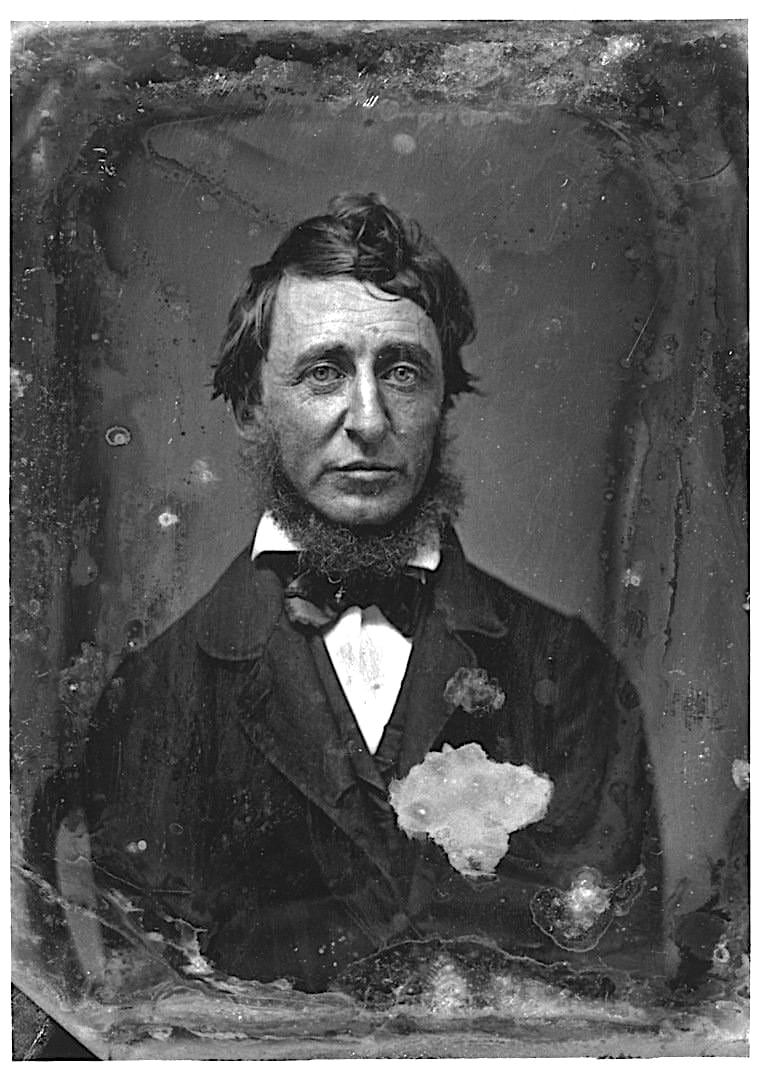
I was walking in a meadow, the source of a small brook, when the sun at last, just before setting, after a cold, gray day, reached a clear stratum in the horizon, and the softest, brightest morning sunlight fell on the dry grass and on the stems of the trees in the opposite horizon and on the leaves of the shrub oaks on the hillside, while our shadows stretched long over the meadow eastward, as if we were the only motes in its beams.
Henry David Thoreau. Walking. As published in Atlantic Monthly, 1862.
It was such a light as we could not have imagined a moment before, and the air also was so warm and serene that nothing was wanting to make a paradise of that meadow. When we reflected that this was not a solitary phenomenon, never to happen again, but that it would happen forever and ever, an infinite number of evenings, and cheer and reassure the latest child that walked there, it was more glorious still.
Smackdown
Official Story / Public Reckoning / Deeper Contrast
Mar 2025

White House / EPA / Energy
The administration describes March through peace negotiations, American strength, economic security, resource development and regulatory relief. After the televised confrontation with President Volodymyr Zelensky in February, Trump presents himself as a broker capable of ending Russia’s war against Ukraine. At home, timber production, fossil-fuel expansion and environmental deregulation are presented as ways to restore prosperity, lower costs and remove barriers to growth.
Emphasis
- Trump orders the expansion of timber production on federal lands, describing existing protections and permitting delays as obstacles to jobs, housing costs, wildfire prevention and national security.
- In his March 4 address to Congress, Trump declares that America is entering a golden age. He reports a conciliatory message from Zelensky about a minerals agreement, says Russia has signaled readiness for peace, and insists that ending the war requires talking to both sides.
- Energy Secretary Chris Wright promotes abundant, affordable and secure energy, putting expanded production at the center of the administration’s economic and geopolitical strategy.
- The United States and Ukraine announce a proposal for an immediate 30-day ceasefire, conditional on Russian acceptance. The United States agrees to resume intelligence sharing and security assistance after a pause; both countries also commit to pursuing a critical-minerals agreement.
- EPA Administrator Lee Zeldin announces 31 deregulatory actions, promising lower living costs, more domestic energy production, renewed manufacturing and greater state authority while maintaining environmental protection.
- In separate March 25 statements, the White House announces talks with Ukraine and talks with Russia on Black Sea navigation and restrictions on strikes against energy infrastructure. The Russia statement also promises U.S. help restoring Russian agricultural and fertilizer exports to world markets.
Key rhetoric
- Golden age
- Peace
- End the killing
- Economic security
- Energy dominance
- Unleash
- Common sense
- Deregulation
- Affordable
- Great American Comeback
Foregrounded
The president’s negotiating role, the possibility of a ceasefire, mineral resources, domestic production, economic growth, energy supply, regulatory costs and the speed with which federal decisions can be made.
Minimized or absent
In these selected statements, less attention is given to the imbalance between an invaded country and its aggressor, the consequences of suspending military assistance during an active war, the ecological costs of increased logging and extraction, or the scientific and public-health purposes of regulations slated for reconsideration.
The New York Times / The Guardian
Journalists and columnists describe the consequences and the power relationships obscured by official assurances. The Oval Office confrontation raises questions about U.S. pressure on Ukraine and the administration’s treatment of Russia. Forest and energy policies raise questions about habitats, emissions and the purpose of environmental law. A jury verdict arising from the Dakota Access Pipeline protests puts the costs of public dissent into the same month’s record.
Emphasis
- Maureen Dowd argues that Trump’s treatment of Zelensky benefits Putin, reading the February 28 Oval Office confrontation as a reversal of the moral and strategic positions of aggressor and defender.
- Oliver Milman reports on the ecological risks of expanded federal logging, including threats to mature forests, wildlife habitat, waterways and protections under the Endangered Species Act.
- Thomas L. Friedman argues that a durable peace in Ukraine requires pressuring Putin, rather than making the invaded country bear the principal burden of securing an agreement.
- Léonie Chao-Fong traces the administration’s shift toward Moscow, including the U.S. suspension of military aid and intelligence sharing with Ukraine after the Oval Office clash.
- Oliver Milman and Dharna Noor examine the international reach of Trump’s fossil-fuel agenda, asking how oil, gas, coal and resource agreements could prolong dependence on fuels driving climate change.
- Lisa Friedman and Hiroko Tabuchi report on EPA’s sweeping March 12 announcements, including reconsideration of the scientific finding underpinning federal greenhouse-gas regulation.
- Rachel Leingang and Nina Lakhani report on a jury verdict against Greenpeace in litigation brought by Energy Transfer over Dakota Access Pipeline protests. Greenpeace warns that the lawsuit threatens peaceful dissent.
Key rhetoric
- Sovereignty
- Aggression
- Leverage
- Consequences
- Habitat
- Emissions
- Scientific evidence
- Accountability
- Public protest
Foregrounded
Who invaded whom; what Ukraine risks losing in negotiations; the effects of interrupted assistance; what logging removes from forests; what added fossil-fuel use contributes to the atmosphere; the science behind pollution regulation; and the financial consequences of challenging pipeline development.
Minimized or absent
Peace, energy abundance, growth and efficiency are not accepted as complete descriptions of events. These accounts ask whose interests are protected, what evidence is being discounted and what happens to people and places outside the room where decisions are announced.
Key verbs
Federal verbs: negotiate, secure, restore, develop, expand, unleash, reconsider, streamline
Public verbs: scrutinize, trace, question, document, measure, expose, resist, protect
Sources
- Donald J. Trump. Immediate Expansion of American Timber Production. 1 Mar 2025. The White House.
- Donald J. Trump. Address Before a Joint Session of the Congress. 4 Mar 2025. Daily Compilation of Presidential Documents.
- U.S. Department of Energy. Secretary of Energy Chris Wright Delivers Keynote Remarks at CERAWeek 2025. 10 Mar 2025. U.S. Department of Energy.
- U.S. and Ukrainian Delegations. Joint Statement of Ukrainian and American Delegations Following Their Meeting in Jeddah. 11 Mar 2025. Office of the President of Ukraine.
- U.S. Environmental Protection Agency. EPA Launches Biggest Deregulatory Action in U.S. History. 12 Mar 2025. U.S. Environmental Protection Agency.
- The White House. Outcomes of the United States and Ukraine Expert Groups on the Black Sea. 25 Mar 2025. The White House.
- The White House. Outcomes of the United States and Russia Expert Groups on the Black Sea. 25 Mar 2025. The White House.
- Maureen Dowd. Trump Is Rootin’ for Putin. 1 Mar 2025. The New York Times.
- Oliver Milman. Trump orders swathes of US forests to be cut down for timber. 3 Mar 2025. The Guardian.
- Thomas L. Friedman. America Became Great Because of the Things Trump Hates. 5 Mar 2025. The New York Times.
- Léonie Chao-Fong. How Trump is driving US towards Russia – a timeline of the president’s moves. 9 Mar 2025. The Guardian.
- Oliver Milman and Dharna Noor. Trump’s ‘drill, baby, drill’ agenda could keep the world hooked on oil and gas. 12 Mar 2025. The Guardian.
- Lisa Friedman and Hiroko Tabuchi. E.P.A. Declares ‘Greatest Day of Deregulation Our Nation Has Seen’. 12 Mar 2025. The New York Times.
- Rachel Leingang and Nina Lakhani. Greenpeace must pay at least $660m over Dakota pipeline protests, says jury. 19 Mar 2025. The Guardian.
The deeper contrast
March turns on the distance between political declarations and their consequences. The administration speaks of peace, strength, energy dominance and a new golden age. Journalists ask what peace means for a country defending itself against invasion, what expanded production means for forests and the atmosphere, and what happens to people who resist the construction of a pipeline. The promises are made in public, but their consequences extend far beyond the places where they are announced.
My walks offered another kind of public record. Blue and yellow appeared in painted flags, ribbons, water, sky, bread and a spinning pinwheel. I filmed the president’s televised address, following faces, gestures and protest signs with my camera, then allowed those images to dissolve into an empty swing and a landscape emerging from winter. The words “STAND WITH UKRAINE” were baked into bread that Aron sliced and we ate.

Elsewhere, I encountered “ABOLITION,” “KEEP FIGHTING,” a petroleum pipeline warning, rusting pumps and a purple crocus pushing through dead leaves. These images do not explain one another, but their proximity allows unexpected relationships to emerge.
Thoreau describes a cold, gray day transformed by the sudden arrival of evening sunlight. He imagines that light returning again and again, bringing reassurance to children who have yet to walk the meadow.
I am drawn to that confidence in the recurring life of the world, but political outcomes offer no comparable certainty. Walking and filming do not resolve the contradictions of the public record. They allow me to remain attentive to what is happening around me, discovering moments of beauty and delight without turning away from the reasons for despair.
See also: Miserere – Górecki. Danish National Concert Choir (Live). 4 Nov 2020. YouTube.
See: World of Shale
See: Probe Earth’s Interior with Advanced Radiation Sources
See: The Deep Hot Biosphere : The Myth of Fossil Fuels
See: Two of the Seven Strangest Man-Made Disasters
See: Exxon Confronts Nuns, Calpers Over Global Warming Plans, Boskin