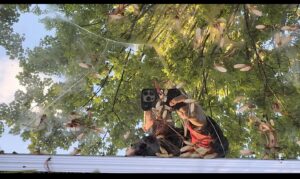
For best viewing, click ⛶ for fullscreen.
Magic for Water: Out Walking | May 2025
17 minutes read time.
In “Walking,” Thoreau quotes a traveler describing an America where everything seems turned up: the sky bluer, the stars brighter, “the rain is heavier,” the rivers longer, the forests bigger.
I know the feeling. In May there seemed to be water everywhere.
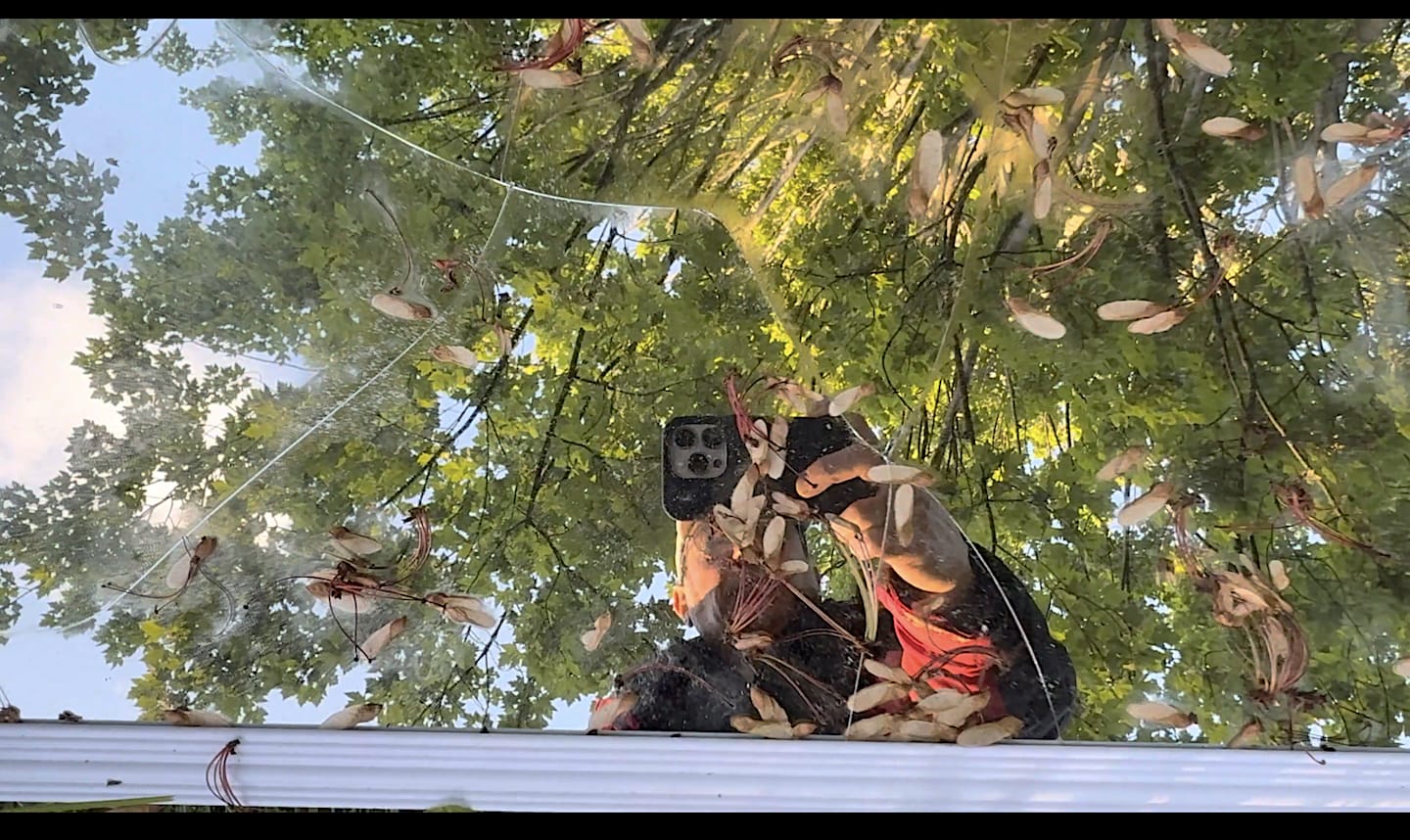
I stood in the rain with a camera. I looked at water lying where it had collected, water moving, water reflecting light, water turning the ordinary surface of things into something else.
I moved the camera sometimes, changed my angle, got lower, looked again. Other times I did almost nothing. Something entered my field of perception and I was there to receive it.
There is a difference between those two kinds of images. Some I make. Some seem to be given to me. Mostly the pleasure comes when the two collide.
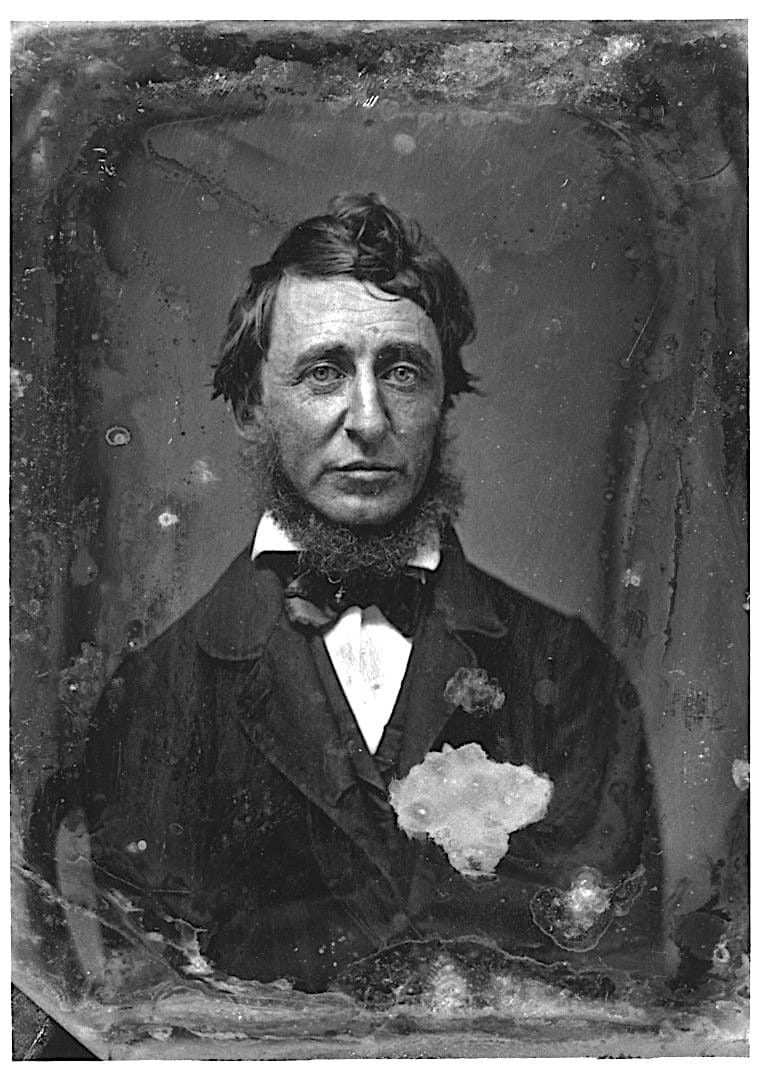
I have been thinking again about Henry David Thoreau, partly because Kathryn Schulz gave him such a beating in her New Yorker essay “Pond Scum,” dismissing Walden as a romanticized fantasy of rustic isolation. The piece portrays Thoreau as arrogant and misanthropic, prompting substantial pushback from literary scholars and biographers who defended his humane actions and ecological importance.
I agree with more of her argument than I expected to. I have no particular need for Thoreau to be a saint. His self-reliance can turn into self-importance; solitude can become an excuse for not having to deal with other people. Schulz makes much of this, and Jeffrey Cramer and others have pushed back against her portrait of him.
But Schulz also says something I don’t want to lose. When Thoreau stops telling everybody else how to live and simply looks, he is wonderful at it. That Thoreau I need. I need the man watching the surface of the pond.
Although Thoreau is insufferable when fancying himself a seer, he is wonderful at actually seeing, and the passages he devotes to describing the natural world have an acuity and serenity that nothing else in the book approaches. It is a pleasure to read him on a battle between black and red ants; on the layers of ice that form as the pond freezes over in winter; on the breeze, birds, fish, waterbugs, and dust motes that differently disturb the surface of Walden. At one point, out in his boat, Thoreau paddles after a loon when it submerges, to try to be nearby when it resurfaces. “It was a pretty game, played on the smooth surface of the pond, a man against a loon…
Kathryn Schulz. “Pond Scum: The Uncool Henry David Thoreau”. The New Yorker. October 19, 2015.
At the same time, I keep imagining Thoreau’s encounter with Walt Whitman in Brooklyn, 1856. Whitman could sing of himself in Song of Myself without stopping at himself. His “I” keeps opening outward, taking in strangers, workers, bodies, suffering, the whole unruly crowd.
Later, during the Civil War, that expansive sympathy became something physical: he went among wounded soldiers, sat with them, wrote letters for them, brought them small things they needed.
Maybe I don’t have to choose between them. I want Thoreau’s eye and Whitman’s company. This matters to me because I make these videos alone. I walk alone. I listen alone. I point the camera at what interests me. Most of the people who pass through the pictures do not know they are passing through anything. A dog, a bird, a man on the bridge, flowers, broken glass, a strange reflection, water running down the street: they arrive without auditioning for the part.
Yet the whole enterprise is meant for other people.
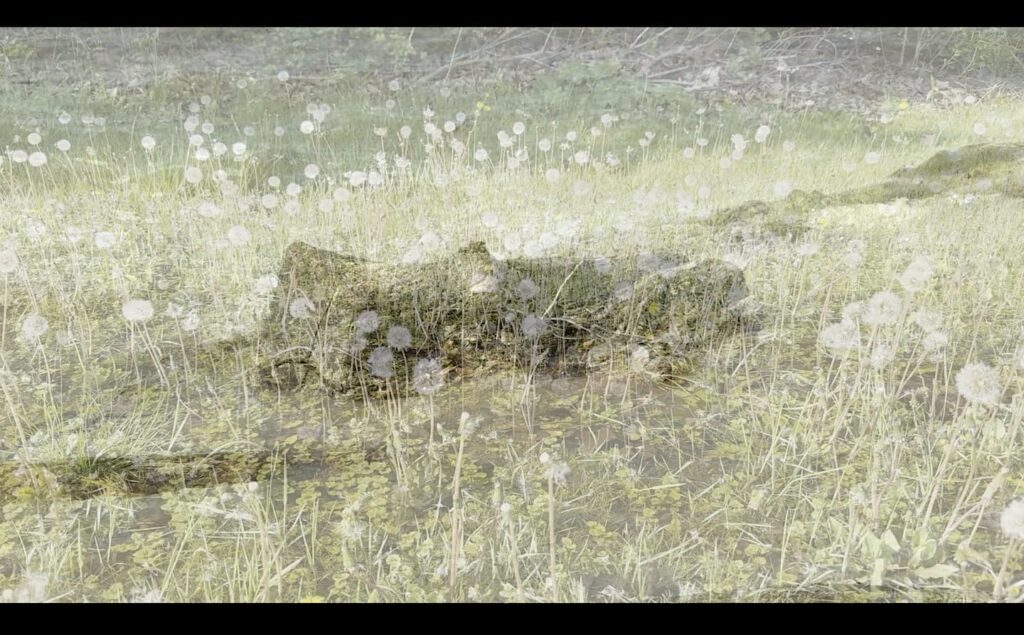
EarthStage began as an archive concerned with hydraulic fracturing, which meant from the beginning that it was concerned with how we live together. Water does not respect the boundaries we draw on a map. Neither does air. Weather certainly doesn’t. Whatever our politics, we occupy the same physical system.
I have never been very good at accepting that politics should be the abstraction and the world underneath it merely the scenery. During May I was reading about Gaza, war, environmental destruction, threats to democratic institutions, forests burning, disappearing species, polluted rivers. I was also listening to my iPod Shuffle, visiting friends, thinking about my children, watching people on the street and looking at fog on the lake. One afternoon another man was looking at it too. He turned toward me and said something like, “It’s like a roller coaster!”
That belongs in the archive too.
The scale is wrong.
That may be why I like it.
A world at war. Fog on Cayuga Lake. A penny on the sidewalk. A man with a camera. Water.
What is the correct proportion?
Today is September 11, twenty-five years after the attacks of September 11, 2001, and I have been reading again about artists like Bill T. Jones asking what possible use art can have when people are dying.
Jason Farago asked the question while writing about Ukraine: why listen to music, look at paintings, go to the theater when war is raging? He went back to something Margo Jefferson wrote soon after September 11—that history requires “the discipline of imagination.”
I recognize something in that.
Painting will not stop a missile. My little movie of rain falling in Ithaca is not going to negotiate a peace agreement. A beautiful reflection on the surface of the water does not feed anyone.
So why look?
Perhaps because looking is one of the ways we practice being present in a world that includes people other than ourselves.
Not looking away is one kind of attention. Looking closely is another. I don’t think they are opposites.
I don’t participate in Instagram. I don’t put these pictures into a machine and count the response in hearts and thumbs. That doesn’t make me purer. I want people to see the work. Of course I do. Otherwise there would be no reason to put it on a website.
But a website can wait.
An archive can wait.
I make something alone and leave it where company might find it later.
There is a freedom in that which I value enormously. The image doesn’t disappear because nobody liked it Tuesday afternoon. May 2025 remains May 2025. I can return to it sixteen months later and discover that I didn’t quite know what I was making.
Maybe that is the other reason I still need Thoreau.
Not Thoreau the prophet. Not Thoreau the bumper sticker. Not the little cabin sold back to us as a lifestyle.
Thoreau looking.
Looking long enough for the ordinary world to become strange again.
The iPhone in my hand is an astonishing machine for doing this. Sometimes I feel ridiculous saying it, but I understand a little of what it must have been like to discover motion pictures before anybody had agreed what they were supposed to be. The Lumière brothers pointed a machine at workers leaving a factory, a train coming into a station, a baby being fed.
I point mine at water.
I don’t know yet whether that is modesty or grandiosity. Probably both.
Some things I construct. Pan, tilt, track, move closer, repeat the shot. Other things occur without asking me. Light hits the water. A bird enters. Somebody says something. A song that has been sitting unseen among thousands of songs arrives at exactly the wrong or right moment.
Fact and feeling meet there.
So do accident and intention.
This may be what I mean by magic.
Not supernatural magic. I don’t need the water to perform a miracle.
The magic is that there is anything here at all, and that by giving something our attention it becomes possible to see what had been there all along.
Why care about freedom of the press if you never write anything? Why care about democracy if you never participate in it? Why care about each other if you never love anybody? Why care about the Earth if we have forgotten how to look at it?
That last question can become sentimental very quickly. Thoreau sometimes lets it. So can I.
The corrective is other people.
The work has to come back from the pond.
That is why these videos sit on top of an archive about fracking. That is why the solitary walk ends at a public website. That is why the pleasure of looking at water does not exempt me from reading the newspaper. I want both.
I want to be left alone with the light on the water.
I want to live with everyone else.
Magic for Water. An offering, a ritual, perhaps knowingly inadequate, but still something I can give.
Smackdown
Official Story / Public Reckoning / Deeper Contrast
May 2025
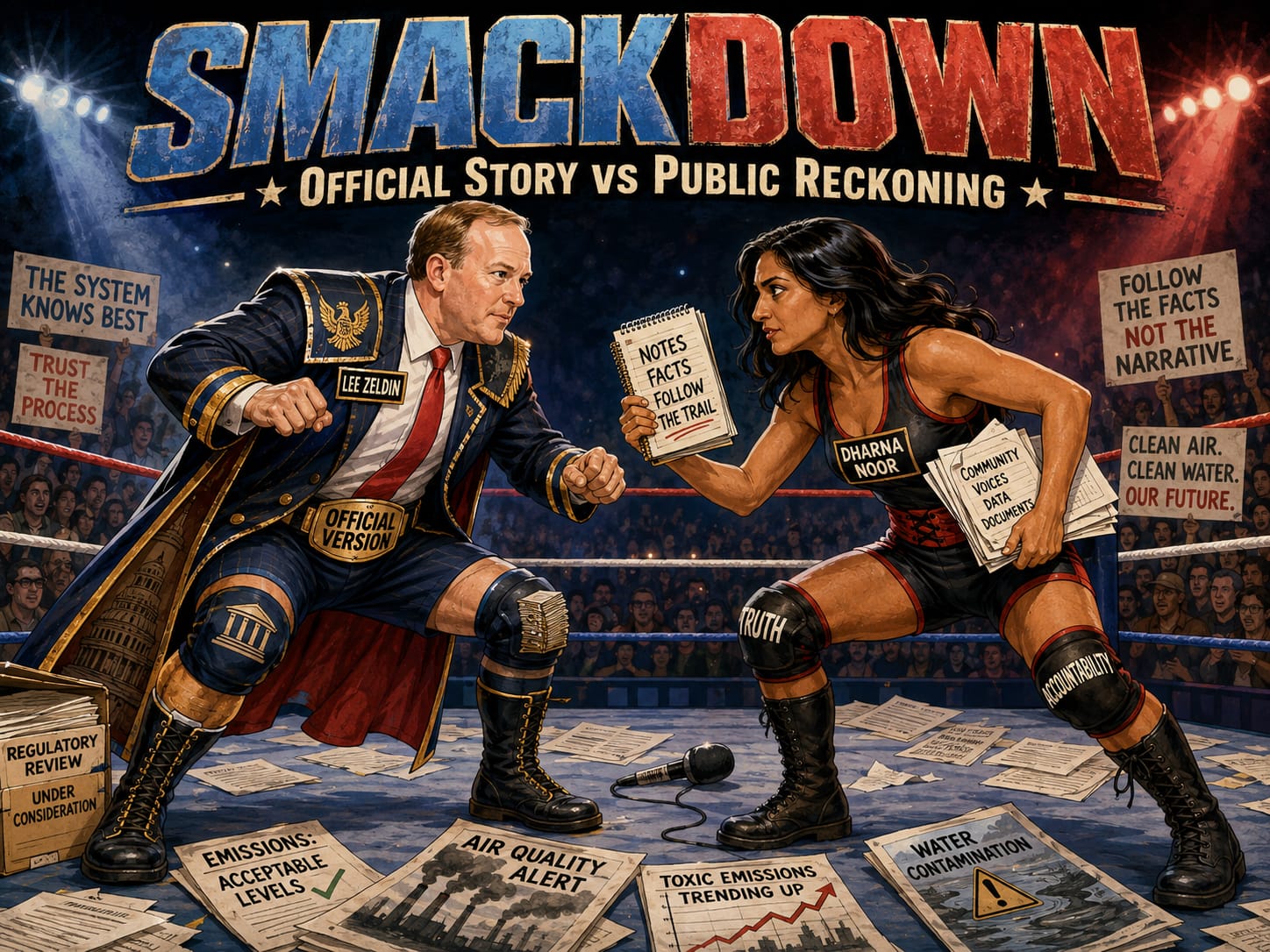
Federal / EPA, Energy, Interior
Federal agencies describe May through common sense, efficiency, permitting reform, energy dominance and economic growth. Environmental protection is presented not as a brake on development but as compatible with faster approvals, expanded production, lower costs and reliable energy. EPA repeatedly promises clean air, land and water while describing regulation as something that should empower rather than restrict.
Emphasis
- EPA says it is rejecting a “false choice” between environmental stewardship and economic prosperity, presenting faster permitting, deregulation and energy development as compatible with cleaner air, land and water.
- The Department of Energy describes its FY2026 budget as “unleashing American energy” while eliminating more than $15 billion associated with programs the department characterizes as supporting more expensive and less reliable energy sources.
- Interior announces a policy intended to complete oil-and-gas lease parcel reviews on public lands within six months, linking faster leasing to energy production, jobs, lower costs and economic growth.
- Interior proposes rescinding a rule governing wind and solar development on public lands, describing wind and solar as “intermittent” and arguing that restrictions on oil, gas and mineral development should be removed.
- EPA tells states and authorized tribes that their Clean Water Act Section 401 role is “specific and limited” to water-quality requirements, saying certification should not be used to stop projects for unrelated reasons and explicitly linking the clarification to energy, critical-mineral and infrastructure development.
Key rhetoric
- “Common sense”
- “Energy dominance”
- “Powering the Great American Comeback”
- “Streamline”
- “Unleash”
- “Reliable”
- “Affordable”
- “Regulatory burden”
- “Economic prosperity”
- “Protection that empowers rather than restricts”
Foregrounded
Permitting speed, energy supply, reliability, development, taxpayer cost, domestic production, resource extraction and economic growth. Environmental protection is generally framed as something that can accompany these goals rather than limit them.
Minimized or absent
Within these selected May statements, considerably less attention is given to cumulative greenhouse-gas emissions, climate urgency, methane leakage, chemical disclosure, downstream ecological effects, or the consequences that expanded fossil-fuel production may have beyond the individual project being permitted.
The Guardian, The New York Times / IEA / Global Forest Watch
The public record follows the same policies outward toward consequence. Regulatory changes become emissions projections. Oil and gas infrastructure becomes methane. Fracking becomes a question about what chemicals went underground and whether anyone knows what they were. Forest fires become measurable loss. The emphasis shifts from the burden imposed by regulation to the physical conditions regulation is supposed to describe, disclose or constrain.
Emphasis
- Oliver Milman reports that 145 administration actions during the first 100 days targeted environmental rules and programs involving air, water, climate, wildlife and public lands.
- The International Energy Agency estimates that abandoned coal mines and oil-and-gas wells emitted about 8 million tonnes of methane in 2024. If treated as a country, abandoned fossil-fuel facilities would rank as the world’s fourth-largest source of fossil-fuel methane.
- Joe Fassler reports that required chemical disclosures had not been filed for 675 of 1,114 recently fracked sites in Colorado, leaving significant uncertainty about chemicals being used underground.
- Global Forest Watch data show tropical primary forest loss reaching 6.7 million hectares in 2024, nearly twice the previous year’s total. For the first time in its record, fire became the largest driver of tropical primary-forest loss.
- Lisa Friedman reports that EPA was preparing a proposal to eliminate federal greenhouse-gas limits on coal- and gas-fired power plants, arguing that emissions from the power sector did not contribute “significantly” to dangerous pollution or climate change.
- Nina Lakhani reports that the Supreme Court narrowed the scope of environmental review for the proposed Uinta Basin Railway, a project intended to carry crude oil from Utah through the broader national rail network.
Key rhetoric
- Data
- Disclosure
- Emissions
- Methane
- Chemicals
- Fire
- Measurement
- Review
- Consequence
Foregrounded
What enters the atmosphere, what goes underground, what is disclosed, what remains unknown, what burns, what crosses property and political boundaries, and what happens after a permit or regulatory decision leaves the office where it was made.
Minimized or absent
The official vocabulary of energy dominance, regulatory burden and permitting efficiency is not treated as a complete account of environmental policy. These sources keep asking what can be measured beyond that vocabulary and who or what encounters the resulting physical conditions.
Key verbs
Federal verbs: streamline, unleash, accelerate, empower, reduce, develop, restore
Public verbs: count, measure, disclose, emit, leak, burn, track, review
Sources
- U.S. Environmental Protection Agency. ICYMI: Administrator Zeldin in The Hill: “EPA is rejecting the false choice between environmental stewardship and economic prosperity”. 2 May 2025. U.S. Environmental Protection Agency.
- U.S. Department of Energy. Energy Secretary Wright Testifies Before House Appropriations Subcommittee on FY2026 Budget Request. 7 May 2025. U.S. Department of Energy.
- U.S. Department of the Interior. Interior Streamlines Oil and Gas Leasing to Advance Energy Independence and Economic Growth. 13 May 2025. U.S. Department of the Interior.
- U.S. Department of the Interior. Interior to Initiate Action to Rescind BLM’s Intermittent Energy Rule. 14 May 2025. U.S. Department of the Interior.
- U.S. Environmental Protection Agency. EPA Reinforces Alignment of Clean Water Act Section 401 with “Powering the Great American Comeback” Initiative. 22 May 2025. U.S. Environmental Protection Agency.
- Oliver Milman. Trump has launched more attacks on the environment in 100 days than his entire first term. 1 May 2025. The Guardian.
- International Energy Agency. Global Methane Tracker 2025: Key Findings. 7 May 2025. International Energy Agency.
- Joe Fassler. US oil firms pumping secret chemicals into ground and not fully reporting it. 20 May 2025. The Guardian.
- World Resources Institute / Global Forest Watch. Global Forest Loss Shatters Records in 2024, Fueled by Massive Fires. 21 May 2025. World Resources Institute.
- Lisa Friedman. Documents Show E.P.A. Wants to Erase Greenhouse Gas Limits on Power Plants. 24 May 2025. The New York Times.
- Nina Lakhani and agencies. US supreme court sides with Utah railway project challenged by environmentalists. 29 May 2025. The Guardian.
The Deeper Contrast
May keeps returning me to water.
I did not set out with a thesis about it. I stood in the rain with a camera. I looked at the lake. I watched water collect and move and change what could be seen on a surface.
At the same time, water was moving through the other archive.
On May 22 EPA described the role of states and tribes under Section 401 of the Clean Water Act as “specific and limited.” Water quality remained the statutory concern, but the agency also said certification should not become an obstacle to energy, mineral and infrastructure projects.
I understand the need for definitions. Laws need boundaries. Permits need scope.
Water is less cooperative.
The old fracking archive was built around that problem. Water goes underground carrying sand and chemicals. Methane finds cracks. Wastewater has to go somewhere. What enters a stream does not necessarily remain beside the property where it entered.
In May I saved another story about that old problem. Colorado had passed unusually strong rules requiring disclosure of chemicals used in oil and gas operations. Yet an investigation found that disclosures were missing for hundreds of recently fracked sites. After a well blowout, researchers could measure benzene and other pollutants in the air, but the undisclosed ingredients meant they could not know everything that had been released.
That is a strange kind of invisibility.
The same month the International Energy Agency tried to count another invisible thing: methane still escaping from abandoned wells and coal mines. Global Forest Watch counted something enormous enough to see from space: forests disappearing through fire at a rate never before recorded in its data.
These are different stories.
But matter keeps refusing the categories we give it.
Methane leaks. Smoke travels. Water carries what enters it.
In May I was also reading about the possibility of thinking about a river not simply as a resource but as something alive, something with which human beings are entangled. I do not have to decide whether a river is literally a legal person to understand the question being asked. What changes when the river is no longer merely scenery or a conduit for something we want?
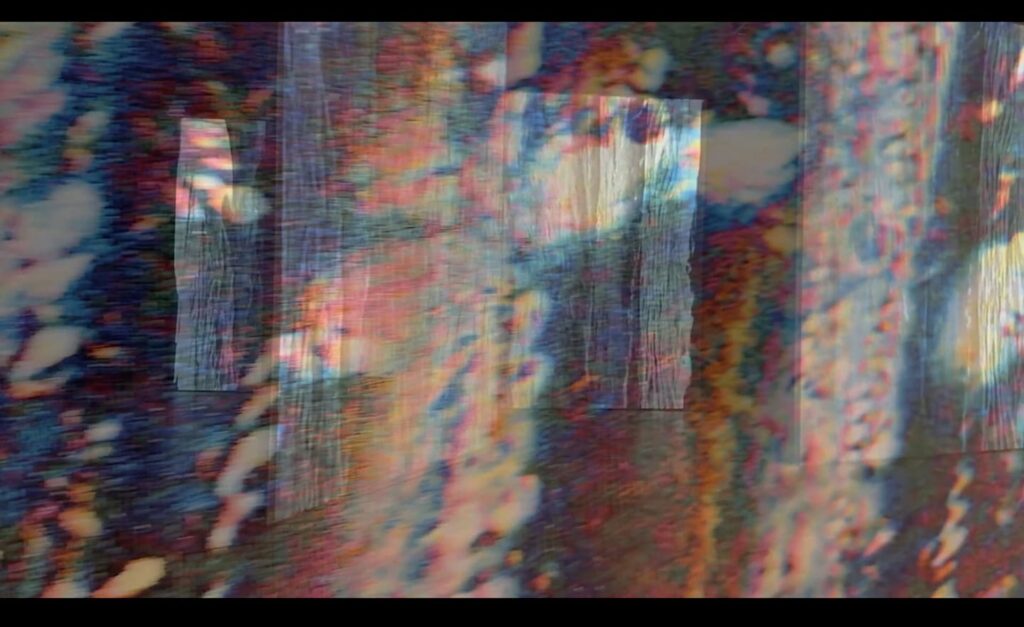
That question reaches all the way back through EarthStage.
The website began with fracking because I wanted to understand how we live together. Years later I am standing in Ithaca pointing a camera at rain.
The scale is wrong again.
Maybe that is the deeper contrast.
Government has to draw lines: jurisdiction, authority, permissible use, the scope of review.
The physical world keeps crossing them.
And I keep looking at the water.
See also: Henry David Thoreau. Walking. 1862. Atlantic Monthly.
See also: Henry David Thoreau. Walden: Or Life in the Woods.
See also: Kathryn Schulz. Pond Scum: The Uncool Henry David Thoreau. The New Yorker. October 19, 2015.
See also: Jeffrey S. Cramer. In Praise of Pond Scum. Classic Penguin Tumblr.
See also: Jane Bennett. The Largesse of Thoreau and Whitman. 17 Dec 2025. Center for the Study of World Religions. Harvard Divinity School.
See also: The Thoreau Log. 19 November 1856. The Walden Woods Project.
See also: Brian Seibert. The Dance That Didn’t Happen at the World Trade Center Plaza. 9 Sep 2026. New York Times.
See also: Bill T. Jones. DANCE: THE AFTERMATH; A Louder Public Voice. 23 Sep 2001. New York Times.
See also: Jason Farago. The Role of Art in a Time of War. 28 Jul 2022. Updated 11 Mar 2026. New York Times.
See also: Margot Jefferson. ON WRITERS AND WRITING; The Critic in Time of War. 28 Oct 2001. New York Times.
See also: Edward Abbey. Down the River with Henry David Thoreau. Poetic Outlaws on Substack.
See also: Jonathan Watts. Robert Macfarlane: ‘Sometimes I felt as if the river was writing me’. 17 May 2025. The Guardian.
Macfarlane considers rivers not simply as resources or scenery but as living presences with which human beings are entangled.
See also: Joe Fassler. US oil firms pumping secret chemicals into ground and not fully reporting it. 20 May 2025. The Guardian.
Colorado required disclosure of chemicals used in oil and gas operations, yet hundreds of recently fracked sites lacked required filings.
See also: Lisa Friedman. Documents Show E.P.A. Wants to Erase Greenhouse Gas Limits on Power Plants. 24 May 2025. The New York Times.
The agency plans to argue that carbon emissions from power plants do not contribute “significantly” to climate change. Scientists disagree.
See also: Nina Lakhani and agencies. US supreme court sides with Utah railway project challenged by environmentalists. 29 May 2025. The Guardian.
The case asks how far an environmental review must follow the consequences of a project beyond the project itself.
See: World-Renowned Scientist Dr. Theo Colborn on the Health Effects of Water Contamination from Fracking
See: U.S. Congress: Fracturing Responsibility and Awareness of Chemicals Act
See: Frack Fluid Spill in Dimock Contaminates Stream, Killing Fish
See: Drinking Water: Understanding the Science and Policy behind a Critical Resource