
For best viewing, click ⛶ for fullscreen.
Spill Response : Out Walking | Apr 2025
14 minutes read time
Spill Response
I did not know what April 2025 was going to become while I was walking through it.
Rain fell on pavement. Forsythia and daffodils arrived in yellow. An earthworm crossed wet asphalt. Ants moved over concrete. Ducks appeared and disappeared. People gathered in downtown Ithaca carrying signs.
HANDS OFF
A large paper bird floated above them as they marched. Across the country that day, people were gathering at more than a thousand demonstrations against actions of the new Trump administration.
I was there with a camera.
The camera does not know history. It knows what enters the frame.
Neither, for that matter, did I know very much about the history I was living through. I keep an ongoing archive of Notes—news reports, songs heard on my iPod, fragments from radio programs, things seen while walking, things I want to remember. My April Notes are full of attempts to keep up: courts, deportations, universities, climate policy, Gaza, tariffs, public records, demonstrations. Mixed among them are water filters, friends, a cracked telephone, our family’s dying dog, garbage in Washington Park, things I meant to fix.
Someone had repeatedly left garbage beside a trash can in Washington Park. I called the city. Someone answered. I was grateful that the ordinary machinery of civic life still worked.
This too was April 2025.
Looking backward now, I am tempted to organize it. That is what hindsight does. Patterns that were invisible while I lived them begin to appear. But there is a danger in making the past more coherent than it was.
The month doesn’t resolve.
It thickens.
In the films, politics and spring do not take turns. They occupy the same days. People come together to say Hands Off. There is pleasure in the gathering, humor in some of the signs, an enormous bird in the street. There is also unease in gathering publicly when people are frightened about what their government is becoming.
Then the march dissolves into flowers, pavement, water.
I do not think the flowers explain the protest.
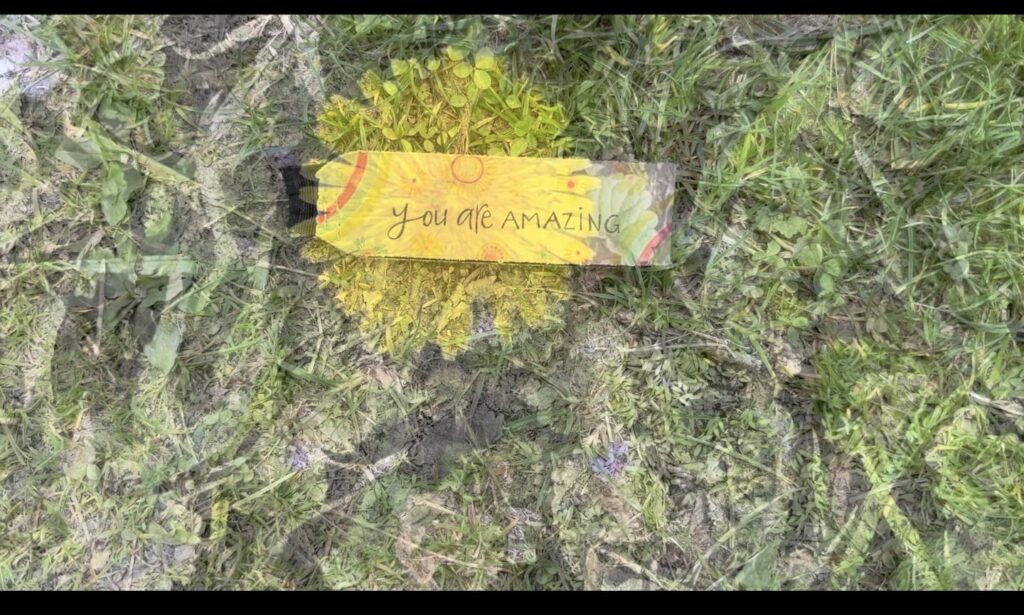
Spring is indifferent to our explanations. We call it renewal, perhaps because we need renewal. But spring is also ruthless. The blossom opens because its time has come. Insects emerge. Things mate, eat, decay, disappear. A flower is cut down. A worm crosses pavement with no guarantee of reaching the other side.
Life returning does not mean that things will be all right.
It means life returns.
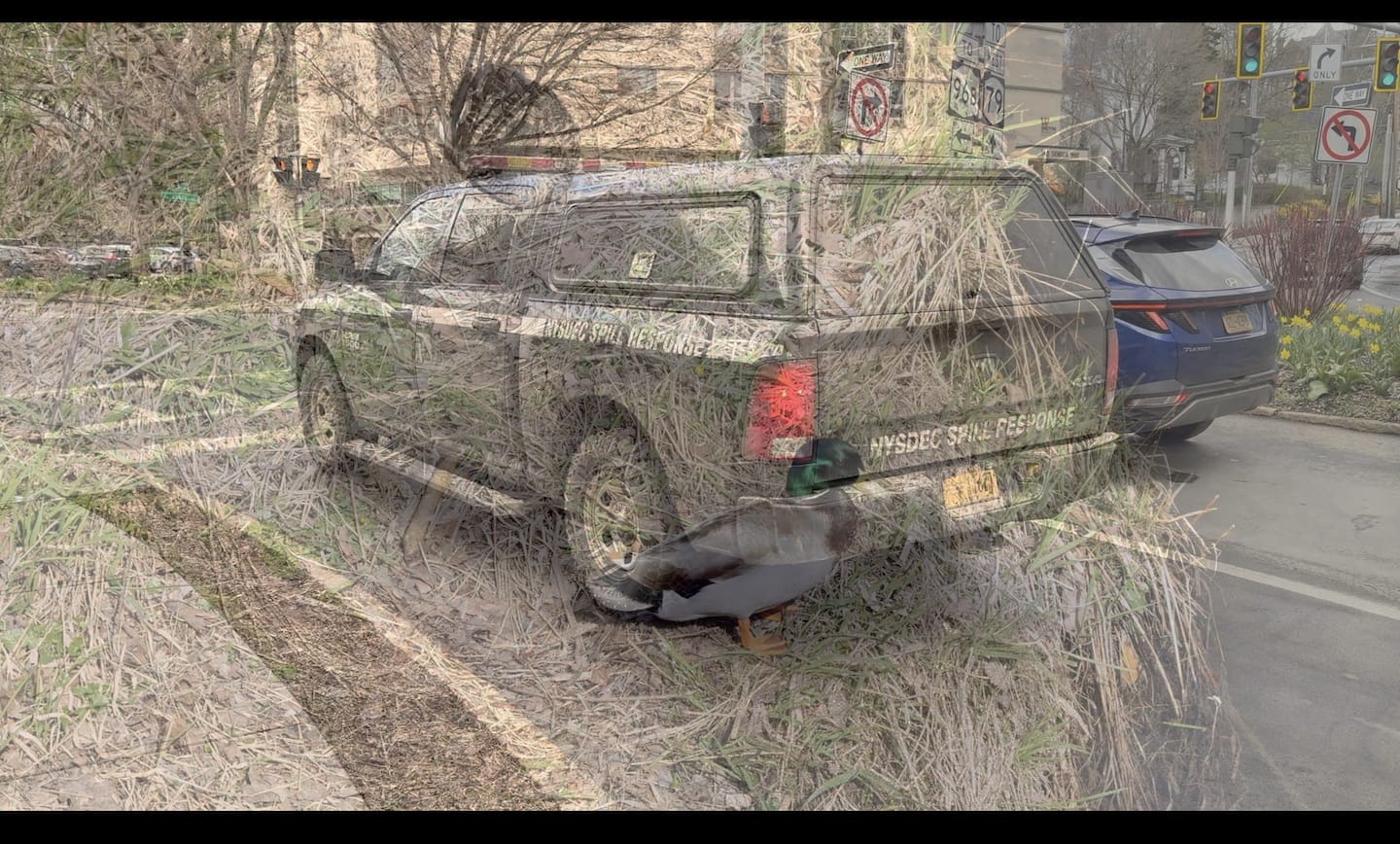
Somewhere in the middle of all this, a New York State Department of Environmental Conservation truck waits at an intersection. On its side are the words:
SPILL RESPONSE.
There was my title.
A spill is something that has escaped its boundary. Response is what follows.
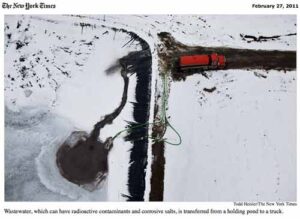
April was full of water. There were reports of extraordinary floods. I saved stories about wetlands damaged by oil production and, on the fifteenth anniversary of Deepwater Horizon, a warning that knowledge gained from that catastrophe was being discarded. Peter Gabriel’s Here Comes the Flood wandered repeatedly through my listening. Later in the month I made an installation note to myself: “Drop liquid on screen.”
I could make too much of this.
Water is good at inviting metaphor. The rain in the film was also just rain.
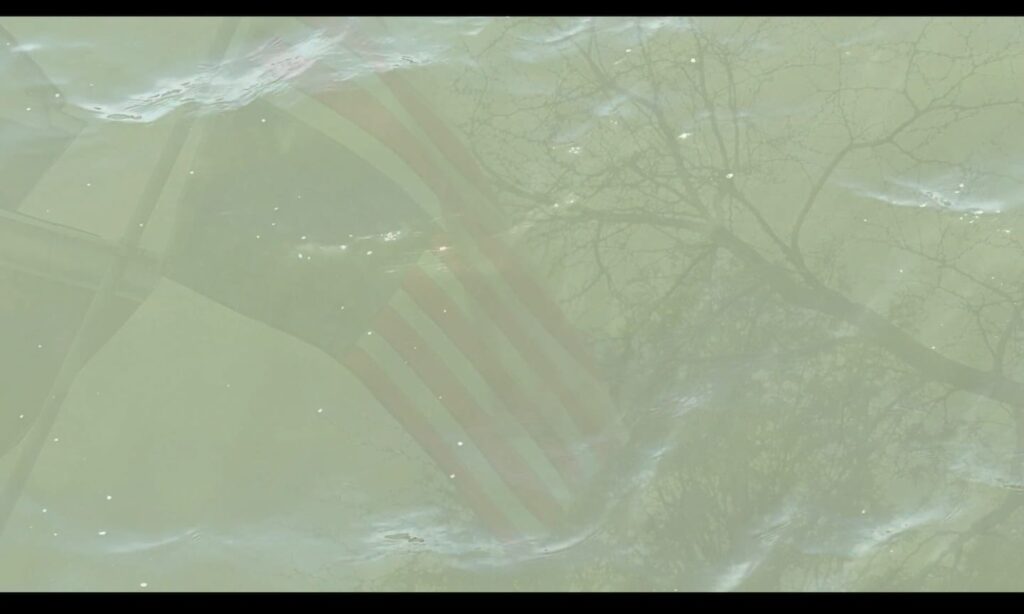
Yet water kept appearing, and so did things exceeding their containers: public anger entering the streets, political decisions entering ordinary lives, information disappearing from public websites, spring pushing through pavement.
My own response was frequently to save something.
An article. A song title. A sentence heard on the radio. A strange conjunction. Something seen while walking.
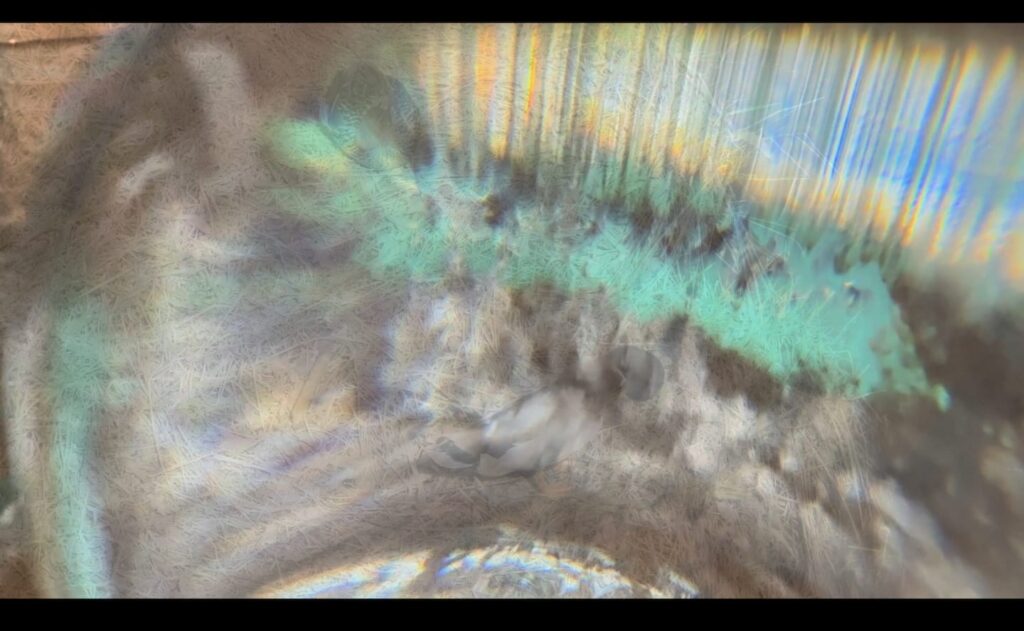
I walk alone much of the time. Solitude has never meant that I wanted a world consisting only of myself. The camera comes home with evidence of other lives: people marching, someone’s lost cat, a stranger’s sign, a dog, rowers on the water, insects, birds, flowers planted by people I do not know.
The two films give these encounters different amounts of time.
Out Walking passes through them quickly, although its dissolves can make one image linger inside the next. Deeper Listening stretches ordinary duration until smaller things begin to acquire weight: ants, aggregate, seed heads, moss, a bee, a painted line, a boot. Sometimes the image seems less observed than inhabited, as if there were time enough to float inside it.
A swoon, perhaps.
Nothing needs to stand for everything else.
Edward Abbey once went down a living river thinking about another walker who had died more than a century before him. Near the end of his journey he called out:
Henry thou should be with us now.
I understand the impulse.
Not because Thoreau could tell us what to do about April 2025.
Perhaps simply because he understood that paying attention was part of the work of being alive.
…The brawling waters roar below,
Edward Abbey, Down the River, 1982
rainbows of broken sunlight dance in the spray.
We descend.
Henry thou should be with us now.
I look for his name in the water, his face in the airy foam.
He must be here. Wherever there are deer and hawks, wherever there is liberty and danger, wherever there is wilderness, wherever there is a living river,
Henry Thoreau will find his eternal home.
Smackdown
Official Story / Public Reckoning / Deeper Contrast
April 2025
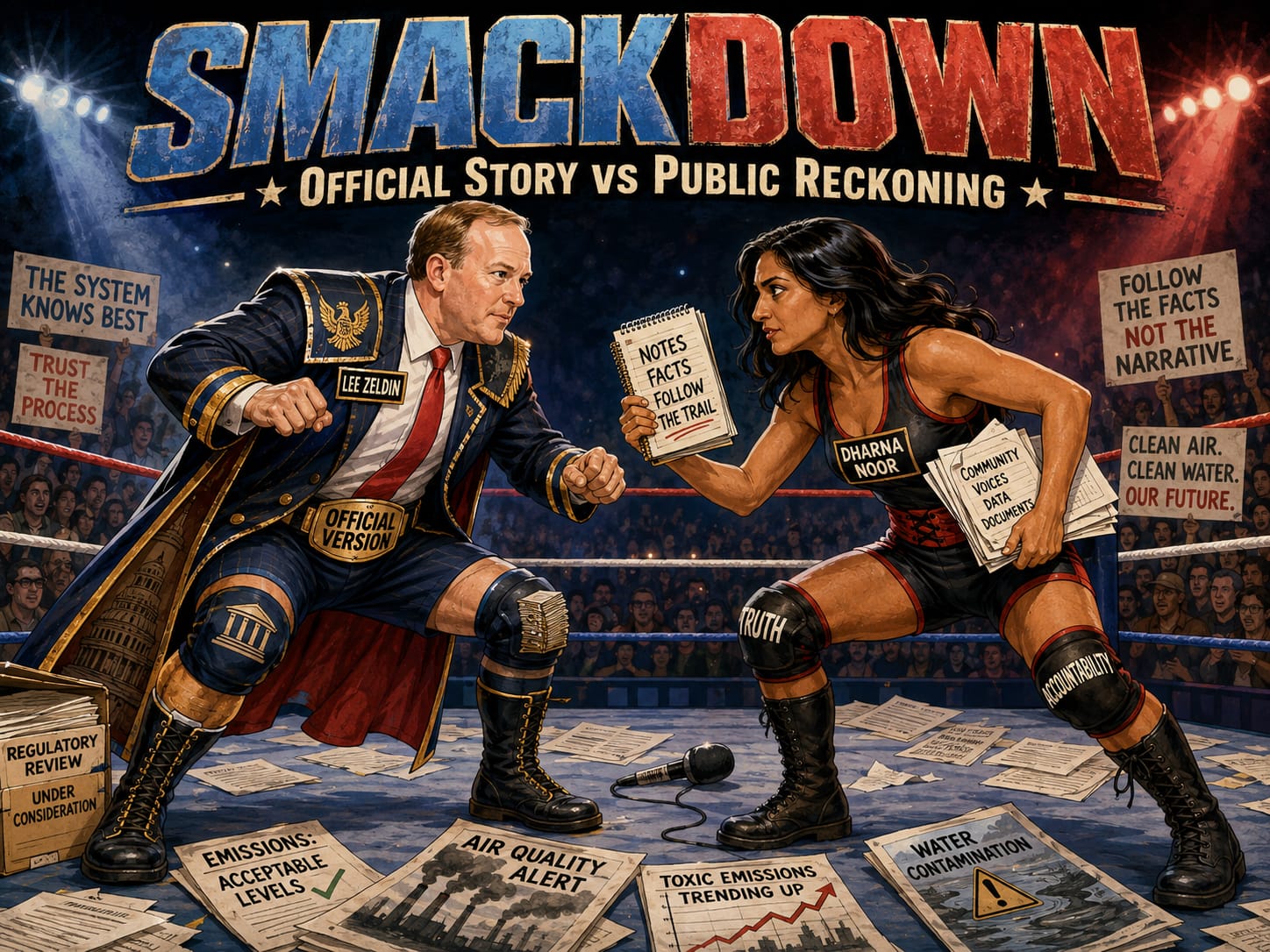
Federal / EPA, Energy, Interior
By the end of April, federal agencies were publishing their own account of the administration’s first 100 days. EPA emphasized 100 environmental actions. The Department of Energy described a restoration of “American Energy Dominance.” Across the administration, faster permitting, expanded domestic energy production, affordability, reliability and regulatory relief were presented as compatible with environmental protection.
Emphasis
- EPA marks the first 100 days with a list of 100 environmental actions, including hazardous-material cleanup after the Los Angeles wildfires, PFAS actions, work at Superfund sites and completion of state implementation plans.
- Energy Secretary Chris Wright says the first 100 days restored “American Energy Dominance”, citing LNG export approvals, lower gasoline prices and reduced regulatory barriers.
- The White House directs the Justice Department to identify and challenge state and local policies it considers obstacles to domestic energy production, including policies involving climate change, environmental justice, greenhouse-gas emissions and carbon penalties.
- The White House grants certain coal-fired power plants a two-year exemption from newer mercury and air-toxics requirements, arguing that the requirements threaten electricity reliability, affordability and energy security.
- Interior announces emergency permitting procedures intended to reduce some energy and critical-mineral reviews from years to no more than 28 days, linking accelerated approval to domestic energy supply and the declared national energy emergency.
Key rhetoric
- “Energy dominance”
- “Unleash”
- “Affordable”
- “Reliable”
- “Emergency”
- “Regulatory relief”
- “Streamline”
- “Clean air, land and water”
- “Great American Comeback”
Foregrounded
Domestic production, permitting speed, energy supply, LNG exports, electricity reliability, consumer cost and removal of regulatory barriers. Environmental protection is presented as compatible with accelerated energy development and economic growth.
Minimized or absent
Within these selected statements, considerably less attention is given to cumulative greenhouse-gas emissions, climate risk, the consequences of abbreviated environmental review, the capacity of federal scientific institutions, or the effects of limiting state climate-policy authority.
The Guardian / Scientists / Environmental Reporting
An immediate first-100-days counter-record counted a different set of actions. Reporting during April followed federal policy outward toward state climate laws, environmental review, pollution, scientific capacity and disaster preparedness. The emphasis shifts from the speed or burden of regulation to what government retains the ability to measure, remember, review and respond to.
Emphasis
- Oliver Milman reports an analysis counting 145 administration actions during the first 100 days to weaken or repeal environmental protections or expand fossil-fuel use, involving air, water, climate, wildlife and public lands.
- Dharna Noor reports that the April 8 order targets state and local climate policies, including laws requiring major fossil-fuel companies to contribute toward climate-related damages.
- Former Deepwater Horizon commission member Terry Garcia argues that cuts to science, environmental and safety agencies threaten knowledge developed after earlier disasters, including scientific capacity needed for spill response and recovery.
- Reporting on Interior’s emergency procedures describes environmental permitting timelines for some fossil-fuel and mining projects being compressed from years to less than a month.
- Tom Perkins reports that the Justice Department terminated a federal settlement addressing untreated sewage in Lowndes County, Alabama, after describing the agreement as an improper DEI initiative.
- Mark Oliver and agencies report that nearly 400 contributors to the sixth National Climate Assessment were dismissed. The congressionally mandated assessment is used by federal and local governments to understand and prepare for climate risks including extreme heat, flooding, hurricanes and drought.
Key rhetoric
- Data
- Climate risk
- Pollution
- Public health
- Scientific capacity
- Environmental review
- Accountability
- Preparedness
- Institutional memory
- Consequence
Foregrounded
What happens after an executive order or agency announcement: what enters the air and water, how rapidly projects are reviewed, whether states can pursue their own climate policies, whether pollution remedies continue, whether government retains scientists and data, and whether knowledge accumulated from previous disasters remains available for the next one.
Minimized or absent
These sources give less emphasis to the administration’s vocabulary of energy dominance, regulatory burden and permitting efficiency. Their attention is directed instead toward environmental, scientific, legal and public-health consequences.
Key verbs
Federal verbs: unleash, dominate, accelerate, streamline, remove, approve, restore, protect, relieve, develop
Public verbs: count, measure, review, prepare, disclose, dismiss, weaken, pollute, remember, document
Sources
- U.S. Environmental Protection Agency. EPA Celebrates 100 Days with 100 Environmental Actions. 30 Apr 2025. U.S. Environmental Protection Agency.
- U.S. Department of Energy. Secretary Wright Highlights 100 Days of Unleashing American Energy Under President Trump. 29 Apr 2025. U.S. Department of Energy.
- The White House. Protecting American Energy From State Overreach. 8 Apr 2025. The White House.
- The White House. Regulatory Relief for Certain Stationary Sources to Promote American Energy. 8 Apr 2025. The White House.
- U.S. Department of the Interior. Department of the Interior Implements Emergency Permitting Procedures to Strengthen Domestic Energy Supply. 23 Apr 2025. U.S. Department of the Interior.
- Oliver Milman. Trump has launched more attacks on the environment in 100 days than his entire first term. 1 May 2025. The Guardian.
- Dharna Noor. Trump takes aim at city and state climate laws in executive order. 9 Apr 2025. The Guardian.
- Terry Garcia. I served on the Deepwater Horizon inquiry commission. Trump has us headed for a new disaster. 20 Apr 2025. The Guardian.
- Oliver Milman. US interior agency to fast track fossil fuel and mining permits over “fake emergency”. 24 Apr 2025. The Guardian.
- Tom Perkins. Trump administration kills landmark pollution settlement in majority-Black county. 24 Apr 2025. The Guardian.
- Mark Oliver and agencies. Trump dismisses contributors to key US report on climate crisis preparedness. 29 Apr 2025. The Guardian.
Deeper Contrast
April moves quickly in the public record. Rules are challenged, permitting is accelerated, coal is protected, state climate policies are targeted, scientists are dismissed, and federal agencies publish their first-100-days accounts.
Deeper Listening does something almost opposite.
It extends ordinary duration. Ants, aggregate, seed heads, moss, a bee, a painted line, a boot begin to occupy more time than they normally would. The film does not argue with an executive order. It changes the conditions of attention.
That difference matters.
Speed can be useful. A city worker answers a phone. A spill requires response. An emergency may demand action. But response also depends on things accumulated slowly: scientific knowledge, environmental review, institutional memory, public records, trained people, experience carried forward from earlier failures.
In April, Terry Garcia warned that lessons learned from Deepwater Horizon were being endangered by cuts to science, environmental and safety agencies. In the film, a state truck bearing the words SPILL RESPONSE waits quietly at an intersection.
The coincidence is almost too neat.
SPILL RESPONSE.
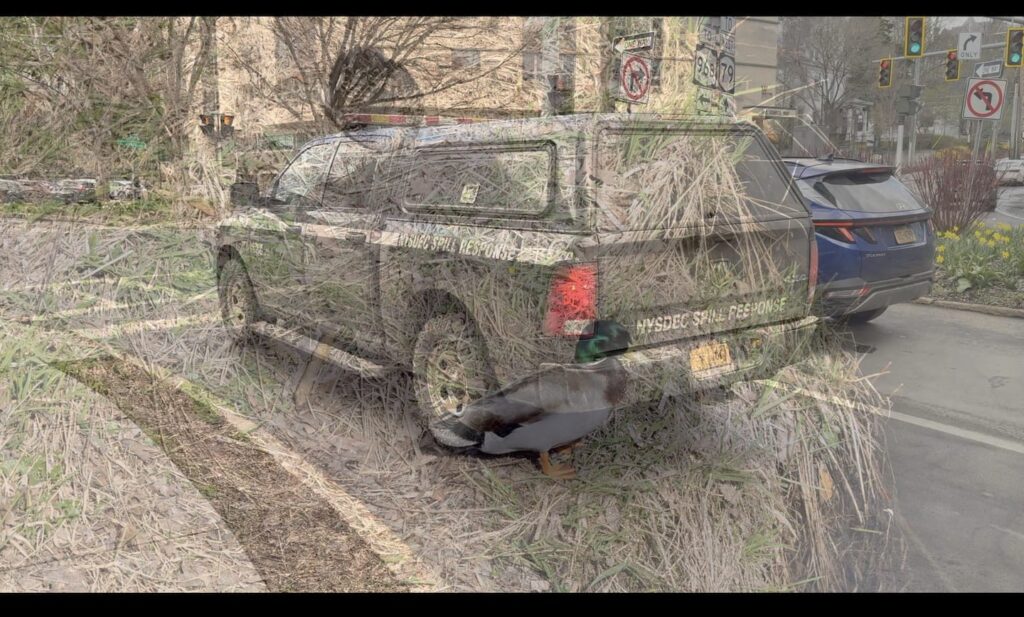
A spill does not care what we call deregulation, efficiency or energy dominance. Once something escapes its boundary, somebody has to know what entered the water, where it went, what it damaged and what to do next.
That requires scientists. Records. Regulators. Inspectors. Institutional memory. Time to look before permission is granted.
April’s federal vocabulary was full of verbs like streamline, unleash, accelerate, remove.
Deeper Listening works in the other direction.
Slow down. Look again. Notice what is there.
Not every daffodil is an argument. The rain is still rain.
But when a government begins removing the people, rules and knowledge needed to recognize damage, paying attention stops being merely contemplative.
It becomes part of the response.
See also: Edward Abbey. “Down the River with Henry Thoreau.” Down the River. Dutton, 1982.
See also: Eric Holthaus. ‘Potentially historic’ flooding threat looms after almost 100 tornadoes hit US. 3 Apr 2025. The Guardian.
Rainfall near Memphis, Tennessee, is expected to exceed 12in over the next three days.
See also: Maya Yang. Jury orders Chevron to pay more than $744m for destroying Louisiana wetlands. 4 Apr 2025. The Guardian.
This article is more than 1 year old
Verdict marks end of the first trial of 42 lawsuits filed about 12 years ago, alleging firm’s projects destroyed the regions.
See also: Tiffany Hsu. The White House Frames the Past by Erasing Parts of It. 5 Apr 2025. The New York Times.
As the Trump administration pulls government websites and data offline, it is selectively stripping away the public record, letting the president declare his own version of history, archivists and historians said.
See also: Lisa Friedman and Brad Plumer. Five Takeaways From Trump’s Plan to Rescue Coal. 9 Apr 2025. The New York Times.
To help the struggling coal industry, President Trump used his executive authority to try to keep aging plants alive and burn more coal for electricity.
See also: Friederike Otto. Climate change is not just a problem of physics but a crisis of justice. 18 Apr 2025. The Guardian.
In an exclusive extract from Friederike Otto’s new book, she says climate disasters result from inequality as well as fossil fuel.
See also: Guardian staff. 100 Days of Trump. 29 Apr 2025. The Guardian.
The president has begun his second term at a whirlwind pace, slashing the government, upending international alliances, challenging the rule of law and ordering mass deportations.
Law-abiding migrants sent to foreign prisons. Sweeping tariffs disrupting global markets. Students detained for protest. Violent insurrectionists pardoned. Tens of thousands of federal workers fired. The supreme court ignored.
The first 100 days of Donald Trump’s second term have shocked the United States and the world. On the eve of his inauguration, Trump promised the “most extraordinary first 100 days of any presidency in American history”, and what followed has been a whirlwind pace of extreme policies and actions that have reshaped the federal government and the US’s role in the world.
Let’s look at what he has achieved and destroyed.
See: Magic for Water
See: National Commission on the BP Deepwater Horizon Oil Spill and Offshore Drilling
See: Fueling Washington
See: Raul Grijalva’s MySpace Blog