For best viewing, click ⛶ for fullscreen.
Neil’s Mellow Pad (2024) aligns with the intention of Earthstage: to attend to the living world as active presence—complex, fragile, and ongoing. These fragments are not arguments. They are acts of attention.
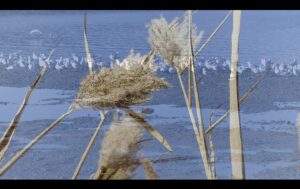
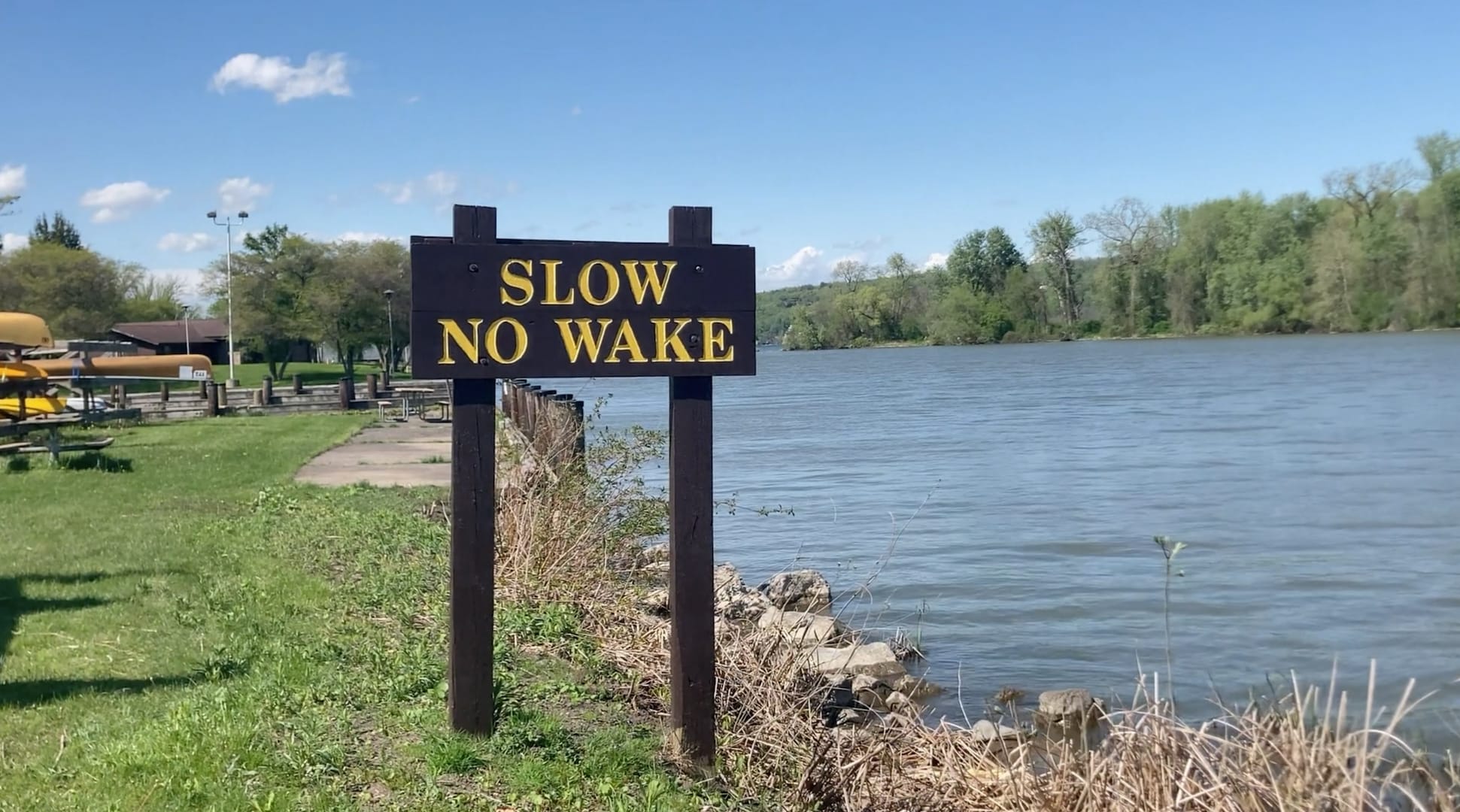
Earth Day marks the release of this piece—its first public moment. Walking, for me, is a way of thinking: to be in the open air, to ground myself physically on the earth, to move at the pace of perception rather than production. I shoot what presents itself: sunlight moving across foliage, wind in trees, water surfaces, insects crossing the frame, or an unexpected event that briefly interrupts the ordinary. I don’t stage these moments. I encounter them.
Like jazz improvisation, the work unfolds through attentiveness rather than planning. Each shot is a spontaneous response to conditions already in motion. I’m not composing images in advance so much as listening with my eyes—allowing the world to lead and deciding, in real time, how and when to respond with the camera.
In this practice, I deliberately allow the machine itself to speak. I treat the camera, the slideshow algorithm, and the act of screen capture as material—much the way a painter works with paint. Chance, chronology, and compression are not effects to be corrected but conditions to be engaged. A month of walking, noticing, and discovering may be folded into three or four minutes, not as narrative but as density.
This process treats improvisation not as “soloing over changes,” but as real-time composition. The walk becomes the score. The camera acts as both instrument and microphone. The edit becomes a record of accumulated attention.
While walking, I attune to variables in the visual field much the way an improvising musician listens:
• Texture: density of patterns, surface detail, movement within the frame
• Dynamics: light and shadow, near and far, intensity and restraint
• Range / Register: wide angle to telephoto, low to high, stillness to motion
• Duration: short gestures versus sustained lines; how seconds accumulate into form
• Timbre / Color: tonal quality of light, contrast, articulation, visual blend
• Tempo / Feel: pulse, groove, rubato—time stretched or compressed without losing continuity
• Character / Mood: emotional intention, even when unspoken
• Energy / Intensity: calm to urgent, settled to volatile
Rubato matters here—not as chaos, but as expressive time: a stretching and compressing of duration that keeps an underlying pulse intact. Even within a fixed structure of one-second shots joined by one-second dissolves, perception bends. What may initially feel relentless often settles through repetition, allowing nuance and emotion to emerge within the velocity.
See also: Carole Cadwalladr. Frédéric Gros: why going for a walk is the best way to free your mind. 19 Apr 2014. The Guardian.
Some of the finest thinkers in history were also enthusiastic walkers. In his surprise bestseller, Frédéric Gros uses philosophy to show how walking can bring about a sense of peace. So why is he so conflicted about life?
See also: Steve Elman. Jazz Appreciation: Mark Harvey 44, Aardvark Jazz Orchestra 40. 8 October 2012. The Art Fuse.
The film score is The Mellow Pad (1995) by Mark Harvey, performed by his Aardvark Jazz Orchestra.
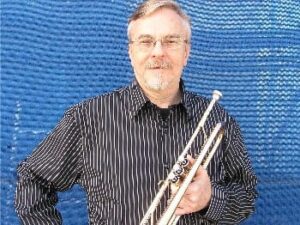
Trumpeter/composer Mark Harvey may be the only ordained minister in the world who has converted his life from full-time religion to (just about) full-time jazz. Photo: Kate Matson
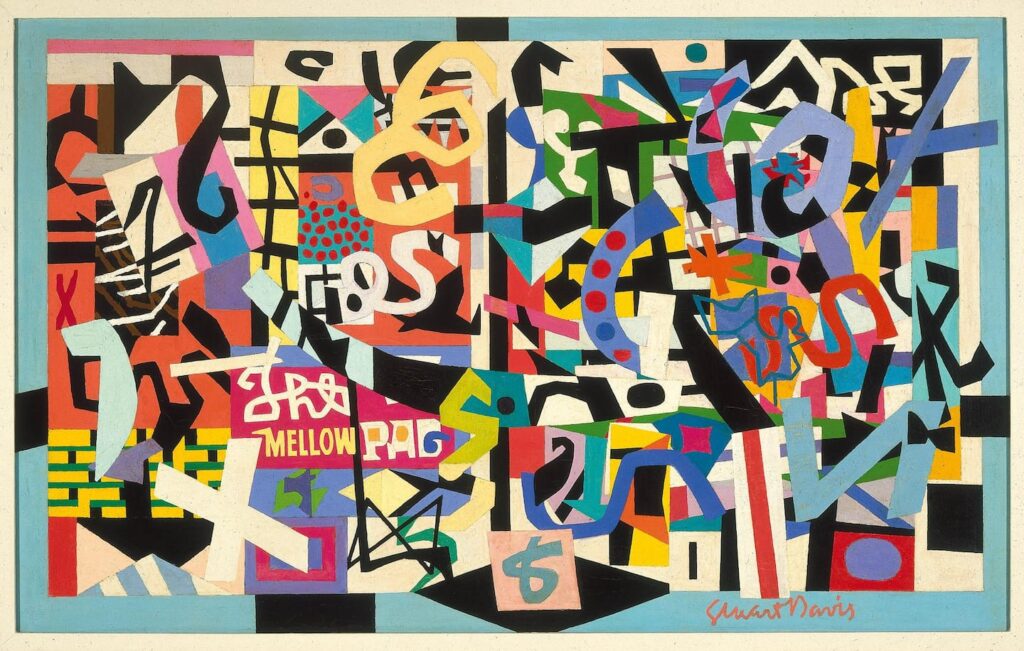
Both the composition and the spirit of Mellow Pad were present at the beginning of this work. The painting’s syncopation of color and geometry, its held energy, offered a visual analogue to the improvisational field I was entering. The music did not illustrate the images; it shaped the conditions under which the series emerged.
The resulting film is not a narrative. It does not declare a beginning or an end. It lives most fully in the middle: where perception is still forming, and the world continues to move. I asked for permission to use the track:
Dear Neil, this is Rebecca DeLamotte, manager for the Aardvark Jazz Orchestra. Thanks for your recent note on the AJO website. Mark Harvey (founder, music director, and composer for The Aardvark Jazz Orchestra) and I were interested to learn of your intriguing work in experimental filmmaking. Mark would be glad to license The Mellow Pad (and other music if you wish) for your films.
What kind of arrangement do you have in mind? Please send your thoughts, or, if you’d like to chat by phone, we can arrange a time to speak. Just let me know.
All best,
Rebecca
Rebecca DeLamotte, Managing Director
Americas Musicworks, management for The Aardvark Jazz Orchestra
29 Newbury St, Somerville, MA 02144
Tel: 617-947-5548
The walking continues. 🚶♂️🌎🎶
Stuart Davis spent six years working on the piece, aiming to create a kaleidoscopic focal point that moves the eye across the canvas, much like an improvised jazz solo.
The Mellow Pad (1945-1951). 27 Sep 2007. YouTube. Brooklyn Museum.
See also: John Szwed. Painting Jazz. 21 Feb 2025. Gagosian Quarterly.
“My objective was to make paintings that could be looked at whilst listening to [a jazz] record at the same time, without incongruity of mood.” — Stuart Davis
Nothing is more comparable than the intensity of jazz. It is jazz which has really contradicted the impressionists in painting. It is jazz and the Rite of Spring. It has played the same role as the fauve painters.
Jean Cocteau in Jack Hopper, “Jean Cocteau on Jazz,” DownBeat, January 14, 1964

See also: Google Images results for “every Earth Day”who made the earth day posters” since 22 Apr 1970.
See also: Katie White. Robert Rauschenberg Made the First-Ever Earth Day Poster—Here Are 3 Fascinating Facts About How He Conceived the Powerful Image. 21 Apr 2021. Arnet News.
See: Geo Animation: Marcellus Shale Permits in PA Over Time | Blog | Rhiza Labs
See: SkyTruth: Upper Green River Valley – A View From Above
See: Industrial Scars
See: Deeper Listening