For best viewing, click ⛶ for fullscreen.
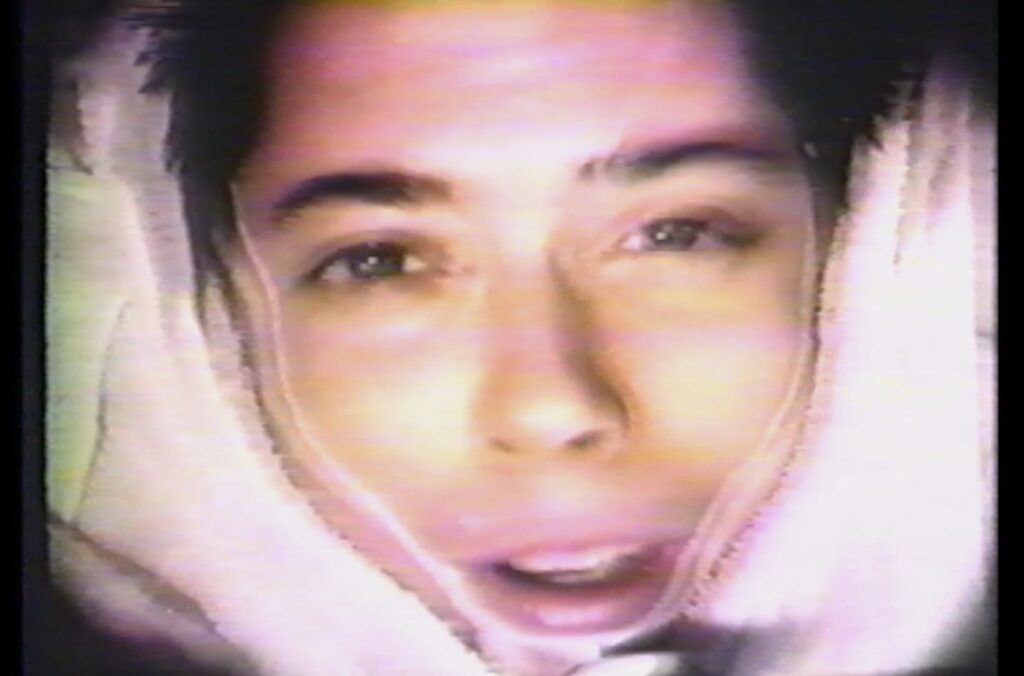
First shown as a two-channel, three monitor video piece on three large boxed blonde Oak black-and-white Setchell-Carlson monitors set on the stage floor. I was inspired by The Vasulkas Machine Vision series (1975-1977) to work in video that way. They used monitors just like these in a gallery manifestation of the Machine Vision series that I saw in Soho in 1976. Boundary, in this theatrical dance version was shown onstage at two venues in concert with Julie’s choreographed dance work: first at NYU and then at the Nantucket Arts Center in the summer of 1980.
Julie and I first met in 1979 and had so much in common. We both collected media. She had been collecting audio from radio broadcasts and recorded her performance activity in collaboration with Liz Copeland and others. Throwing rocks and screaming “Help” juxtaposed with my collection of film footage and image processed video sparked a long surreal meditation and mutual admiration for the year 1980. I had my own Bolex 8mm footage: an off the wall re-filming of Night and Fog shot in Brooklyn in 1974 that was cast behind dancers in Bill T. Jones and Arnie Zane’s ‘At the Crux of‘ (1976).

Additional footage from a 1977 film I shot in front of the White House on Nov. 16, 1977 was also used in “No”. I had gone to the White House to take tourist pictures, maybe try to shoot off and for the screen like Saul Levine. The White House was one more stop on the ‘Cross America’ for the fourth time tour I was making, having quit my San Francisco Corporate media job to move to Rhinebeck, NY. I drove alone in the 1976 Datsun B-210 my father bought me, from San Francisco to Rhinebeck to work with Gary Hill and Dave Jones at George Quasha’s Jimmy Carter CETA funded jobs program in the Arts at the Arnolfini Arts Center.
At the White House, I found myself in the middle of a CIA staged “Down With the Shah” counter demonstration, in a battle of fists, stones and nail‐studded boards that left 92 demonstrators and 27 policemen injured.
Linda Charlton. Clashes and Tear Gas Mar Shah’s Welcome in Capital. 16 Nov 1977. NYT.
I think of the late experimental filmmaker Paul Sharits who loved this work and was a colleague of mine while I lived in Buffalo from 1987 – 1990. It was N:O:T:H:I:N:G (1968) and T,O,U,C,H,I,N,G (1968) that inspired me to want to imitate him in video, in the studio with Julie in 1980, bungling but managing an interactive color studio patch that depended on a reel-to-reel tape delay and my home-made ’Richard Brewster’ preamp for it’s ‘wall of sound’. Julie Harrison’s imagination, boldness, and editing skills were integral to realizing this work.
In the late 1980s, Sharits was shot in his stomach at a local bar. He claimed the incident to have been an accident, for he was mistaken for someone else. He later experienced bouts of depression trying to recuperate from his wound, as well as having broken up with a designer named Laurie. Sharits later died silently in 1993, in Buffalo, New York, noted to be the same death place as his film colleagues, James Blue and Hollis Frampton, in a eulogy by former director of George Eastman House, Anthony Bannon.
My practice involves a fluid freedom of movement in the mix. I process images and sound into plastic compositional material. With this material, the glass is both full, empty and shattered at the same time. I like to view both the container and its shards. Like words in language, my clips may be arranged for communication but also recombined into unknown poetic, grammatical and semantic forms.
I want to interrogate the acceptance of reality. In my films, what might otherwise be considered documentary scenarios become realities that slip, shift and falter, and we begin to inhabit spaces of the unreal or uncanny.
Drawing on a vocabulary of personal, historical, and electronically processed abstract and documentary imagery is my cinematic work. Post-production is not scripted but is an act of discovery; both in terms of the cut and in the layering of imagery.
I draw from an ongoing diarist practice in my choice of material. I maintain this diarist practice within the private/public life of the camera that seeks to tell the truth about the light outside that happened when I saw it. I shoot whenever the impulse makes me stop and look.
Boundary
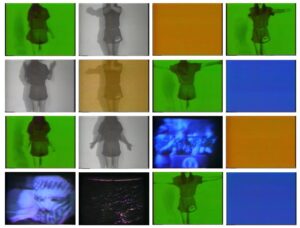
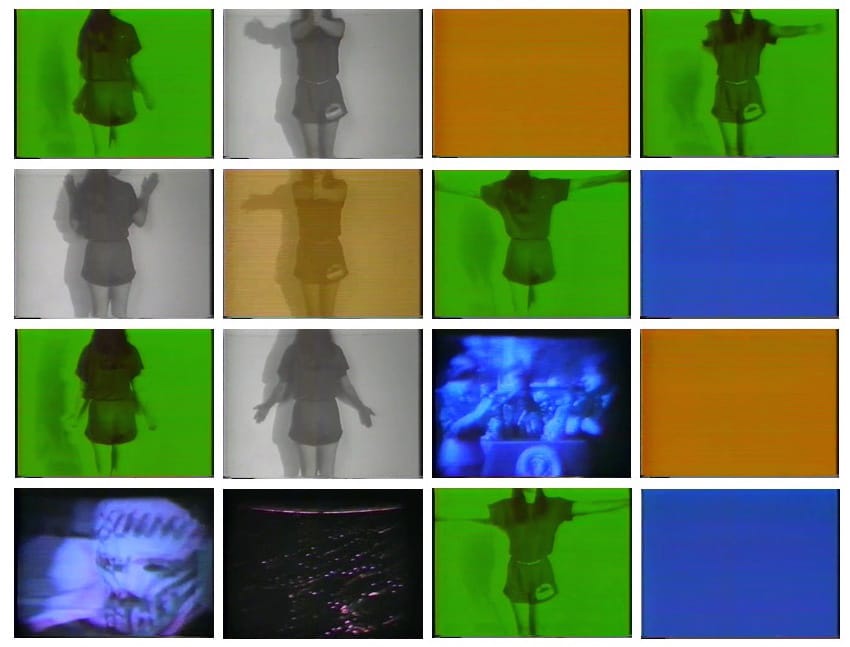
Boundary combines a rich vocabulary of personal, historical, and electronically processed abstract images to describe the mythical journey of a female protagonist. According to Neil Zusman, it is “an experiment in storytelling, ranging from an abstract psychological attack upon a woman, a mythic death and rebirth, a personal dialectic with history, a world view embracing violence as villainy personified, a journey through the worlds of power and innocence, and a return to the transcendence of the individual over the boundaries of this historical mind-set.”
Pattern matrices, cross-referencing and formal matching relationships contribute as much as do highly charged symbolic images to the emotive vision expressed in the tape. Machine processing is used to exploit the emotional possibilities inherent in both images and dramatic structure, so that the density and rapid sequencing of visual impressions suggest the multi-layered complexity of contemporary experience.
Text from catalog of IPC traveling exhibition, 1981–1983.
Boundary
…Of course, I never knew all this.
Of course, I never knew all this.
She did die when I was a year.
And I heard it from other people.
About the ninth month.
About the ninth month.
She started getting very sick.
Started getting very sick.
Not sure what she was sick with.
What she was sick with.
Cancer.
Cancer.
They say.
They say.
They put her in the hospital.
They put her in the hospital.
Two weeks later she died.
Two weeks later she died.
I can’t remember her.
I can’t remember her.
And there are no pictures left.
And there are no pictures left.
Commonwealth. Nation.
(Electronic sounds)
Waal waaaaaaaaa.
Waaaa waaaaaa.
Waaa wa wa wa.
Waaaa.
Waa.
Waaaaaaaaa.
Waa.
Nooooo.
Waaa waa wa wa.
Wa wa wa.
Wa wa wa wa.
(Singing) [inaudible 00:07:28]
Wa wa wa wa.
(Drums)
(Electronic sounds)
Take off your dress she said, and then.
(Electronic sounds)
Paper. Pa. Paper. Pa. Paaa. Paper.
(Electronic sounds)
Help. Help. Help. Help. Help. Help. Help.
(Electronic sounds)
Monitor.
Inside.
By three…
Inside.
Metallic instruments.
She was going.
Showing.
Home.
Her neural activity. Take off your dress.
She said. And then.
Some. And can.
Inside. Paper.
Can.
Inside. Paper. Sip. Paper.
Indie.
Pa pa pa paper.
Angry.
Hidden. Inside. Face.
(Music)
Magazine. Reading.
Pornography.
Glitch.
Hit.
Side.
Box.
Inside.
Inside.
Hidden.
Hurry.
Desert.
Desert.
Mesa.
Mesa.
Arroyo.
Arroyo. We are going.
We are going to go.
Then. They. Green.
Underneath.
Inside. Paper. Pa pa paper. Pa pa paper. Paper.
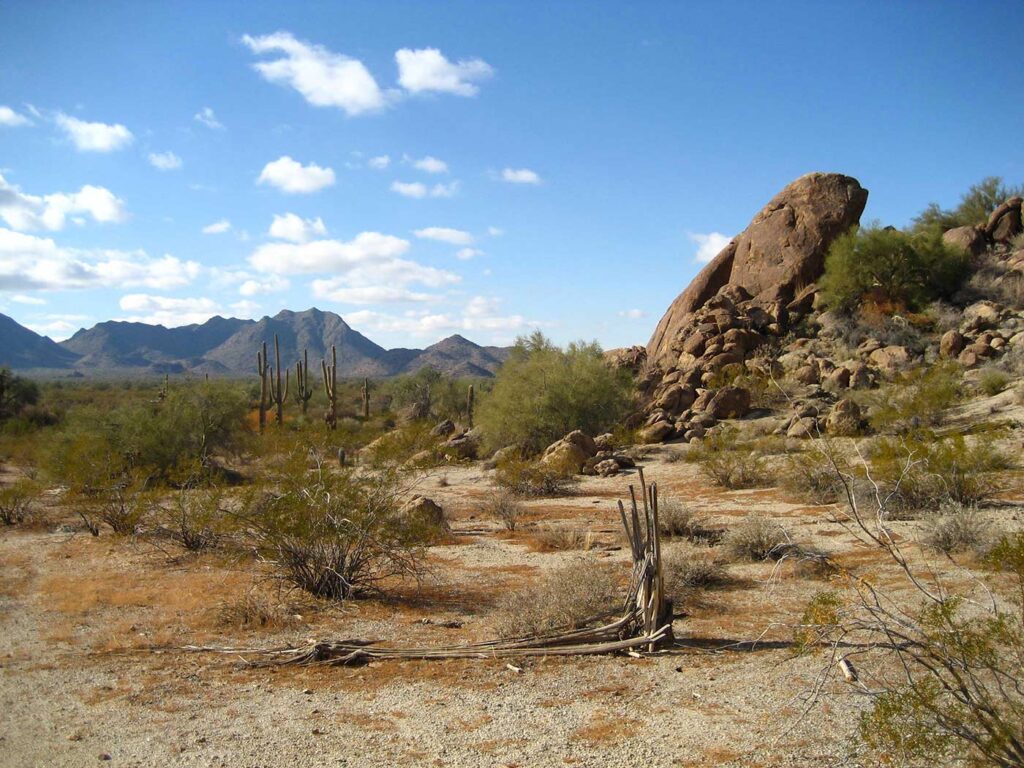
Highqueue. View of the Sonoran Desert approx. 30 miles west of Maricopa, Arizona. 20 January 2007.