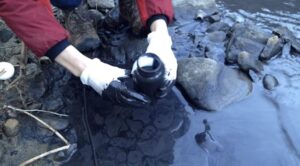

“The West Virginia coalfields contain some of the highest quality water in the world. Aquifers in the coalfields often sit directly below seams of coal. When the coal seam is undisturbed, it acts as a giant carbon filter, leaving excellent water quality that West Virginians across the state rely on for drinking water.
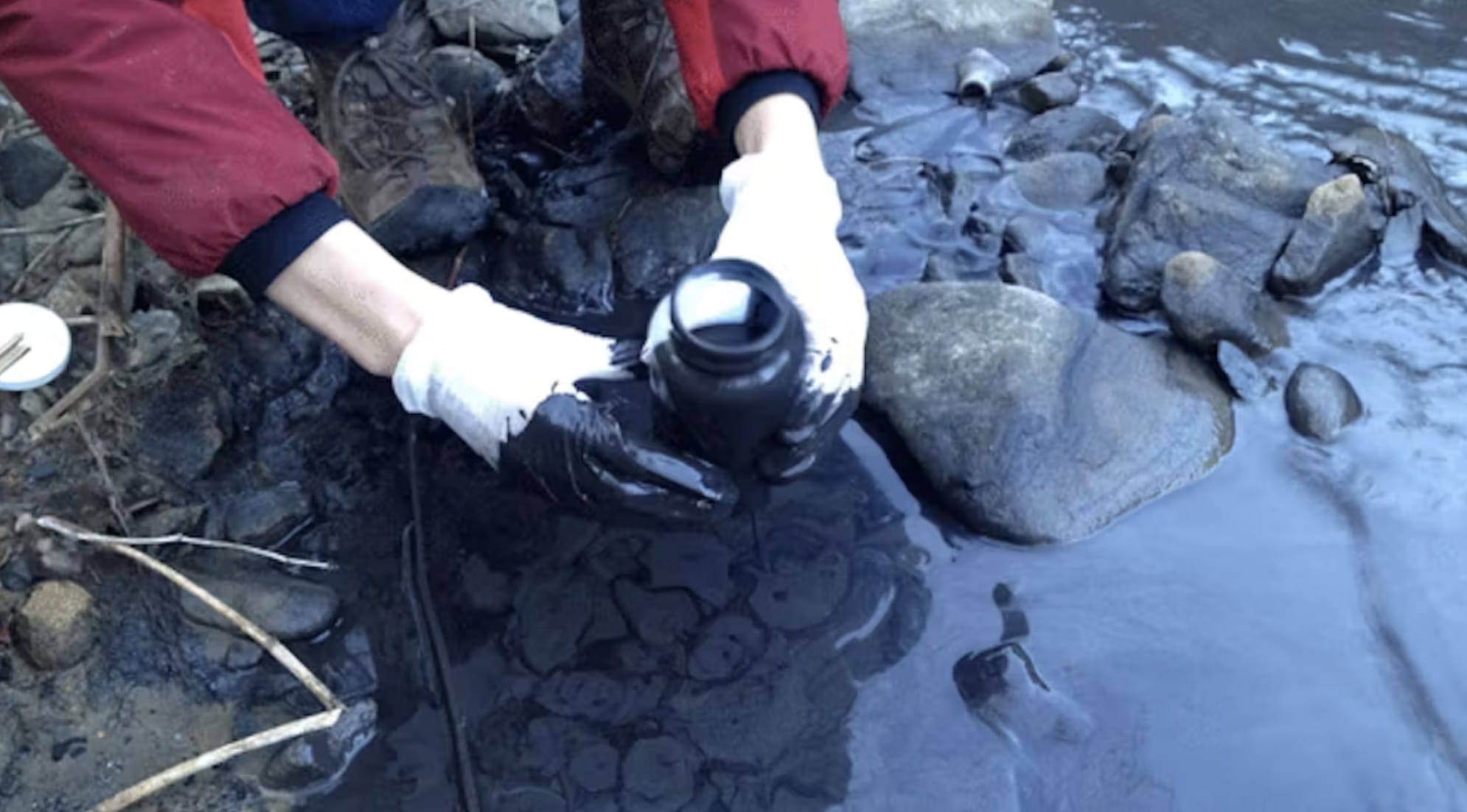
When coal seams are disrupted, however, water quality quickly declines. The accounts of impaired water quality in the coalfields are abundant. As mining continues and practices such as slurry injections and impoundment sites become more prevalent, communities are seeing a decline in their water quality.
One woman from Hopkins Fork had her water tested when she moved into her home in 2002 and was told it was of spring water quality, as good as any you could buy. Today, she does not even use the water to brush her teeth…
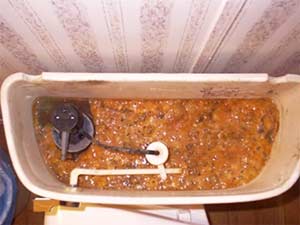
…In total, several hundred million gallons of coal slurry were injected underground within 3 miles of the nearest well user. Some residents suspect that the heavy blasting at the Black Castle Surface mine cracked the geologic layers allowing the coal slurry to enter the water table.
Environmental Engineer Dr. Scott Simonton agrees this is a plausible scenario. Despite repeated requests by residents and citizens groups, the West Virginia Department of Environmental Protection still refuses to study the water in Prenter to determine the source of the contamination.”
Aurora Lights supports locally-based projects that strengthen the connections within and between human communities and their natural environment by promoting environmental and social action.
See also: Sandy Smith. Coal Slurry Catastrophes Continue: West Virginia Hit With Another Environmental Emergency. 19 Feb 2014. Environment, Health and Safety Today Magazine (EHS Today).
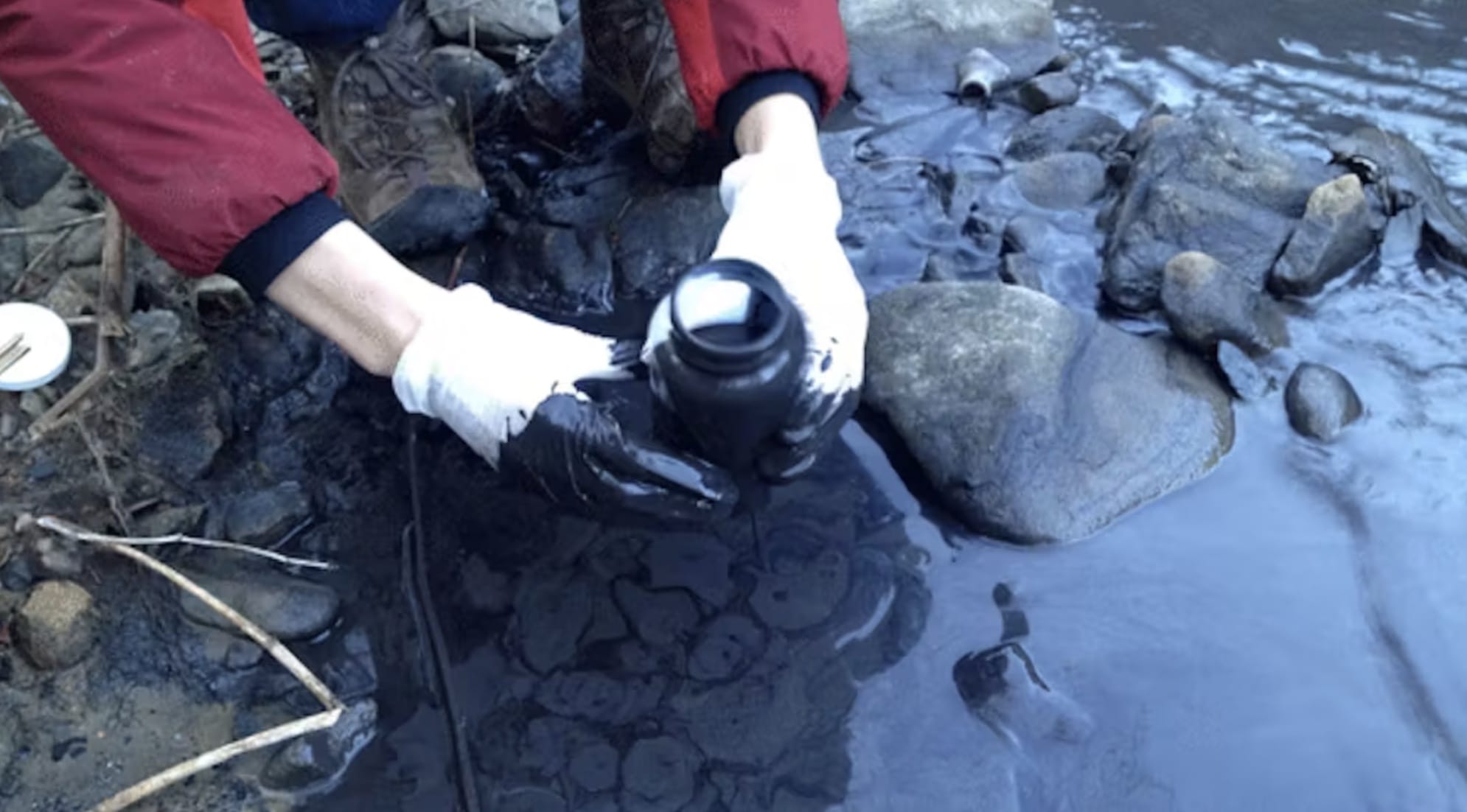
Download a lesson plan: Public health in Prenter Hollow, W.VA. Lesson Plan
See also: Aurora Lights Home.
See also: (current website, formerly Aurora Lights) Mountain Stewardship and Outdoor Leadership. https://www.mountainsol.org/
See also: Jen Osha, founder of Aurora Lights, writes:
“I am facilitating a participatory mapping project regarding the impacts of mountaintop-removal coal mining in southern West Virginia. I am also producing a CD to raise money and awareness about the social and environmental injustice in the coalfields through the nonprofit I founded, Aurora Lights. A first CD was called Moving Mountains, and we raised $6,000 for local grass-roots groups. My son, Elijah Storm, is 5 now and spends most of his time in the woods.”
About Journey Up Coal River:
The Coal River website is a multimedia resource centered around an interactive set of maps of the Coal River Valley. The maps were created in conjunction with local residents to discuss their concerns as well as share lessons regarding sustainable living, cultural values, and close connection to land and community. This website features dozens of audio interviews with community members, photos, videos, and music, as well as college-level lesson plans to reach out to students.
There are three objectives for our project: first, to increase awareness of the current concerns in the Coal River Valley; secondly, to provide a forum for local residents to actively shape how their home is viewed by participating in the creation of the website; thirdly, to use multimedia and cross-disciplinary curriculum to engage university students in the real-world research context of Coal River Valley. We also aim to encourage people to come to the Valley to work with community members for a more just, sustainable economy and to stop mountaintop removal. To get involved, please see this page.
This website is released in conjunction with the benefit CD Still Moving Mountains: The Journey Home, which includes music from national musicians such as Kathy Mattea and Del McCoury as well as West Virginia musicians and Coal River residents. The concept for the CD and multimedia website was birthed at a grassroots level and is being carried out with constant communication and cooperation with valley residents.
The project is being presented with financial assistance from the West Virginia Humanities Council, a state affiliate of the National Endowment for the Humanities. Any views, findings, conclusions or recommendations do not necessarily represent those of the West Virginia Humanities Council or the National Endowment for the Humanities.
Aurora Lights (AL) is a nonprofit organization with a mission to “strengthen connections within and between human communities and their natural environment.” In West Virginia, Aurora Lights supports hands-on environmental education programs for college students, reforestation programs through our native trees nursery, and overseas opportunities for local students to travel to the Ecuadorian Amazon to experience First People’s connections to the land. We specifically organize, lead and fund weekend trips to the coalfields as well as summer internships. In addition, AL produced a CD compilation of interviews and music entitled “Moving Mountains,” with $6,500 in proceeds going to support southern West Virginian coal-field residents, individual educators and activists concerned with the issue of mountaintop removal coal mining.
Additional information about Aurora Lights and our mission statement can be found here.
Cartographic work done by Fritz Boettner GIS coordinator for Downstream Strategies, a small, Morgantown, W.Va.-based environmental consulting firm. Thank you Fritz!
Thank you to everyone who worked so hard to make this project a reality. We’ve tried to list everyone here, but so many people volunteered their time that we may have left someone out. If so, we apologize and please let us know so we can put you up here.
About Journey Up Coal River
See also: Heather Moyer. Here’s What 7.8 Billion Gallons of Toxic Coal Sludge Looks Like. 26 Jul 2016. EcoWatch.
See: Marsh Fork Elementary: Journey Up Coal River | A Community and Strip Mining
See: West Virginia Surface Owners’ Rights Organization (WVSORO)
See: Changing a Water Filter in Prenter Hollow, WV
See: Coal River
See: Frack Check WV (West Virginia)
See: Deep Down | Film on Mountaintop Mining | PBS
See: West Virginia Blue: Dunkard Creek fish kill
See: New WVU-Va Tech study links water quality and cancer deaths in West Virginia coalfields
See: Ecological integrity of streams related to human cancer mortality rates
See: Mountaintop Removal
See: Breaking news: EPA vetoes Spruce Mine permit
See: The risks of oil and gas production acknowledged around the world