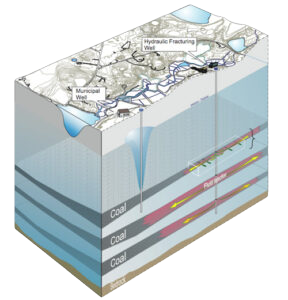
Philadelphia Enquirer editorial. Published: Mar. 22, 2010.
…Representatives of the Marcellus Shale Coalition, an industry trade group, point out that not a single case of groundwater contamination has been linked to their drilling technique, called hydraulic fracturing or “fracking.”
It involves pumping up to three million gallons of water (per well), combined with sand and chemicals, more than a mile underground to shatter the rock and release the gas.
But fracking does carry potential risks to the environment. Those concerns are causing government officials elsewhere to proceed cautiously on Marcellus drilling. New York state has imposed a moratorium on Marcellus wells until it completes an environmental-impact assessment.
Reader comments:
Jim Barth
I thank the Philadelphia Inquirer for its editorial, and I offer a couple of points of clarification to the Marcellus Shale Coalition’s assertions. The group says, “not a single case of groundwater contamination has been linked to their drilling technique, called hydraulic fracturing”. First of all, the group always incorrectly compares the new technology to “six decades”, or “one million” wells drilled. This new technology is “high volume, slickwater, multi-stage hydraulic fracturing and horizontal drilling, into shale”. That is the only appropriate comparison to make, and that process did not become completely introduced until 2002. Here is the pertinent timeline, as constructed by the draft SGEIS of the NYS DEC, and a V.P. from Chief Oil & Gas, who just participated on a panel at Temple University last Thursday, the 18th of March. In 1996, slickwater fracturing was introduced. In 2000 (according to Kristi Gittins of Chief), the first horizontal well was drilled in the Barnett Shale in Texas (she said she was there to witness it). In 2002, multi-stage hydraulic fracturing was introduced on horizontal boreholes. Many people would also extend this timeline to 2005, when Congress passed the Energy Act that gave all the exemptions from federal environmental laws to the gas and oil industry. Any comparison to wells drilled or fractured during the 40’s, 50’s, 60’s, 70’s, 80’s, 90’s, is false. Add to this fact that the only independent study performed was the 2004 US EPA, which was roundly criticized for the politically motivated purging of findings from the summary pages. Luckily, EPA whistleblower, Westin Wilson, shed light on that report’s findings, and Abram Lustgarten, after reading through the report, quoted findings in which the EPA found that fracturing fluids migrated in over half the cases studied. The bottom line is, no independent, scientifically peer reviewed study has been done, and the US EPA has just been funded to perform exactly that task.
Posted 09:43 AM, 03/22/2010
moneywort
+I wish they said NONONONONO Our STATE goverment is destroying OUR State Forest, for a few dollars in their pockets. shame shame
Posted 10:22 AM, 03/22/2010
Lee Woodmansee
Your Editorial often states obvious facts, other times it is incorrect. I am a land owner in the Marcellus Region and a member of a landowner’s organization which is also in favor of strict environmental safeguards in drilling for natural gas. The State has increased its inspections and must constantly monitor the industry to assure that there are always enough inspectors as the industry grows. In addition, the State needs to immediately perform a study to assure that our State Forests are not being destroyed by willy-nilly leasing and drilling. This should have been done, and a leasing/drilling plan created, prior to signing the first lease. Mr. Barth points out that “high volume, slick water” fracturing has been in use since 1996 without a single case of groundwater contamination being linked to this procedure. Excellent point. There are some that want to close down all gas drilling until studies are done TO THEIR SATISFACTION which shoow that the last 14 years of no problems will continue without exception. In fact, their satisfaction will never met. There was one error in the Editorial, however. The chemicals “being pumped into the ground” are available on various web sites and certainly posted on each drilling site. What is not generally posted is the mix of those chemicals being used. To sum up, responsible landowners and groups of landowners feel very strongly that gas exploration can be done while preserving the environment. Readers should give them credit for continuing the stewardship that their families have often provided for generations. After all, it truely is their back yard we are talking about.
Posted 11:15 AM, 03/22/2010
Jim Barth
I applaud Mr. Woodmansee’s general points about the responsible stewardship goals of many landowners, including many who have already leased. I disagree strongly with his contention that it is currently safe to drill and fracture. Also, 1996 is not the end of the timeline, it is the beginning. As I wrote, 2002, or 2005 is really the date from which to judge, and no accepted studies have been performed. It is a version of “don’t ask, don’t tell”, which I would phrase as “don’t look, don’t find”. Yes, I believe there should be a moratorium in Pennsylvania until proper studies of this new technology are performed, and incorporated into uniform regulations, enforced by environmental staff that is adequate. Concerning the point that the slickwater fracturing chemicals have been transparently disclosed, if this is the case, then why does the PADEP website list 45 “products”, while the NYS DEC draft SGEIS lists approximately 192 (some of which are partial listings), and the Endocrine Disruption Exchange (TEDX) lists 435 “products” used in this process? I posed this question the other day to Scott Roetruck, the very capable V.P. spokesperson of Chesapeake. No answer to that other than Chesapeake is responsible and uses “best practices”. What about the rest of the industry? Lastly, I’m tired of this isolation of “hydraulic fracturing”. The entire process and industrialization of our watersheds and pristine forests worry the heck out of me as well. There have been hundreds of serious accidents and contaminations that have been caused by drilling for gas over the past 15 years, whether coal bed methane, or shale. They are a matter of fact, and easily looked up. We need a cumulative environmental impact study! How many well pads, how many forested acres, how many wells are going to be drilled and fractured? This piecemeal, permit by rule approach is a tragedy waiting to happen.
Posted 12:18 PM, 03/22/2010
Jim Barth
There are (at least) three other points I would make about this high volume, slickwater fracturing process.
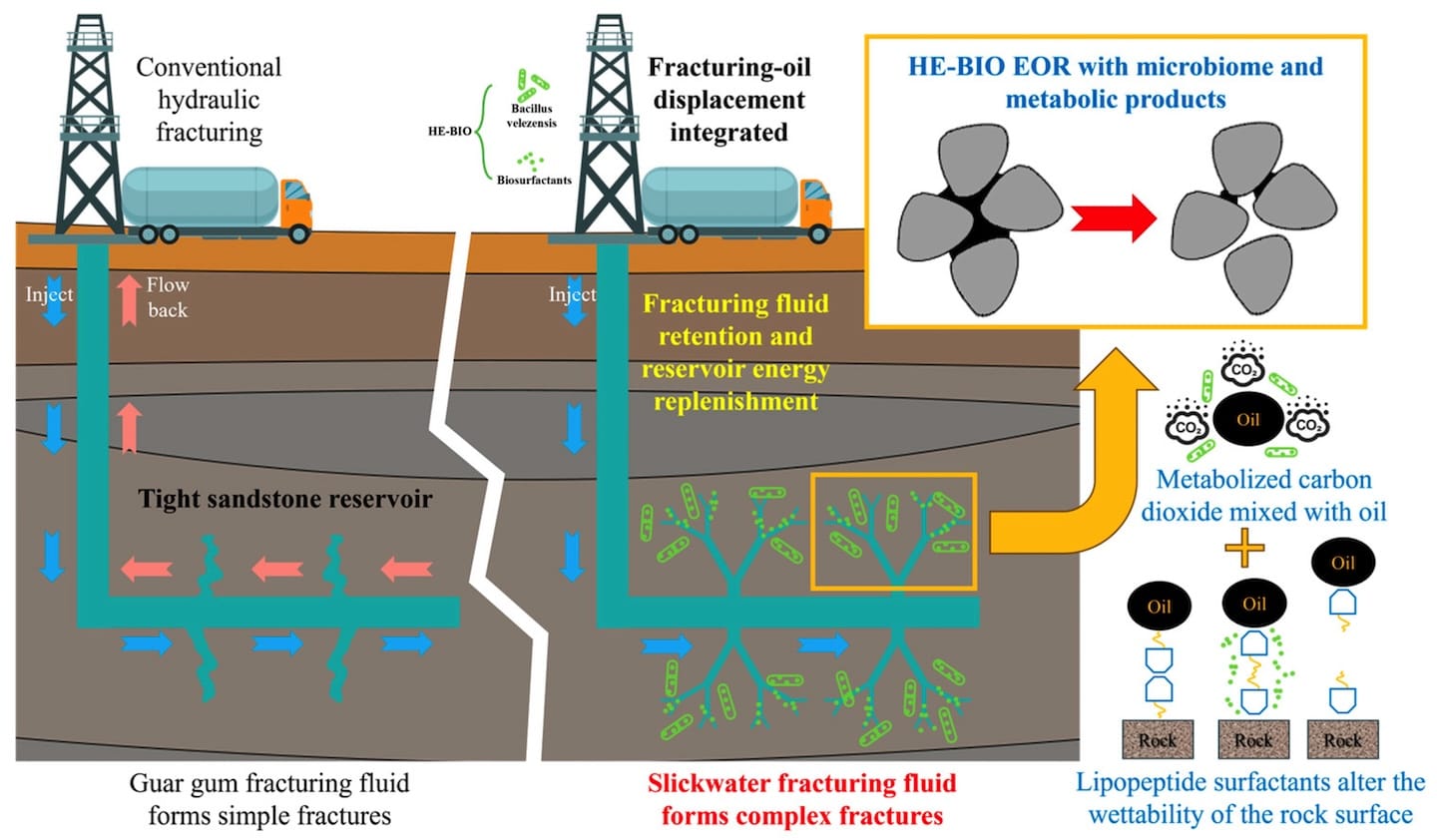
The first involves the volume of water, sand and chemicals of concern used. If a 5,000′ lateral is going to be fracked (multi-stage), then at least 5,000,000 gallons of water are used, along with about 4,000,000 pounds of sand (thank you Mr. Maykuth) and, most importantly, anywhere from 210,000 to 800,000 pounds of fracturing chemicals/compounds/products. This is a “ton” of chemicals, and I believe, very dangerous to have placed within a few hundred feet of someone’s house and well water, currently allowed by law. Second, I don’t think having these chemicals listed on a MSDS is the primary issue.
My position is: Who is asking, studying, whether or not these chemicals should be permitted to be injected under intense pressure through our aquifers, into the ground, in these amounts, or any amounts, in the first place? These amounts are per well, per fracture. Eight wells may easily be drilled and fracked from one pad, and since about 80% to 85% of the toxic stew remains unrecovered, that amounts to 32 million gallons of this chemical nightmare, that remain underground, free to migrate, within the drilling unit area and beyond, per fracture!
The simple fact is, we can not know with certainty, at this point, whether or not migration occurs. My third point, is that there is no meaningful difference between these types of gas extraction wells, and an injection disposal well for toxic flowback, except that injection wells are regulated by the US EPA, and this process is not (thank you “Halliburton loophole”).
I highly recommend that people view a short video presentation on EPA regulations of injection wells given by Dr. Tony Ingraffea from Cornell University.
It is no wonder that the gas extraction industry so vehemently opposes the Fracturing Awareness of Chemicals Act (F.R.A.C. Act).
Posted 04:08 PM, 03/22/2010
Toot44
In Susquehanna County, Cabot has already had contamination of wells from drilling accidents. Just recently in Lycoming County (Jersey Shore) there was a foamy substance running down the hill and into Pine Creek that DEP did not know where it was coming from or what was in it. They discovered it came from a drilling site, DEP tested it, and said they didn’t think it would cause health problems (really?). I fear for the long term effect these chemicals being injected into the ground will have on our aquaifiers, wells, etc.
I do not necessarily believe what anyone is saying, because I do no believe anyone really knows what the long term effects will be; fracturing the shale certainly cannot be monitored that far underground and who knows where these chemicals will migrate to and end up? Also, many municipalities are being mandated to pay millions to clean up the Chesapeake Bay, but I feel are unfairly being targeted, because all the gas drilling will surely in some way affect the Bay and we are all going to be paying for their contamination. Not fair to the taxpayers in these municipalities. In a recent article I read where there is a study being done re: the effect on the Chesapeake but won’t be completed until 2012. So I contend, don’t make the municipalities pay until the study is completed, and add the gas drilling company into the responsibility equation for payment.
See: Pennsylvania Orders Cabot Oil and Gas to Stop Fracturing in Troubled County – ProPublica
See: Commonwealth of Pennsylvania DEP takes aggressive enforcement action against Cabot Oil
See: New Lawsuit Filed in Fracking Country
See: Hazards posed by natural gas drilling are not limited to below ground