60 documents

2011

June (2011)

May (2011)

Property Rights and Drilling

Property Rights and Drilling

…Slottje warned municipal officials to avoid getting trapped into thinking they have to provide road use agreements….The biggest problem Slottje sees facing municipalities is the increased erosion of enforcement of environmental regulations. “So we’re swinging back to protecting the environment through property rights and home rule,” she said.

Source: Tompkins Weekly (2011) Read More

April (2011)

Getting drillers to respect the environment

Getting drillers to respect the environment

“Our quality of life has an unquenchable thirst for energy. Offshore drilling and production helps to satisfy this thirst.” — Richard Haut. Extracting energy requires trade-offs. “We want clean air, but we also like the convenience of electricity,” said Richard Haut during a lunch-hour seminar last Tuesday. Haut, founder and senior research scientist at Houston Advanced Research Center (HARC), visited Cornell to promote what he calls “environ – mentally friendly drilling systems.”

Source: The Tompkins County Weekly (2011) Read More

Despite overhaul, gas wastewater still a problem

Despite overhaul

Pennsylvania’s natural gas drillers are still flushing vast quantities of contaminated wastewater into rivers that supply drinking water, despite major progress by the industry over the past year in curtailing the practice.

Source: The Mercury | PottsMerc.com (2011) Read More

Pa. drillers told to stop sending wastewater to treatment plants

Pa. drillers told to stop sending wastewater to treatment plants

The bromides themselves are not a public health risk – they account for a tiny part of the salty dissolved solids that create an unpleasant taste in water at elevated levels. …But bromides react with the chlorine disinfectants used by drinking water to form brominated trihalomethanes (THMs), a volatile organic compound.

Source: Philadelphia Inquirer (2011) Read More

E.P.A. Proposes New Emission Standards for Power Plants

E.P.A. Proposes New Emission Standards for Power Plants

The Environmental Protection Agency (archived) on Wednesday (2011-03-16) proposed the first national standard (archived) for emissions of mercury and other pollutants from coal (archived) -burning power plants, a rule that could lead to the early closing of a number of older plants and one that is certain to be challenged by the some utilities and Republicans in Congress.

Source: The New York Times (2011) Read More

March (2011)

Natural Gas Drillers Protest Nomination of Fracking Critics for EPA Review Panel

Natural Gas Drillers Protest Nomination of Fracking Critics for EPA Review Panel

The Independent Petroleum Association of America challenged the nomination of two prominent fracking critics—Theo Colborn and Robert Howarth—to an EPA review panel studying hydraulic fracturing. Industry leaders accused them of bias, citing Colborn’s work on health impacts and Howarth’s draft report suggesting shale gas emissions may rival coal. The dispute highlighted tensions between environmental scientists and industry advocates as the EPA began evaluating the risks of hydraulic fracturing and its implications for climate and public health.

Source: New York Times: Greenwire (2010) Read More

February (2011)

WATER: Gas drilling in huge Appalachia reserve yields foul, briny byproduct – AP

WATER: Gas drilling in huge Appalachia reserve yields foul

A vast Appalachian watershed — a reserve supplying drinking water across multiple states — faced encroaching gas development. Conservationists warned that drilling in or near protected lands could ripple far beyond lease boundaries. Industry backers emphasized economic revival in struggling regions. The scale was enormous: aquifers, forests, pipelines threading through one of the East’s largest intact landscapes.

Source: cleveland.com (2010) Read More

Underground Injection of Gas Industry Brine Taking Off – State Journal – STATEJOURNAL.com

Underground Injection of Gas Industry Brine Taking Off - State Journal - STATEJOURNAL.com

As millions of gallons of fracking “flowback” return to the surface in West Virginia, operators have increasingly shipped the heavy brine to Ohio for underground injection. According to state officials, disposal options remain limited, with only two permitted Class II wells handling waste locally. The logistical strain underscores a growing dilemma: while drilling accelerates across the Marcellus Shale, wastewater disposal infrastructure lags behind, raising questions about long-term environmental safeguards.

Source: The State Journal (2010) Read More

Dark Side of a Natural Gas Boom

Dark Side of a Natural Gas Boom

As drilling surged across Pennsylvania, economic optimism collided with mounting reports of spills, wastewater mismanagement, and regulatory strain. What was marketed as a clean-energy bridge began to reveal industrial consequences, leaving communities to reckon with the environmental costs of rapid extraction.

Source: The New York Times (2009) Read More

BP – For BP, a History of Spills and Safety Lapses

BP - For BP

BP’s record of spills and safety failures, including high-profile disasters, shadowed broader energy debates. As shale expansion accelerated, past corporate missteps served as reminders that operational assurances and compliance histories do not always align. Reputation travels with infrastructure.

Source: The New York Times (2010) Read More

Big Money Drives Up the Betting on the Marcellus Shale

Big Money Drives Up the Betting on the Marcellus Shale

As major investors and multinational firms entered the Marcellus Shale, lease prices and speculative capital surged. The influx of “big money” transformed local drilling into a high-stakes financial arena, where acreage valuation became as strategic as production rates.

Source: The New York Times | Climatewire (2010) Read More

Graham Pulls Support for Major Senate Climate Bill

Graham Pulls Support for Major Senate Climate Bill

Senator Lindsey Graham withdrew support from a major Senate climate bill, fracturing a fragile bipartisan coalition. The setback stalled momentum for comprehensive climate legislation. Energy policy once again splintered along party lines, leaving regulatory authority to agencies and states.

Source: The New York Times (2010) Read More

Experts in Favor of Public Access

Experts in Favor of Public Access

The public should have access to the inner workings of Luzerne County home rule subcommittees, say three experts on the state’s open meeting law.

Source: The Times Leader, Wilkes-Barre & Scranton PA (2011) Read More

January (2011)

There’s Gas in Those Hills

There’s Gas in Those Hills

In Hughesville, Pennsylvania, Raymond Gregoire initially ignored the offer to lease drilling rights on his land. Weeks later, he signed for $62,000 and organized 75 neighbors into a $3 million collective agreement. As the Marcellus land rush accelerated, stories like Gregoire’s captured both opportunity and unease—farmers weighing short-term financial windfalls against the permanent industrial transformation of rural landscapes.

Source: The New York Times (2008) Read More

State Decision Blocks Drilling for Gas in Catskills

State Decision Blocks Drilling for Gas in Catskills

New York State halted proposed drilling in the Catskill Park, protecting a region that feeds New York City’s drinking water system. Energy companies argued modern techniques could operate safely. State officials weighed the risk to a supply serving millions. The decision underscored a high-stakes reality: when gas sits beneath a watershed of national importance, economics collides with precaution.

Source: The New York Times (2010) Read More

WATER: Rulings Restrict Clean Water Act, Foiling E.P.A.

WATER: Rulings Restrict Clean Water Act

Court rulings narrowed the reach of the Clean Water Act, limiting federal oversight of certain streams and wetlands. Environmental advocates warned that smaller waterways — often feeding larger rivers — could slip beyond regulation. For drilling operations and wastewater disposal sites, the implications were immediate. A legal technicality in Washington could determine what protections applied at the edge of a rural creek.

Source: The New York Times (2010) Read More

Opinion: Avoiding America’s next drilling disaster

Opinion: Avoiding America's next drilling disaster

In the wake of the BP Gulf oil disaster, U.S. Sen. Robert Casey of Pennsylvania and U.S. Rep. Diana DeGette of Colorado warned in the Philadelphia Inquirer that hydraulic fracturing posed a parallel onshore risk, urging federal disclosure of fracking chemicals under the Safe Drinking Water Act. Challenging exemptions advanced during Vice President Dick Cheney’s 2005 energy legislation, Casey and DeGette argued that energy companies should disclose the ingredients in fracking fluids—diesel fuel, benzene, methanol, and formaldehyde among them—while preserving proprietary formulas, countering industry claims that state regulation alone was sufficient.

Source: Philadelphia Inquirer (2010) Read More

2010

December (2010)

Wind Power Backbone Sought Off Atlantic Coast

Wind Power Backbone Sought Off Atlantic Coast

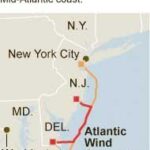
Google and a New York financial firm agreed to invest in a proposed $5 billion transmission backbone designed to connect future offshore wind farms along the Atlantic Seaboard. The 350-mile underwater cable, stretching from northern New Jersey to Norfolk, Virginia, could remove key obstacles to large-scale wind development and reshape the region’s electrical grid. Supporters argue the project would accelerate clean energy expansion while making offshore turbines economically viable and less visually intrusive.

Source: The New York Times (2010) Read More

Editorial – A Decision Above Reproach | The Cornell Daily Sun

Editorial - A Decision Above Reproach | The Cornell Daily Sun

Peter Meinig, chairman of the Cornell University Board of Trustees and a former associate of a major natural gas company, was urged to recuse himself from any university decisions involving shale gas leasing. Critics argued that Cornell’s credibility — particularly in environmental research and public policy — could be undermined if leadership with industry ties influenced drilling-related land use decisions. The debate spotlighted governance, transparency, and conflicts of interest as Marcellus pressure mounted.

Source: Cornell Sun (2010) Read More

Proposed gas drilling ban in city wins friends, foes such as Tom Ridge

Proposed gas drilling ban in city wins friends

Concerned Chippewa Citizens (CCC), founded by Pat Popple, provides information and advocacy resources related to frac sand mining and processing facilities in Wisconsin and beyond. Through publications, community organizing, and public speaking, the group addresses environmental and health concerns linked to sand extraction. The organization also monitors proposed expansion projects, including oil sands development initiatives in the United States.

Source: Pittsburgh Post-Gazette (2010) Read More

Editorial: Fiddling while the tap water burns

Editorial: Fiddling while the tap water burns

Let us see if we have this right: The tap water is bubbling in Parker County, carbonated with enough natural gas to make it as flammable as a French Quarter cocktail and as explosive as a hand grenade, and the Texas Railroad Commission — consulting its Advent calendar, no doubt — has scheduled a hearing on the matter for Jan. 10.

Source: Denton Record Chronicle (2010) Read More

November (2010)

Halliburton’s Interests Assisted by White House – Los Angeles Times

Halliburton's Interests Assisted by White House - Los Angeles Times

In 2005, Congress amended the Safe Drinking Water Act, carving out a controversial exemption for hydraulic fracturing. The move—later dubbed the “Halliburton loophole”—removed federal oversight of underground injection practices central to the shale boom. Supporters framed it as regulatory clarity for domestic energy development; critics saw it as a quiet rollback of environmental protection with national consequences.

Source: Los Angeles Times (2004) Read More

Land Board approves Otter Creek coal lease

Land Board approves Otter Creek coal lease

“The state Land Board, undeterred by anti-mining protesters who disrupted the board’s Helena meeting for 45 minutes until they were arrested, voted 3-2 Thursday to approve leasing 570 million tons of state-owned coal for development of a mine in southeastern Montana’s Otter Creek Valley.

Source: Billings Gazette (2010) Read More

What Lies Beneath

What Lies Beneath

In a Texas Observer investigation into oilfield waste injection wells, high school art teacher Cecile Carson challenged the Railroad Commission of Texas after commissioners swiftly denied her protest against a proposed injection well near her Wise County property. The case highlights weak enforcement penalties—often capped at a few thousand dollars—and raises broader concerns about regulatory oversight of oil and gas waste disposal in Texas communities.

Source: The Texas Observer (2006) Read More

Pennsylvania lawsuit says drilling polluted water

Pennsylvania lawsuit says drilling polluted water

A Pennsylvania lawsuit alleged that nearby drilling operations contaminated private water wells, igniting a battle over causation and responsibility. Plaintiffs pointed to methane and chemical signatures. Companies disputed the link. As expert witnesses parsed geology, the case underscored a persistent question: when water changes, who proves why?

Source: Reuters (2009) Read More

Ozone raises its ugly head in rural Utah

Ozone raises its ugly head in rural Utah

People who visited eastern Utah’s vast open spaces last winter might have thought they were doing their lungs a big favor by taking a deep breath of fresh, country air. But it turns out, they would have been better off going to Los Angeles or most other major cities.

Source: The Salt Lake Tribune (2010) Read More

The Costs of Natural Gas, Including Flaming Water

The Costs of Natural Gas

A critical examination of Josh Fox’s documentary Gasland, exploring fracking’s environmental and health impacts through vivid imagery and testimony from scientists and affected residents. The review weighs Fox’s emotional force against questions of investigative rigor, situating the film within the broader debate over regulation and watershed protection. Josh Fox’s documentary exposes hydraulic fracturing as a process that injects chemical-laced water deep underground, resulting in contamination so severe that tap water can ignite. Through personal stories and scientific testimony, the film frames fracking as an urgent public health and environmental crisis.

Source: The New York Times (2010) Read More

October (2010)

Hazards posed by natural gas drilling are not limited to below ground

Hazards posed by natural gas drilling are not limited to below ground

In a June 20, 2010 investigation for the Republican Herald, journalist Laura Legere reported that many of the most serious hazards from Marcellus Shale drilling occur above ground, including chemical storage, wastewater transport, and surface spills. Department of Environmental Protection records obtained through Pennsylvania’s Right-to-Know Law revealed hundreds of violations involving at least 92 drilling companies, prompting DEP Secretary John Hanger to attribute repeated spills and methane leaks—particularly involving Cabot Oil & Gas—to poor management and inadequate oversight.

Source: Republican Herald (2010) Read More

Plan to send fracking wastewater near Keuka Lake is abandoned | stargazette.com | Star-Gazette

Plan to send fracking wastewater near Keuka Lake is abandoned | stargazette.com | Star-Gazette

A contentious plan by Chesapeake Energy to convert an abandoned gas well in Pulteney, New York, into a deep-well wastewater disposal site near Keuka Lake is officially dead—though the company left the door open for similar facilities in the future. The proposal, which would have handled more than 180,000 gallons of Marcellus Shale fracking waste per day, drew opposition from local residents, Pulteney Town Supervisor Bill Weber, U.S. Rep. Eric Massa, and Walter Hang of Ithaca-based Toxics Targeting, who argued that grassroots resistance in the Finger Lakes influenced decisions before the EPA and the New York DEC.

Source: Ithaca Journal (2010) Read More
September (2010)

Gas industry approach would torpedo Barnett Shale study

Gas industry approach would torpedo Barnett Shale study

In the Barnett Shale, industry leaders pushed regulatory changes critics warned would gut local oversight. Supporters framed it as streamlining. Opponents saw a rollback of hard-won protections. At stake: inspection authority, environmental review, and the balance of power between drillers and the communities hosting them. The fight wasn’t just about gas — it was about who sets the rules when billions are underground.

Source: Star-Telegram (2010) Read More
Industry campaign targets ‘hydraulic fracturing’ bill

Industry campaign targets 'hydraulic fracturing' bill

As House Democrats explored new oversight of hydraulic fracturing, an industry coalition called Energy in Depth launched a campaign warning that regulation would kill jobs and harm the economy. Reported in the New York Times by Anne C. Mulkern, the effort illustrated how shale politics had become a high-stakes battle over narrative—economic growth versus environmental protection—at a moment when domestic gas production was rapidly expanding.

Source: The New York Times: Greenwire (2009) Read More

WATER | That Tap Water Is Legal but May Be Unhealthy

WATER | That Tap Water Is Legal but May Be Unhealthy

Water can meet federal standards and still carry risks. Investigations revealed that “legal” does not always mean safe, particularly where industrial activities stress aquifers. Residents confronting murky tap water and ambiguous assurances found themselves navigating a gray zone between compliance and public health.

Source: The New York Times (2009) Read More

August (2010)

Tainted Water Spurs Evacuations

Tainted Water Spurs Evacuations

“Hundreds of people living near a natural-gas drilling site in northwest Louisiana have been forced to evacuate their homes after gas seeped into their drinking water.

Source: The Wall St. Journal | wsj.com (2010) Read More

Editorial – The risks of fracking | Philadelphia Inquirer

Editorial - The risks of fracking | Philadelphia Inquirer

A March 22, 2010 Philadelphia Inquirer editorial noted the Marcellus Shale Coalition’s claim that hydraulic fracturing had never contaminated groundwater, while acknowledging environmental risks and New York’s drilling moratorium. What followed was a pointed public exchange: commenters such as Jim Barth challenged industry timelines, cited EPA whistleblower Westin Wilson and ProPublica’s Abrahm Lustgarten, and questioned chemical disclosure, regulatory exemptions, and cumulative impacts on Pennsylvania watersheds.

Source: Philadelphia Inquirer (2010) Read More
Editorial – The Halliburton Loophole – NYTimes.com

Editorial - The Halliburton Loophole - NYTimes.com

The so-called “Halliburton Loophole” exempted hydraulic fracturing from key provisions of the Safe Drinking Water Act. Critics argued the exemption shielded industry from meaningful oversight, while defenders insisted state regulation sufficed. At stake: whether federal law should close the gap between energy development and environmental accountability.

Source: The New York Times (2009) Read More

Residents near gas leak still live in fear

Residents near gas leak still live in fear

Long after the headlines fade, the anxiety lingers. Families living near gas infrastructure describe ongoing health worries, property concerns, and distrust of official reassurances. The story underscores how the costs of extraction are often borne by communities far from corporate boardrooms.

Source: Chagrin Valley Times, The Solon Times, The Geauga Times Courier (2009) Read More

Politicians choose sides in Marcellus Shale drilling debate

Politicians choose sides in Marcellus Shale drilling debate

As drilling expanded across the Marcellus region, elected officials split along economic and environmental lines. Promises of jobs and tax revenue competed with warnings about water contamination and landscape fragmentation. The shale boom reshaped not only terrain, but political alliances.

Source: Press & Sun-Bulletin: pressconnects.com (2009) Read More

Western PA landowners regret deep gas wells deals

Western PA landowners regret deep gas wells deals

In Washington County, Pennsylvania, farmer Ron Gulla and horse farm owner Joyce Mitchell say their excitement over gas leases turned to regret after two years of heavy drilling activity near their properties. Reporting in The River Reporter, residents described methane bubbling into drinking wells and ponds. Gulla warned that landowners should obtain costly baseline water tests before drilling begins, underscoring the risks facing rural communities amid Marcellus Shale development.

Source: The River Reporter - Online (2010) Read More

Use of potentially harmful chemicals kept secret under law – washingtonpost.com

Use of potentially harmful chemicals kept secret under law - washingtonpost.com

In the Washington Post, Lyndsey Layton reported that nearly 20 percent of the 84,000 chemicals in commercial use are shielded from public disclosure under a little-known federal provision. The Environmental Protection Agency allows companies to keep identities secret, leaving consumers and regulators in the dark. As hydraulic fracturing expands nationwide, critics warn that this chemical secrecy undermines public trust and limits meaningful oversight of substances injected underground.

Source: Washington Post (2010) Read More

Our Towns: A Land Rush Is Likely, So a Lawyer Gets Ready

Our Towns: A Land Rush Is Likely

Across upstate communities, the Marcellus Shale boom promised economic revival—lucrative leases for landowners and revenue for state government. Yet thousands of wells using high-volume slickwater fracturing injected millions of gallons of chemically treated water deep underground. As reports detailed substances like benzene and toluene in drilling fluids, residents grappled with a defining question: would the gas rush bring prosperity, or expose long-term environmental costs?

Source: The New York Times (2008) Read More

Editorial – Shale and Our Water – NYTimes.com

The New York Times editorial board questioned whether high-volume hydraulic fracturing had outpaced the science meant to protect drinking water. With millions of gallons injected per well and incomplete disclosure of chemicals, the piece pressed regulators to ensure that energy expansion did not compromise aquifers and public health.

Source: The New York Times (2009) Read More

WATER: Hundreds turn out to oppose wastewater facility – Corning, NY – The Corning Leader

WATER: Hundreds turn out to oppose wastewater facility - Corning

Hundreds packed a public meeting to challenge a proposed wastewater treatment facility meant to handle drilling runoff. Residents worried about contaminants, truck convoys, and what might slip through filtration. Officials argued the plant would manage an unavoidable byproduct of the boom. But the turnout signaled something deeper: communities refusing to be quiet endpoints for an industry’s leftovers.

Source: Corning Leader (2010) Read More

Gas wells’ leftovers may wash into Ohio | Columbus Dispatch Politics

Gas wells' leftovers may wash into Ohio | Columbus Dispatch Politics

Waste from gas wells — brine, drilling muds, chemical residues — risked washing into Ohio waterways, raising alarms about downstream impacts. As disposal sites filled and storms rolled through, environmental groups pressed for stronger oversight. State officials weighed the evidence. The leftovers of the shale boom weren’t just industrial details; they traveled with gravity and rain.

Source: Columbus Dispatch Politics (2010) Read More

Pennsylvania State officials seek more oversight of gas drilling

Pennsylvania State officials seek more oversight of gas drilling

As permits surged, Pennsylvania officials moved to tighten oversight of shale operations — reviewing casing standards, inspection capacity, and enforcement authority. The boom had outrun the rulebook. Lawmakers faced pressure from both drillers and residents, each warning of different risks. The state’s challenge was clear: regulate a rapidly expanding industry without halting the economic engine it had unleashed.

Source: Philadelphia Inquirer (2010) Read More

Fort Worth Weekly: Perilous Profits

Fort Worth Weekly: Perilous Profits

In Fort Worth, gas royalties flowed — and so did complaints. The Weekly examined how profits from the Barnett Shale boom intersected with allegations of air pollution, property damage, and regulatory gaps. For some landowners, lease checks meant windfall. For others, the costs felt closer to home. The question lingered: who bears the risk when extraction becomes neighborhood business?

Source: Fort Worth Weekly (2007) Read More

Senators Want to Bar E.P.A. Greenhouse Gas Limits

Senators Want to Bar E.P.A. Greenhouse Gas Limits

A group of senators moved to block the EPA from regulating greenhouse gases, arguing climate rules exceeded the agency’s mandate. The proposal reflected a broader clash over separation of powers: should carbon limits originate in Congress or through agency interpretation of existing law?

Source: The New York Times (2010) Read More

Exxon-Xto Deal Forces Congress to Reconsider Natural Gas

Exxon-Xto Deal Forces Congress to Reconsider Natural Gas

Rex Tillerson — a former tuba player in the University of Texas Longhorn Band who once supplied the band’s bottom register — would later rise to become ExxonMobil’s CEO. In global energy markets, he built a reputation as a disciplined negotiator, forging high-level relationships including with Russian President Vladimir Putin and the Kremlin. When Exxon moved to acquire XTO Energy, doubling down on U.S. shale, the scale of the bet drew renewed congressional attention to natural gas policy and market concentration. When a supermajor commits billions, energy independence narratives and oversight frameworks shift with it. Scale reshapes politics.

Source: The New York Times : Climatewire (2010) Read More

Item added to cart.
0 items - $0.00