Format: Book
2013
January (2013)

Flow – The War Between Public Health and Private Interests

FLOW: For Love of Water, directed by Irena Salina, investigates the global water crisis and the privatization of freshwater resources. Featuring interviews with scientists, activists, and policy experts, the documentary explores water scarcity, pollution, and corporate control of municipal water systems. The film raises questions about water as a public trust versus a market commodity, while highlighting grassroots movements and policy efforts advocating for equitable access.
Source: Environment and Society (2008) Read MorePoison Fire

If you plan to stop by these woods on a snowy evening bring some marshmallows and expect an evening sunburn. There’s a chance your treats will be toxic.
Source: YouTube (2008) Read MoreBig Boys in Tulsa

Discussion at an imaginary natural gas exploration and production company headquarters. Video used the XtraNormal media plugin and is no longer available.
Source: xtranormal (2010) Read MoreIgnitable Drinking Water in Candor, NY, Above Marcellus Shale

This video documents a well in Candor, NY—above the Marcellus Shale—where drinking water can be ignited, raising urgent questions about regulatory oversight and underground contamination (Spill #0811696). Referencing Walter Hang’s 2010 letter to the NYS DEC and watchdog reports criticizing decades of insufficient enforcement, the footage situates the incident within a broader pattern of state-level regulatory failure and mounting public protest.
Source: YouTube (2009) Read MoreBeware The Green Dragon! | Right Wing Watch
Beware The Green Dragon! | Right Wing Watch seeks to expose how the “radical environmental” environmental movement is out to control the world and destroy Christianity.
Source: People for the American Way | Right Wing Watch (2010) Read MoreDeep Down | Film on Mountaintop Mining | PBS
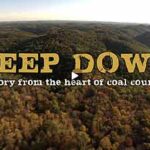
Beverly May and Terry Ratliff grew up like kin on opposite sides of a mountain ridge in eastern Kentucky. Now in their fifties, the two find themselves in the midst of a debate dividing their community and the world: who controls, consumes, and benefits from our planet’s shrinking supply of natural resources?
Source: Independent Lens | PBS (2010) Read MoreRobert F. Kennedy Jr. tells the Colorado Oil and Gas Association that Wind and Solar Plants are Gas Plants

Atomic energy expert. Naval Academy, Naval Postgraduate School and Naval War College graduate. Publisher,
Source: Atomic Insights Blog (2010) Read MoreSixty Lame Minutes

Aubrey McClendon of Chesapeake Energy blamed “Congressional apathy” for coal’s price advantages. Photo: F. Carter Smith/Bloomberg News
Source: Post Carbon Institute | Leading the transition to a resilient world (2010) Read MoreUS natural gas drilling boom linked to pollution and social strife

The gas stored in the Marcellus Shale formation is the subject of desperate drilling to secure US domestic energy supplies. But the process involved – hydraulic fracturing – is the focus of a bitter dispute over environmental damage and community rights.
Source: The Ecologist (2010) Read MoreWelcome to Mr. Rogers Neighborhood

Kentucky ranks dead last in healthy behavior (archived), and 49th in overall well-being, ..More mountaintop removal will only make these problems with the health of Appalachian people even worse. Its hard to get worse than worst, but Hal Rogers is doing his darndest.
Source: Appalachian Voices (2011) Read More2012
October (2012)
Under the surface: fracking, fortunes and the fate of the Marcellus Shale
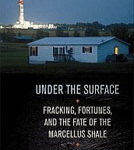
Hydrofracking’s proposed a massive industrial transformation on a huge swath of rural Northeastern U.S. It has divided communities and sparked an intense public debate about science, economics, law making and enforcement. Under the Surface tells the story of the Marcellus Gas Rush and is written by Tom Wilber, a newspaper reporter who covered the environmental beat for Binghamton, N.Y.’s Press & Sun Bulletin. Recommended!
Source: Cornell University Press (2012) Read MoreJune (2012)
Affirming Gasland
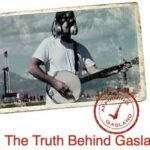
Immediately upon the film’s release, Energy In Depth issued a paper claiming to “debunk” the film’s documentary evidence.
Source: DamascusCitizens.org (2010) Read More2011
May (2011)
Living Downstream: An Ecologist’s Personal Investigation of Cancer and the Environment
Dr. Sandra Stiengraber discusses the effects that pollution and toxins have on us through our interconnected food chain.
Source: Da Capo Press (2010) Read MoreRaising Elijah: Protecting Our Children in an Age of Environmental Crisis

In the absence of federal policies that are protective of child development and the ecology of the planet on which our children’s lives depend, we serve as our own regulatory agencies and departments of the interior…
Source: Da Capo Press (2011) Read MoreEconomic Implications of Marcellus Shale Natural Gas Development: Potential Impacts on Tourism, Agriculture, and Housing

A webinar hosted by Cornell University’s Community and Regional Development Institute (CaRDI) (archived) on May 9, 2011 presented the work of a graduate student project in the Dept. of City and Regional Planning guided by Professor Susan Christopherson. (PDF).
Source: Cornell Cooperative Extension (CCE) (2011) Read MoreThe Deep Hot Biosphere : The Myth of Fossil Fuels

This post explores Thomas Gold’s controversial abiogenic theory of petroleum formation, which argues that hydrocarbons originate deep within the Earth rather than from compressed biological matter. While climate policy debates focus on fossil fuel scarcity and carbon removal, the article raises concerns about methane emissions from gas flaring and questions assumptions embedded in mainstream energy narratives. Gold’s “deep hot biosphere” hypothesis challenges conventional geology and reframes discussions about resource limits, earthquakes, and even the origins of life.
Source: Springer | Copernicus (1998) Read MoreMarch (2011)
Crimes against nature: how George W. Bush and his corporate pals are plundering the country and high-jacking our democracy
In Crimes Against Nature, Robert F. Kennedy Jr. delivers a sweeping indictment of the George W. Bush administration, arguing that corporate cronyism has undermined public health, national security, and democratic governance. Kennedy emphasizes the enduring importance of the public trust doctrine, which holds that resources such as air, water, fisheries, and wetlands belong to the commons and cannot be diminished for private gain. He contends that protecting these shared resources is essential to preserving democracy itself.
Source: HarperCollins (2004) Read MoreBlue Covenant: The Global Water Crisis and the Coming Battle for the Right to Water

This is an expert’s view of our worldwide water crisis. References to facts are found in the back of the book making for an uncluttered read in language everyone can understand. Follow some of the stories about the
Source: The New Press (2009) Read MoreArt of the common-place: the agrarian essays of Wendell Berry

For most of the history of this country our motto, implied or spoken, has been Think Big…Thinking Big has has led us to the two biggest and cheapest political dodges of our time: plan-making and law-making.
Source: Counterpoint Press (2002) Read MoreThe Warriors of Qiugang: 仇岗卫士 A Chinese Village Fights Back
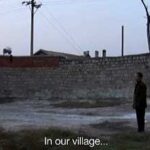
For years, a chemical plant in the Chinese village of Qiugang had polluted the river, poisoned the drinking water, and fouled the air — until residents decided to take a stand. The Warriors of Qiugang, a Yale Environment 360 video co-produced by Ruby Yang and Thomas Lennon, tells the story of the villagers’ determined efforts to stop the pollution.
Source: Yale Environment 360 (2011) Read MoreOur Stolen Future: Are We Threatening Our Fertility, Intelligence, and Survival?–A Scientific Detective Story
A broad exposé of how chemicals disrupt the endocrine systems of living organisms.
Source: Plume (1997) Read MoreBushwhacked : Life in George W. Bush’s America

Molly Ivins and Lou Dubose take a brisk, sharp tour through the George W. Bush years — from the campaign machine to the policy aftermath. The book treats politics less like abstract ideology and more like a lived system: money, messaging, crony networks, and consequences that land on ordinary people. It reads like a field guide to power — funny, furious, and specific — with names attached and receipts implied.
Source: Random House (2003) Read MoreNatural gas: Fueling the Future
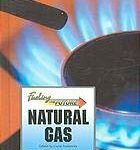
“Fueling the Future” sells natural gas as the clean, modern answer — abundant, domestic, practical. It’s the kind of framing that helped shale leap from regional drilling play to national storyline. But beneath the optimism sit the mechanics that matter: wells, pipelines, compressors, flaring, methane leakage, and water. The hook here isn’t the promise — it’s how fast a “bridge fuel” becomes a full-scale infrastructure decision.
Source: Greenhaven Press (2006) Read MoreClimate Co-benefits and Child Mortality Wedges

Climate change issues bring into greater prominence that all the world’s people are linked together and that we all have a stake in creating a sustainable path for the planet and no such path can allow for 10 million avoidable child deaths each year.
Source: Wellcome Trust Frontiers Meeting (2008) Read MoreFebruary (2011)
PBS | Need to Know
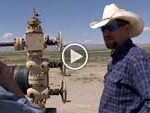
In its August 27, 2010 Need to Know investigation, PBS correspondent John Larson, working in collaboration with ProPublica, examined claims by Wyoming residents that hydraulic fracturing was contaminating drinking water while regulators insisted they lacked jurisdiction on federal lands. The segment, “The Price of Gas,” highlighted tensions between citizen testimony and EPA oversight, and was briefly removed from the PBS website to clarify the energy-industry affiliations of members of an EPA peer review panel before being restored with edits.
Source: PBS.org (2010) Read MoreTree spiker : from Earth First! to lowbagging: my struggles in radical environmental action

In Tree Spiker: From Earth First! to Lowbagging: My Struggles in Radical Environmental Action, Mike Roselle recounts his evolution from Yippie provocateur to cofounder of Earth First! and the Rainforest Action Network, tracing decades of radical environmental activism from street theater to mountaintop-removal protests in Appalachia. Writing against the backdrop of federal drilling exemptions advanced under Vice President Dick Cheney and ongoing battles over hydraulic fracturing disclosure, Roselle situates non-violent civil disobedience as both moral response and strategic necessity in confronting coal, oil, and gas power structures.
Source: St. Martin's Press (2009) Read MoreNew York State Attorney General: Oil & Gas Leases: Landowners’ Rights

The New York Attorney General examined the legality and fairness of oil and gas lease practices, including whether landowners received adequate disclosure. As lease offers proliferated, questions about transparency and consumer protection entered the legal arena.
Source: New York State (2008) Read MoreJanuary (2011)
Model validation : perspectives in hydrological science
Hydrological models must be validated against real-world data — aquifer behavior, fracture propagation, water flow rates. Without validation, projections risk drifting into assumption. In shale regions, the credibility of risk assessments depends on whether theory meets measurement.
Source: J. Wiley (2001) Read MoreCoal River
(The Killers Within) has crafted an incriminating indictment of the Appalachian King Coal industry in West Virginia, and of the man he defines as its rapacious kingpin, Massey Energy’s CEO, Don Blankenship.
Source: Farrar, Straus and Giroux (2008) Read More2010
December (2010)
American West at Risk, The: Science, Myths, and Politics of Land Abuse and Recovery
The American West at Risk examines the environmental decline of the arid western United States, documenting how resource extraction, energy development, and nuclear experimentation have reshaped fragile landscapes. From depleted soils and waters to nuclear test sites such as Gasbuggy and Rio Blanco, the book traces the consequences of policies that prioritized short-term gain over long-term stewardship. It calls for renewed conservation of soils, freshwater, forests, and fisheries to prevent further degradation of the region’s remaining natural resources.
Source: Oxford University Press, USA (2008) Read MoreDrinking Water: Understanding the Science and Policy behind a Critical Resource

The National Research Council of the National Academies reports in Management and Effects of Coalbed Methane Produced Water in the Western United States (National Academies Press, 2010) that “produced water” accumulates over millions of years and should be treated as a largely nonrenewable resource. The study—authored by the Board on Earth Sciences and Resources, the Water Science and Technology Board, and the Division on Earth and Life Studies—warns that removing these underground water stocks without fully understanding groundwater impacts carries serious environmental risks and requires management decisions based on ecological responsibility rather than lowest cost.
Source: National Academies of Sciences, Engineering and Medicine (2010) Read MoreNovember (2010)
Poisoned profits : the toxic assault on our children

In The Toxic Assault on Our Children, journalists Philip and Alice Shabecoff examine rising rates of childhood illness in the United States, arguing that environmental exposure to industrial chemicals plays a significant role. Drawing on scientific research and public policy analysis, the authors critique regulatory shortcomings and industry influence. The book calls for stronger environmental protections and greater public awareness regarding toxic exposure and children’s health.
Source: Random House (2008) Read MorePennsylvania Department of Environmental Protection (DEP). Fact Sheet:Landowners and Oil and Gas Leases in Pennsylvania, Answers to questions frequently asked by landowners about oil and gas leases and drilling.

As shale drilling surged across Pennsylvania, the Department of Environmental Protection found itself under pressure — issuing permits, responding to complaints, and fielding accusations of understaffing. For residents reporting contaminated wells or methane migration, the DEP was the first call. For drillers, it was the regulator standing between delay and approval. Its capacity became part of the story.
Source: Commonwealth of Pennsylvania, Edward G. Rendell, Governor (2012) Read MoreOctober (2010)
Natural Capitalism: The Next Industrial Revolution
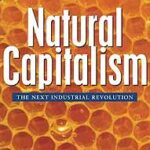
Natural Capitalism by Paul Hawken and Amory and Hunter Lovins argues that businesses can align profitability with ecological responsibility by valuing natural resources as essential capital. The authors propose applying market principles to environmental systems, showing that energy efficiency, resource conservation, and whole-systems thinking can drive innovation and long-term prosperity. First published a decade earlier, the book challenged conventional economics by demonstrating that environmental stewardship and competitive business success are not opposing goals but mutually reinforcing strategies.
Source: Earthscan (2010) Read MoreAugust (2010)
Drill here, drill now, pay less : a handbook for slashing gas prices and solving our energy crisis
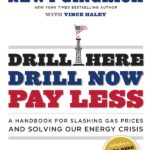
Echoing the slogan popularized by political figures like Newt Gingrich, “Drill Here, Drill Now, Pay Less” framed expanded domestic drilling as a direct path to lower energy prices. The handbook distilled an argument that resonated nationally during high gas-price cycles. Critics countered that global oil markets and production timelines rarely bend to slogans.
Source: Regnery Pub. (2008) Read MoreEcocide in the USSR : health and nature under siege
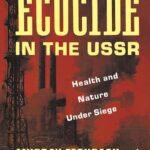
The term “ecocide” evokes systemic environmental destruction — landscapes degraded not by accident but by policy and industrial priority. Examining ecological collapse in the former USSR provides a historical mirror: when environmental safeguards erode, damage accumulates quietly until it becomes generational. Energy policy is never purely economic.
Source: BasicBooks (1993) Read MoreModels in ecosystem science
Ecosystem science relies on models — structured representations of complex biological and hydrological systems. In drilling debates, models estimate contamination pathways, habitat fragmentation, and long-term impacts. The quality of the model shapes the quality of the decision.
Source: Princeton University Press (2003) Read More