Henry Waxman

Henry Waxman

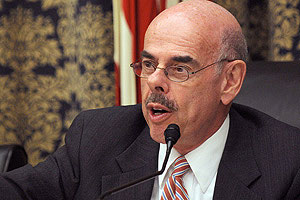
Henry Arnold Waxman (born September 12, 1939) is an American politician and lobbyist who was a U.S. representative from California from 1975 to 2015. He is a member of the Democratic Party. His district included much of the western part of the city of Los Angeles, as well as West Hollywood, Santa Monica, and Beverly Hills, and was numbered the 24th district from 1975 to 1993, the 29th district from 1993 to 2003, and the 30th district from 2003 to 2013, changing because of redistricting after the 1990, 2000, and 2010 censuses. Waxman was an influential liberal member of Congress, and was instrumental in passing laws including the Infant Formula Act of 1980, the Orphan Drug Act of 1983, the Drug Price Competition and Patent Term Restoration Act of 1984, the Clean Air Act of 1990, the Ryan White CARE Act of 1990, the Food Quality Protection Act of 1996, the State Children’s Health Insurance Program of 1997, the Postal Accountability and Enhancement Act of 2006, the Family Smoking Prevention and Tobacco Control Act of 2009, and the Patient Protection and Affordable Care Act of 2010. In 1985, he played an instrumental role in banning federal funding for the Red Line subway in Los Angeles so that it would not go into his affluent Westside district. He is currently chairman at Waxman Strategies, a D.C.-based lobbying firm, Regent Lecturer for University of California, Los Angeles, and lecturer at the Johns Hopkins Bloomberg School of Public Health.

10 documents

2013

January (2013)

House committee votes to deny climate change

House committee votes to deny climate change

On March 15, 2011, Republicans in the House energy committee voted not once (archived), not twice, but three times (archived), against amendments (archived) recognizing that climate change is real, despite the broad scientific consensus that ” climate change is happening (archived) and human beings are a major reason for it.” They then unanimously voted (archived) in favor of the Upton-Inhofe bill to repeal the EPA’s scientific endangerment finding on greenhouse pollution.

Source: Grist (2011) Read More

2011

May (2011)

February (2011)

Halliburton

Halliburton

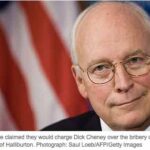
Halliburton, long associated with hydraulic fracturing technology, became synonymous with the so-called “Halliburton loophole” in the Energy Policy Act of 2005, which exempted most fracking from federal Safe Drinking Water Act oversight. As a global oilfield services leader, the company’s influence extends from well design to policy debate.

Source: Solutions for Today's Energy Challenges - Halliburton (2010) Read More

January (2011)

Newsweek Greenwashes the Oil Lobby for Real

Newsweek Greenwashes the Oil Lobby for Real

…At the same time as they talk big about going green, the oil barons have waged highly organized disinformation campaigns going back decades to prevent legislative efforts to combat climate change (

Source: FAIR (Fairness and Accuracy in Reporting) (2010) Read More

Frac Tech: Stage After Stage

Frac Tech: Stage After Stage

Frac Tech provided multi-stage fracturing services, enabling operators to fracture horizontal wells section by section — “stage after stage.” The technical refinement of staged fracturing turned shale from theory into scalable production. Innovation in sequencing proved as important as drilling depth.

Source: Frac Tech: Stage After Stage (2010) Read More

Congress Launches Investigation Into Gas Drilling Practices

Congress Launches Investigation Into Gas Drilling Practices

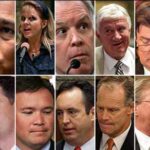
Members of Congress initiated investigations into gas drilling practices, requesting documents and testimony related to environmental impacts and regulatory compliance. When congressional oversight activates, the technical mechanics of fracking move into public record.

Source: ProPublica (2010) Read More

2010

October (2010)

Extraction-tax and campaign donations

Extraction-tax and campaign donations

Marcellus Shale Money Watch emerged as a transparency initiative urging Pennsylvania legislators to disclose campaign contributions from the natural gas industry during debates over extraction taxes. Partnering with advocacy groups such as Common Cause, the project highlighted loopholes in campaign finance reporting that allowed donations to remain undisclosed until after key votes. The broader effort reflects ongoing concerns about industry influence, political accountability, and the role of small-donor, citizen-funded election reforms in strengthening democratic governance.

Source: Philly.com (2010) Read More

September (2010)

Industry campaign targets ‘hydraulic fracturing’ bill

Industry campaign targets 'hydraulic fracturing' bill

As House Democrats explored new oversight of hydraulic fracturing, an industry coalition called Energy in Depth launched a campaign warning that regulation would kill jobs and harm the economy. Reported in the New York Times by Anne C. Mulkern, the effort illustrated how shale politics had become a high-stakes battle over narrative—economic growth versus environmental protection—at a moment when domestic gas production was rapidly expanding.

Source: The New York Times: Greenwire (2009) Read More

August (2010)

CalFrac Well Services

CalFrac Well Services

CalFrac Well Services supplied hydraulic fracturing crews and equipment, providing the technical muscle behind well completion. Service companies like CalFrac operate largely out of public view, yet their fleets of trucks and high-pressure pumps are the operational core of the shale revolution.

Source: Hydraulic Fracturing, Coiled Tubing, Acidizing, Nitrogen and C02 Services (2010) Read More
Item added to cart.
0 items - $0.00