

Delen Goldberg. Plan to truck hydrofracking wastewater to Finger Lakes shelved, for now. 21 Feb 2010. Syracuse.com.

Sharon Daggat and her husband have a 52 acre farm, 38 acres used as a vineyard, in the Steuben County town of Pulteney. They are concerned about a permit that would allow Chesapeake Energy to store hydrofracking wastewater in an empty natural gas well next to their property. Their property is less than a mile west of Keuka Lake. They fear contamination of their well water and damage to their vineyard.
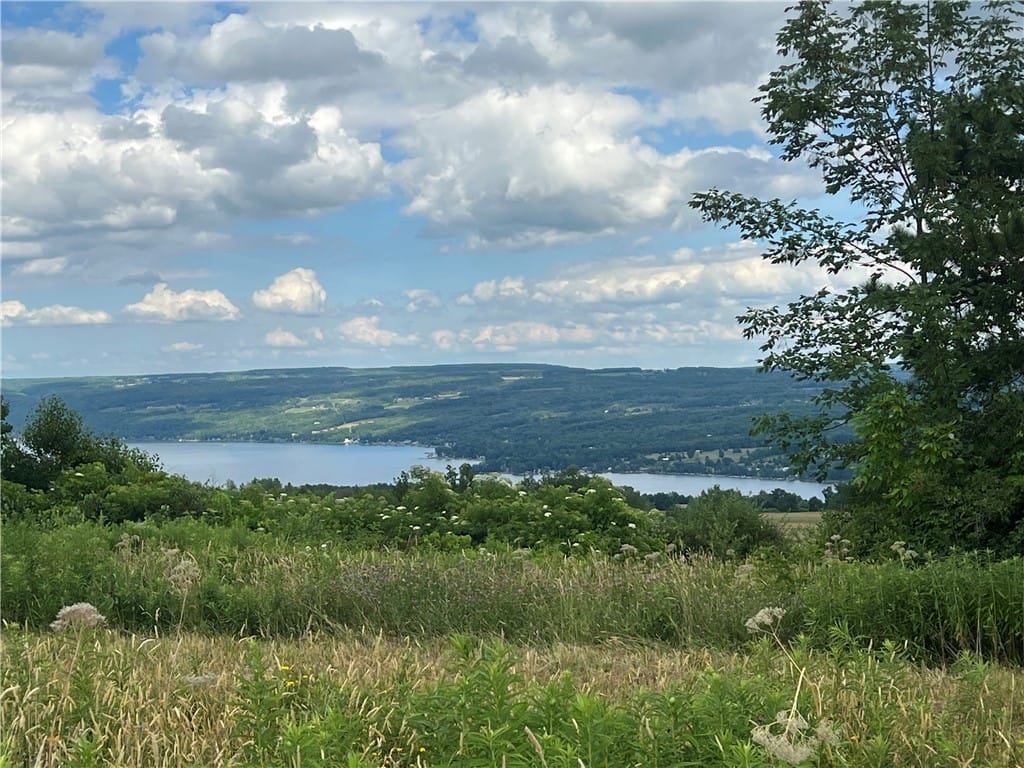
A drama that linked Pennsylvania, a tiny Finger Lakes town and 663 million gallons of chemical-laden water is foreshadowing a problem New York will face if it allows high-volume natural gas drilling.
Oil and gas companies drilling for natural gas in Pennsylvania are running out of ways to dispose of the millions of gallons of wastewater produced by “hydrofracking” the Marcellus Shale.
One gas company proposed a solution: Bring the dirty water to New York’s Finger Lakes.
Chesapeake Energy Corp., an Oklahoma City company that holds dozens of drilling leases in Central New York, wanted to store up to 663 million gallons of wastewater from Pennsylvania in a converted natural gas well 87 miles west of Syracuse, in the Steuben County town of Pulteney. The town sits less than a mile from Keuka Lake.
When residents found out, hundreds flocked to meetings at the local firehouse. Elected officials fired out letters of opposition. U.S. Rep. Eric Massa threatened to lie down in front of Chesapeake trucks, if necessary.
Last week, after the public outcry, Chesapeake withdrew its application. At least for now.
William Fowler, Chesapeake’s director of environmental and regulatory affairs, told regulators the company is abandoning the plan as long as high-volume hydraulic fracturing is banned in New York. There’s a state moratorium on the method.But if the ban is lifted, Chesapeake could re-submit its application.
“While we will continue to re-use as much water as possible, in the future, as operations dictate, we will need additional disposal options,” said Matthew Sheppard, Chesapeake’s senior director of corporate development.
The debate that raged in Pulteney highlights a question that New York — which is considering allowing high-volume hydrofracking for the first time — has sidestepped: What should be done with the millions of gallons of water, chemicals and sand that’s needed to hydrofrack?
Hydrofracking involves shooting up to 8 million gallons of water and a chemical cocktail into wells to break up underground shale rock and create microscopic pathways for natural gas to escape. When the natural gas is retrieved, so is much of that water.
Chesapeake proposed stashing it deep underground, into gaps formed between rock formations that once held natural gas. The underground storage area would not be lined or contained.
“In New York, we don’t really have any way to treat this water,” said Katherine Nadeau, of Environmental Advocates of New York, a state environmental watchdog group.Flowback water — mostly water and sand mixed with chemicals — is considered industrial waste, according to the DEC. Haulers transporting the water must fill out the same forms as people moving or disposing of medical waste.
Draft regulations issued last year by the DEC require companies to have a plan for disposing of the wastewater. But the agency fails to offer any specifics about what that plan should include.
Instead, the DEC suggests operators use injection wells (such as the one proposed in Pulteney) to store the dirty water underground, take it to municipal sewage treatment plants or haul it out of state to industrial treatment plants. The DEC leaves it up to companies to choose the best way.
But a review by ProPublica, a nonprofit investigative reporting group, found that none of the DEC’s recommended options are feasible. Of 109 New York water treatment plants listed in the DEC report, ProPublica found that only three have an interest in accepting wastewater, and then, only in small amounts. Nine of the 11 out-of-state plants suggested by the DEC can’t take any more wastewater, ProPublica found.
Officials at Onondaga County’s Metropolitan Sewage Treatment Plant, for example, said they don’t know whether they can handle fracking flowback because they don’t know what’s in the water. Federal laws exempt the oil and gas industry from disclosing chemical lists to the public.“It is a concern of the county,” said Dan Jean, Metro’s operations superintendent. “We are in the process of evaluating what we should be doing. We’ve worked so hard to making Onondaga Lake better, we certainly don’t want to go backwards.
”Wastewater is extremely salty — about five times more so than the ocean — and contains high levels of total dissolved solids, which are microscopic minerals and organic materials dissolved in the water. Municipal plants, paid for by taxpayers, aren’t equipped to handle either.
Both salt and dissolved solids can kill bacteria the plants use to break down sewage, harming the effectiveness of the plants. If dissolved solids pass through sewage plants to streams and rivers, they can kill fish and change ecosystems.
In Pennsylvania, state regulators limited the amount of fracking wastewater that municipal plants can accept, lowering it to 1 percent of their daily flow. That came after levels of total dissolved solids spiked above government standards in the Monongahela River, a drinking source for more than 700,000 people. Residents complained about a bad taste and smell in their tap water and a strange white film on their dishes. Regulators also found that industrial pipes and machinery had corroded.
Meanwhile, in West Virginia, another hotbed for hydrofracking, state officials asked sewage treatment plants to turn away wastewater while the state develops an approach to regulating dissolved solids.
Independent scientists working for the U.S. Geological Survey blasted the New York DEC’s recommendations for disposing of fracking water.
“The use of publicly owned wastewater treatment facilities as a potential treatment option for flowback waters has not been properly evaluated … and its inclusion in the (proposed rules) as a possible option is questionable,” scientists said in written comments to the DEC. “This section leads to false hopes and needs further evaluation.
”Oil and gas companies are trying to come up with alternatives. Several, including Chesapeake, have started experimenting with recycling wastewater. Companies treat the flowback for solids, blend it with fresh water and then use it to frack a new well.USGS scientists think that’s the best approach.
“Considering the issues associated with flowback water disposal, it’s difficult to understand why this is not the standard practice,” the scientists wrote to the DEC.
Chesapeake officials said their recycling operations have allowed them to scrap, at least temporarily, their push for a well permit in Pulteney.“We have advanced our operational capacity to reuse/recycle water produced in other areas of the Marcellus Shale, greatly reducing our current need for additional disposal facilities in New York,” Fowler said.
Residents of Pulteney hope the technology continues to improve so their tiny town of 1,350 won’t become a home for fracking wastewater if New York lifts its ban.
Homeowners in the scenic Finger Lakes community worry about the potential problems 40 trucks a day hauling fracking water could create. Many say they’re concerned about Keuka Lake and its watershed, which provides drinking water to about 20,000 people.
“Agriculture and tourism are the two largest industries in New York. They’re the mainstay of the Finger Lakes,” said Art Hunt, of Hunt Country Vineyards, about 3 miles from the well Chesapeake was eyeing. “You can imagine what this dust, noise, air pollution, just from the normal operations, will do — let alone any accidents.”“If there ever is a spill, even a truck accident, we’ll be the next Love Canal,” Hunt said. “And all the tourists will say, ‘We’re not going there.’”
See: Storing Hydrofracking Wastewater near Keuka Lake
See: Plan to send fracking wastewater near Keuka Lake is abandoned | stargazette.com | Star-Gazette
See: U.S. EPA Initiates Hydraulic Fracturing Study | Meeting | EPA Science Advisory Board (SAB)
See: WATER: Hundreds turn out to oppose wastewater facility – Corning, NY – The Corning Leader