Residents near gas leak still live in fear.
You never know from day to day what is going to happen,” Mrs. McGee said of their situation. “You have no idea how a gas well will affect your life.”
Everything now, from shopping to doctors’ appointments and vacations, have to be planned around what is happening with the gas-level readings in their home, she said. “Our lives are not our own.”
They have 100 percent readings of the lower explosive levels every week, Mrs. McGee said. They are being told they are safe, as long as the house is vented but are worried about what would happen if the vents accidentally are blocked, she said.
When the McGees first experienced what they call a “black goo” in their water, she said, “they tried to convince us it was perfectly normal.”
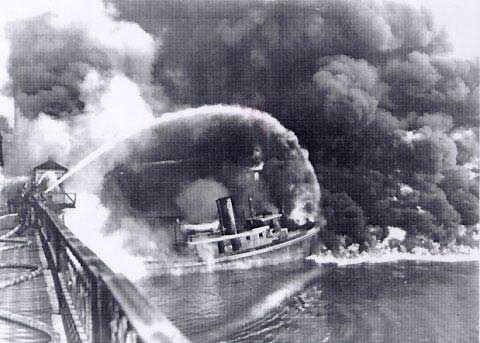
Editor’s note. 17 Jan 2025. Neil Zusman. The EPA was started as a result of public oputrage over the Cleveland, OH Cuyahoga River being in flames.
See also: Jenni Denekas. Reflections and Exhortations on the Anniversary of the Clean Water Act. 18 Oct 2018. Xerces Society.
I did a search for “McGees first experienced what they call a “black goo” in their water” and found this archive “zine” (1979) from the McClean County Museum of History in Bloomington, Illinois. I love archivists when they recognize what has historical significance. The Keep is the institutional repository of Eastern Illinois University.
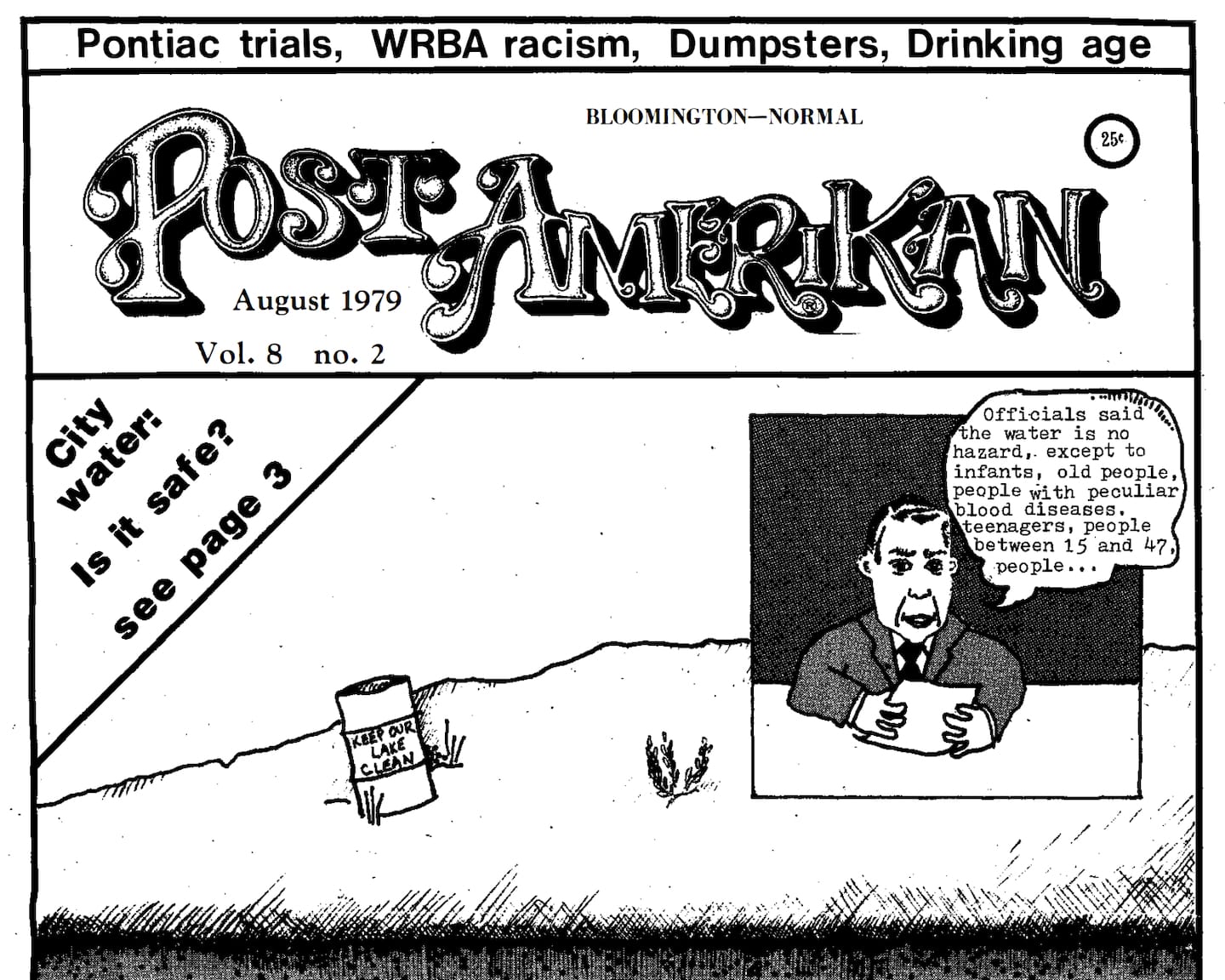
The Post Amerikan (1972-2004). Vol. 8 no. 2.
Follow this and additional works at: https://thekeep.eiu.edu/post_amerikan
Part of the Gender, Race, Sexuality, and Ethnicity in Communication Commons, Journalism Studies Commons, Publishing Commons, and the Social Influence and Political Communication Commons at Eastern Illinois University.
See p. 3: Bloomington’s Water how dangerous is it?
The Post Amerikan began publication in 1972 in Bloomington-Normal, Illinois. An underground, alternative newspaper, it was run collectively by volunteers and funded by subscriptions, ads sales, and community fundraisers. The paper was published from 1972 to 2004, making its 32 years the longest continuous publication run for any underground newspaper in America.
See also: Wikipedia | The Fifth Estate
The Fifth Estate is a socio-cultural reference to groupings of outlier viewpoints in contemporary society, and is most associated with bloggers, journalists publishing in non-mainstream media outlets, and the social media or “social license”. The “Fifth” Estate extends the sequence of the three classical Estates of the Realm, nobility, clergy, subjects and the preceding Fourth Estate, essentially the mainstream press. The use of “fifth estate” dates to the 1960s counterculture, and in particular the influential The Fifth Estate, an underground newspaper first published in Detroit in 1965. Web-based technologies have enhanced the scope and power of the Fifth Estate far beyond the modest and boutique conditions of its beginnings.
Nimmo and Combs asserted in 1992 that political pundits constitute a Fifth Estate.[1] Media researcher Stephen D. Cooper argued in 2006 that bloggers are the Fifth Estate.[2] In 2009, William Dutton argued that the Fifth Estate is not just the blogging community, nor an extension of the media, but “networked individuals” enabled by the Internet, e.g. social media, in ways that can hold the other estates accountable.[3]
See: Freedom of Information in the USA
See: Gas wells’ leftovers may wash into Ohio | Columbus Dispatch Politics
See: Northeast Ohio faction fights uphill battle over oil and gas well drilling laws | cleveland.com
See: Analysts: Don’t expect ‘fracking’ standards until after 2012 election
See: Underground Injection of Gas Industry Brine Taking Off – State Journal – STATEJOURNAL.com
See: Dark Side of a Natural Gas Boom
See: Chief Oil & Gas