(Editor’s Note: 27 Dec 2023. The archived page of this video is no longer available. The Ed Swartz story was funded and filmed by a project supported by the Fledgling Fund.
The Fledgling Fund supported the creation and dissemination of innovative media projects that can play critical roles in igniting social change. The Fledgling Fund believes that film and other creative media can often demonstrate what statistics can not, can create broad understandings of social problems, and can inspire both civic dialogue and concrete action.
The Wyoming story presented below and framed around evidence presented by the late Ed Swartz, is key to understanding the impact the fracking boom has had on landowners, animals, water, environmental balance and sustainability; first felt in Texas and Wyoming around 2000. What has happened in the Powder River Basin and elsewhere in the West is still an essential read and is preserved here so that it may be reviewed by future scholars and journalists in part, by these articles selected by me.)
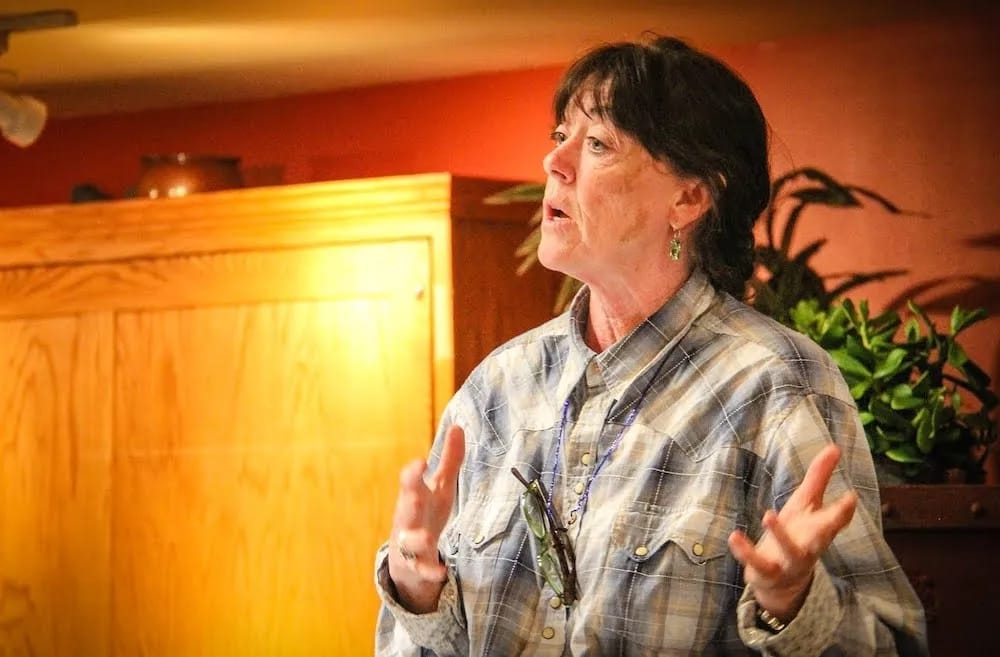
Powder River Basin Resource Council’s Jill Morrison at a meeting in 2014. (provided/PRBRC)
One of Jill Morrison’s most memorable moments as a landowner advocate and organizer for the Powder River Basin Resource Council came early in her career. In the early 1990s, she helped lead a campaign to turn out public comments against a proposal to store spent nuclear fuel in the state.
So many people heeded that call that “we broke the fax machine in the governor’s office,” Morrison recalled.
A conservation peer of Morrison’s has a story about another moment. They were standing outside after a public meeting grousing about how to best convince Wyoming policymakers to take on climate change. Morrison, who apparently thought her peer wasn’t being strident enough, was already walking to her car when she turned and said “Maybe take a fucking position.”
Morrison chuckled at the memory during an interview with WyoFile, saying “age has kind of mellowed me out.” It’s natural to get frustrated in her line of work, she added, especially when confronted with social injustices and how they’re often allowed to persist. “You have to keep a good sense of humor and learn to build relationships with people you don’t always agree with … and try not to make it personal.”
Morrison will retire from the Powder River Basin Resource Council in June after 30 years with the organization, most recently as executive director. She is known throughout the state for her tenacity in advocating for landowners.
Morrison, along with her PRBRC members and colleagues, is responsible for helping push landmark reforms to protect land and water in coal mining, for stronger protocols to reduce the occurrence of toxic orange clouds from coal mine blasting and for an instrumental role in reforming Wyoming’s split-estate laws to better protect surface owners dealing with energy development. She was a driving force behind the state’s recent efforts to replace self-bonding for coal mine reclamation with stronger surety requirements, and she pushed the state to beef up efforts to reclaim orphaned oil and gas facilities.
Jill Morrison is retiring from the Powder River Basin Resource Council after 30 years with the organization. Most recently, she served PRBRC’s executive director. (Dainis Hazners)
In her line of work, Morrison said, there are often more losses than wins. Progress still happens, though. The key, she said, is to continually widen your circle and to help others find their voice.
After three decades in the maw of activism, community organizing and watchdogging government, her colleagues say Morrison’s legacy is standing up for values most everyone can agree on, even if they disagree on how to achieve them.
“Jill is a veritable force of nature,” Wyoming Outdoor Council senior conservation advocate Dan Heilig said. “If you’re a proponent of a very bad industrial project and you’re at a public meeting or hearing that’s packed full of people and you happen to see, out of the corner of your eye, Jill Morrison enter and take a seat, that’s the last thing you want to see.”
Wyoming roots
Morrison’s Wyoming roots date back to 1890 when her great-grandfather homesteaded on Laramie Peak, near Esterbrook. The family moved to western Nebraska eight years later to farm in the Mitchell Valley region. There, her parents and paternal grandmother instilled a sense of work ethic and community, she said.
“We raised sweet corn, picked it and then had to go door-to-door in our community and a nearby town to sell it in order to raise money to buy a horse,” Morrison recalled.
When the family lost the Nebraska farm during the 1980s farm crisis, it inspired a resolve to fight for social justice and against “power concentrated in the hands of large corporations,” she said.
Morrison worked as a waitress while earning her English degree at Arizona State University. While there, she also volunteered as an organizer against the licensing and building of the Palo Verde nuclear power plant west of Phoenix. During that work she was inspired by the work of a handful of attorneys and journalists, including Don Devereux and Kathy McManus. Those connections led Morrison to Los Angeles, where she began producing investigative documentaries before accepting a reporting position at a local public television station.
Morrison honed her investigative skills freelancing stories on the side, including undercover work to reveal horse-drugging in the horse racing industry as well as illegal smuggling of exotic birds and the wild bird trade.
“I realized that investigative reporting, or good reporting, could help change things and could address problems,” Morrison said. “But I also saw that it took more than telling a story to create positive change. While good journalism is integral to a functioning democracy, so is organizing work.”
Morrison wanted to see more results from her work, and wanted to return to her rural roots. She ended up in Wyoming, taking a position as organizer for the Powder River Basin Resource Council in 1990.
Fighting for landowners
The PRBRC formed in the early 1970s in response to plans to industrialize huge swaths of the Powder River Basin with surface coal mining and dozens of coal-fired power plants. Few laws were on the books to protect surface owners who eked out a living dry-land farming and ranching on the arid plains.
Its founders, including Bill and Bernie Barlow, Ed Swartz, Sally Forbes and others, played pivotal roles in shaping the Wyoming Environmental Quality Act of 1973, the Wyoming Industrial Development Information and Siting Act of 1975 and the federal Surface Mining Control and Reclamation Act of 1977.
Founding the organization, “was based on the fact that their entire livelihoods — ranching — was threatened by coal mining,” Morrison said. “There were no regulations or framework in the early 1970s and [coal mining] was booming. They were threatening to mine right through their land and water, and that’s why they came together.”
Although made up of a politically diverse, and often stubbornly independent collection of ranchers, the PRBRC had grown into an adept force for property rights and environmental protections by the time Morrison arrived in 1990.
Morrison began pouring over dense volumes of permitting and regulatory documents at local, state and federal offices and became a staple of public meetings.
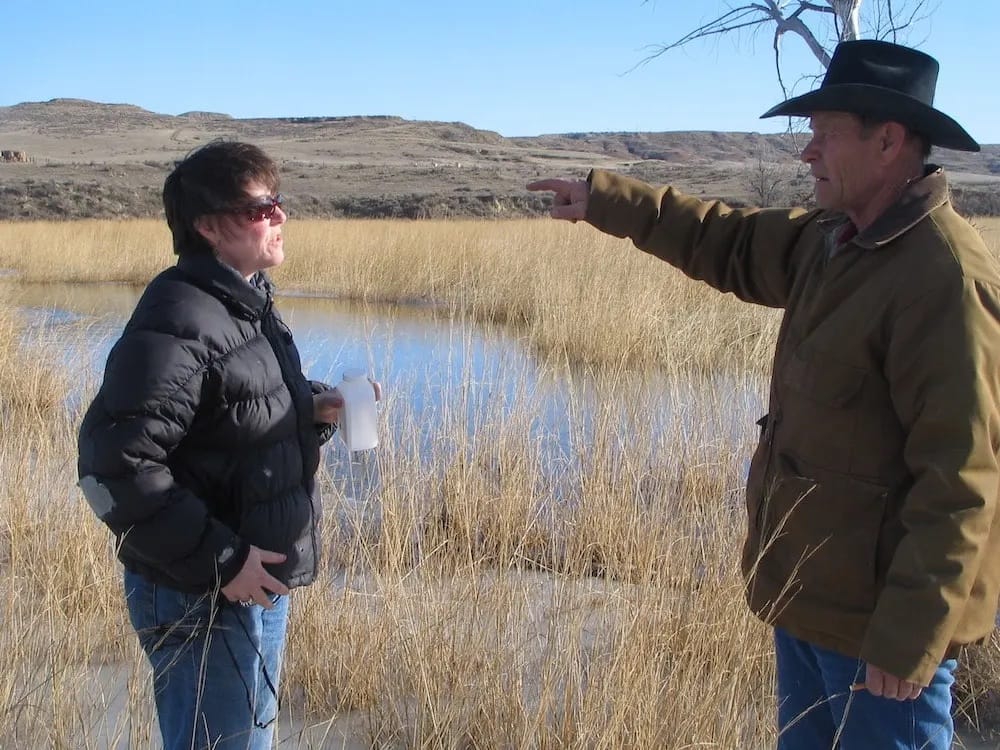
Jill Morrison and Kenny Clabaugh discuss the impacts of coal-bed methane gas on ranching operations in the Powder River Basin in 2006. (Dustin Bleizeffer/WyoFile)
Much of her time then, and still today, is spent at kitchen tables with PRBRC members, learning about challenges and potential threats to their property, ranching operations and health.
“When you live and work on the land, it’s instilled in you that that land and water is what’s sustaining your family and it’s what will sustain all of us into the future,” Morrison said. “I think that’s something that comes from being close to the land.”
Conflicts of a gas boom
No one was prepared for the massive coal-bed methane gas boom that gripped northeast Wyoming beginning in the late 1990s through 2010. CBM developers envisioned — and the state eagerly tried to accommodate — ambitions for 50,000 wells throughout the Powder River Basin in Wyoming and Montana.
The unprecedented boom relied on pumping massive volumes of water from coal aquifers to release the coal-bed methane gas. In order for the endeavor to be profitable, developers insisted on dumping the saline water at the surface, which often flooded ephemeral streams and usually dry draws year-round, wreaking havoc on ranching operations. The massive transfer of untreated water, along with the unprecedented scale of industrial activity, consumed Morrison’s and the PRBRC’s focus for more than a decade.
“When that industry boomed, Wyoming was on its back as a state economy,” former Casper Star-Tribune Editor and former Equality State Policy Center Executive Director Dan Neal said. “The state had been through a horrible recession in the 1990s, and energy people didn’t want anybody standing in their way.”
Local and state elected officials saw the boom as a godsend to save Wyoming’s economy after a long oil and gas slump in the 1990s. They were eager to accommodate developers, even if that meant tweaking state regulations to do so. The boom also created divisions among ranchers in the region — the PRBRC’s core membership. Some who held rights to mineral royalties stood to make millions, while others only stood to suffer the negative impacts.
Jill Morrison is interviewed about coal-bed gas development in the Powder River Basin in the summer of 2012. (provided/Powder River Basin Resource Council)
One major win for the PRBRC and landowners was a reform to the state’s split-estate laws, giving surface owners better leverage to negotiate with developers who owned the right to drill for minerals below their ranching operations.
For many, Morrison — backed by the PRBRC and its members — came to represent the industry’s biggest threat. She, and the PRBRC, were frequent targets of critical public comments, op-eds and letters to the editor. To others, Morrison and PRBRC were the only allies they had to help save their livelihoods.
Morrison found comfort and resolve in teaching others how to organize and to find the confidence to speak out, she said. She also made a point to recruit and elevate women in organizing efforts.
“Jill helped me find my voice to confront these things in a reasonable way,” former PRBRC chairwoman and Powder River Basin rancher Nancy Sorenson said. “She’s an educator, she’s an organizer and she holds your hand when you’re worried and scared, and that’s a wonderful thing.”
The art of advocacy in Wyoming
The nature of the PRBRC’s work, and Morrison’s commitment to it, often puts them at odds with Wyoming’s dominant energy industry and the state’s prevailing politics.
“I always thought one key to the Powder River Basin Resource Council’s success was strong advocacy for property rights,” Neal said. “It’s always been interesting to me to see when that puts them in conflict with more conservative policymakers.”
Morrison is effective, Neal added, because she has an analytical mind and understands the cultural and political landscape.
“To be in that kind of work, you’re up against people that are far better funded than you,” Neal said. “It can be a spiritually daunting business, and you have to have a lot of people you like working with and working for.”
Sen. Eli Bebout (R-Riverton) rarely found himself on the same side of a policy debate with Morrison. But, he said, she consistently adds to the quality of policy discussions.
“We certainly did have a different view on responsible development of our minerals,” Bebout said.
Bebout said he’s never questioned Morrison’s commitment to and love for Wyoming. “When the dust settles, we need to have the responsible development along with reasonable protections.”
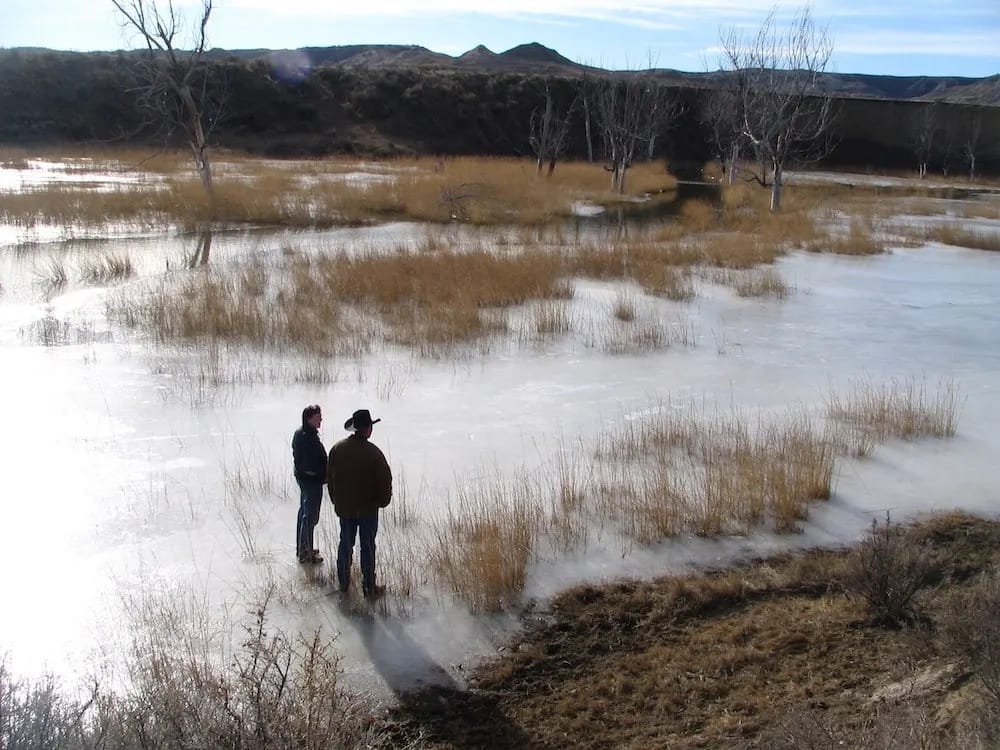
Jill Morrison, left, and Kenny Clabaugh observe an ephemeral Powder River Basin draw in 2006. Usually dry, yet moist enough to provide good grazing, the draw was flooded with water from coal-bed methane gas wells. (Dustin Bleizeffer, WyoFile)
Jonah Energy vice president Paul Ulrich has interacted with Morrison on Wyoming energy issues for 20 years, he said — sometimes in opposition, but more often in collaboration. For example, they clashed on the groundwater contamination issue in Pavillion, but collaborated to find compromise on plans to protect greater sage grouse.
“It’s challenging in Wyoming,” Ulrich said. “We all care about habitat and wildlife, and in my case we care about my industry and the jobs we provide.
“I felt Jill has approached the most challenging issues with a sensibility to Wyoming,” Ulrich continued. “That says something. We may see things differently and have different approaches. But that responsibility to Wyoming land and Wyoming landowners is an important perspective.”
PRBRC attorney Shannon Anderson — Morrison’s longtime colleague — said that not everybody appreciates Morrison’s tenacity.
“Jill rubs the wrong way sometimes because she knows she needs to be tough, the power balance being what it is, and we’re just a scrappy little group of half a dozen staff and a couple thousand members,” Anderson said.
Future of Wyoming advocacy
Morrison plans to stay involved in landowner advocacy in Wyoming after she retires, she said, but she’s looking forward to “stepping back.”
She plans to travel more, including on horseback, exploring her beloved Bighorn Mountains just outside her home of Story. She looks forward to spending more time with her Wyoming friends, working her garden and playing music.
Jill Morrison frequently contributes to regional and national discussions regarding landowner rights and energy development. On Dec. 14, 2020, she was a featured speaker at the Atlantic Council Global Energy Center’s webinar on energy transition in coal communities. (screengrab)
She also plans to help renovate the Kearney Community Hall in nearby Banner.
Morrison is proud of her efforts to help lift women’s voices in civic participation and advocacy, she said. Currently, the PRBRC staff is entirely women — not an intentional design, but a “happy accident,” she said.
It does feel a bit odd, she added, to step back from advocacy work just as the state and its citizens face historic economic, environmental and cultural challenges. However, she’s confident in what she sees as a growing commitment among young people to shaping Wyoming’s future.
“There’s a lot of young people here who love this state and are yearning to put in place some of their ideas and practices, and we need to give them a voice and give them a platform,” Morrison said. “Our elders have wisdom and there’s a lot that’s going to come from all segments of the population who see that Wyoming has another future besides mining coal or developing oil and gas. We don’t just have to be a resource colony.”
Anderson said the PRBRC will announce a new executive director in a few months. As for Morrison, “she’ll be missed.”
“Her legacy is building this organization into a voice for Wyoming’s people, and a voice for our future,” Anderson said.
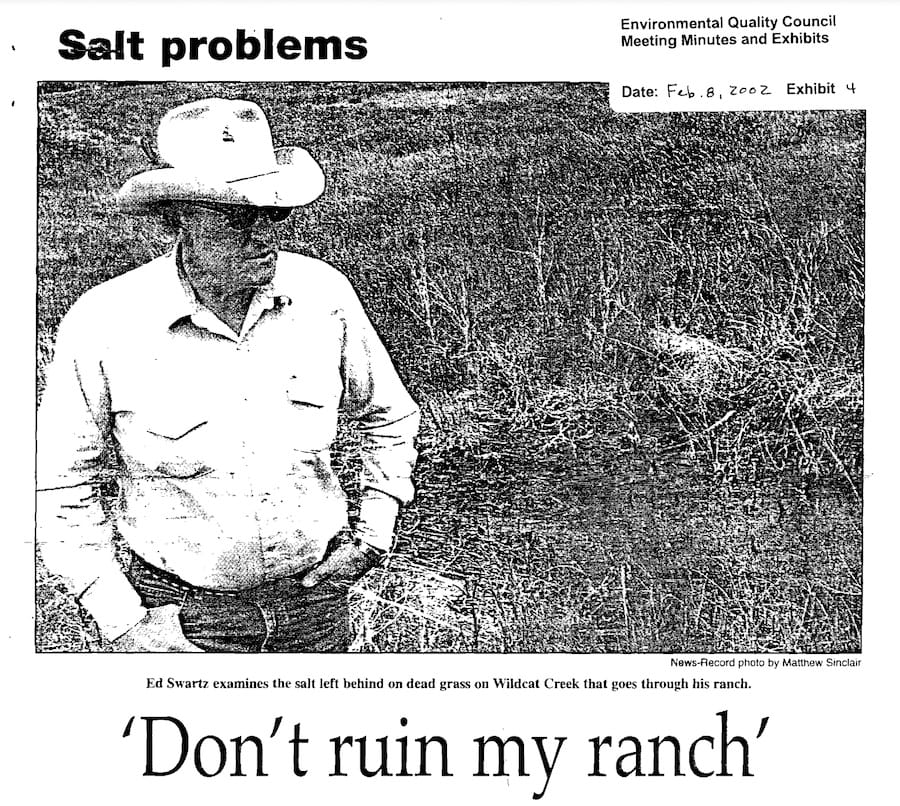
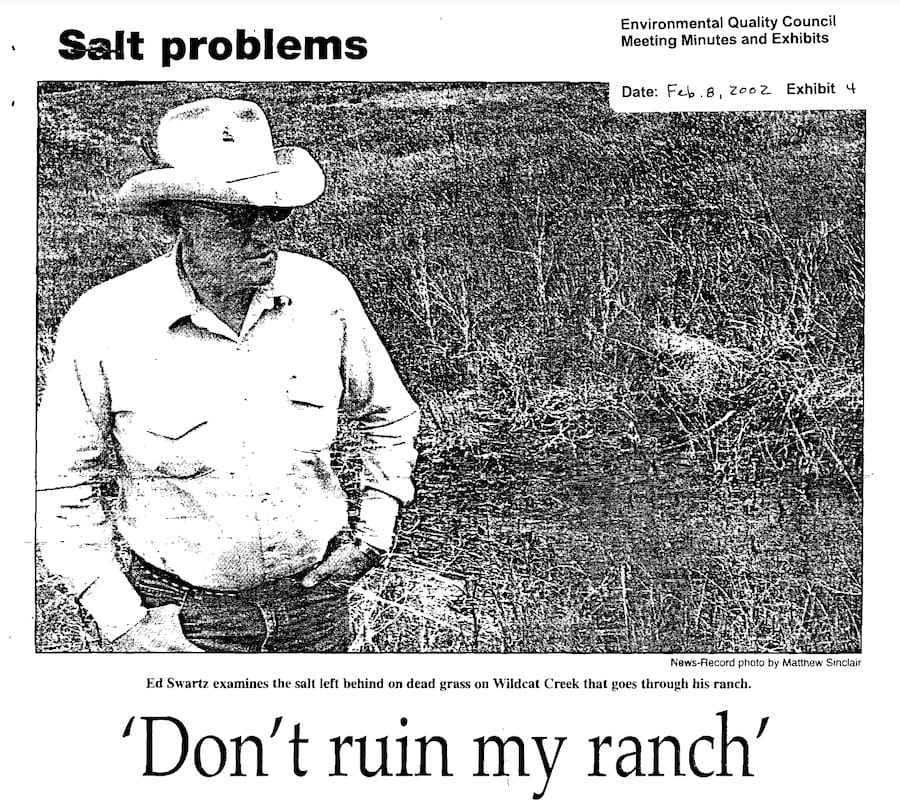
Wildcat Creek is a tiny ribbon of water that meanders through 10 miles of Ed Swartz’s sprawling cattle ranch. Flowing just a month or so out of the year, it seems an unlikely lifeline for 15,000 acres of dry high-plains prairie. But four generations of Swartzes have adapted to the creek’s ephemeral flow. When runoff fills the creek in the spring, Swartz floods patches of sepia valley bottom and turns them into emerald green hayfields that get his “girls”–a herd of charcoal-black cows–through the long Wyoming winters. But the fields that make his operation viable are in trouble now. He has been unable to irrigate for four years because high salt levels in the creek water will kill his hay.
“Whiskey’s for drinking and water’s for fighting,” they say out here. But Swartz and many other ranchers around Wyoming and throughout the West are now engaged in a fight that has turned that adage on its head. It’s not about too little water but too much–too much of the wrong kind. Water is being pumped out of the ground at a neighbor’s ranch upstream because the water contains methane gas. After the gas is stripped out, the water, with high levels of sodium, is considered waste and is dumped into the creek that runs through Swartz’s property. “I want things back like they were,” says Swartz. “The state is so greedy for money they will let anything happen. They will ignore their own rules, laws and regulations to kiss [up to] the methane industry. And it really, really bothers me.”
The American cowboy is, by reputation, a man of few words. But this rancher is talking rapid fire, spitting out words like bitter coffee grounds. His fields are fallow, his legal bills are mounting and his way of life is under siege–all because, he says, common sense has been suspended in a mad dash for coal-bed methane, a colorless, odorless, tasteless gas that, among other things, is used to heat millions of American homes. Many ranchers and environmentalists in Wyoming, a very conservative, pro-industry state, say they feel like ghosts. They have trouble getting their story told in Wyoming’s pro-business daily newspapers, and their political leaders don’t seem to be listening, though a new governor has promised to change that. Swartz has been a Republican precinct committee member for 35 years, but he says his party compatriots ignore him when he takes photographs and stories of tainted water to Republican meetings around the state. And that burns him up. Things have gotten so bad, he says, “I am ashamed to say that I am a lifelong working Republican…”
GILLETTE – There’s a full-page color spread of Campbell County rancher Ed Swartz in the October 2003 issue of Playboy.
Don’t worry: It’s in good taste.
But Swartz wasn’t the first. Several other folks from northeast Wyoming were featured in a 2003 Rolling Stone magazine article, and that followed coverage by the Wall Street Journal and the Los Angeles Times.
Now it’s “60 Minutes'” turn. The CBS news program with Dan Rather will feature the highly charged issue of coal-bed methane gas development in the Powder River Basin on Dec. 29 at 7 p.m.
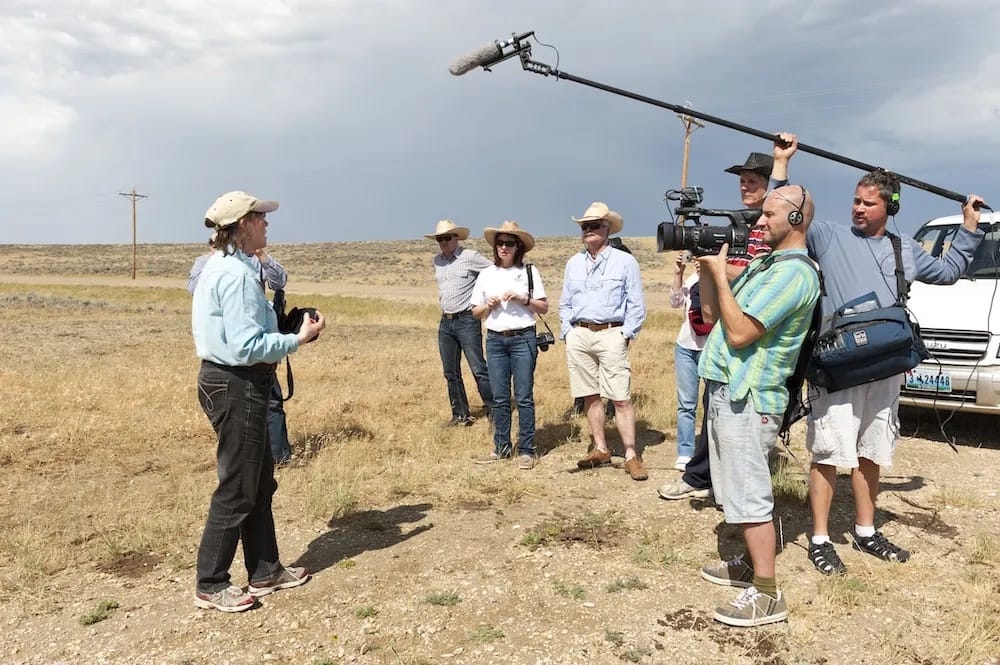
Rather and a television crew spent three days in August interviewing people in the Gillette and Sheridan areas and touring coal-bed methane operations. The industry’s rapid-fire speed into the national energy picture and its sometimes controversial relationship with ranchers and the environment here has helped earn the national news spotlight.
And being under the national spotlight can be a good thing, according to Jill Morrison of the Powder River Basin Resource Council.
Morrison, who was instrumental in bringing “60 Minutes” to Wyoming’s coal-bed methane fields, said Wyoming is better off if the rest of America understands where its energy comes from.
“It educates those people who are the consumers of that energy about what the real, on-the-ground impacts are to people living where the energy is developed,” Morrison said. “I think it also helps in terms of putting additional pressure to hold industry and our government agencies accountable to provide the best plans and best management practices where energy development occurs.”
Among those interviewed for the show were Bill and Marge West, Don Spellman and Steve Adami, whose ranches have been extensively developed for methane. Also interviewed was Sheridan County resident Allison Cole, who along with several other families in a Beatty Gulch subdivision, lost her water well to coal-bed methane drilling.
Rather also interviewed Gillette resident John Kennedy, owner of Kennedy Oil.
“I was trying to show that we can keep jobs in this country from going overseas. We have a monstrous amount of natural gas that can be developed right in the center of this country, and we can create tens of thousands of jobs and billions of dollars of income for the nation,” Kennedy said.
Kennedy said he’s curious about how the program might portray the industry. And although Kennedy doesn’t consider himself a good spokesman, he said he feels it’s important that the rest of the United States understands what’s at stake with energy development in the Rocky Mountain region.
“The better story from their standpoint might be ‘The Trashing off the West,'” Kennedy said. “But my objective was for the nation to know we have this valuable, clean-burning abundant resource in the middle of the United States. And we can create millions of jobs and save billions of dollars from going overseas.”
See also: Cally Carswell. Trouble in the PRB. 10 Nov 2010. High Country News.
In 1973, a group of ranchers met in a schoolhouse in Wright, Wyo., to discuss the future of the Powder River Basin. The vast prairie, which stretches from Wyoming’s Big Horn Mountains to the South Dakota border and north into Montana, was experiencing its first big coal boom. And the scale of development envisioned in a 1971 federal study — 42 new power plants in five Western states, most in Montana and Wyoming, and a slew of strip mines to feed them — promised to transform the region.
“I wasn’t anti-coal or anti-mining,” says Ed Swartz, now 70, who was among the cattlemen at the schoolhouse. “But I want things done right…”