10 documents

2012

September (2012)

The Tragedy of the Commons

The Tragedy of the Commons

Another example of a typical commons is groundwater. Nobody really owns the groundwater; it is technically up for grabs. Eventually, depletion by a few means depletion for all.

Source: Science (1968) Read More

2011

March (2011)

Untested Waters: The Rise of Hydraulic Fracturing in Oil and Gas Production and the Need to Revisit Regulation

Untested Waters: The Rise of Hydraulic Fracturing in Oil and Gas Production and the Need to Revisit Regulation

As the hunt for important unconventional gas resources in America expands, an increasingly popular method of wringing resources from stubborn underground formations is a process called hydraulic fracturing – also described as hydrofracturing, fracking, or fracing – wherein fluids are pumped at high pressure underground to fracture a formation and release trapped oil or gas.

Source: Fordham Environmental Law Review (2008) Read More

The Effect of the United States Supreme Court’s Eleventh Amendment Jurisprudence on Clean Water Act Citizen Suits: Muddied Waters

The Effect of the United States Supreme Court's Eleventh Amendment Jurisprudence on Clean Water Act Citizen Suits: Muddied Waters

In her Oregon Law Review article, “The Effect of the United States Supreme Court’s Eleventh Amendment Jurisprudence on Clean Water Act Citizen Suits,” Professor Hope Babcock examines how the Court’s expansion of state sovereign immunity has narrowed citizens’ ability to enforce federal environmental laws. She argues that recent decisions have shielded state agencies from accountability, weakening Clean Water Act enforcement and limiting private lawsuits under other environmental statutes, thereby constraining the public’s capacity to vindicate federally protected rights.

Source: Oregon Law Review (2004) Read More

Owning the Center of the Earth

Owning the Center of the Earth

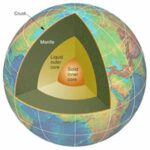
How far below the earth’s surface do property rights extend? The conventional wisdom is that a landowner holds title to everything between the surface and the center of the earth. This article is the first legal scholarship to challenge the traditional view.

Source: UCLA Law Review (2008) Read More

February (2011)

Birth of EPA

Birth of EPA

The United States Environmental Protection Agency (EPA), officially established on December 2, 1970 by President Richard Nixon, emerged from a decade of rising environmental awareness sparked in large part by Rachel Carson’s Silent Spring. As pollution crises mounted and public pressure intensified following the passage of the National Environmental Policy Act (NEPA), Nixon created a strong, independent agency to unify federal air, water, pesticide, and radiation programs under Administrator William D. Ruckelshaus.

Source: EPA Journal (1985) Read More
Freedom of Information in the USA

Freedom of Information in the USA

There are probably no more important reforms to government than the ones that came with the passing of the Federal Freedom of Information (“FOI”) Act. The law recognized in no uncertain terms that if government is to be of the people, by the people and for the people, the decisions and actions of the government must be open for review by the people.

Source: IRE (Investigative Reporters and Editors) Journal (2002) Read More

January (2011)

Coalbed Methane Development: The Costs and Benefits of an Emerging Energy Resource

Coalbed Methane Development: The Costs and Benefits of an Emerging Energy Resource

Coalbed methane extraction promised domestic energy gains, but critics tracked groundwater drawdown, surface disturbance, and wastewater disposal challenges. The cost-benefit debate was not theoretical — it played out in ranchlands and aquifers. As unconventional gas expanded, lessons from coalbed methane became a cautionary template.

Source: Natural Resources Journal (2003) Read More

2010

December (2010)

Item added to cart.
0 items - $0.00