George W. Bush

George W. Bush

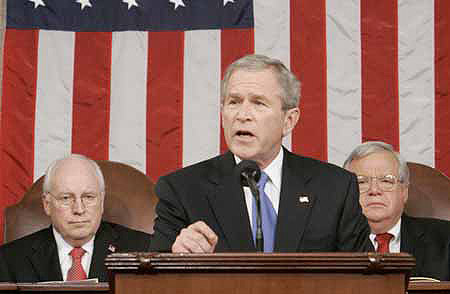
Like his father, George W. Bush had ties to the oil industry. Even Bush’s vice president, Dick Cheney, was an ex-oilman, having served as the CEO of oilfield services company Halliburton. Within two weeks of taking office, Bush named Cheney as the chairman of the National Energy Policy Development Group (NEPDG).

20 documents

2023

June (2023)

Clean Water Laws Are Neglected, at a Cost in Suffering

Clean Water Laws Are Neglected

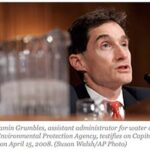
Journalist Charles Duhigg examined how weakened enforcement of clean water laws left communities exposed to pollution. In states where regulators lacked resources or political backing, violations mounted quietly. The cost wasn’t theoretical — it showed up in hospital visits, contaminated wells, and neighborhoods struggling with what flowed from upstream facilities.

Source: New York Times (2009) Read More

2012

October (2012)

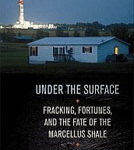
Under the surface: fracking, fortunes and the fate of the Marcellus Shale

Under the surface: fracking

Hydrofracking’s proposed a massive industrial transformation on a huge swath of rural Northeastern U.S. It has divided communities and sparked an intense public debate about science, economics, law making and enforcement. Under the Surface tells the story of the Marcellus Gas Rush and is written by Tom Wilber, a newspaper reporter who covered the environmental beat for Binghamton, N.Y.’s Press & Sun Bulletin. Recommended!

Source: Cornell University Press (2012) Read More

2011

May (2011)

April (2011)

Powder River Basin Resource Council

Powder River Basin Resource Council

The Powder River Basin Resource Council represents ranchers, landowners, and rural residents navigating coalbed methane and gas development. Members negotiate surface use agreements, challenge permits, and push for stronger reclamation standards. For families whose livelihoods depend on land and water, the council offers leverage in conversations often dominated by energy firms with national reach.

Source: Powder River Basin Resource Council (2010) Read More

March (2011)

Crimes against nature: how George W. Bush and his corporate pals are plundering the country and high-jacking our democracy

Crimes against nature: how George W. Bush and his corporate pals are plundering the country and high-jacking our democracy

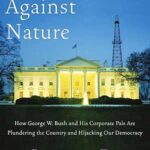
In Crimes Against Nature, Robert F. Kennedy Jr. delivers a sweeping indictment of the George W. Bush administration, arguing that corporate cronyism has undermined public health, national security, and democratic governance. Kennedy emphasizes the enduring importance of the public trust doctrine, which holds that resources such as air, water, fisheries, and wetlands belong to the commons and cannot be diminished for private gain. He contends that protecting these shared resources is essential to preserving democracy itself.

Source: HarperCollins (2004) Read More

U.S. Speaker Nancy Pelosi: The Gavel: Draining The Swamp

U.S. Speaker Nancy Pelosi: The Gavel: Draining The Swamp

Then–Speaker Nancy Pelosi highlighted legislative efforts addressing energy reform and environmental protection. Congressional leadership framed drilling oversight and clean energy transitions as matters of national policy. In Washington, energy debates unfolded not only in committees but on the House floor.

Source: The Gavel (2008) Read More

Tim DeChristopher | Bidder70

Tim DeChristopher | Bidder70

Environmental activist Tim DeChristopher, founder of Peaceful Uprising and later cofounder of the Climate Disobedience Center, became known as “Bidder 70” after disrupting a 2008 Bureau of Land Management (BLM) oil and gas lease auction held during the final months of the George W. Bush administration. By posing as a bidder and driving up prices on 22,000 acres of Utah public land slated for fossil fuel development, DeChristopher sought to prevent what environmentalists described as a rushed and undervalued sale. He was later prosecuted and convicted of fraud in March 2011 and sentenced to two years in prison, framing his act as civil disobedience in defense of climate justice and democratic accountability.

Source: Bidder70 (2010) Read More

WATER | Fracking and the Environment: Natural Gas Drilling, Hydraulic Fracturing and Water Contamination

WATER | Fracking and the Environment: Natural Gas Drilling

ProPublica journalist Abrahm Lustgarten reported that federal officials in Wyoming found at least three water wells containing chemicals used in hydraulic fracturing. The investigation brought the groundwater question into sharp focus, linking drilling activity to documented contamination findings. As shale development expanded, water moved to the center of the debate: how much is used, what returns to the surface, and how safely it is managed.

Source: Democracy Now (2010) Read More

Bushwhacked : Life in George W. Bush’s America

Bushwhacked : Life in George W. Bush's America

Molly Ivins and Lou Dubose take a brisk, sharp tour through the George W. Bush years — from the campaign machine to the policy aftermath. The book treats politics less like abstract ideology and more like a lived system: money, messaging, crony networks, and consequences that land on ordinary people. It reads like a field guide to power — funny, furious, and specific — with names attached and receipts implied.

Source: Random House (2003) Read More

Climate Co-benefits and Child Mortality Wedges

Climate Co-benefits and Child Mortality Wedges

Climate change issues bring into greater prominence that all the world’s people are linked together and that we all have a stake in creating a sustainable path for the planet and no such path can allow for 10 million avoidable child deaths each year.

Source: Wellcome Trust Frontiers Meeting (2008) Read More

February (2011)

Energy Policy Act of 2005-Critique

Energy Policy Act of 2005-Critique

Critics revisited the Energy Policy Act of 2005, focusing on provisions that limited federal oversight of hydraulic fracturing. The “Halliburton loophole” became shorthand for regulatory exemption. What passed quietly in statute books years earlier now sat at the center of public debate.

Source: Wikipedia, the free encyclopedia (2010) Read More

January (2011)

Molly Ivins: Keeping Our Eyes on the Ball

Molly Ivins: Keeping Our Eyes on the Ball

Journalist Molly Ivins combined sharp political critique with Texas humor in her 2006 column urging voters to stay engaged during a turbulent election season. She condemned partisan attacks, voter suppression, and what she saw as ethical and policy failures of the Bush administration. Reminding readers that democracy depends on participation, Ivins called for vigilance, fairness, and civic courage—insisting that politics belongs to the people, not merely those in power.

Source: truthdig.com (2006) Read More

Conoco Phillips Remediation

Conoco Phillips Remediation

ConocoPhillips, one of the world’s largest energy companies, has faced remediation obligations tied to environmental impacts in various jurisdictions. Cleanup efforts, consent decrees, and negotiated settlements form part of the lifecycle of extraction. Production may be the headline; remediation is the longer ledger.

Source: Conoco Phillips (2010) Read More

2010

November (2010)

August (2010)

White linked to company in pollution probe

White linked to company in pollution probe

As Houston mayor and 2010 gubernatorial candidate, Bill White faced scrutiny over his $2.6 million compensation from BJ Services, a gas well servicing company under congressional investigation for potential groundwater contamination linked to hydraulic fracturing. Environmental advocates, including Sharon Wilson of Earthworks’ Oil & Gas Accountability Project, questioned the alignment between White’s environmental record and his ties to the drilling industry amid mounting concerns over diesel use and hazardous waste in fracking operations.

Source: The Houston Chronicle - Houston & Texas News | Chron.com (2010) Read More

Meanwhile, Back at the Ranch

Meanwhile

Writing in The Nation, Eyal Press traced the evolution of federal natural gas policy from the Clinton administration’s balanced expansion to the Bush administration’s push to remove drilling restrictions on public lands. The article framed shale development not simply as an energy story but as a political shift in regulatory philosophy—one with implications for environmental protection, public land stewardship, and the accelerating push toward fossil fuel extraction.

Source: The Nation (2004) Read More

Buried Secrets: Is Natural Gas Drilling Endangering U.S. Water Supplies?

Buried Secrets: Is Natural Gas Drilling Endangering U.S. Water Supplies?

Investigative reporter Abrahm Lustgarten examined whether hydraulic fracturing posed risks to underground water supplies long assumed safe. Internal documents, field reports, and federal hesitations suggested a murkier picture than public assurances implied. At stake: aquifers serving millions. The promise of cleaner-burning fuel collided with a quieter question — what happens if the contamination is slow, invisible, and hard to prove?

Source: ProPublica (2008) Read More

Hydraulic Fracturing of Oil and Gas Wells

Hydraulic Fracturing of Oil and Gas Wells

A nuts-and-bolts explainer of the process: drilling, casing, perforation, high-pressure fluid, sand, and chemical additives — engineered force applied underground to release gas. It’s operational clarity in a debate that often floats above the mechanics. The hook here is not ideology — it’s process: how a well becomes productive, where failures can occur, and why “how it’s done” matters when water, cement, and pressure are the core ingredients.

Source: Earthworks (2010) Read More
Item added to cart.
0 items - $0.00