

Lisa Jackson’s Twitter feed is one of the ways the Environmental Protection Agency communicates with the public. She has 13,000 followers and follows Barack Obama, Perspectives, the official Blog of the U.S. Environmental Protection Agency, among others.
(Editor’s Note 27 Jan 2025.) EPA Perspectives cannot even be found on Archive.org’s Wayback Machine. Just until 2022. As far as the Twitter archive long ago claimed by the Library of Congress to be archived and available for research, that too has been “swept under the rug”.
See also: Laura Wamsley. Library Of Congress Will No Longer Archive Every Tweet. 26 Dec 2017. NPR.
Since 2010, Library of Congress has been archiving every single public tweet: Yours, ours, the president’s.
But today, the institution announced it will no longer archive every one of our status updates, opinion threads, and “big if true“s. As of Jan. 1, the library will only acquire tweets “on a very selective basis.”
The library says it began archiving tweets “for the same reason it collects other materials — to acquire and preserve a record of knowledge and creativity for Congress and the American people.” The archive stretches back to Twitter’s beginning, in 2006.
Laura Wamsley. Library Of Congress Will No Longer Archive Every Tweet. 26 Dec 2017. NPR.
See also: Axel Bruns. The Library of Congress Twitter Archive: A Failure of Historic Proportions. 1 Jan 2018. Medium.
It’s dead: the U.S. Library of Congress has officially pulled the plug on its project to create a full, complete archive of all of Twitter — past, present, and future. The Library will now only archive tweets “on a selective basis”.
The aborted Twitter Archive project was established after Twitter, in a well-publicised move, gifted the Library access to its tweet archive and live feed in 2010. But unfortunately, beyond the fanfare, the Library never provided the project with the support it required.
Axel Bruns. The Library of Congress Twitter Archive: A Failure of Historic Proportions. 1 Jan 2018. Medium.
See also: Kara Alaimo. All tweets belong in the Library of Congress. 27 Dec 2017. CNN.
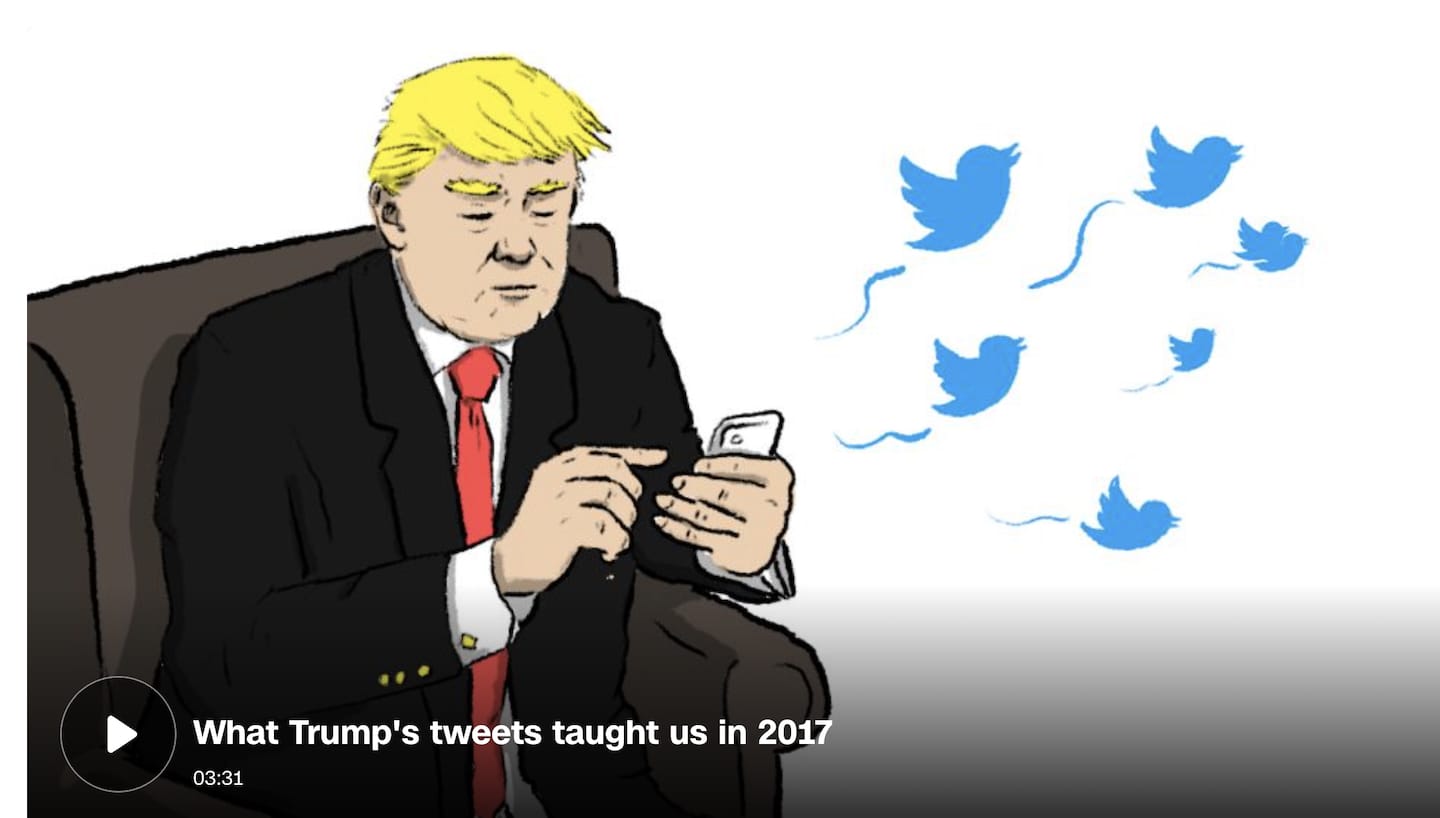
On Tuesday, the Library of Congress announced it’s going to stop archiving all tweets. Instead, it will only record a selection of them.
That’s a huge blow to the ability of Americans to hold politicians and companies accountable. In particular, social media has become more important to our politics than ever before, so we need more tools to hold politicians responsible for their behavior on social media – not less…
…But one problem with social media is that, unlike with traditional media, politicians can directly tell the public whatever they want. Their statements are not vetted or fact-checked before publication. This enables them to easily make false claims. Just 16% of Donald Trump’s statements researched by PolitiFact, a fact-checking website, have been rated either “true” or “mostly true.”
Another problem is that politicians can disavow their untruths and other statements that later prove inconvenient. President Trump deleted 50 tweets this year, according to the Pittsburgh Post-Gazette. For example, after Roy Moore won the Republican Senate primary in Alabama, the President’s previous tweets endorsing Luther Strange for the nomination were deleted.
Kara Alaimo. All tweets belong in the Library of Congress. 27 Dec 2017. CNN.

See also: Biz Stone. Tweet Preservation. 14 Apr 2010. X Blog.
It is our pleasure to donate access to the entire archive of public Tweets to the Library of Congress for preservation and research. It’s very exciting that tweets are becoming part of history. It should be noted that there are some specifics regarding this arrangement. Only after a six-month delay can the Tweets be used for internal library use, for non-commercial research, public display by the library itself, and preservation.
The open exchange of information can have a positive global impact. This is something we firmly believe and it has driven many of our decisions regarding openness. Today we are also excited to share the news that Google has created a wonderful new way to revisit tweets related to historic events. They call it Google Replay because it lets you relive a real time search from specific moments in time.
Google Replay currently only goes back a few months but eventually it will reach back to the very first Tweets ever created. Feel free to give Replay a try—if you want to understand the popular contemporaneous reaction to the retirement of Justice Stevens, the health care bill, or Justin Bieber’s latest album, you can virtually time travel and replay the Tweets. The future seems bright for innovation on the Twitter platform and so it seems, does the past!
Biz Stone. Tweet Preservation. 14 Apr 2010. X Blog.
I don’t know if she’s read many of the eco-blogs covered on this site, but she’s not following them on Twitter.
Public meetings have been the traditional way that the EPA has defensively communicated with the public in the past. Molly Ivins has written about Bob Spiegel’s 1992 videotapes on the Edison Wetlands (New Jersey) in Bushwhacked.
I attended a meeting on hydraulic fracturing in Binghamton last year. The EPA seemed to do a great job. Judith Enck was a good listener. Bill Wolfe has a report on that meeting at WolfeNotes.com, “On the Threshold of a Fracking Nightmare”.
Is our contact with EPA an outcome of a new transparency? How is it going?
Despite calls for transparency from Republicans (Sen. Johanns) and Democrats, (Rep. Hinchey); the Obama administration has signalled that the U.S. is intending to develop natural gas and promote Tar Sands development before environmental impact studies have been completed. There have been no social impact assessments (Freudenburg, 1986) on this development rush, just a lot of public gushing over the new Shalellionaires.
Despite the recent (1/11/11) announcement of a $7 million dollar EPA grant to fund cumulative human health risk assessment research, EPA science still emphasizes engineering over socioeconomic studies in both their selection of reviewers for the upcoming study of hydraulic fracturing and their communication with the public about toxic threats close to home.
Last year, a USGS (U.S. Geological Society) “fish” scientist was one of the co-authors of a study reported by Coal Tattoo:
West Virginians who live near streams polluted by coal mining are more likely to die of cancer, according to a first-of-its kind study published by researchers at West Virginia University and Virginia Tech.
Hitt, Nathaniel P., and Michael Hendryx. “Ecological Integrity of Streams Related to Human Cancer Mortality Rates.” EcoHealth 7, no. 1 (March 2010): 91-104.
AFS Member Nathaniel Hitt Honored with Presidential Early Career Award. 26 May 2017. American Fisheries Society.

In January, President Obama recognized AFS member Nathaniel “Than” Hitt, Ph.D. as one of 102 scientists and researchers to earn the Presidential Early Career Award, the highest award that the government gives to independent researchers in their early careers.
Hitt is a research fish biologist for the U.S. Geological Survey at the Leetown Science Center in West Virginia. His current research focuses on climate change ecology from both physical and biotic perspectives. He is developing landscape models to predict where streams will be resilient to air temperature change, and investigating local adaptation to heat stress in native brook trout.
“I hope my research helps inform biological conservation and restoration planning in the Appalachian region,” he said. “It’s an honor to be selected by the Obama administration for this award, particularly among such brilliant colleagues within the federal science corps.”
AFS Member Nathaniel Hitt Honored with Presidential Early Career Award. 26 May 2017. American Fisheries Society.
Both the EPA and the USGS have many scientists doing research that cross over their specific areas of responsibility. The list of media contacts found below leaves me wondering how I would react if I were a West Virginian stream dweller. What about the stream by the school? What about our animals? Who can I call?
I have not found a Hydraulic Fracturing media representative as of 1/11/11. Hydraulic Fracturing deserves a subject area and its own media representative from this Federal Agency. (Neil Zusman, 2011-01-11.)
See: “Seven Priorities for EPA’s Future”, a Memorandum from Lisa P. Jackson, Administrator to all EPA Employees. (Jan. 12, 2010).
Air Quality
Chemical Risk Management
Children’s Health
Climate Change
Drinking Water
Drinking Water Security
Emergency Response
Endocrine Disruptors
Enforcement
Enforcement Advisory
Environmental Education
Environmental Information
Environmental Justice
Federal advisory committees
FOIAs (Freedom of Information Acts)
Fuels
Ground Water
Hazardous Waste
Health Risk Assessments
Homeland Security
Radiation
Recycling
Solid Waste
Superfund
Toxics
Tribal Issues
Underground Storage Tanks
Wastes
Wastewater
Water
Watersheds
Wetlands
Yucca Mountain
Ms. Jackson maintains a blog and this Twitter feed and is the person responsible for the Office of the Administrator. Press releases may be received by email automatically here:
News Releases issued by the Office of the Administrator
Get News by Email
Media Contacts
See also: Freudenburg, William R. “Social Impact Assessment.” Annual Review of Sociology 12 (January 1, 1986): 451-478.
Find contacts for specific topics in the table on the Media Contacts link above or call the general phone line: 202-564-4355.
See: EPA in the Crosshairs | Mixplex
See: In Pursuit of Sustainability
See: Bushwhacked : Life in George W. Bush’s America
See: WolfeNotes | On the Threshold of a Fracking Nightmare
See: Society of Environmental Journalists (SEJ) Members’ Blogs and Websites
See: Coal mining companies fight back against permit veto
See: New WVU-Va Tech study links water quality and cancer deaths in West Virginia coalfields