
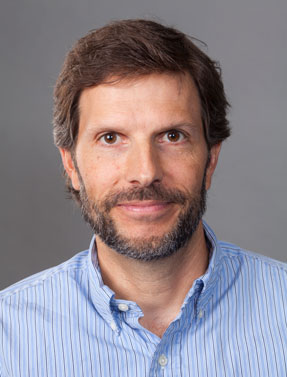
Ramon Alvarez is a Senior Scientist in the Texas EDF office. He works to reduce air pollution, with a current emphasis on emissions from natural gas and oil production. He led EDF’s campaign to establish the successful Texas Clean School Bus Program and worked with US-Mexico border industries to find cost-effective methods to reduce waste.
About this Blog: EDF’s energy experts discuss how to accelerate the transition to a clean, low-carbon energy economy.
Ramón Alvarez, Ph.D. “Barnett Shale gas producers caught with their hands in the cookie jar”. April 16, 2010. Environmental Defense Fund Blog.
“Natural gas producers should not impede the city’s efforts to better characterize their industry’s air pollution. After all, if industry’s claims are true that the natural gas production in Fort Worth does not produce harmful emissions, then they should have nothing to fear from a thorough and independent city-sponsored study.”
An Uncommon Approach: Four Core Strategies
Founded in 1967 as the Environmental Defense Fund, we tackle the most serious environmental problems with:
See our history of results.
A few of our historic results
For three decades, we have built a track record of wins that have made a difference
1967: A small group of scientists forms our organization to win a U.S. ban on DDT, which harmed wildlife and tainted mother’s milk.
1975: Our economic model leads California regulators to call for energy efficiency rather than new coal and nuclear plants.
1985: Our scientists help convince federal regulators to phase lead out of gasoline, leading to a dramatic decline in childhood lead poisoning.
1987: We play a key role in the treaty to phase out CFCs, chemicals that damage the Earth’s ozone layer.
1989: A plan we designed with two Western water districts provides conserved irrigation water to city residents.
1990: The Clean Air Act uses our market-based design. Acid rain is reduced faster than expected, at a fraction of the predicted cost.
1991: McDonald’s accepts the recommendations of our joint task force, eliminating more than 300 million pounds of packaging waste.
1997: Our research finds that endangered species tend to be concentrated in “hot spots” where conservation efforts can be focused.
1997: Our cap-and-trade architecture becomes the basis of the U.S. global warming proposal adopted at Kyoto.
2000: Seven of the world’s largest corporations join us in a partnership, setting firm targets to reduce their greenhouse gas emissions.
2002: We assemble the science showing that marine protected areas boost fish populations dramatically.
2002: We aid in passing California’s first-in-the-nation law to reduce global warming emissions from vehicles.
2003: Our advocacy helps end Congress’s moratorium on market-based “catch share” methods to protect fisheries.
2003: Deep cuts in unhealthful diesel pollution from farm and construction equipment are spurred by our national and local work.
2004: The first FedEx hybrid-electric trucks hit the road. The new vehicles reduce soot by 96% and go 57% farther on a gallon of fuel.
2005: We help spur the Clean Air Interstate Rule, a cap-and-trade regulation to reduce sulfur and nitrogen oxide pollution.
2006: California passes the nation’s first statewide cap on greenhouse gas emissions, a measure we conceived of and helped draft.
2006: A biological jewel in Hawaii is safeguarded, becoming the world’s largest marine reserve, thanks to our key role.
2007: Supreme Court rules favorably in two historic suits we’re party to: one, a win for clean air; the other, a win for curbing global warming pollution.
2007: Our hard-hitting campaign against the Texas utility TXU leads to a landmark buyout deal that blocked a new wave of dirty coal plants.
See: Ceres Principles – Corporate Environmental Conduct
See: As You Sow – Corporate Accountability, Shareholder Action, and ToxicsReduction
See: Futurism Now
See: Christopherson to study economic impact of gas drilling in Marcellus Shale
See: Under the surface : fracking, fortunes and the fate of the Marcellus Shale