

Lively and informative rural American blog based in Austin Texas. This section contains articles on the Environment.
The oldest article I could find was from 2007:
Julie Ardery. The Wild Lady of Karnack, Texas. 12 Jul 2007. Daily Yonder.
Having grown up in rural Texas, Lady Bird Johnson didn’t think of the American landscape as one “homogenous” drive-through. And she made sure we wouldn’t see it that way either.
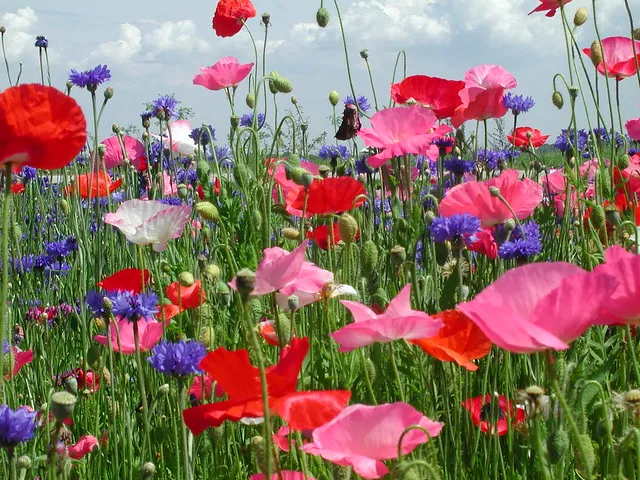
Former first lady and plant conservationist Claudia Alta Johnson died July 11, at her Austin residence. She was 94.
A world traveler who occupied the White House, she doesn’t fit most people’s description of a rural American, but she was one. She was born in tiny Karnack, Texas, pop. 775, daughter of a wealthy cotton farmer. Who but a country kid would be nicknamed “Lady Bird” for a red spotted beetle?
And, we think, only someone who’d been raised in the country would have noticed when billboards and trash crept over the landscape, cutting off what Mrs. Johnson used to call “vistas.” Lady Bird Johnson, of course, did something about that.
In June of 1956, President Dwight Eisenhower had signed the bill creating the federal network of Interstate highways. Built for high speed cars, the interstates forever changed rural America. Small towns were by-passed, and cities once out of range were brought within a day’s easy traveling distance. As a consequence, the American countryside turned from a place either unknown or lived in to something “seen” ““ smeared across the window of a car.
Julie Ardery. The Wild Lady of Karnack, Texas. 12 Jul 2007. Daily Yonder.
The Daily Yonder’s special reports also bring you overviews of the big issues now facing small communities — health, employment, broadband access, education, and economic development.
The Daily Yonder brings issues and images of the rural U.S. to the fore. We welcome readers from all over to see what’s working, failing or never been tried in small communities.
Dee Davis is president and founder of the Center for Rural Strategies, which publishes the Daily Yonder. He is the former executive producer of Appalshop Films/Headwaters Television. Read more about the staff here.
See also: Abrahm Lustgarten. “Natural Gas’s Climate Benefits Questioned.” Daily Yonder. 25 Jan 2011.
It was thought natural gas easily beat coal when it came to slowing climate change. The EPA finds that thinking needs a revision.
The United States is poised to bet its energy future on natural gas as a clean, plentiful fuel that can supplant coal and oil. But new research by the Environmental Protection Agency—and a growing understanding of the pollution associated with the full “life cycle” of gas production—is casting doubt on the assumption that gas offers a quick and easy solution to climate change.
Advocates for natural gas routinely assert that it produces 50 percent less greenhouse gases than coal and is a significant step toward a greener energy future. But those assumptions are based on emissions from the tailpipe or smokestack and don’t account for the methane and other pollution emitted when gas is extracted and piped to power plants and other customers.
The EPA’s new analysis doubles its previous estimates for the amount of methane gas that leaks from loose pipe fittings and is vented from gas wells, drastically changing the picture of the nation’s emissions that the agency painted as recently as April. Calculations for some gas-field emissions jumped by several hundred percent. Methane levels from the hydraulic fracturing of shale gas were 9,000 times higher than previously reported.
Abrahm Lustgarten. “Natural Gas’s Climate Benefits Questioned.” Daily Yonder. 25 Jan 2011.
See: What Lies Beneath
See: Bluedaze – Drilling Reform for Texas
See: France to Unlock Dirty Oil Under Paris With Texan Help
See: Dish Mayor Calvin Tilman Testifies at Railroad Commission – Oil and Gas Lawyer Blog
See: Exxon’s Oozing Texas Oil Pits Haunt Residents as XTO Deal Nears – BusinessWeek