14 documents

2011

May (2011)

March (2011)

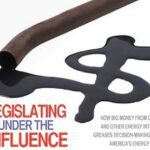
Legislating Under the Influence

Legislating Under the Influence

In the last decade alone, big energy has pumped more than $2.9 billion into electing and lobbying federal officials and candidates, according to campaign finance and lobbying disclosure reports.

Source: Common Cause (2010) Read More

U.S. Department of Energy (DOE), Office of Fossil Energy and National Energy Technology Laboratory: Modern Shale Gas Development in the United States: A Primer.

U.S. Department of Energy (DOE)

The DOE’s Office of Fossil Energy promotes research and development aimed at enhancing domestic energy production and technological efficiency. During the shale boom, federal research initiatives supported improved extraction techniques even as environmental and regulatory questions intensified.

Source: U.S. Department of Energy (2009) Read More

February (2011)

History of Litigation Concerning Hydraulic Fracturing to Produce Coalbed Methane. LEAF (Legal Environmental Assistance Foundation) and The Hydraulic Fracturing Decisions.

History of Litigation Concerning Hydraulic Fracturing to Produce Coalbed Methane. LEAF (Legal Environmental Assistance Foundation) and The Hydraulic Fracturing Decisions.

A growing body of litigation traced disputes over groundwater contamination, lease conflicts, and regulatory authority tied to hydraulic fracturing. Lawsuits accumulated across states as plaintiffs sought damages and clarity. The courtroom became an extension of the drilling field — technical arguments, expert testimony, and contested science unfolding under oath.

Source: Interstate Oil and Gas Commission (IOGCC) (2009) Read More

U.S. Greenhouse Gas Inventory Report (2010 Draft) | Climate Change – Greenhouse Gas Emissions | U.S. EPA

U.S. Greenhouse Gas Inventory Report (2010 Draft) | Climate Change - Greenhouse Gas Emissions | U.S. EPA

The EPA’s draft greenhouse gas inventory quantified methane and carbon dioxide emissions across sectors — including natural gas systems. Methane’s potency as a greenhouse gas sharpened attention on leaks from wells, pipelines, and compressor stations. The numbers reframed shale not just as local extraction, but as a climate variable.

Source: U. S. EPA Office of Atmospheric Programs (2006) Read More

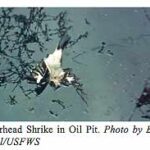
Wildlife Mortality Risk in Oil Field Waste Pits. U.S. Fish and Wildlife Service.

Wildlife Mortality Risk in Oil Field Waste Pits.  U.S. Fish and Wildlife Service.

Open waste pits associated with oil and gas operations have been linked to bird and wildlife deaths when animals mistake contaminated water for safe habitat. Mortality reports raised concerns about regulatory standards and monitoring. Extraction’s footprint, critics argued, extends beyond property lines and into migration corridors.

Source: U.S. Fish and Wildlife Service (2000) Read More

Addressing the Environmental Risks from Shale Gas Development

Addressing the Environmental Risks from Shale Gas Development

Our analysis suggests that while shale gas development poses significant risks to the environment, including faulty well construction, blowouts, and above-ground contamination due to leaks and spills of fracturing fluids and waste water, technologies and best practices exist that can help manage these risks.

Source: Briefing Paper (2010) Read More

Environmental Issues and Challenges in Coal Bed Methane Production

Environmental Issues and Challenges in Coal Bed Methane Production

Coalbed methane development revealed a familiar pattern: energy extraction layered atop groundwater systems and rural landscapes. Pumping methane from coal seams alters aquifers, produces saline discharge, and reshapes surface hydrology. The environmental challenges are not incidental — they are engineered into the process. As unconventional gas expands, coalbed lessons echo forward.

Source: International Petroleum Environmental Conference, University of Tulsa (2003) Read More

January (2011)

Unconventional Gas Shales: Development, Technology, and Policy Issues

Unconventional Gas Shales: Development

Congressional Research Service reports detailed the mechanics of unconventional shale development — horizontal drilling, hydraulic fracturing fluids, production decline curves. The technical primer underscored a reality: the shale revolution was engineered as much as it was discovered.

Source: U.S. Congress (2009) Read More

2010

November (2010)

New York City Department of Environmental Protection: Briefing to the NYC Water Board on the Natural Gas Impact Assessment Project

New York City Department of Environmental Protection: Briefing to the NYC Water Board on the Natural Gas Impact Assessment Project

The New York City Department of Environmental Protection oversees a watershed supplying drinking water to more than 9 million people. As Marcellus Shale drilling approached upstate reservoirs, NYCDEP entered the debate forcefully. When a city of that size signals risk, drilling is no longer rural policy — it becomes metropolitan infrastructure defense.

Source: City of New York (2009) Read More

August (2010)

Drilling Around the Law: Drinking Water Threatened by Toxic Natural Gas and Oil Drilling Chemicals

Drilling Around the Law: Drinking Water Threatened by Toxic Natural Gas and Oil Drilling Chemicals

This is where policy turns sharp: how legal carve-outs, jurisdictional gaps, and regulatory limits shape what companies must disclose and what agencies can enforce. The title itself signals the tension — not just drilling into rock, but drilling through legal frameworks. The hook is governance: who has authority, what gets exempted, what gets hidden, and how drinking water protection becomes a fight over statutes rather than only chemistry.

Source: Environmental Working Group (2009) Read More
Item added to cart.
0 items - $0.00